History of Jersey 83-93 Banner sm photo History of Jersey 83-93 Banner sm.jpg

Friday, June 29, 2012

1992-93 Vancouver Canucks Pavel Bure Jersey

Named as one of the four inductees into the Hockey Hall of Fame this past Wednesday, Pavel Bure was once selected to practice with Wayne Gretzky and Vladislav Tretiak for a television program at the age of 11. By the age of 14, Bure was named to the famed Central Red Army's junior team.

In 1986, five years before playing in Vancouver as a professional, Bure toured Canada with a Soviet youth team and played a game at the Pacific Coliseum, his future home rink.

He made his debut with the Central Red Army senior club in 1987-88 at the age of 16 as a fill-in player when the Red Army Club was without several regulars who were participating in the 1987 Canada Cup. In all, he managed to get into five games, which included scoring his first goal.

While with CSKA Moscow, Bure was teamed with Alexander Mogilny and Sergei Fedorov, a dangerously potent line combination that was set to dominate not only Soviet hockey, but international hockey for years to come, until politics interfered and changed everything.

Bure CSKA, Bure CSKA

Bure set a Soviet League record for goals by a rookie in 1988-89 when he totaled 17 goals in 32 games, a mark that would stand for 18 years as CSKA continued their dominance by winning the league championship for the 13th consecutive season. He was recognized for his for his efforts by being named the league's rookie of the year. He also participated in the 1989 World Junior Tournament, with his eight goals tying for the tournament lead. Additionally, his 14 points led the competition in scoring, earning him Best Forward honors while leading the Soviet Union to the gold medal.

Mogilny would later defect after that spring's World Championships in Sweden, breaking up the line the Soviets expected would lead them into the future.

Later on June 17, 1989, thanks to some detective work by their head scout, the Vancouver Canucks were able to draft Bure one year earlier than many thought he would be eligible due to a rule that stated he needed at least two seasons of play, with a minimum of 11 games each season, for his top-level European club.

Although Bure only played in five league games, it was discovered he had also competed in enough exhibition and international games to make him eligible to be chosen 113th overall in the 6th round. The Detroit Red Wings had even been told by an NHL vice-president that Bure was not eligible prior to their fifth round pick. Verbal complaints and written protests followed, which resulted in a formal investigation, which ended in league president John Ziegler declaring the pick illegal on May 17, 1990.

Bure would compete in the 1990 World Junior Championships, this time scoring seven goals in seven games, but come up short with a silver medal. Later that spring he made is debut with the Soviet National Team as a 19-year-old at the World Championships in Switzerland in which he scored six points in ten games on the way to a gold medal.

Pavel Bure
Pavel Bure at the 1990 World Junior Championships

Another international tournament was on the calendar for 1990, this time in Seattle, Washington for the Goodwill Games. While the Soviet Union won the gold medal, and Bure contributed four goals and an assist in five games, the tournament is best remembered for the defection of Bure's other linemate, Fedorov, who tried to persuade Bure to defect with him. Bure declined out of concern for repercussions against his brother Valeri, who was then an up and coming 15-year-old in the Soviet Union.

After the Canucks selection of Bure was negated by the league's ruling, Vancouver appealed to the league and provided game sheets proving his participation in the required number of games. On June 15, 1990, the day before that year's Entry Draft in which Bure would have been fair game for any team who wished to select him, Vancouver's selection of Bure was permanently reinstated.

In Bure's third season with Central Red Army in 1990-91, he tied for the team lead in scoring with 46 points in 44 games. His 35 goals were one behind the league leader in that category. During the season he also participated in his third World Junior Championships. Bure finished as the tournament's leading scorer once more following his 12 goal, 15 point effort, but had to once more settle for a silver medal. He concluded his junior career with a tournament record 27 goals.

Bure CSKA, Bure CSKA
Bure as a member of the famed Central Red Army team

Later that spring he participated in the 1991 World Championships where he tied for the team lead with 11 points in 11 games on his way to a bronze medal finish.

Bure left Moscow on September 6, 1991 and the Canucks began to negotiate a contract with him, but before it could be finalized, the Canucks also had to deal with the Central Red Army club, who had an existing contract with Bure. The two sides met in late October of 1991 in Detroit and in the end, Bure was free to join the Canucks following a $250,000 payment to Central Red Army. Once that deal was settled, Bure signed a four year contract with Vancouver, making him the second highest paid player on the team behind only team captain Trevor Linden.

Due to the court proceedings, Bure missed the first month of the season and eventually made his NHL debut on November 5, 1991 against the Winnipeg Jets which ignited "Pavel-mania". His speed on the ice was eye-catching and led to his eventual nickname of "The Russian Rocket".

Pavel Bure
Prior to his NHL debut, Bure poses for one of
Upper Deck's unconventional "lifestyle" cards

After a 4-3 win over the Los Angeles Kings on November 7th, Bure got his first NHL point on November 10th with an assist on a goal by Cliff Ronning in a 6-0 win over the New York Islanders. As he adjusted to life in North America and the NHL style of game, he was able to score 12 goals in 42 games. It was at that point that Bure caught fire and surged to the end of the season with a stellar 22 goals in his final 23 games, which sent Vancouver into a frenzy and gave him 34 goals and 60 points in 65 games, which tied a team record for points by a rookie.

Pavel Bure
Bure as a rookie in 1991-92

Once in the playoffs, Bure registered his first hat trick during Game 6 of the Canucks opening round series against Winnipeg. The Canucks would participate in two rounds of the playoffs that season, with the confident rookie scoring 6 goals and 10 points in 13 games.

At the conclusion of the season, Bure was named the winner of the 1992 Calder Trophy as NHL Rookie of the Year, the first Canuck's player to win an individual award in the team's 21 seasons.

Pavel Bure
Bure poses with the Calder Trophy

Now with a full year of experience and confidence under his belt, Bure got off to a flying start, scoring a career high four goals in only the third game of the season. He also set Canucks team records for goals and points in a period when he scored three goals and added an assist during the second period of the Canucks game against the Winnipeg Jets. Additionally, his four goals set a team record for goals in a game and shorthanded goals in a game, as two of Bure's goals came with the Canucks a man down.

That season he participated in his first NHL All-Star Game, scoring twice for the Campbell Conference. Not long after the all-star game, Bure set the Canucks team record for goals in a season with his 46th goal, passing Tony Tanti's mark of 45. He continued to light the lamp at a furious pace, hitting the 50 goal mark on March 1st in a neutral site game in Hamilton, Ontario against the Buffalo Sabres.

March 9th saw Bure pass Patrik Sundstrom's franchise record of 91 points with a pair of assists in a 7-2 win over the New Jersey Devils before reaching the rarified air of the 60 goal plateau, which he accomplished during a 6-3 win over the Calgary Flames. Bure would finish his sophomore season with exactly 60 goals and 50 assists for 110 points.

He duplicated the 60 goals again the following season as part of a nearly identical 107 point season in 1993-94, and added another 16 goals and 31 points in 24 games as he led the Canucks to the Stanley Cup Finals. He would play four more seasons with the Canucks, including scoring 51 goals in his final season in Vancouver in 1997-98.

He only played 11 games during his first year with the Florida Panthers, but was worth the wait when he unleashed back to back 58 and 59 goal seasons in 1999-00 and 2000-01, leading the league in goals both times.

The Panthers acquired his brother Valeri in 2001-02, but after 56 games, during which he scored 49 points to lead the Panthers for the season, he was traded to the New York Rangers in March. More knee injuries limited him to just 39 games in 2002-03 and forced him to miss the 2003-04 season. After the 2004-05 season was canceled due to the lockout, the additional time off still did not allow Bure to return to full health and he announced his retirement in November of 2005.

In 12 NHL seasons, Bure played in 702 games, scoring 437 goals and 779 points and played in six NHL All-Star Games, including being named the game's MVP in 2000.

Internationally, Bure played in three World Juniors, winning gold in 1989 and silver medals in 1990 and 1991. At the World Championships, he won gold in 1990 and a silver in 1991. Eligible for the Olympics thanks to the NHL's full cooperation, he was able to earn a silver in 1998, along with being named the tournament's Best Forward, and a bronze in 2002. Earlier this year, Bure was inducted into the International Ice Hockey Federation's Hall of Fame.

Today's featured jersey is a 1992-93 Vancouver Canucks Pavel Bure jersey as worn during his second season in the NHL during which he scored 60 goals on this date in 1991.

This jersey features the Stanley Cup Centennial patch on the right chest as worn by all players in the NHL that season. This style of jersey was adopted in 1989 and worn through the 1996-97 season, with the only notable change being the addition of the "Canuck Place" patch in 1992.

Vancouver Canucks 92-93 jersey, Vancouver Canucks 92-93 jersey
Photo courtesy of Classic Auctions

Bonus Jersey: Today's bonus jersey is a 1991 Soviet Union Pavel Bure jersey. Following Adidas in the mid to late 1980's, the Finnish brand Tackla became the supplier for the World Championships and Olympics through 1993. Their jerseys featured mesh fabric and classic styling (for the most part), with contrasting colored shoulders which contained repeating diamond shapes, which is the Tackla company logo.

Their jerseys are also instantly recognizable by their block font numbers with the "3-D" drop shadow effect. These jerseys are all sublimated, and therefore age very well, retaining their bright colors over time.

Jerseys worn in 1994 and 1995 were branded as Reebok jerseys, but have all the hallmarks of being produced by Tackla, the dye-sublimated mesh fabric and 3-d block numbers, especially the logo on the lower left hem on the back which reads "manufactured by Tackla"!

Soviet Union 1992 jersey

In today's video segment, a look at what could have been, with Bure, Mogilny and Fedorov playing together at the 1989 World Junior Tournament.


Next, a look at "Pavel-mania" during Bure's rookie season, including footage of his first NHL game and his first two NHL goals.


Thursday, June 28, 2012

1992-93 Boston Bruins Adam Oates Jersey

On Tuesday, the Hockey Hall of Fame announced its inductees for 2012, and included in the group of four players was Adam Oates, a Canadian, who took the less travelled route to the NHL at the time by playing college hockey in the United States. While with Rensselaer Polytechnic Institute, more commonly known as RPI, where he helped win the 1985 NCAA Championship. He graduated with school records for most assists, setting the tone for his NHL career in the process, with 60, points in a season with 91 and career points with 150.

Oates RPI, Oates RPI
Oates celebrates RPI's national championship

After RPI's championship season, Oates signed as an undrafted free agent with the Detroit Red Wings. He would play four seasons in Detroit before being traded to the St. Louis Blues and beginning his journey around the league. Upon his arrival in St. Louis, he would be paired with Brett Hull, a move that enabled him to immediately score over 100 points for the first of four times in his career, a 24 point improvement over his final season with the Red Wings. During his second season in St. Louis, 1990-91, he would accumulate 90 assists despite playing in only 61 games, which allowed him to raise his career best from 102 points up to 115.

Oates Blues, Oates Blues

Following a contract hold out the following year, he would continue his trek when he was traded to the Boston Bruins. He would show St. Louis the error of their ways with a career high 45 goals and 145 points to finish third in league scoring in 1992-93, a position he would repeat the next season with 32 goals and 80 assists for 112 points.

Oates Bruins, Oates Bruins
Oates during his career best season in 1992-93

The relationship with the Bruins soured and Oates would once more be on the move three seasons later, this time to the Washington Capitals, where he would change his jersey number from #12 to #77 in honor of Bruins teammate Ray Bourque, who remained in Boston.

In Oates first full season in Washington, the Capitals would make it all the way to the 1998 Stanley Cup Finals before falling to his former club, the Red Wings.

Oates Capitals 1998 Finals, Oates Capitals 1998 Finals
Oates shakes hands with Steve Yzerman following the 1998 Stanley Cup Finals

Oates would play six seasons for the Capitals, including being named team captain in 1999. He led the league in assists in 2000-01 and would repeat that feat again the following season, becoming the oldest player to ever do so at age 39. That season would also see him score his 1,000th assist, becoming only the eighth player in NHL history to reach that milestone.

Oates Capitals, Oates Capitals
Oates as captain of the Capitals

However, Oates would once again be traded, finishing the season by playing 14 games with the Philadelphia Flyers. 2002-03 would see Oates return to the Stanley Cup Finals for the second time, now with the Mighty Ducks of Anahiem, before falling in seven games to the New Jersey Devils.

Oates Ducks, Oates Ducks
Oates while with the Mighty Ducks

2003-04 would see him add one last opportunity to add to his sweater collection, as he would dress for his seventh and final club, the Edmonton Oilers. His final career totals would stand at 341 goals and 1079 assists for 1420 points in 1337 games and Oates would play in five NHL All-Star Games. His playmaking ability would see him total more assists in the 1990's than any other player, save for Wayne Gretzky. Oates had the most points of any eligible player not in the Hockey Hall of Fame up until his election this week.

In addition to being voted into the Hockey Hall of Fame Oates' memorable day continued with him being named head coach of the Washington Capitals, his first NHL head coaching position.


"Obviously, a fantastic day. I don't know if that's happened before," Oates said of being picked for induction and hired as a coach on the same day. "It's just a special, special day for us."

Today's featured jersey is a 1992-93 Boston Bruins Adam Oates jersey as worn during Oates career best season during which he had a career high of not only 45 goals, but also 97 assists for 142 points.

The Bruins wore this jersey style for the first time in 1974-75, adding shoulder patches in 1976 and names on the back a year later. The jerseys then remained unchanged all the way through the 1994-95 season, and frankly never should have been replaced, as they would now be on the same plane as the unchanging sweaters of the Red Wings, Blackhawks, Rangers and Canadiens.

Boston Bruins 92-93 B jersey, Boston Bruins 92-93 B jersey

Here is Oates talking about his favorite memories of playing in St. Louis.


Uh, yea...


And a few less speaking lines this time around...


That's really about it for Oates on YouTube. He has over 1,000 NHL assists, will now be in the Hall of Fame, yet can't get on YouTube, so here's your homework assignment - someone needs to make a career highlight video of Adam Oates and his undeniable playmaking abilities.

Wednesday, June 27, 2012

1995-96 Colorado Avalanche Joe Sakic Jersey

The Hockey Hall of Fame announced it's 2012 inductees, which included Stanley Cup champion Joe Sakic.

Sakic was originally drafted by the Colorado Avalanche franchise when they were still the Quebec Nordiques 15th overall in the 1987 NHL Entry Draft.

A little known fact is that Sakic's parents were Croatian immigrants and he grew up speaking Croatian before attending elementary school. He would be named Rookie of the Year in the Western Hockey League of Canadian Juniors in 1987 after scoring 133 points. He also survived a horrific bus crash involving his club, the Swift Current Broncos, in which four of his teammates were killed. The following year Sakic was named WHL Most Valuable Player and Canadian Major Junior Player of the Year after scoring 160 points.

He scored an assist on his NHL debut on October 6, 1988 versus the Hartford Whalers and originally wore sweater #88 because Alain Cote was wearing his preferred #19. He finished with 62 points in 70 games.

Sakic Rookie, Sakic Rookie
Sakic wearing #88 as a rookie

With Cote now retired, Sakic claimed his #19 for 1989-90 and scored 102 points. 1990-91 saw Sakic score 109 points, sixth overall in the league, and be named co-captain of the Nordiques (for home games).

Sakic would miss 11 games in 1991-92, which would hurt him in his chances to repeat another 100 point season, and he would conclude the year with 94 points. During this time period. the Nordiques regularly finished in last place, which allowed them to load up on high draft choices and put them in position to acquire a number of talented players, highlighted by their trade of holdout Eric Lindros.

Now named full time team captain of the newly reconfigured Nordiques, Sakic would respond in 1992-93 with 105 points and lead the Nordiques out of the wilderness and into the playoffs for the first time in his career on the heels of a staggering 52 point improvement, double their total of the year prior. Without any previous playoff experience, the Nordiques would be eliminated in the first round by arch-rivals the Montreal Canadiens.

Sakic Nordiques, Sakic Nordiques

1993-94 was a slight step back for Sakic, as he would fall short of the 100 point barrier with 92, but the Nordiques would take a large step back, dropping 28 points in the standings and miss the playoffs yet again.

The Nordiques final season of in Quebec saw Sakic finish fourth in scoring during the lockout shortened 1994-95 season and the Nordiques would capture the division title, only to be eliminated in six games by the New York Rangers, ending their time in Canada.

Relocated to Denver, the Colorado Avalanche took to the ice in the 1995-96 season hoping to continue the improvement shown during Sakic's seven seasons in Quebec. Little did anyone anticipate the events that would unfold that season.

After having a major falling out with the Montreal Canadiens, superstar goaltender Patrick Roy was traded to the Canadiens former arch-rivals, now located in Colorado, a trade which would have never, ever happened had the club remained in Quebec, and the Avalanche were now on their way to glory.

Sakic topped 50 goals for the first time with 51, adding 69 assists for a career high 120 points for third in the league. The Avalanche would storm the playoffs, defeating first the Vancouver Canucks, followed by the Chicago Blackhawks by identical 4 games to 2 margins. Next up was a hard fought series with the Detroit Red Wings, upsetting the team that finished 27 points ahead of them in the standings 4-2 for the right to face the upstart Florida Panthers, whom they easily dismissed in four straight games for the the franchises first Stanley Cup Championship in their first season out of Quebec. Sakic would lead the playoffs in scoring that season and be named the winner of the Conn Smythe Trophy.

It had been a long journey for Sakic, who, along with Curtis Leschyshyn, were the only two Nordiques players from the 1988-89 season to suffer through the years of last place finishes to eventually raise the Stanley Cup.

Sakic 1996 Stanley Cup, Sakic 1996 Stanley Cup
Sakic with the Stanley Cup in 1996

Sakic would eventually play 13 seasons in Colorado, scoring 100 points twice more in his career, eventually surpassing the 600 goal, 1,000 assist and 1,600 point marks. His 16 years as captain of the franchise is the second longest tenure in NHL history and his outstanding career with the Avalanche was recognized when his #19 was retired by the club in 2009.

Sakic #19 banner, Sakic #19 banner

While Sakic played in Colorado, the Avalanche were regular fixtures in the playoffs, and contenders for the Stanley Cup for seven straight seasons, reaching the conference finals in six of those seven seasons, including winning the Stanley Cup again in 2001, the same season he won the Hart Trophy as league MVP, the Pearson Award and the Lady Byng Trophy.

Sakic Byng, Stanley, Hart, Sakic Byng, Stanley, Hart
Sakic with the Lady Byng, Stanley Cup and Hart Trophy in 2001

Internationally, Sakic was a member of the Canadian National Team that won the World Junior Championship in 1988, the 1994 World Championship, the 2002 Olympics and the 2004 World Cup of Hockey. Sakic also won a silver medal at the 1991 World Championships and was captain of Team Canada at the 2006 Olympics in Italy. His Stanley Cup championship, World Championship and Olympic gold medal made him one of the first group of Canadians to become a member of the Triple Gold Club in 2002.

Sakic Lemieux gold medal, Sakic Lemieux gold medal
Mario Lemieux with Sakic after receiving their gold medals in 2002

Today's featured jersey is a 1995-96 Colorado Avalanche Joe Sakic jersey and features the 1996 Stanley Cup Finals patch. This jersey stands apart with it's "mountain range" striping on the waist and arms, unlike any other jersey of it's day. Combined with it's unique color palette, custom number font, memorable secondary shoulder logos and the club's success on the ice, this style Colorado Avalanche jersey is a true icon of it's era and only the change to the templated Reebok Edge jerseys killed off what would have likely been one of those jerseys that lived on unchanged for years.

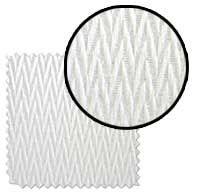
The white names and numbers on this jersey have a textured herringbone pattern pattern to them, which is called "Glacier Twill". In addition to that detail, the silver outline around all the numbers is a metallic silver material, which is often done as a flat grey material on Avalanche jerseys. The lettering for the name is also tall and narrow, as shown by the shape of the "C", which is also often found as a nearly perfect circle shape with rounded, instead of flat sides like shown here.

Colorado Avalanche 95-96 F
Colorado Avalanche 95-96 B

Our first video today are the Top 10 things about Joe Sakic.


Our second video is a tribute video dedicated to his entire career on the occasion of his retirement.


Friday, June 22, 2012

2011-12 Colorado Avalanche Gabriel Landeskog Jersey

Tonight is the 2012 NHL Entry Draft, which is being held at the Consol Energy Center in Pittsburgh, hosted by the Penguins. The draft is set to begin at 7 PM Eastern time and the first round will be broadcast on the NBC Sports Network in the United States and TSN in Canada.

Rounds 2-7 will be shown live on the NHL Network on Saturday beginning at 10 AM.

2010 Draft Logo, 2010 Draft Logo

The Edmonton Oilers won the draft lottery, moving up from the second spot, and now hold the first overall pick for the third consecutive year, something that has not happened since the Quebec Nordiques picked first in 1988 (Mats Sundin), 1989 (Owen Nolan) and 1990 (their memorable soap opera selection of Eric Lindros).

In 2010 the Oilers made left winger Taylor Hall the first selection and followed that up by making center Ryan Nugent-Hopkins the opening choice in 2011.

Taylor Hall, Taylor Hall
Taylor Hall

For 2012, many experts anticipate Russian right winger Nail Yakupov, who played his junior hockey in Canada for the Sarnia Sting, to be the first overall choice. Some do raise concerns when it comes to taking Russian players so early in the draft these days, including the possibility they will be lured away by teams in the KHL, which does not appear to be the case with Yakupov owing to his playing in Canada already. In Edmonton's case, they have taken a number of forwards early in the draft, raising the possibility they will instead select Canadian defenseman Ryan Murray of the Everett Silvertips with the top pick.

This year's talent pool is said to lack the can't miss, elite level players along the lines of a John Tavares, Steven Stamkos or Sidney Crosby, who were considered the clear number one choices during their draft years, so once Edmonton makes their selection, it's anyone's guess as to how the rest of the opening round will progress.

Jon Tavares, Jon Tavares
John Tavares and friends

Holding the second pick is the Columbus Blue Jackets, followed in order by the Montreal Canadiens, New York Islanders, Toronto Maple Leafs, Anaheim Ducks, Minnesota Wild, Carolina Hurricanes and Winnipeg Jets, with the Tampa Bay Lightning rounding out the scheduled top ten picks, which could all change once any trading begins.

While all eyes will be focused on Yakupov to open the draft, it was last year's #2 selection, Gabriel Landeskog of the Colorado Avalanche who emerged as the Calder Trophy winner at the 2012 NHL Awards show on Wednesday. Previous winners of Rookie of the Year honors have included Jeff Skinner (#7 in 2010), Tyler Myers (#12 in 2008), Steve Mason (#69 in 2006) and you have to go back to Patrick Kane to find the last #1 overall pick who won the Rookie of the Year.

Patrick Kane, Patrick Kane
Patrick Kane, #1 0verall in 2007

Highlights of last year's draft in St. Paul, Minnesota included the selection of Nugent-Hopkins first overall, the choice of Landeskog second and the appearance en masse of the fans from Winnipeg, who were thrilled to learn their franchise would once again be called the Jets as the team picked Mark Scheifele with the seventh overall pick.

The home fans in Minnesota where pleased with Jonas Brodin was taken 10th, and thrilled with the Minnesota Wild dealt defenseman Brent Burns to the San Jose Sharks, along with a 2012 second round pick, for forward Devin Setoguchi, the rights to 2010 first round pick Charlie Coyle and the #28 pick, which they used to select Zack Phillips of the Saint John Sea Dogs. Minnesota later made the locals happy with their second round pick of Mario Lucia, the first Minnesotan taken in the draft, who just happened to be the son of Don Lucia, the coach of the University of Minnesota Golden Gophers.

Jonas Brodin, Jonas Brodin
Jonas Brodin

Perhaps the fans in attendance in Pittsburgh will have a chance to enjoy the same excitement this year, as Pittsburgh natives John Gibson (39th) and Brandon Saad (43rd) were both taken in the second round last year, as well as Vincent Trocheck (64th) going in the third.

On the jersey front, the draft is also frequently the first public airing of several new jerseys, as was the case last season with Nugent-Hopkins kicking off last year's draft by wearing the Oilers new, white road jersey, #3 pick Jonathan Huberdeau donning the Florida Panthers new red home jersey, Christopher Gibson debuting the eventual champion Los Angeles Kings new, white road jersey, Magnus Heilberg wearing the Nashville Predators newly redesigned white jersey and Vladislav Namestnikov putting on the Tampa Bay Lightning's new blue road jersey. While the Winnipeg Jets name was announced, the arrival of their jerseys would have to wait, as Scheifele was given a generic, black NHL crested jersey at the 2011 draft.

2011 Kings Draft, 2011 Kings Draft
Christopher Gibson in the Kings new road jersey

Today's featured jersey is a 2011-12 Colorado Avalanche Gabriel Landeskog jersey as worn by the second overall pick in the 2011 NHL Entry Draft, who went on to be named the winner of the 2012 Calder Trophy as the NHL's Rookie of the Year.

The Avalanche first introduced this blue alternate in 2009, opting to make their secondary blue trim color the main color for this jersey, rather than the burgundy of their previous alternate used from 2001-2007.

Colorado Avalanche 11-12 jersey, Colorado Avalanche 11-12 jersey

Today's video section begins with Nugent-Hopkins being taken 1st overall last year.


Here is fan reaction to Columbus losing this year's "Fail for Nail" Draft Lottery.


Finally, a profile of expected #1 pick Yakupov.


Thursday, June 21, 2012

2011-12 Pittsburgh Penguins Evgeni Malkin Jersey

Last night Evgeni Malkin picked up his second Art Ross Trophy as the 2011-12 NHL scoring champion, as his 109 points were 12 more than his next closest pursuer and made him the only player in the league to surpass 100.

His season was also recognized with the Ted Lindsay Award (previously the Lester Pearson Award) as the NHL's Most Outstanding Player as voted by his peers, the members of the NHL Players Association.

Malkin's hat trick of awards was capped off by by receiving the Hart Trophy as the NHL's Most Valuable Player, only the third Russian to win the NHL's most prestigious award after Sergei Fedorov and Alexander Ovechkin. It was also the fourth time a member of the Pittsburgh Penguins won the award, following Mario Lemieux (1988, 1993 and 1996), Jaromir Jagr (1999) and Sidney Crosby (2007).

Malkin 2012 trophies, Malkin 2012 trophies
Malkin poses with his Lindsay, Ross and Hart trophies

His hoard of trophies last night were in addition to his participation in the 2012 NHL All-Star Game, being named to the NHL First All-Star Team, being named the Penguins MVP and the Kharlamov Trophy as the Best Russian Player in the NHL.

His memorable evening capped off a terrific month for Malkin, who won a gold medal at the 2012 IIHF World Championships exactly one month ago, where he was the tournament's leading scorer with 11 goals and 19 points in 10 games, which earned him a place on the tournament's All-Star Team and the award for both the tournament's Best Forward and Most Valuable Player. He was only the second player to lead both the NHL and World Championships in scoring in the same season after Wayne Gretzky in 1982.

Malkin gold medal, Malkin gold medal
Malkin celebrating Russia's 2012 world championship

Today's featured jersey is a 2011-12 Pittsburgh Penguins Evgeni Malkin jersey as worn on October 13, 2011 when both the Penguins and Washington Capitals wore patches featuring the logo of the Russian team Lokomotiv Yaroslavl, whose plane crashed five weeks earlier, killing 44 of the 45 people on board, including the entire team and it's staff.

The idea to raise money for the families left behind originated with Malkin, who went to Penguins general manager Ray Shero to ask for the team's help in raising money.

"We were born in Russia. We know these guys," Malkin said. "We (played) with these guys on teams, the national team. We need to help their families because those are (our) guys." The Capitals were brought into the plan thanks to their Russian captain Ovechkin. "I know Alex. We talked to him," Malkin said. "We had ideas to sell jerseys Oct. 13 and do an auction."

"We compete against each other hard on the ice, but off the ice we all are part of one big hockey family," Shero said. "Many of our players had friends on the Lokomotiv team. All of us in hockey were touched by this tragic loss. We just thought this game was a unique opportunity for our two teams to work together to raise money for the children and families of the players, coaches and staff who lost their lives."

Malkin OVechkin Lokomotiv faceoff, Malkin OVechkin Lokomotiv faceoff
Mario Lemieux drops the ceremonial puck between Malkin and Ovechkin prior to the game where the Penguins and Capitals wore patches honoring the Lokomotiv victims

Following the game, the jerseys were then auctioned off on NHL.com with the proceeds given to the children and families of the Lokomotiv players. Malkin's jersey sold for $4,020, slightly behind Sidney Crosby's $4,097, while Ovechkin topped the list at $5,501 with teammate and fellow Russian Alexander Semin reaching $3,124.

Pittsburgh Penguins 11-12 jersey, Pittsburgh Penguins 11-12 jersey

Today's video section begins with "Evergene" Malkin accepting his Lindsay Award from Ted Lindsay himself.


Next, "Evgani" getting a chance to show his sense of humor concerning his command of English as he accepts his Hart Trophy as league MVP.


Finally, a video segment on the efforts to raise money by the Penguins organization for the families of the Lokomotiv disaster.


Tuesday, June 12, 2012

2011-12 Los Angeles Kings Willie Mitchell Jersey

In their 45th season of play, the Los Angeles Kings captured their first Stanley Cup championship last night with a dominating 6-1 victory over the New Jersey Devils in front of their delirious home fans.

Kings win Cup, Kings win Cup

The Kings season began with a trip to Europe as part of the NHL Premiere series of opening games. After defeating the Hamburg Freezers 5-4 in an exhibition game, the Kings travelled to Stockholm, Sweden to face the New York Rangers on October 7th, kicking off their season right with a 3-2 win. They returned to Germany, this time in Berlin, where they took on the Buffalo Sabres, dropping a 4-2 decision.

They returned to North America to begin the season proper five days later with a 2-1 shootout loss to the New Jersey Devils, who would feature prominently in their season much later on. They finished October with a 6-3-2 record, which they nearly duplicated in November to reach 12-8-4.

After winning 2-1 on December 1st, the lost their next four in a row to fall to 13-12-4, which cost head coach Andy Murray his job. He was immediately replaced by John Stevens as the search for a permanent replacement began. Under Stevens, the Kings alternated losses and wins over their next four games until Darryl Sutter, who had previously coached Chicago, San Jose and Calgary, as their new, permanent coach.

The effect was swift and dramatic. The Kings scored points in 17 of their next 19 games, going 10-2-6. February though, was not kind to the Kings, who slumped rather badly, dropping eight of their next ten games before making a headline grabbing trade on February 23rd, obtaining former Philadelphia Flyer Jeff Carter from the Columbus Blue Jackets in exchange for defenseman Jack Johnson and a conditional 1st round draft pick.

Carter was unhappy in Columbus and it re-energized him to be reunited with former Flyers teammate Mike Richards. With Carter on board, goaltender Jonathan Quick playing well, the Kings began their playoff push two days later with a 4-0 blanking of the Chicago Blackhawks. A 2-1 loss to Nashville was followed by a three straight wins, but two more losses came next.

Quick won the Kings next six games to elevate Los Angeles from 74 points to 86. After losing two, they would go undefeated over their final six games, winning three and gaining a point in the other three to lock up the final place in the postseason tournament, finishing three wins and five points clear of Calgary in 9th.

Entering the playoffs as the eighth, and final qualifier in the Western Conference, the Kings were paired against the President's Trophy winning Vancouver Canucks, who didn't stand a chance after the Kings won the first two games by matching 4-2 scores in Canada. Los Angeles returned home for a 1-0 shutout by Quick to put the Canucks on the brink. Vancouver stayed alive with a 3-1 win in Game 4, but the Kings moved on with a 2-1 win in overtime of Game 5. Quick only allowed eight goals in the series' five games.

The next challenge for Los Angeles was the #2 seeded St. Louis Blues, however, the Blues were easily dispatched in four straight games with the Kings winning every game by at least two goals as they outscored St. Louis 15-6 to become the first team to defeat both the #1 and #2 seeds in the playoffs.

The Phoenix Coyotes, seed third as Pacific Division winners, were the next hurdle for the Kings, who pushed their winning streak to eight by taking the first three games from Phoenix, which also ran their road record to a perfect 7-0. After the Coyotes stayed alive with a win in Game 5, the Kings closed out the series to advance to the Stanley Cup Finals for the second time in team history with a 4-3 overtime win in Phoenix.

Amazingly, the Kings won their first two games on the road to open their fourth series in a row and extended their road winning streak to 10 games. They looked to be on the brink of a championship after a 4-0 blanking of the Devils in Game 3, but the Devils dug deep and won the next two games 3-1 and 2-1 to send the series back to Los Angeles for a sixth game, the longest series that the Kings had been involved in all postseason.

Not wanting to risk the uncertainty of a seventh game, the Kings took full advantage of an early five minute power play, scoring three times to take control. They added a fourth goal just 1:30 into the second, doing their best to let New Jersey know not to consider any thoughts of a comeback. The Devils would not solve Quick until there was 1:15 left in the second, but with the Kings having never surrendering more than 3 goals in any game of the playoffs, a Devils faced a virtually impossible task entering the third.

In desperation, they pulled goaltender Martin Brodeur with nearly 4 minutes remaining and Trevor Lewis scored to put the game out of reach. Matt Greene followed with a floater from the point just 15 seconds later to produce the final margin of victory and get the celebration underway a few minutes early.

The Kings march through the post season saw them finish with a 16-4 record and a 10-1 mark on the road, winning each series as a lower seed. Quick was named the winner of the Conn Smythe Trophy as the playoff MVP, the third American to win it after Brian Leetch (1994) and Tim Thomas (2011).

Quick Smythe, Quick Smythe

Dustin Brown became just the second American-born captain to win the cup following Derian Hatcher of the Dallas Stars back in 1999. Of note concerning nationalities, forward Anze Kopitar becomes the first Slovenian to win the cup. The Kings trip to Germany and Sweden to open the season is now the fourth year in a row the eventual cup champion has begun their season in Europe as part of the NHL Premiere Series.

Los Angeles Kings Stanley Cup, Los Angeles Kings Stanley Cup

Today's featured jersey is a 2011-12 Los Angeles Kings Willie Mitchell jersey. The Kings made several changes to their jerseys for 2011-12, as they promoted their silver and black alternate jersey with a shield crest to become their new primary home jersey and designating their previous purple and black home jersey adorned with a crown logo as the new alternate. They also created a new white version of their new primary jersey to be worn on the road, a jersey which made it's public debut at the 2011 NHL Draft.

The change to silver and black home and road jerseys was a return to the look the Kings employed from 1988 to 1998, which was ushered in by the arrival of Wayne Gretzky in Los Angeles.

Mitchell, a defenseman, was the second King to hoist the Stanley Cup following team captain Brown. He is a 12 year veteran of the NHL, having started his career with the Devils before moving to the Minnesota Wild, Dallas Stars and Vancouver Canucks and is the oldest player on the Kings. His 24 points this season was a career high, as was his 5 goals.

Los Angeles Kings 11-12 jersey, Los Angeles Kings 11-12 jersey

Here are the highlights of last night's Game 6 as the Kings won the Stanley Cup for the first time in franchise history.


Monday, June 11, 2012

1974-75 Kansas City Scouts Guy Charron Jersey

In 1972, the World Hockey Association came into being, competing directly with the NHL for players and franchise locations. The NHL had already added the Atlanta Flames and New York Islanders in 1972, with the Islanders in particular being a deliberate expansion to occupy a location viewed as desirable by the WHA.

With the WHA having placed teams in direct competition with the NHL in Philadelphia, Boston, Los Angeles, New York, Minnesota and Chicago and taken smaller Canadian markets like Edmonton, Ottawa, Quebec and Winnipeg as their own, the competition for cities in the United States was where the NHL could use expansion as a weapon in their fight against the upstarts.

The remaining cities occupied by the WHA in 1972 were Cleveland and Houston, rounding out their original roster of 12 teams. The weak links in the WHA proved to be Philadelphia, New York and Ottawa, despite their having no direct rival in the NHL. The Philadelphia Blazers moved across the continent to take on the Canucks in Vancouver, while the New York Raiders changed owners and their name to the Golden Blades before fleeing Manhattan to become the New Jersey Knights in what was actually a suburb of Philadelphia 90 miles down the Jersey Turnpike, where they fared even worse than the Blazers, while playing in a substandard home rink.

Meanwhile, Ottawa learned absolutely nothing from the Raiders/Golden Blades about life as tenant of an NHL franchise and made the genius move to have cantankerous NHL hardliner Harold Ballard of all people become their landlord when they moved into Maple Leaf Gardens in Toronto to become the Toros!

That set the scene for the 1974-75 season. The WHA made the questionable move to add teams in Indianapolis and Phoenix as well as having the New Jersey (Philadlephia) franchise set up shop in San Diego, which suffered from the loss of it's potential rivalry with Los Angeles when the Sharks were the next team to try to go head to head with an established NHL cornerstone in Detroit when they became the Michigan Stags, lasting less than a full season.

As a countermove, the NHL expanded to occupy what it viewed as key markets, and on this date in 1974, franchises were awarded to Washington D. C. and Kansas City.

The Kansas City market had been home to a number of teams, dating back to the mid 1920's, including the Kansas City Pla-Mors of the American Hockey Association. They changed their name to the Kansas City Greyhounds in 1933 and the Americans in 1940, lasting until 1942. Other teams played in the United States Hockey League from 1945 to 1951 and the Central Hockey League from 1967 to 1972.

The Scouts were to call the brand new Kemper Arena home and were hoped to create a rivalry with their fellow Missouri residents, the St. Louis Blues. The club was originally going to be called the Mohawks, taking "Mo" from the postal abbreviation for Missouri, and "hawks" from the Kansas nickname of "Jayhawkers" in an effort to appeal to residents on both sides of the border, but the established Chicago Black Hawks protested, saying the name sounded too similar to theirs.

Thus, a name the team contest was held, which resulted in the name "Kansas City Scouts" being chosen in honor of an iconic statue named "The Scout" which overlooks downtown Kansas City from a hill in a nearby park.

Kansas City Scouts logo, Kansas City Scouts logo

The club formed their roster as best they could under the rules the expansion teams were forced to deal with, combined with the intense competition from an additional 14 WHA teams. The Scouts chose goaltender Michel Plasse, a former player with the Kansas City Blues, with their first choice in the 1974 NHL Expansion Draft. Peter McDuffe, another goaltender was chosen second and winger Simon Nolet was taken from the Philadelphia Flyers and would go on to lead the team in scoring.

Simon Nolet Scouts, Simon Nolet Scouts
Simon Nolet

The Scouts would pick second in the Amateur Draft, and chose well, taking eventual NHL All-Star Wilf Paiement. Things did not go quite so well after that, with second round pick Glen Burdon playing a total of 11 NHL games and eventual All-Star and four time Stanley Cup champion Bob Bourne, taken in the third round, being traded for Bart Crashley (2 games with the Scouts) and the rights to Larry Hornung, who played the rest of his career in the WHA, before Bourne ever played a game in Kansas City.

Paiement Scouts, Paiement Scouts
Wilf Paiement

Their first season began with eight games on the road to allow final completion of Kemper Arena. The brutal road trip was a dreadful way to begin life for an expansion club, as they immediately lost 7 and tied 1. After a loss in their home opener on November 2, 1974 to the Chicago Black Hawks, the Scouts finally won their first game over their expansion brothers, the Washington Capitals in Washington.

They would reach New Year's Day with a 5-26-4 record and play respectable hockey through January and February, going 9-13-4, before limping home 1-14-3 to finish next to last with 41 points, 10 back of the lowly California Seals, but 20 ahead of the moribund Capitals.

Nolet led the club in goals with 26 and assists with 32 for 58 points. Guy Charron, obtained from Detroit, was next with 42 points, while Paiement tied Nolet for the lead in goals with 26 of his own on his way to fourth, with his 39 points 2 back of Dave Hudson's 41.

In goal, Plasse lasted 24 games before packing his bags after being traded to Pittsburgh for Denis Herron, who played 22 games while McDuffe led the club in wins with 7 in 36 appearances.

McDuffe Scouts, McDuffe Scouts
Peter McDuffe

Attendance was essentially the same story, as the Scouts finished 17 out of 18 at 7,356, ahead of the Seals 6,172, the only two clubs under 10,000.

The Scouts second draft was nothing short of a failure, failing to land a single player who would play even 170 NHL games as they passed on players like Dennis Maruk, Doug Jarvis and Dave Taylor in what would prove to be an extraordinarily shallow draft that would produce just 6 All-Stars out of 217 picks.

The 1975-76 season began well enough with a 3-2-1 record before the losses began to outnumber the wins. As the calendar reached New Year's, the Scouts were 11-22-4 and on pace for 58 points, but the second half of the season was an unqualified disaster, commencing with a 14 game losing streak.

Two ties, a win and a tie gave a false flicker of hope, as the team went 0-21-6 after their final win on February 6th, their only victory in 1976.

The roster was somewhat of a revolving door, which saw a number of trades, with seven players leaving (along with a first and a pair of second round draft picks) and nine coming in, with one draft pick coming back.

Among those leaving was first year leading scorer and team captain Nolet, who was sent east to Pittsburgh. Charron, now promoted to captain, led the team with 27 goals and 44 assists for 71 points, far ahead of Paiement's 43, the only other player over 40. Also of note, Steve Durbano became a fan favorite as he led the league in penalty minutes with 209. There was turnover in goal as well, as McDuffe was out, which allowed Herron to play 64 games (winning 11), backed up by Bill McKenzie's 22, only one of which he won.

Herron Scouts, Herron Scouts
Denis Herron

During their first two seasons, the Scouts had two head coaches Bep Guidolin and Eddie Bush, three if you count Sid Abel's three game stint to bridge the gap when Guidolin was let go during the Scouts second season.

Guidolin Scouts, Guidolin Scouts

While attendance technically rose to 7,892, it still remained 17th. With the team suffering from a rapid rise in player costs, an ownership group (of thirty-seven individuals!) in debt and losing money and poor play on top of the poor attendance, 5,000 below the league average, the ownership gave it one final chance, but when a season ticket drive to raise more cash sold only 2,000 tickets, the group sold the team to interests who would immediately relocate the franchise to Denver, Colorado for the 1976-77 season, where it was renamed the Colorado Rockies, brining to and end the Scouts stay in Kansas City after an all-to-brief two seasons.

Today's featured jersey is a 1974-75 Kansas City Scouts Guy Charron jersey from the Scouts first season of play. Charron would go on to lead the Scouts in scoring not only in their second season of play, but would lead the franchise in scoring during their time in Kansas City as well.

Charron began his career in 1969-70 with the Montreal Canadiens before five seasons with Detroit before being traded to the Scouts. He would not move with the team to Denver, instead moving over to the Capitals for the final five seasons of his NHL career, which totaled 734 games.

Playing only two seasons in Kansas City did not leave much time for jersey variations, but their second season saw a yellow outline added to the crest to help it separate from the blue background better and the white home jerseys had names added during their second and final season.

Kansas City Scouts 74-75 jersey, Kansas City Scouts 74-75 jersey
photo courtesy of Classic Auctions

Today's video segment is Kansas City commentator Jack Smack lamenting the loss of the Scouts now that the New Jersey Devils, the eventual destination of the Scouts after leaving Denver, are in the Stanley Cup Finals and Kansas City's Sprint Center arena is still without an NHL or NBA tenant.


hit counter for blogger