History of Jersey 83-93 Banner sm photo History of Jersey 83-93 Banner sm.jpg
Showing posts with label Ross Art. Show all posts

Thursday, January 21, 2016

1907 Kenora Thistles Art Ross Jersey

When the Stanley Cup was first offered in 1892 as the prize for the best team in among Canada's amateur ranks, it was called the "Dominion Hockey Challenge Cup".


The cup was donated, at the urging of his two sons Arthur and Algernon, by Lord Stanley of Preston, then the Governor General of Canada, with the intent of creating a way to recognize which club was the current champion.

There was no single league across the whole of Canada at the time, so the format of awarding the cup was based on a challenge format, where the champion of one of the various amateur senior hockey associations could issue a challenge to the holders of the cup. This meant that challenge games could happen at any time during the season as challenges were approved, or ordered, by the cup's trustees. For example, the Ottawa Hockey Club faced four separate challenges for the cup, defended successfully each time, between January and March of 1904 from the Winnipeg Rowing Club, the Toronto Marlboros, the Montreal Wanderers and Brandon Wheat Cities, the latter two taking place just one week apart.

The challenge system was in effect until 1914, with the challenges varying from single-elimination games to best of three or two games, total goals series throughout the challenge era, when the trustees of the cup agreed that it would now be awarded to the winner of a playoff series each season between the champions of the professional National Hockey Association (NHA) and the Pacific Coast Hockey Association (PCHA) leagues.

It was on this date in 1907 that the Kenora Thistles captured the Stanley Cup as they successfully completed a two-game total-goal series against the current cup holders, the Montreal Wanderers, by a score of 12-8.

The Wanderers had held the cup since March of 1906 and had defended the cup once in December of 1906 before the Thistles issued their challenge based on being the champions of the Manitoba Professional Hockey League (MPHL).

Kenora Thistles in action photo KenoraThistlesinaction.png
The Kenora Thistles in action

The Thistles won the first game at the Montreal Arena on January 17, 1907 4-2 and captured the cup four days later by outlasting the Wanderers 8-6. Members of the Thistles included future Hockey Hall of Famers Joe Hall, Tom Hooper, captain Tommy Phillips and Art Ross.

Thistles headline photo Thistlesheadline.jpg

Kenora would retain the cup two months later on March 16 and 18, 1907 by winning the MPHL playoffs against the Brandon Wheat Cities club in a best-of-three series 2 games to none by scores of 8-6 and 4-1.

Just five days after defending the cup, Kenora faced another challenge, this time from the same Montreal Wanderers whom they had taken the cup from exactly two months earlier. The Wanderers took game one in the two-game total-goals series by a commanding 7-2 margin. The Thistles preserved some pride by winning Game 2 by a score of 6-5, but it was not enough to overcome the five goal advantage the Wanderers took into the contest, as they regained the rights to the cup by a final margin of 12 goals to 8, ending the Thistles reign as cup holders at a mere 62 days, the shortest reign in Stanley Cup history.
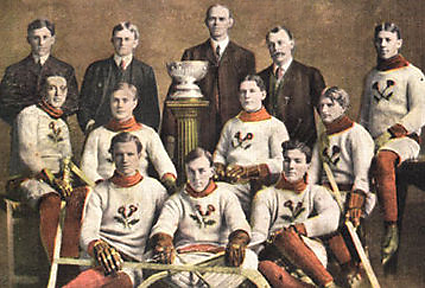
The 1907 Stanley Cup champion Rat Portage Thistles luckily
took time to pose with their trophy during the brief two months they held it

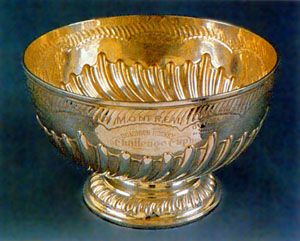
Of note, while each previous cup champion had the right to engrave the name of their club onto the cup, it was the Wanderers who were the first to include the names of each individual player on the championship team, a practice which became an annual tradition in 1924 and set the cup on it's journey from 7 inch bowl to the three foot tall trophy it is today.

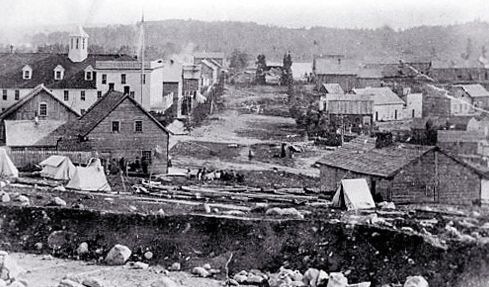
Kenora, originally called "Rat Portage", then with a population of just 4,000 holds the record as the smallest city to ever hold the Stanley Cup. It is located 2oo kilometers east of Winnipeg, directly above Minnesota, in far western Ontario.

 photo RatPortage1880.jpg
Rat Portage in 1880

The Rat Portage Thistles were founded in 1896 and unsuccessfully challenged for the cup twice before in 1903 and 1905 when they were turned back by the Ottawa Silver Seven. It was later in the summer of 1905 that Rat Portage changed it's name to Kenora. The Thistles hockey club would fold during the 1907-08 MPHL season.
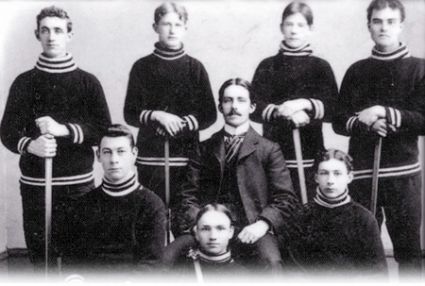
Rat Portage Thistles photo RatPortageThistles1890s.jpg
The 1897 Rat Portage Thistles

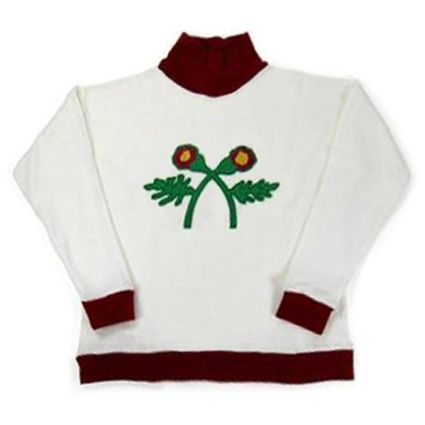
Today's featured jersey is a 1907 Kenora Thistles Art Ross jersey. The Thistles name was chosen in a contest and the winner was a local Scottish carpenter named Bill Dunsmore who not only submitted the name in reference to the region's Scottish heritage, but a drawing of a thistle for the team's logo.

This jersey is the style worn by the Stanley Cup champion Thistles club, which included Ross, who would go on to be not only a player, but a general manager and coach in the NHL and have the trophy for the NHL's annual trophy for the league's leading scorer, the Art Ross Trophy, named after him.

These jerseys were reproduced by the CBC in connection with their "Hockey: A People's History" documentary, and are sadly no longer available on demand.

In another one of those amazing youtube moments, here is a video on the Kenora Thistles. While the original Thistle club disbanded in 1908, subsequent clubs in Kenora have adopted the Thistle name, which was the case for the club that Louis McKay played on in 1934.


Wednesday, January 13, 2016

1910-11 Montreal Wanderers Art Ross Jersey

Born on this date in 1886, Art Ross moved to Montreal in 1902 at the age of 16 and played high school and junior hockey with hockey pioneers and innovators Frank and Lester Patrick. at Westmount Academy and then with the Montreal Westmount club in the Canadian Amateur Hockey League, the top amateur league in Canada, beginning with the 1902-03 season. He played with Westmount again in the 1903-04 season before joining the Montreal Merchants for the 1904-05 season where he scored 10 goals in 8 games.

He moved west in pursuit of a banking career but still had time for hockey, playing for the Brandon Wheat City club of the Manitoba Hockey League in 1905-06, scoring 6 times in 7 games. Ross was then added to the Kenora Thistles roster for their Stanley Cup challenge against the Montreal Wanderers, for which he was paid $1,000 for the two game series.

Teamed with the likes of future Hall of Famers Bad Joe Hall, Tommy Phillips and Tom Hooper, Kenora became the smallest town to ever win the Stanley Cup, as they defeated the Wanderers 4-2 and 8-6 to win the series 12 goals to 8 in the hostile territory of the Montreal Arena, which would figure in Ross' career later on as we shall see...

1907 Kenora Thistles team photo Kenora Thistles 1907 Stanley Cup.jpg
The 1907 Stanley Cup champion Kenora Thistles

Ross moved back home to Montreal for the 1906-07 season and joined the very same Wanderers club he had helped dethrone as Stanley Cup holders, clearly having impressed the team management with his puck rushing style from his defensive position, a rarity in those days, as the defensemen of the day either fired the puck down the ice or deferred the forwards, passing it up to one at the first opportunity.

Art Ross Wanderers photo Art Ross - Montreal Wanderers 1910.png
Ross, seen here with the Wanderers, would return to Montreal
on several occasions throughout his career

Thanks in part to his 8 goals in 10 games, the Wanderers would finish atop the Eastern Canada Amateur Hockey Association to retain the Stanley Cup they had won back from Kenora in a rematch two months after having lost it to the Thistles, of which Ross was not a part of. This would make Ross only the second player, after Jack Marshall, to win the cup two years in a row with two different clubs. Additionally, the Wanderers rebuffed challenges from the Ottawa Victorias, the Winnipeg Maple Leafs and the Toronto Argonauts that spring.

Wanderers champions photo Montreal Wanderers World Champions 1906-1908.jpg
The holders of the Stanley Cup, the Montreal Wanderers

In January of 1908, Ross was a participant in the first all-star game in sports history, which was a benefit game for the family of the late Wanderers defender Hod Stuart, who drowned the previous summer.

For the 1908-09 season, Ross helped the Wanderers fend off another Stanley Cup challenge before the start of the regular season, a 13-10 defeat of the Edmonton Hockey Club. He scored twice in the Wanderers 9 games, but they lost the regular season title to the Ottawa Hockey Club and therefore their rights to the Stanley Cup. Ross was also hired by the Cobalt Silver Kings for a pair of playoff games, which they won to become Timiskaming Professional Hockey League champions.

1909 Cobalt Silver Kings team photo 1909 Cobalt Silver Kings team.png
The 1909 Cobalt Silver Kings

It was back to Montreal for the 1909-10 season, this time with the All-Montreal Hockey Club as a player/manager in the upstart Canadian Hockey Association. Ross had scored 4 goals in 4 games before the league imploded in mid-January of 1910. Ross then caught on with the Haileybury Comets of the rival National Hockey Association, playing in 6 games and scoring 6 goals, which earned him $2,700.

Art Ross Haileybury photo 1910_1911__art_ross.jpg
Art Ross with the Haileybury Comets

Ross was lured back by the Wanderers, who were now members of the same NHA as Haileybury, for the 1910-11 season. He scored 4 times in 11 games and also enhanced his reputation as a tough player by knocking out the Quebec Bulldogs' Eddie Oatman, which started a massive brawl that required police intervention to break up!

Montreal Wanderers 1909-10 photo Montreal Wanderers 1909-10.jpg
The World Champion Montreal Wanderers

The 1911-12 season saw Ross set a career high with 16 goals in 18 games followed by 11 goals in 19 games in 1912-13. After a salary dispute with the Wanderers, the two sides agreed to a new deal and Ross totaled 4 goals and 9 points in 1913-14.

Art Ross Wanderers photo Ross 1912-13 Wanderers card.png
An early Art Ross hockey card

Prior to the 1914-15 season, Ross attempted to persuade other players to leave their clubs and form a new league, which resulted in him being suspended. He responded by declaring himself a free agent. The president of the NHA then upped the suspension to cover all of organized hockey!

When is plan for a new league failed to gain traction, he applied to be reinstated to the NHA, which was granted in December  1914. The Wanderers were less than happy with Ross for the commotion and released him from the team. Ross then found a home with the Ottawa Senators.

Ottawa and the Wanderers finished with identical 14-6 records and a two game, total goal playoff was held to determine who would play the Pacific Coast Hockey Association's Vancouver Millionaires for the Stanley Cup. Ottawa won 4-0 in Game One and held off the Wanderers by despite a 1-0 loss in Game Two.

1914-15 Ottawa Senators team photo 1914-15 Ottawa Senators team.jpg
The 1914-15 Ottawa Senators

After scoring just 3 goals and 1 assist for Ottawa the previous season, Ross equaled a career high with 16 points in 1915-16 with 8 goals and 8 assists.

Somewhat surprisingly, following his acrimonious departure in 1914, Ross returned to Montreal and the Wanderers for the 1916-17 NHA season, in part to keep an eye on his Montreal sporting good store that he owned. He finished with 6 goals and 2 assists for the Wanderers in the final season for the NHA.

A new league was formed as part of some back room dealings, which brought an end to the NHA, but game rise to today's National Hockey League for 1917-18. In addition to his playing duties, Ross was also now the team's coach, but after just three games of the inaugural NHL season, the Wanderers aforementioned Montreal Arena was destroyed by a fire on January 2, 1918, which led to the financially struggling Wanderers folding their homeless franchise, which brought an abrupt end to Ross' playing days.

Montreal Arena fire photo MontrealArenafire1917-18.jpg
The aftermath of the Montreal Arena fire
that brought an end to Ross' playing career

Ross managed to score but one goal in his three NHL games, but ironically, the league scoring championship trophy is named for the man who only scored once in his NHL career!

1917-18 Montreal Wanderers team photo 1917-18MontrealWanderersteam.jpg
The 1917-18 Montreal Wanderers, who played
only three games of the inaugural NHL season

Ross remained active in hockey after his playing days concluded, which saw him coaching McGill University, becoming an NHL referee, coaching the Hamilton Tigers and then being hired by Charles Adams as the vice president, general manager, coach and scout for his NHL expansion franchise, which Ross himself dubbed the Boston Bruins.

In just five seasons, the Bruins, under Ross' leadership, rose from a 6-24 record to Stanley Cup champions. Ross became the first coach to ever pull his goalie late in a losing situation to gain an extra attacker in 1931. Before he retired in 1954 after 30 years with the club, the Bruins would win additional Stanley Cups in 1939 and 1941.

Art Ross Bruins photo Art Ross - Boston Bruins 1931 .png
Art Ross as coach of the Bruins in 1931

Ross was inducted into the Hockey Hall of Fame in 1949, specifically for his playing career, and not his long career as a team executive.

Today's featured jersey is a 1910-11 Montreal Wanderers Art Ross jersey. The Wanderers were formed in 1903 and were active until their arena burned down in 1918. All photographic records indicate the Wanderers wore the same white sweaters with a red band across the chest for their entire professional existence.

The Wanderers franchise finished first in the Federal Amateur Hockey League in 1904 before winning the ECHA championship in 1906 by defeating Ottawa in a two game, total goal playoff to capture the Stanley Cup.

They then won two more ECHA titles in 1907 and 1908 as well as turning away a challenge from the New Glasgow Cubs, winning back the Cup after losing it two months earlier to the Kenora Thistles, and then defending challenges for the cup from the Ottawa Victorias, Winnipeg Maple Leafs, Toronto Hockey Club and Edmonton Eskimos through March of 1909.

Art Ross Wanderers photo Ross Wanderers.png

Tuesday, January 21, 2014

1907 Kenora Thistles Art Ross Jersey

When the Stanley Cup was first offered in 1892 as the prize for the best team in among Canada's amateur ranks, it was called the "Dominion Hockey Challenge Cup".


The cup was donated, at the urging of his two sons Arthur and Algernon, by Lord Stanley of Preston, then the Governor General of Canada, with the intent of creating a way to recognize which club was the current champion.

There was no single league across the whole of Canada at the time, so the format of awarding the cup was based on a challenge format, where the champion of one of the various amateur senior hockey associations could issue a challenge to the holders of the cup. This meant that challenge games could happen at any time during the season as challenges were approved, or ordered, by the cup's trustees. For example, the Ottawa Hockey Club faced four separate challenges for the cup, defended successfully each time, between January and March of 1904 from the Winnipeg Rowing Club, the Toronto Marlboros, the Montreal Wanderers and Brandon Wheat Cities, the latter two taking place just one week apart.

The challenge system was in effect until 1914, with the challenges varying from single-elimination games to best of three or two games, total goals series throughout the challenge era, when the trustees of the cup agreed that it would now be awarded to the winner of a playoff series each season between the champions of the professional National Hockey Association (NHA) and the Pacific Coast Hockey Association (PCHA) leagues.

It was on this date in 1907 that the Kenora Thistles captured the Stanley Cup as they successfully completed a two-game total-goal series against the current cup holders, the Montreal Wanderers, by a score of 12-8.

The Wanderers had held the cup since March of 1906 and had defended the cup once in December of 1906 before the Thistles issued their challenge based on being the champions of the Manitoba Professional Hockey League (MPHL).

Kenora Thistles in action photo KenoraThistlesinaction.png
The Kenora Thistles in action

The Thistles won the first game at the Montreal Arena on January 17, 1907 4-2 and captured the cup four days later by outlasting the Wanderers 8-6. Members of the Thistles included future Hockey Hall of Famers Joe Hall, Tom Hooper, captain Tommy Phillips and Art Ross.

Thistles headline photo Thistlesheadline.jpg

Kenora would retain the cup two months later on March 16 and 18, 1907 by winning the MPHL playoffs against the Brandon Wheat Cities club in a best-of-three series 2 games to none by scores of 8-6 and 4-1.

Just five days after defending the cup, Kenora faced another challenge, this time from the same Montreal Wanderers whom they had taken the cup from exactly two months earlier. The Wanderers took game one in the two-game total-goals series by a commanding 7-2 margin. The Thistles preserved some pride by winning Game 2 by a score of 6-5, but it was not enough to overcome the five goal advantage the Wanderers took into the contest, as they regained the rights to the cup by a final margin of 12 goals to 8, ending the Thistles reign as cup holders at a mere 62 days, the shortest reign in Stanley Cup history.

The 1907 Stanley Cup champion Rat Portage Thistles luckily
took time to pose with their trophy during the brief two months they held it

Of note, while each previous cup champion had the right to engrave the name of their club onto the cup, it was the Wanderers who were the first to include the names of each individual player on the championship team, a practice which became an annual tradition in 1924 and set the cup on it's journey from 7 inch bowl to the three foot tall trophy it is today.

Kenora, originally called "Rat Portage", then with a population of just 4,000 holds the record as the smallest city to ever hold the Stanley Cup. It is located 2oo kilometers east of Winnipeg, directly above Minnesota, in far western Ontario.

 photo RatPortage1880.jpg
Rat Portage in 1880

The Rat Portage Thistles were founded in 1896 and unsuccessfully challenged for the cup twice before in 1903 and 1905 when they were turned back by the Ottawa Silver Seven. It was later in the summer of 1905 that Rat Portage changed it's name to Kenora. The Thistles hockey club would fold during the 1907-08 MPHL season.

Rat Portage Thistles photo RatPortageThistles1890s.jpg
The 1897 Rat Portage Thistles

Today's featured jersey is a 1907 Kenora Thistles Art Ross jersey. The Thistles name was chosen in a contest and the winner was a local Scottish carpenter named Bill Dunsmore who not only submitted the name in reference to the region's Scottish heritage, but a drawing of a thistle for the team's logo.

This jersey is the style worn by the Stanley Cup champion Thistles club, which included Ross, who would go on to be not only a player, but a general manager and coach in the NHL and have the trophy for the NHL's annual trophy for the league's leading scorer, the Art Ross Trophy, named after him.

These jerseys were reproduced by the CBC in connection with their "Hockey: A People's History" documentary, and are sadly no longer available on demand.


In another one of those amazing youtube moments, here is a video on the Kenora Thistles. While the original Thistle club disbanded in 1908, subsequent clubs in Kenora have adopted the Thistle name, which was the case for the club that Louis McKay played on in 1934.


Thursday, January 21, 2010

1907 Kenora Thistles Art Ross Jersey

When the Stanley Cup was first offered in 1892 as the prize for the best team in among Canada's amateur ranks, it was called the "Dominion Hockey Challenge Cup".


The cup was donated, at the urging of his two sons Arthur and Algernon, by Lord Stanley of Preston, then the Governor General of Canada, with the intent of creating a way to recognize which club was the current champion.

There was no single league across the whole of Canada at the time, so the format of awarding the cup was based on a challenge format, where the champion of one of the various amateur senior hockey associations could issue a challenge to the holders of the cup. This meant that challenge games could happen at any time during the season as challenges were approved or ordered by the cup's trustees. For example, the Ottawa Hockey Club faced four separate challenges for the cup, defended successfully each time, between January and March of 1904 from the Winnipeg Rowing Club, the Toronto Marlboros, the Montreal Wanderers and Brandon Wheat Cities, the latter two taking place just one week apart.

The challenge system was in effect until 1912 when the trustees of the cup agreed that it would now be awarded to the winner of a playoff series each season between the champions of the professional National Hockey Association (NHA) and the Pacific Coast Hockey Association (PCHA) leagues.

It was on this date in 1907 that the Kenora Thistles captured the Stanley Cup as they successfully completed a two-game total-goal series against the current cup holders, the Montreal Wanderers, by a score of 12-8.

The Wanderers had held the cup since March of 1906 and had defended the cup once in December of 1906 before the Thistles issued their challenge based on being the champions of the Manitoba Professional Hockey League (MPHL).

The Thistles won the first game at the Montreal Arena on January 17, 1907 4-2 and captured the cup four days later by outlasting the Wanderers 8-6. Members of the Thistles included future Hockey Hall of Famers Joe Hall, Tom Hooper, Tommy Phillips and Art Ross.


Kenora would retain the cup two months later on March 16 and 18, 1907 by winning the MPHL playoffs against the Brandon Wheat Cities club in a best-of-three series 2 games to none by scores of 8-6 and 4-1.

Just five days after defending the cup, Kenora faced another challenge, this time from the same Montreal Wanderers whom they had taken the cup from previously. The Wanderers took game one in the two-game total-goals series by a commanding 7-2 margin. The Thistles preserved some pride by winning Game 2 by a score of 6-5, but it was not enough to overcome the five goal advantage the Wanderers took into the contest, as they won the rights to the cup by a final margin of 12 goals to 8, ending the Thistles reign as cup holders at a mere 62 days, the shortest reign in Stanley Cup history.

Of note, while each previous cup champion had the right to engrave the name of their club onto the cup, it was the Wanderers who were the first to include the names of each individual player on the championship team, a practice which became an annual tradition in 1924 and set the cup on it's journey from 7 inch bowl to the three foot tall trophy it is today.

Kenora, originally called "Rat Portage", then with a population of just 4,000 holds the record as the smallest city to ever hold the Stanley Cup. It is located 2oo kilometers east of Winnipeg, directly above Minnesota, in far western Ontario.

The Rat Portage Thistles were founded in 1896 and unsuccessfully challenged for the cup twice before in 1903 and 1905 when they were turned back by the Ottawa Silver Seven. It was later in the summer of 1905 that Rat Portage changed it's name to Kenora. The Thistles hockey club would fold during the 1907-08 MPHL season.

Today's featured jersey is a 1907 Kenora Thistles Art Ross jersey. The Thistles name was chosen in a contest and the winner was a local Scottish carpenter named Bill Dunsmore who not only submitted the name in reference to the region's Scottish heritage, but a drawing of a thistle for the team's logo.

This jersey is the style worn by the Stanley Cup champion Thistles club, which included Art Ross, who would go on to be not only a player, but a general manager and coach in the NHL and have the trophy for the NHL's annual trophy for the league's leading scorer, the Art Ross Trophy, named after him.

These jerseys were reproduced by the CBC in connection with their "Hockey: A People's History" documentary, and are sadly no longer available.


In another one of those amazing youtube moments, here is a video on the Kenora Thistles. While the original Thistle club disbanded in 1908, subsequent clubs in Kenora have adopted the Thistle name, which was the case for the club that Louis McKay played on in 1934.


hit counter for blogger