History of Jersey 83-93 Banner sm photo History of Jersey 83-93 Banner sm.jpg
Showing posts with label Toronto Maple Leafs. Show all posts

Thursday, November 24, 2022

1973-74 Toronto Maple Leafs Börje Salming Jersey

Swedish defenseman Börje Salming passed away earlier today after being diagnosed with ALS in July. 

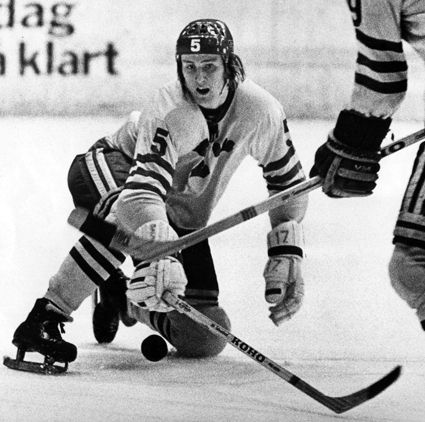
Born in 1951, Salming began his career with three seasons with Kiruna AIF in the Swedish second division beginning with the 1967-68 season. While with Kiruna, Salming played for Sweden during both the 1968 and 1969 European Junior Championships.
Salming Sweden photo Salming Sweden young.jpg
A young Salming wearing the three crowns for Sweden

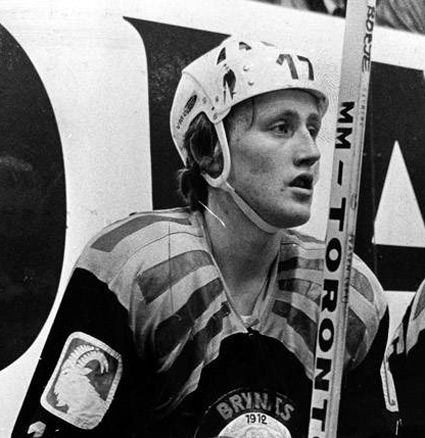
He joined Brynäs IF in Division 1 for three seasons beginning in 1970-71 and found immediate success with championships in both 1971 and 1972. During this phase of his career he made his senior level debut for Sweden at the 1972 World Championships, earning a bronze medal. He returned to the squad in 1973 where his offensive game exploded with 4 goals and 6 assists for 10 points in 10 games from the blueline as Sweden came through with silver medals.
Salming Brynas photo Salming Brynas 1.jpg
Salming while with Brynas in Division 1

Salming's eyes were opened when he was chosen to play for Sweden in a pair of exhibition games against Team Canada, who were on their way to play the second half of the 1972 Summit Series in Moscow. The Canadians played a much rougher style of hockey, with more body checking and stickwork, but Salming realized he could compete with the NHL's best.

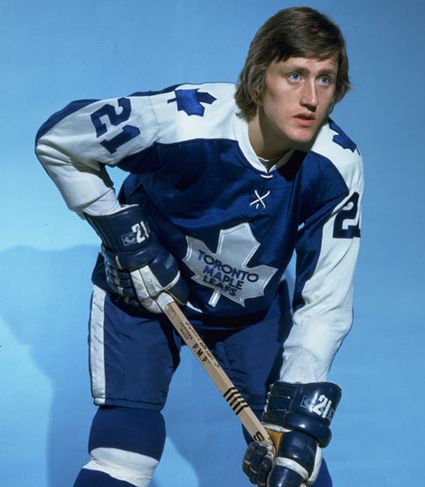
During this time period, the world of professional hockey in North America underwent an unprecedented expansion with the arrival of the World Hockey Association in 1972, which began with a dozen new teams all needing to fill their rosters while the NHL countered with adding the New York Islanders and Atlanta Flames to attempt to secure strategic territories before the WHA could arrive. With so many players needed to fill the roughly 280 roster spots, teams began to look beyond the borders of Canada and the United States, and the Toronto Maple Leafs turned an eye toward Sweden, with an eye on left winger Inge Hammarstrom. Salming stood out to the Toronto scouts and he too, was signed as a free agent by the Maple Leafs to make his NHL debut with the 1973-74 season.
Salming Maple Leafs photo Salming Maple Leafs 1.jpg
Salming was now a European trailblazer with the NHL's Maple Leafs

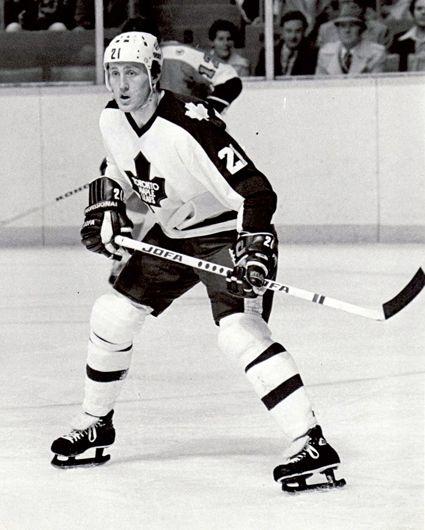
His first game came on October 10, 1973, a 7-4 victory over the Buffalo Sabres after which Salming was named the game's number one star. With minimal offensive numbers on his resume from Sweden, the rookie impressed with 34 assists on his way to a 39 point season as he unleashed his  powerful wrist shot and accurate passes upon the NHL while enduring taunts of "Chicken Swede" and a barrage of physical abuse aimed at intimidating him all the way back to Sweden.

Two seasons later in 1975-76, he elevated his game to 16 goals and 41 assists for 57 points, all while playing his customary stout defense as he changed the accepted preconceived stereotype of European players being "soft" and easy to intimidate.
Salming Maple Leafs photo Salming Maple Leafs 5.jpg

Prior to the start of the 1976-77 season, Salming returned to the Sweden National Team when he was a member of their roster during the inaugural 1976 Canada Cup tournament where he scored 4 goals and 7 points in 5 games.
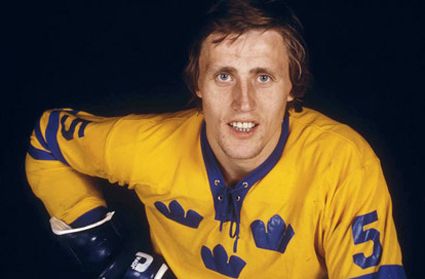
Salming Sweden photo Salming Sweden.jpg

Beginning with the 1976-77 season when he set career highs with 66 assists and 78 points, Salming reeled off four consecutive 70 point seasons, including finishing second on the team in points with 71 in 1979-80.

In 1980-81, Salming reached 60 assists for the third and final time of his career with 61. The Maple Leafs also qualified for the playoffs for the eight straight time in Salming's eight seasons in Toronto.
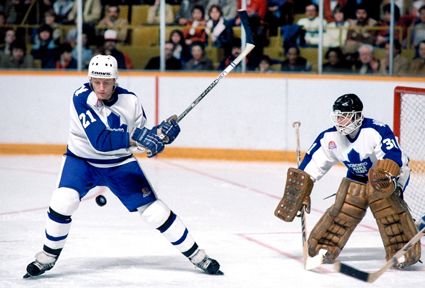
Salming Maple Leafs photo Salming Maple Leafs 2.jpg

Later that fall Salming again donned the Tre Kroner jersey of Sweden for the 1981 Canada Cup.

As his point totals began to decrease starting in 1980-81, his penalty minutes began to rise, starting with his first season over 100 with 154, followed by 170 in 1981-82 and topping out at 192 in 1983-84, his fourth of five seasons over 100, and the only five over 100 of his career.
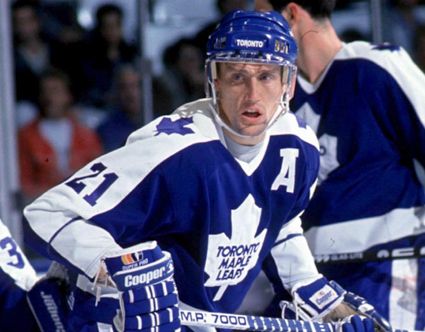
Salming Maple Leafs photo Salming Maple Leafs 3.jpg

A gruesome injury in the 1985-86 season saw him receive over 200 stitches in his face after being cut by a skate after being knocked to the ice. Despite the horrific nature of the injury, Salming was back on the ice three days later. He was limited to just 41 games that season, after his durability saw him never play less than 68 over the previous ten seasons, but returned in time to play 10 playoff games as Toronto returned to the postseason.
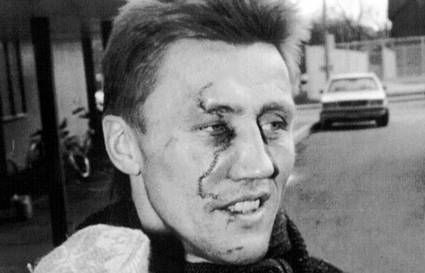
Salming stitches photo Salming stitches.jpg
Salming was back on the ice three days after thankfully
not injuring his eye when his face was sliced by a skate

Salming would play three more seasons for Toronto, but never more than 66 games as time began to catch up to the rugged Swede. After his final of 16 seasons with the Maple Leafs, Salming would play in his first World Championships in 16 years for the 1989 edition.
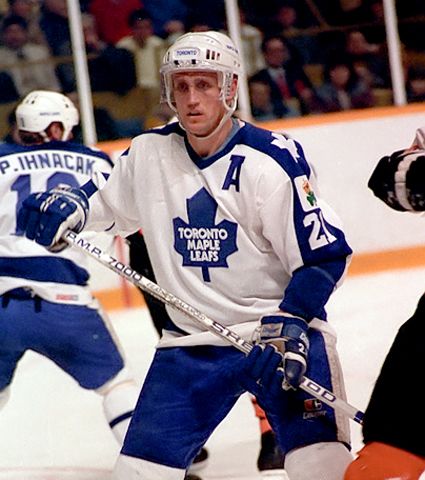
Salming Maple Leafs photo Salming Maple Leafs 
4.jpg

Not ready to hang up his skates, Salming signed with the Detroit Red Wings for the 1989-90 season where he played the final 49 games of his NHL career.
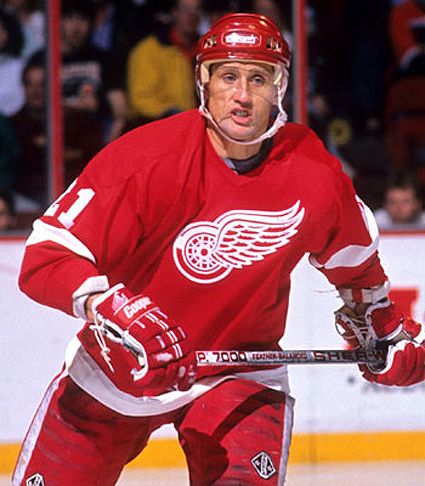
Salming Red Wings photo Salming Red WIngs.jpg
Salming in his final NHL days in Detroit

Salming returned to Sweden and joined AIK IF of the Elitserien for the 1990-91 season, scoring 13 points in the shorter 36 game schedule.
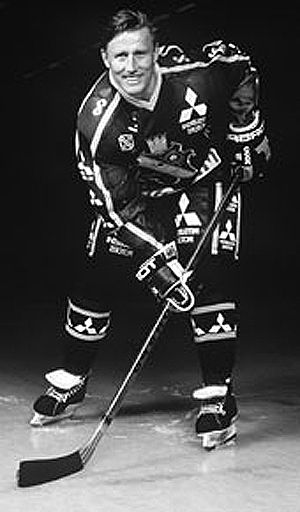
Salming AIK photo Salming AIK.jpg
Salming returned to play three final seasons in Sweden

Salming had an emotional return to Toronto in the fall of 1991 when he received a standing ovation from his fans when Sweden competed there in the Canada Cup, Salming's third. "I'll never forget our game in Toronto. The fans gave me a standing ovation during the introductions. I was representing my country and Canadian fans gave me a standing ovation. Sometimes hockey has no country," a touched Salming recalled.
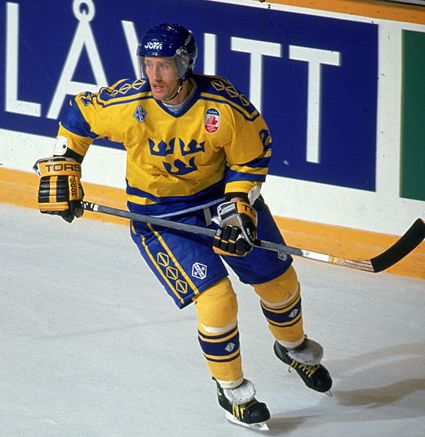
Salming Sweden 1991 photo Salming Sweden 1991.jpg
Salming  made an emotional return to Toronto during the 1991 Canada Cup

During the 1991-92 AIF season Salming played in his final international tournament when he finally played in his first Olympics in Albertville, France where he went out in fine style with 4 goals and 7 points in eight games.

His playing career concluded with 6 games with AIK during the 1992-93 season, his 26th.

Salming's final NHL totals were 150 goals and 637 assists for 787 points in 1,148 games played, with his 1,099 third all-time for Toronto. He holds Maple Leafs records for Most Career Points by a Defenseman (768), Most Career Goals by a Defenseman (148), Most Career Assists (620), Most Assists in a Season by a Defenseman (66) and Best Career Plus/Minus (+155).

He was voted the winner of the Viking Award as the best Swede in the NHL in 1976, 1977 and 1979, was named to the Canada Cup All-Star Team in 1976, played in the NHL All-Star Game in 1976, 1977 and 1978 and played for the NHL All-Stars in the 1979 Challenge Cup against the Soviet Union.
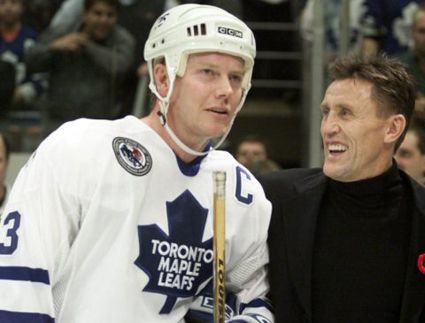
Sundin Salming photo Sundin Salming.jpg
Salming is credited with opening the door for many Swedes,
including future Maple Leafs captain Mats Sundin

He became the first Swede inducted into the Hockey Hall of Fame in 1996, was named to the IIHF Hall of Fame in 1998, had his #21 honored by the Maple Leafs and was named to the IIHF Centennial All-Star Team in 2008.

Salming honored photo Salming honored.jpg
Salming received many honors following his stellar career

Salming Tux photo Salming Tux.jpg

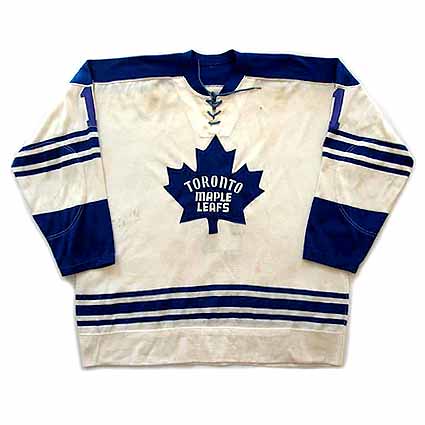
Today's featured jersey is a 1973-74 Toronto Maple Leafs Börje Salming jersey as worn during his trailblazing rookie season in the NHL. For the new decade, the Maple Leafs introduced a new, modernized jersey for the 1970-71 season, complete with a new logo. The club waffled back and forth between a lace up collar the first two seasons, changed to a v-neck in 1972-73 and back to the lace up collar again in 1973-74 and 1974-75 before a return to the v-neck from 1975-76 onwards.

Against the wishes of owner Harold Ballard, names on the back became visible and permanent in 1978-79 after which the jerseys remained unchanged through 1991-92, a run of 22 seasons for this style.
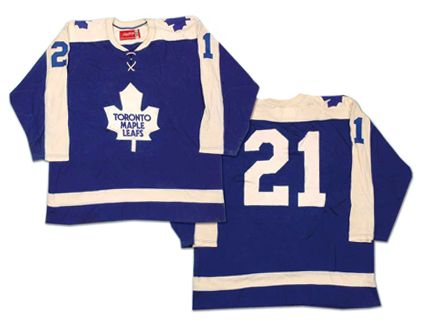
Toronto Maple Leafs 1973-74 jersey photo Toronto Maple Leafs 1973-74 jersey.jpg
photo courtesy of Classic Auctions

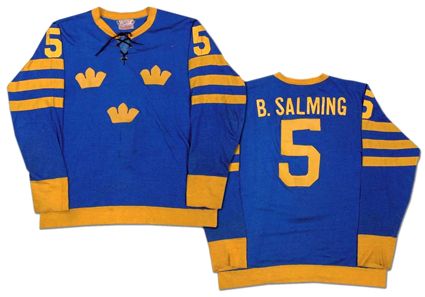
Bonus jersey: Today's bonus jersey is a 1976 Sweden National Team Börje Salming jersey as worn during the inaugural 1976 Canada Cup tournament, one of three Canada Cups and nine international tournaments Salming competed in for Sweden.

Sweden 1976 jersey photo Sweden 1976 jersey.jpg
photo courtesy of Classic Auctions

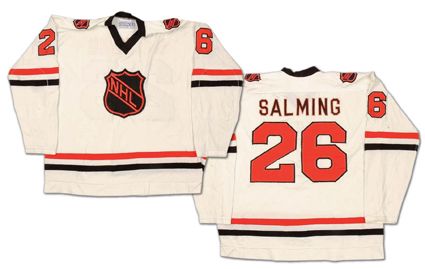
Extra bonus jersey: Today's extra bonus jersey is a 1979 NHL All-Star Börje Salming jersey as worn during the 1979 Challenge Cup. For the 1979-80 season, the league did not hold a traditional interleague Campbell vs. Wales all-star game. Instead, a team of NHL All-Stars would take on the Soviet Union in a three game series at New York's Madison Square Garden.

Proving Salming's standing in the league, he was selected as a member of the  NHL team, which was comprised of 23 Canadians and three Swedes, with the other two being forwards Ulf Nilsson and Anders Hedberg, for a total of just 26 of the league's most elite players rather than two full squads required to stock the rosters of a traditional two team All-Star Game.

The jersey itself is an extremely simple affair with thin, dual stripes of orange and black adorned with the NHL shield on the chest and shoulders, making them more plain than the ones worn by the Soviets!

photo NHL All-Star 1979 jersey.jpeg
photo courtesy of Classic Auctions

Today's video section begins with a well done profile of Salming.


This next video contains more game action and was from his introduction into the Hockey Hall of Fame.


Tuesday, December 19, 2017

The 100th Anniversary of the NHL

It was on this date one hundred years ago in 1917 that the first games of the National Hockey League were played. The league was formed for one basic reason - for the owners to rid themselves of fellow team owner Eddie Livingstone!

Livingstone was the owner of the Toronto Shamrocks of the National Hockey Association (NHA) and had a contentious relationship with his fellow owners, primarily Sam Lichtenhein of the Montreal Wanderers, with whom he often butted heads with. At one point, Lichtenhein even offered Livingstone $3,000 to abandon his team and walk away, but the cheeky Livingstone countered with a $5,000 offer for Lichtenhein to do the same!

Prior to the 1915-16 season, Livingstone purchased the Toronto Blueshirts, giving him both Toronto NHA franchises - and an unwelcome two votes in league matters. When Frank Patrick and Lester Patrick, owners of the Pacific Coast Hockey League (PCHA) Seattle Metropolitans raided the Blueshirts roster, Livingstone transferred Shamrocks players to the Blueshirts. The league seized the Shamrocks franchise from Livingstone, as had been demanded by the league only a week earlier, not wanting one owner with whom they did not get along with having two votes, when there was now nothing left for Livingstone to sell since the club had no players. It also angered the other owners that they were now a five team league, forcing one club to be idle each week and that road trips to Toronto would be for one game instead of the more economical two, as in the past.

In 1916-17, the 228th Battalion of the Canadian Army formed a team in the six team NHA, taking the place of the Shamrocks. Unfortunately, the 228th received their orders to head overseas to join the fighting in World War I and had to withdraw from the league during the season. This gave the other four owners of the Montreal Canadiens, Montreal Wanderers, Quebec Bulldogs and Ottawa Senators the opening they needed, and they held a meeting without Livingstone and voted to suspend his remaining Blueshirts franchise with the excuse of wanting to keep the league with an even number of teams.

 photo 1917-18 228th Battalion Team.jpg
A rare shot of the 228th Battalion Hockey Team

Livingstone field suit against the league as a result. The Blueshirts home rink, the Arena Gardens were then given three weeks to separate itself from Livingstone by the NHA or the other owners would operate without a club in Toronto and thus the arena would lose its tenant. The feisty Livingstone of course refused to sell his club, and therefore, at their annual meeting in November, the NHA announced it was suspending league operations due to the difficulty of running a five team league and also blaming player shortages due to World War I.

 photo Mutual_Street_Arena_interior.jpg
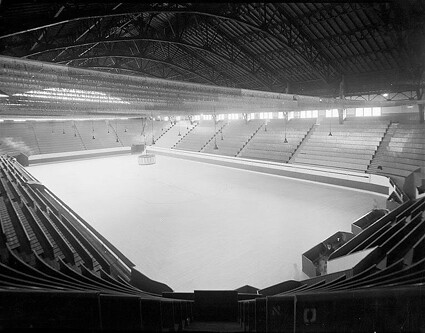
The Blueshirts home rink, the Arena Gardens

A week later, all of the owners, minus Livingstone naturally, announced they had formed a brand new league, the National Hockey League (NHL), which consisted of the Montreal Canadiens, the Montreal Wanderers, the Ottawa Senators and the Quebec Bulldogs. The new league also claimed to have retained the contracts of the suspended Toronto Blueshirts players!

With the Quebec Bulldogs suspending operations due to financial difficulties before the new NHL could even begin the 1917-18 season, the Arena Gardens were awarded a temporary NHL franchise, managed by Charlie Querrie, making the fledgling NHL a four team league once again. The league also assigned the Blueshirts players on a lease basis to the temporary Toronto franchise. To further complicate matters, many of the players had signed contracts with both Livingstone and the Arena.

The season, and the league, would kick off on this date in 1917 when Toronto lost to the host Montreal Wanderers in front of 700 fans by a score of 10-9. The Wanderers Dave Ritchie scored the first goal in NHL history, while Harry Hyland had four goals to record the league's first hat trick in short order. In the day's other game,  the Ottawa Senators lost to the Montreal Canadiens 7-4 in Ottawa.

The Canadiens would win the first half of the season to earn a spot in the postseason championship playoff, while the Wanderers opening night win would be their only one in the NHL, as they would cease operations following the fire that burned down their home, the Montreal Arena, on January 2nd after just six games of their schedule and the Wanderers at a dismal 1-5 record.

Team owner Lichtenhein had already made a request from the other clubs to loan the Wanderers better players to field a more competitive team in hopes of attracting more fans, but when the plan was rejected by his fellow owners following the fire, and with his club dealing with the loss of their home arena, Lichtenhein disbanded the club on January 4, ending the Wanderers fourteen year history.

Montreal Arena fire, Montreal Arena fire

The aftermath of the Montreal Arena fire

The Toronto club had no official nickname, but the "Blueshirts" were successful on the ice, winning the second half of the season schedule and earned the right to play Montreal for the championship. Toronto was led by Reg Noble, who scored 30 goals and 10 assists in 20 games for 40 points, third overall in the league behind the prolific Joe Malone of the Canadiens who scored a spectacular 44 goals in just 20 games as part of his league leading point total. Corbett Denneny and Harry Cameron also were standouts for Toronto, with 29 and 27 points respectively, for fifth and sixth in league scoring. Toronto's Harry "Hap" Holmes came in second to Georges Vezina of Montreal in the goaltending department with a goals against average of 4.80 in 16 games.

Toronto defeated the Canadiens for the league championship in a two games, total goals series 10-7, capturing the O'Brien Cup. Toronto then faced off against the Vancouver Millionaires of the PCHA and won the Stanley Cup by 3 games to 2, causing Livingstone to again head to court to file suit for the revenue earned by "his" championship squad of players.


As a result of this lawsuit, the Arena Gardens formed a new company, the Toronto Arena Hockey Club Company, to own and run a hockey team separate from the Arena Gardens business in order to protect the Arena business from Livingstone's lawsuits. The NHL then awarded a "new" franchise to the Hockey Club Company. This club was officially named the Toronto Arenas and, not surprisingly, was stocked with the same players from the 1918 championship club. When his players were once again not returned to him for the 1918-19 season, Livingstone sued the Arena Gardens.

Once again, the players were uncertain who would prevail in the courts and covered their bases by signing contracts with both the Toronto Arena Hockey Club Company and Livingstone.

Livingstone did prevail in the courts sometimes, but not always. Two rulings in his favor of $20,000 and later $100,000 sent the Arena Gardens into bankruptcy. Despite the company's legal wranglings at the time, the arena would continue to operate for 77 years until closing in 1989.

When the Toronto Arenas did take to the ice in the 1918-19 season as Stanley Cup Champions, they did not play like it. Forced to sell most of their star players due to mounting legal bills, the Arenas record for the season was 5 wins and 13 losses, attendance was low and several players left the team. Finally, the team wrote to the league requesting that the season be ended when each of the three clubs had reached 18 games played and then officially withdrew from the league. This left only the Canadiens and Senators to play for the championship of the NHL and the right to meet the Pacific Coast Hockey Association champions for the Stanley Cup, which Montreal won 4 games to 1.

Meanwhile, Livingstone was busy was attempting to overthrow the NHA management, purchased the dormant Quebec Bulldogs franchise, and began an unsuccessful attempt to start a rival league, the Canadian Hockey Association and threatened to file an injunction to stop the NHL from operating. He also made unsuccessful attempts to start new leagues in 1920, 1924 and 1926, none of which ever played a single game.
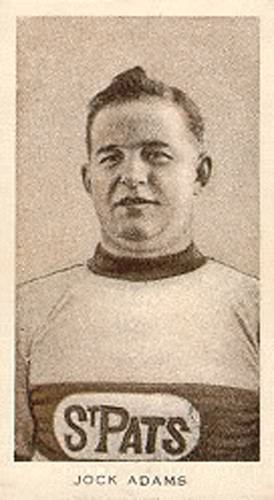
Finally, the Toronto Arenas franchise was sold to the St. Patricks Hockey Club of Toronto, who ran the successful senior amateur St. Patricks team in the Ontario Hockey League, which included Arenas team manager Querrie in the four-man ownership group, in December of 1919.

The new owners renamed the club the Toronto St. Patricks and the $5,000 sale price was supposed to go to Livingstone to settle the purchase of his NHA club, for which he had once demanded $20,000 for after they had won the 1918 Stanley Cup. However, Livingstone never received the money, which many believe was kept by NHL president Frank Calder.

The Toronto St. Patricks were members of the NHL through the 1926-27 season, when Querrie, having been sued by none other than Livingstone, was forced to sell the St. Patricks. He reached an agreement to sell the club to Conn Smythe, who renamed the club the Toronto Maple Leafs and constructed Maple Leaf Gardens in 1931.

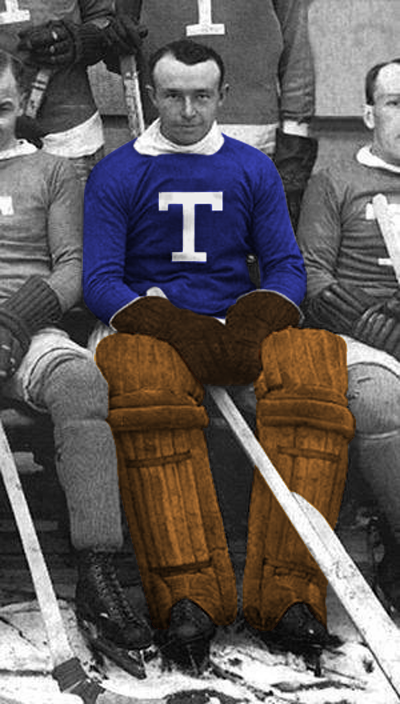
Today's featured jersey is a 1917-18 Toronto Blueshirts Hap Holmes jersey as worn during the inaugural season of the National Hockey League. Their jerseys would change for the second NHL season with the addition of white stripes around the arms and the word "Arenas" across the front, bisected by the large T crest from the previous season.

Holmes would win the Stanley Cup four different times, and with four different teams. He first joined Eddie Livingstone's Toronto Blueshirts of the NHA in 1912, winning the cup with them in 1914. He joined the Seattle Metropolitans of the PCHA in 1915 and won the cup with Seattle in 1917.

In his only season with the Toronto Blueshirts, he would win his third Stanley Cup before returning to Seattle the following season. After the Metropolitans folded four seasons later, Holmes would join the WCHL's Victoria Cougars in 1924 and go on to win his fourth Stanley Cup, the last cup won by a non-NHL team. After one more season in Victoria, the entire WCHL folded and the Victoria Cougars players were sold to the new Detroit NHL franchise, which took the name the Cougars as a tribute to the Victoria club before eventually becoming the Red Wings. Holmes would play his final two seasons in Detroit and conclude his career with 408 games played, 198 wins, 40 of which were shutouts, 192 losses and 14 ties.

Holmes was inducted into the Hockey Hall of Fame in 1972 and the American Hockey League award for the top goaltender each season is named the Hap Holmes Memorial Award.

Monday, May 15, 2017

1946-47 Toronto Maple Leafs Turk Broda Jersey

Born on this date in 1914 in Brandon, Manitoba, goaltender Walter "Turk" Broda played his junior hockey in his hometown with the Brandon Athletics in the 1931-32 season and the Brandon Native Sons in 1932-33, winning the Turnbull Cup  as MJHL champions, followed by the Memorial Cup as junior champions of Canada.

In 1933-34, he joined the Winnipeg Monarchs, who were terribly overmatched, scoring just 27 goals in a 14 game schedule, 13 less than the next worst team and 50 less than the first place Kenora Thistles. Despite having the future NHL star Broda in goal, the Monarchs still completed the season with the second worst defense in the MJHL, giving up an average of 4 goals per game, while scoring just under 2. All of this left Broda with a dismal  1-11 record and a 4.25 goals against average, giving little insight into the professional career that was to follow! Even worse, Broda played one game with the Monarchs senior level team, taking the loss after giving up 6 goals.

The 1934-35 statistics only showing Broda playing in 2 games for the Detroit Farm Crest team, which was sponsored by the Farm Crest Bakery of Detroit, winning one and losing one with a 2.00 goals against.

His career took a giant step forward during the 1935-36 season when Broda played in 47 games for the Detroit Olympics of the International Hockey League, winning 26 while losing 18 and tying 3 with 6 shutouts and a 2.10 GAA. In the postseason, Detroit eliminated the other division winner, the Syracuse Stars and then defeated the Windsor Bulldogs in a pair of three game sweeps to capture the championship after Broda allowed just 8 goals in their 6 consecutive victories.

While playing for the Olympics, Broda was spotted by the owner of the Toronto Maple Leafs, Conn Smythe, who was in Detroit scouting a different goaltender. When Broda caught his attention, he contacted Jack Adams of the Detroit Red Wings about acquiring the young goaltender, which he did for the sum of $7,500.

 photo Broda Conn Smythe.jpg
Broda later in his career enjoying a moment with Maple Leafs owner Smythe

Broda then made his NHL debut in the 1936-37 season and became an instant hit with the Maple Leafs fans due to his outgoing personality. In his first season, he played in 45 games, winning 22 as Toronto qualified for the playoffs.

 photo Broda Maple Leafs 4.jpg
Fan favorite Broda

He would win 24 games in 1937-38 with a 2.56 GAA. While his win total would drop to 19 in 1938-39, his 9 ties and lower 2.15 GAA were enough to allow the Maple Leafs to finish 3rd in the league. In the playoffs, Toronto eliminated the New York Americans 2 games to none and then dispatched the Red Wings 2 games to 1 to qualify for the Stanley Cup Finals, but fell to the Boston Bruins in five.

In 1939-40, he set a new career best with 25 wins and a 2.23 GAA as the Maple Leafs again returned to the Finals after defeating the Chicago Black Hawks and the Red Wings in a pair of 2 game sweeps before falling to the New York Rangers in six.

It all came right for Broda in 1940-41, as he led the league in wins with 28 and won the Vezina Trophy as the Maple Leafs allowed a league low 99 goals against, the only team under 100 for the season.

 photo Broda 1941 Vezina Trophy.jpg
Broda with the Vezina Trophy in 1941

in 1941-42, Broda was second in the NHL in wins with 27, but more importantly, the second overall Maple Leafs defeated the first place Rangers in six games to advance to the Finals where they met Detroit. The Red Wings won Games 1 and 2 in Toronto 3-2 and 4-2 before putting a stranglehold on the Stanley Cup with a 5-2 win back at home in Game 3.

With Toronto down 2-0 half way through the game, the Maple Leafs fought back and won the game with a goal with seven minutes to play to stay alive for Game 5 where Toronto roared back into contention with a dominating 9-3 win to close the gap to 3 games to 2.

Game 6 in Detroit saw Broda make a Johnny Mowers goal stand up for a 1-0 Maple Leafs victory to tie the series and force an improbable Game 7 back at Maple Leaf Gardens.

A Canadian record 16,218 fans packed the Gardens, the first time a crowd of over 16,000 had ever been reached. Detroit killed off a two man disadvantage in the scoreless first period. Syd Howe got the only goal of the second period for the visiting Red Wings but Sweeney Schriner evened the score after a goal mouth scramble to get Toronto on the scoreboard. Two minutes later, Pete Langelle gave the Maple Leafs their first lead at 2-1. Schriner scored the third goal of the period for Toronto at 16:13 to close out the scoring and completed the incredible four game comeback, something which had never happened before in the 25 years of the NHL.

 photo 1941-42 Toronto Maple Leafs team.jpg
The Stanley Cup champion 1941-42 Toronto Maple Leafs

Broda would play one more season for the Maple Leafs, winning 22 games and finishing with the second best GAA in the NHL at 3.18 for the 1942-43 season until he enlisted in the Canadian Army, spending the next three years away from hockey.

When he was discharged during the 1945-46 season, he rejoined the Maple Leafs and was able to play in 15 of the club's 50 games.

 photo Broda Maple Leafs 5.jpg
Turk Broda

Broda took back his familiar role of Toronto's top goaltender for the 1946-47 season, aided in part by the retirement of his wartime substitute Frank McCool due to issues with stomach ulcers. Back in the saddle, Broda set a new career high with 31 wins after playing in all 60 games for the Maple Leafs in the newly expanded schedule.

During the playoffs, the Red Wings were dispatched in five games before the Maple Leafs won the second Stanley Cup of Broda's career when they defeated the Montreal Canadiens in six games after he only allowed 7 goals over the final five games of the series.

 photo Broda 1947 Stanley Cup.jpg
Broda with the "stovepipe" Stanley Cup in 1947

Broda set a career high with 32 wins in 1947-48 and won his second Vezina Trophy with a 2.38 goals against before Toronto won their second consecutive Stanley Cup by beating the Bruins in five before sweeping Detroit in four straight, with Broda getting a shutout in Game 3.

 photo Broda 1948 Stanley Cup Vezina Trophy.jpg
Broda with the newly redesigned Stanley Cup and the Vezina Trophy in 1948

For the 1949-50 season, Toronto sank down to the fourth and final playoff spot with a 22-25-13 record. Broda and the Maple Leafs rose to the challenge and defeated the Bruins in five. They then repeated their sweep of the Red Wings from the season before to win Toronto's third consecutive Stanley Cup and Broda's fourth.

 photo Broda Maple Leafs 3.jpg
No profile of Broda is complete without this shot of him eating pancakes in his crease following the concerns about his weight turning into a publicity boon for the Maple Leafs

For the 1950-51 season, Broda shared the goaltending duties with Al Rollins, who played in 40 games. Broda would play in 31 games, going 14-11-5, which included winning his 300th on December 20, 1950, making him the first goaltender in NHL history to ever win 300 games in a career.

When it came to the playoffs, Broda ended up seeing action in 8 of the Maple Leafs 10 games. After losing Game 1 of the Semifinals and tying Game 2, Toronto won the next four in a row to send the Bruins packing. The Stanley Cup Finals were a wild affair, as the Maple Leafs and Canadiens played five consecutive overtime games, with Toronto capturing the fifth Stanley Cup of Broda's career as the Maple Leafs prevailed 4 games to 1, winning the final game on Bill Barilko's famous diving goal, his last before vanishing on a fishing trip that summer.

 photo Broda 51-52 Parkie.jpg
A 1951-52 Turk Broda "Parkie" hockey card

Broda would retire after playing just one game of the 1951-52 season at the age of 37, the oldest player in the league at the time.
Broda would finish with 629 games played with a 302-224-101 record with a career 2.53 goals against average and 62 shutouts. His career playoff record was 60-39 with a 1.98 GAA.

He was the first goaltender to ever win 300 games in a career and would win five Stanley Cups, 2 Vezina Trophies and had his #1 honored by the Maple Leafs and was inducted into the Hockey Hall of Fame in 1967.

 photo Broda Maple Leafs 1.jpg
Note this shot of Broda wearing the captain's "C"!

Following his playing days, he went into coaching, primarily with the Toronto Marlboros of the Ontario Hockey Association from 1954-55 to 1962-63, which included winning Memorial Cups in 1955 and 1956.

Today's featured jersey is a 1946-47 Toronto Maple Leafs Turk Broda jersey. The Maple Leafs redesigned their logo for the 1938-39 season and wore the same style of jersey all the way through the 1957-58 season until adding a lace-up collar for the 1958-59 season save for the 1945-46 to 1947-48 seasons when the lettering on their leaf logo changed from blue to red for those three seasons, which included a pair of Stanley Cups in 1947 and 1948.

 photo Toronto Maple Leafs 1946-47 jersey.jpg

In today's video section, a profile of Broda's career from the Maple Leafs on the occasion of his inclusion in Toronto's Legends Row.

Tuesday, May 2, 2017

The Original 6 Era Comes to a Close - 1966-67 Toronto Maple Leafs Dave Keon Jersey

On this date in 1967, the Toronto Maple Leafs defeated the Montreal Canadiens 3-1 to win the Stanley Cup in six games, bringing an end to The Original 6 Era.

The NHL began in 1917 with four member clubs, the Montreal Canadiens, Montreal Wanderers, Toronto Hockey Club and Ottawa Senators. The Wanderers would only last six games before a fire burned down the Montreal Arena, an event which would cause the financially struggling club to call it quits.

Montreal Arena fire
The 1918 Montreal Arena fire

The Toronto franchise would be renamed the Arenas for 1918-19 and the St. Patricks in 1919-20, a season which would see the league expand to four clubs once again with the revival of the Quebec Bulldogs. That revival would last but one season before the club was relocated and became the Hamilton Tigers for the 1920-21 season.

 photo 1921-22StPatricks.jpg
The Stanley Cup champion 1921-22 Toronto St. Patricks

The NHL would expand for the 1924-25 season to six clubs with the addition of the Montreal Maroons and the first club based in the United States, the Boston Bruins. If one were prone to split hairs, these six teams, the Bruins, Tigers, Canadiens, Maroons, Senators and St. Pats could be considered the true "Original 6".

The Hamilton franchise was dropped for 1925-26 and it's players transferred to a new club, the New York Americans. Additionally, a new franchise was granted to Pittsburgh, which was named the Pirates, bringing the league up to seven teams.

The following season was again one of change and expansion. A change in ownership in Toronto saw the St. Pats renamed the Maple Leafs mid-season and the Chicago Black Hawks arrived on the scene, along with the Detroit Cougars following the demise of the Western Hockey League. Those two clubs were stocked with the players from the Portland Rosebuds and Victoria Cougars. The New York Rangers, who would share Madison Square Garden with the Americans, were granted an expansion franchise as well. This brought the league now up to a full ten teams.
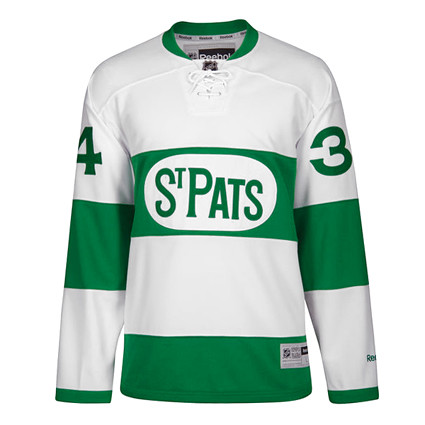
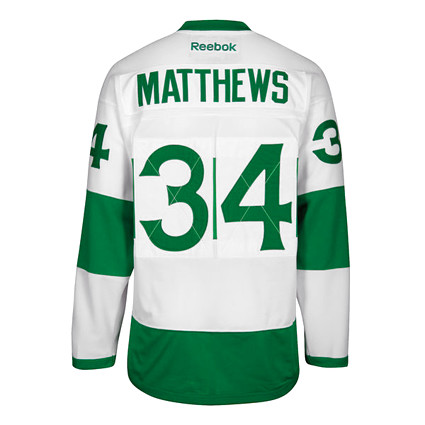
 photo 1927-28TorontoMapleLeafsteam.jpg
The newly renamed 1927-28 Toronto Maple Leafs

In 1930-31, the Pirates relocated to Philadelphia and became the Quakers, who would last just one season before folding, leaving the NHL with 9 teams. This scenario would be repeated in 1934-35 when the once powerful Ottawa Senators would relocate and become the St. Louis Eagles, who would also fold after a single season, bringing the number of clubs down to 8.

Also in 1930-31 the Cougars would change their name to the Falcons for two seasons before adopting the name Red Wings in 1933-34.

At the end of the 1937-38 season, the Montreal Maroons would drop by the wayside, lowering the number of clubs down to 7, the lowest number since 1926. Those seven clubs would carry on through the 1941-42 season, when the New York Americans, despite still playing in Manhattan, changed their name to the Brooklyn Americans in an attempt to win more fans. When that failed to work, the Americans ceased operations, a move which officially began the "Original 6" era in 1942-43.

Those six clubs, the Bruins, Black Hawks, Red Wings, Canadiens, Rangers and Maple Leafs would continue on unchanged through the 1966-67 season, 25 seasons in all.

During the Original 6 era, Detroit won the Stanley Cup five times, Montreal ten times, including five in a row from 1956 to 1960, Toronto nine times and Chicago once while the Rangers failed to win the cup despite the one in six odds.

1944-45 Toronto Maple Leafs team photo 1944-45TorontoMapleLeafsteam.jpg
The 1945 Toronto Maple Leafs with the "stovepipe" Stanley Cup

In 1966-67, the Black Hawks finished first with 94 points, easily distancing themselves from Montreal at 77, Toronto with 75 and the final playoff qualifier New York at 72. As was the practice back then, Chicago did not draw the fourth place Rangers, but the third placed Maple Leafs, who upset the Black Hawks 4 games to 2 with all four of their wins by two goals. Montreal advanced to the finals by sweeping the Rangers in four straight.

Montreal looked to have the upper hand after winning Game 1 at home easily by a score of 6-2, but Toronto immediately responded with a 3-0 shutout behind Johnny Bower in goal. A thrilling Game 3 in Toronto saw the Maple Leafs win 3-2 in overtime. Before Toronto could exploit their home advantage Montreal took their turn winning one on the road, again by a dominating 6-2 score.

Back in Montreal, Toronto disappointed the home fans by putting Montreal on the brink with an easy 4-1 with Terry Sawchuk in goal, who took over for Game 4 when Bower was knocked out of the series with an injury.

When Game 6 in Toronto went the way of the Maple Leafs 3-1, the Maple Leafs hoisted the Stanley Cup and the Original 6 era came to an end as the league would expand by no less than six teams for the 1967-68 season, with clubs in Los Angeles, Oakland, St. Louis, Minnesota, Philadelphia and a return to Pittsburgh.

1966-67 Toronto Maple Leafs
The 1966-67 Stanley Cup Champion Toronto Maple Leafs

Today's featured jersey is a 1966-67 Toronto Maple Leafs Dave Keon jersey. Keon led the Maple Leafs in scoring that season and was also named the winner of the Conn Smythe Trophy following their Stanley Cup victory.

This jersey style was introduced during the 1966-67 season in time for the Maple Leafs run to the Stanley Cup bearing a maple leaf which closely resembled that of the new Canadian flag introduced in 1965. This jersey would have a relatively brief lifespan, lasting through just the 1969-70 season but was revived by the Maple Leafs in 2011-12 as their new alternate jersey.

Keon played 15 seasons for the Maple Leafs, winning four Stanley Cups. He was inducted into the Hockey Hall of Fame in 1986 and in 2016 was named as the greatest Toronto Maple Leaf in team history.

Toronto Maple Leafs 66-67 jersey
photo courtesy of Classic Auctions

Bonus jersey: Today's bonus jersey is a 1966-67 Toronto Maple Leafs Johnny Bower jersey. This white jersey was worn for the Maple Leafs home games at Maple Leaf Gardens. Bower played 12 seasons for the Maple Leafs, winning four Stanley Cups. He was inducted into the Hockey Hall of Fame in 1976.

Toronto Maple Leafs 1966-67 F H jersey
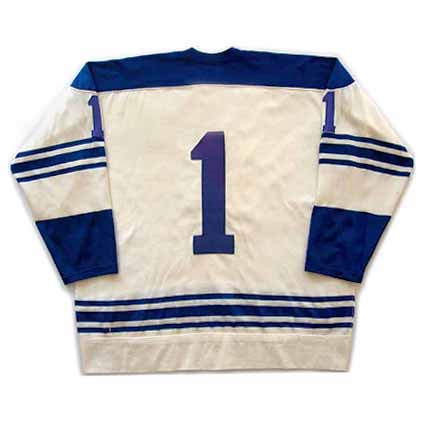
Toronto Maple Leafs 1966-67 B H jersey


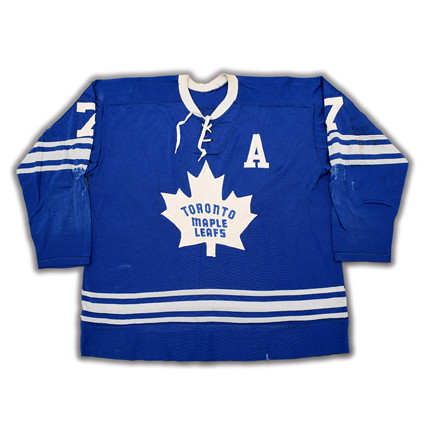
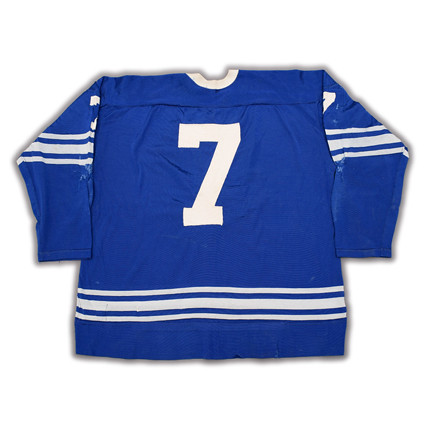
Extra bonus jersey: Today's extra bonus jersey is a 1966-67 Toronto Maple Leafs Tim Horton jersey. Horton played 20 seasons for the Maple Leafs, winning four Stanley Cups. He was inducted into the Hockey Hall of Fame in 1977.

Toronto Maple Leafs 1966-67 F jersey
Toronto Maple Leafs 1966-67 B jersey
photos courtesy of Classic Auctions

Today's video selection is game footage of the Maple Leafs capturing the 1967 Stanley Cup, the final one of the Original 6 era.


Since 1967, the Maple Leafs have yet to win another cup, angering even their most ardent supporters.

Thursday, March 30, 2017

Toronto's First Stanley Cup - 1917-18 Toronto Blueshirts Hap Holmes Jersey

Eddie Livingstone was the owner of the Toronto Shamrocks of the National Hockey Association (NHA). He had a contentious relationship with his fellow owners, primarily Sam Lichtenhein of the Montreal Wanderers, and the two often butted heads. At one point, Lichtenhein even offered Livingstone $3,000 to abandon his team and walk away, but the cheeky Livingstone countered with a $5,000 offer for Lichtenhein to do the same!

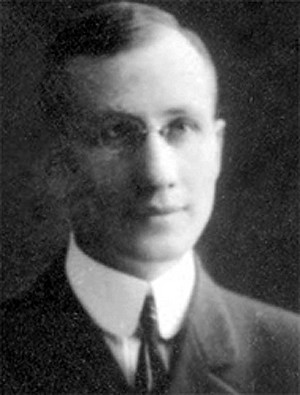
Eddie Livingstone
Toronto Shamrocks owner Eddie Livingstone

Prior to the 1915-16 season, Livingstone purchased the Toronto Blueshirts, giving him both Toronto NHA franchises - and an unwelcome two votes in league matters, which was a decided advantage when you consider the NHA consisted of just six clubs.

When Frank Patrick and Lester Patrick, owners of the Pacific Coast Hockey League (PCHA) Seattle Metropolitans raided the Blueshirts roster and signed away its players, Livingstone transferred the Shamrocks roster to the Blueshirts. The league seized the Shamrocks franchise from Livingstone a week after they demanded he sell the franchise, primarily because the other NHA owners did not want one owner, particularly one they did not get along with, having two votes. Livingstone was unable to comply with the demand he sell the Shamrocks because there was now nothing left to sell, since the club had no players.

It also angered the other owners that they were now a five team league due to Livingstone being unable to retain the Blueshirts roster and operate two clubs, not only forcing one club to be idle each week, but also meaning that road trips to Toronto would be for one game instead of the more economical two, as in the past.

In 1916-17, the 228th Battalion of the Canadian Army formed a team in the six team NHA, taking the place of the Shamrocks. Unfortunately, the 228th received their orders to head overseas to join the fighting in World War I and had to withdraw from the league during the season. This gave the other four owners of the Montreal Canadiens, Montreal Wanderers, Quebec Bulldogs and Ottawa Senators the opening they needed, and they held a meeting without Livingstone and voted to suspend his remaining Blueshirts franchise with the excuse of wanting to keep the league with an even number of teams.

 photo 1917-18 228th Battalion Team.jpg
A rare shot of the 228th Battalion Hockey Team

Livingstone filed suit against the league as a result of the suspension of his lone remaining team. The Blueshirts home rink, the Arena Gardens, were then given three weeks to separate itself from Livingstone by the NHA or the other owners would operate without a club in Toronto, meaning the arena would lose its tenant. The feisty Livingstone of course refused to sell his club, and therefore, at their annual meeting in November, the NHA announced it was suspending league operations due to the difficulty of running a five team league while also blaming player shortages due to World War I.

 photo Mutual_Street_Arena_interior.jpg
The Blueshirts home rink, the Arena Gardens

A week later, all of the owners, minus Livingstone naturally, announced they had formed a brand new league, the National Hockey League (NHL), which consisted of the Montreal Canadiens, the Montreal Wanderers, the Ottawa Senators and the Quebec Bulldogs. The new league also claimed to have retained the contracts of the suspended Toronto Blueshirts players!

With the Quebec Bulldogs suspending operations due to financial difficulties before the new NHL could even begin the 1917-18 season, the Arena Gardens were awarded a temporary NHL franchise, managed by Charlie Querrie, making the fledgling NHL a four team league once again. The league also assigned the Blueshirts players on a lease basis to the temporary Toronto franchise. To further complicate matters, many of the players had signed contracts with both Livingstone and the Arena.

The season, and the league, would begin play on December 19, 1917 when the Ottawa Senators lost to the Montreal Canadiens 7-4 and Toronto lost to the Montreal Wanderers by a score of 10-9. The Canadiens would win the first half of the season to earn a spot in the postseason championship playoff, while the struggling Wanderers would cease operations following the fire that burned down their home, the Montreal Arena, on January 2, 1918 after having played just six games.

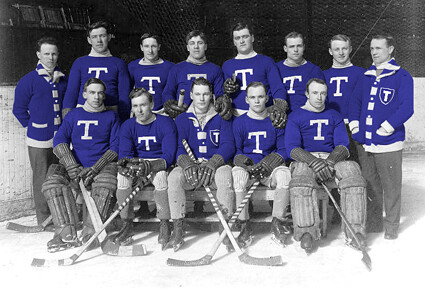
The Toronto Hockey Club had no official nickname, but the "Blueshirts" were successful on the ice, winning the second half of the season schedule, earning the right to play Montreal for the league championship.

Toronto was led by Reg Noble, who scored 30 goals and 10 assists in 20 games for 40 points, third overall in the league behind the prolific Joe Malone of the Canadiens who scored a spectacular 44 goals in just 20 games as part of his league leading point total. Corbett Denneny and Harry Cameron also were standouts for Toronto, with 29 and 27 points respectively, good for fifth and sixth in league scoring. Toronto's Harry "Hap" Holmes came in second to Georges Vezina of Montreal in the goaltending department with a goals against average of 4.80 in 16 games.

Toronto defeated the Canadiens for the league championship in a two games, total goals series 10-7, capturing the O'Brien Cup. Toronto then faced off against the Vancouver Millionaires of the PCHA for the rights to the Stanley Cup.

The best-of-five series was played entirely at the Arena Gardens. Game 1 took place on March 20th and was won by Toronto 5-3 playing under NHL rules. Game 2, under PCHA rules, which allowed forward passing and retained the use of the Rover position, delivered a 6-4 victory to Vancouver.

Toronto went ahead 2 games to 1 with a 6-3 win while back under NHL rules for Game 3. The subsequent Game 4 with PCHA rules resulted in the Millionaires tying the series at two games apiece after a humiliating 8-1 demolition of their NHL adversary, forcing a deciding fifth game.

The fifth game took place under NHL rules, which gave Toronto an apparent advantage while playing at home. Denneny eventually scored the game winning goal to clinch the Stanley Cup for Toronto in a narrow 2-1 win for the Blueshirts on this date in 1918, making them the first NHL team to ever win the Stanley Cup.

The 1917-18 Stanley Cup champion Toronto Hockey Club

The victory for the Blueshirts resulted in Livingstone again heading back to court, this time to file suit for the revenue earned by "his" championship squad of players.

As a result of this lawsuit, the Arena Gardens formed a new company, the Toronto Arena Hockey Club Company, to own and run a hockey team separate from the Arena Gardens business in order to protect the Arena business from Livingstone's lawsuits. The NHL then awarded a "new" franchise to the Hockey Club Company. This club was officially named the Toronto Arenas and, not surprisingly, was stocked with the same players from the 1918 championship club. When his players were yet again not returned to him for the 1918-19 season, Livingstone sued the Arena Gardens.

Once more, the players were uncertain who would prevail in the courts and covered their bases by signing contracts with both the Toronto Arena Hockey Club Company and Livingstone.

Livingstone did prevail in the courts sometimes, but not always. Two rulings in his favor of $20,000 and later $100,000 sent the Arena Gardens into bankruptcy. Despite the company's legal wranglings at the time, the arena would continue to operate for 77 years until closing in 1989.

When the Toronto Arenas did take to the ice in the 1918-19 season as Stanley Cup Champions, they did not play like it. Forced to sell most of their star players due to mounting legal bills, the Arenas record for the season was 5 wins and 13 losses, attendance was low and several players left the team. Finally, the team wrote to the league requesting that the season be ended when each of the three clubs had reached 18 games played and then officially withdrew from the league. This left only the Canadiens and Senators to play for the championship of the NHL and the right to meet the Pacific Coast Hockey Association champions for the Stanley Cup, which Montreal won 4 games to 1.

Meanwhile, Livingstone was busy was attempting to overthrow the NHA management, purchased the dormant Quebec Bulldogs franchise, and began an unsuccessful attempt to start a rival league, the Canadian Hockey Association and threatened to file an injunction to stop the NHL from operating. He also made unsuccessful attempts to start new leagues in 1920, 1924 and 1926, none of which ever played a single game.

Finally, the Toronto Arenas franchise was sold to the St. Patricks Hockey Club of Toronto, who ran the successful senior amateur St. Patricks team in the Ontario Hockey League, which included Arenas team manager Querrie in the four-man ownership group, in December of 1919.

The new owners renamed the club the Toronto St. Patricks and the $5,000 sale price was supposed to go to Livingstone to settle the purchase of his NHA club, for which he had once demanded $20,000 for after they had won the 1918 Stanley Cup. However, Livingstone never received the money, which many believe was kept by NHL president Frank Calder.

The Toronto St. Patricks were members of the NHL through the 1926-27 season, when Querrie, having been sued by none other than Livingstone, was forced to sell the St. Patricks. He reached an agreement to sell the club to Conn Smythe, who renamed the club the Toronto Maple Leafs and constructed Maple Leaf Gardens in 1931.

Today's featured jersey is a 1917-18 Toronto Blueshirts Hap Holmes jersey as worn during the inaugural season of the National Hockey League. Their jerseys would change for the second NHL season with the addition of white stripes around the arms and the word "Arenas" across the front, bisected by the large T crest from the previous season.

Holmes would win the Stanley Cup four different times, and with four different teams. He first joined Eddie Livingstone's Toronto Blueshirts of the NHA in 1912, winning the cup with them in 1914. He joined the Seattle Metropolitans of the PCHA in 1915 and won the cup with Seattle in 1917.

In his only season with the Toronto Blueshirts, he would win his third Stanley Cup before returning to Seattle the following season. After the Metropolitans folded four seasons later, Holmes would join the WCHL's Victoria Cougars in 1924 and go on to win his fourth Stanley Cup, the last cup won by a non-NHL team. After one more season in Victoria, the entire WCHL folded and the Victoria Cougars players were sold to the new Detroit NHL franchise, which took the name the Cougars as a tribute to the Victoria club before eventually becoming the Red Wings. Holmes would play his final two seasons in Detroit and conclude his career with 408 games played, 198 wins, 40 of which were shutouts, 192 losses and 14 ties.

Holmes was inducted into the Hockey Hall of Fame in 1972 and the American Hockey League award for the top goaltender each season is named the Hap Holmes Memorial Award.

Saturday, March 18, 2017

2016-17 Toronto Maple Leafs St. Patricks Throwback Auston Matthews Jersey

As a part of their Centennial celebrations, the Toronto Maple Leafs will be wearing throwback jerseys tonight as worn from 1922-23 to 1924-25 when the club was known as the Toronto St. Patricks.

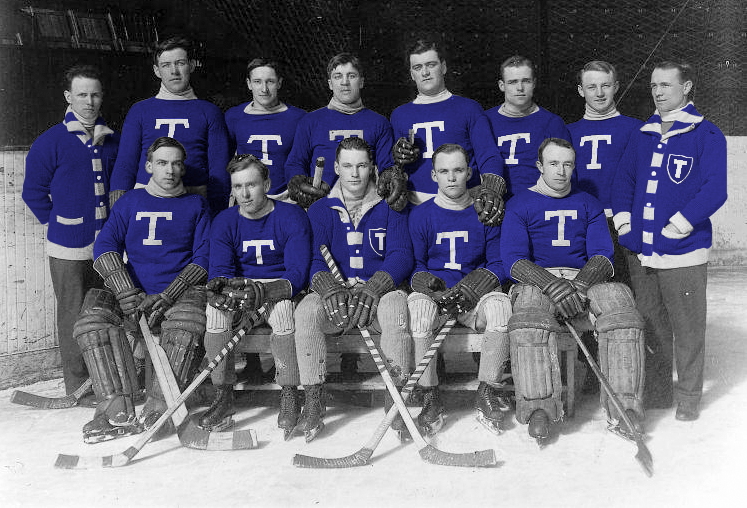
The team began during the first season of the National Hockey League in 1917-18 as the Toronto Hockey Club, also known as the Toronto Blueshirts. The club won the NHL playoffs their first season and then defeated the Vancouver Millionaires of the PCHA 3 games to 2 to take the Stanley Cup in their very first try.

1917-18 Toronto Blueshirts team
The Stanley Cup champion 1917-18 Toronto Blueshirts

The following season, still wearing blue sweaters, the club became known as the Toronto Arena Hockey Club, named after the Arena Gardens rink which owned the club as a part of business maneuvers to protect themselves from legal action from the owner of the previous Toronto franchise that played in the previous National Hockey Association. The team was more commonly referred to as the Toronto Arenas for the 1918-19 season. The Arenas quickly ran into financial difficulties and were sold to new owners for $5,000 in time for the 1919-20 NHL season.

Mutual_Street_Arena_interior
The Arena Gardens, later changed to the Mutual Street Arena

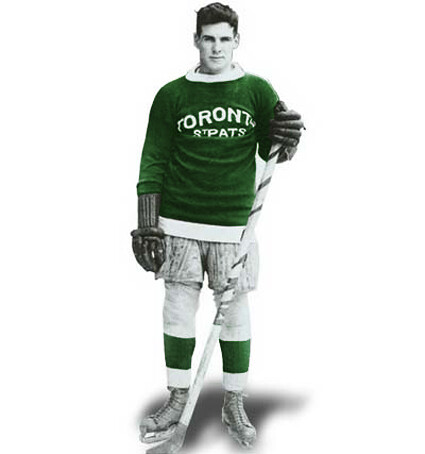
The new owners were Charile Querrie, the General Manager of the Toronto Arenas, and the owners of an amateur hockey club called the St. Patricks. The new ownership group then changed the NHL club's name to the Toronto St. Patricks and their sweaters from blue to now green.

Rebounding from a chaotic 5-13 season resulting from the sale or defection of their best players due to the financial problems of the previous ownership, the St. Patricks were essentially starting over from scratch for the 1919-20 season.

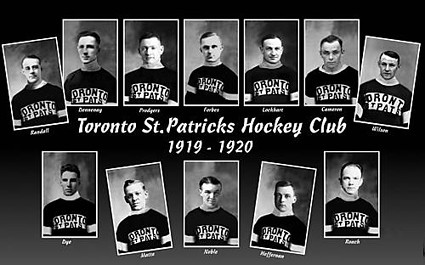
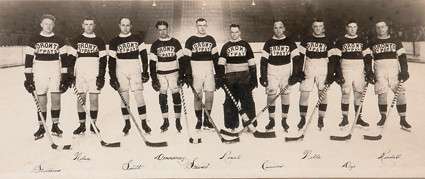
1919-20 Toronto St Patricks team
1919-20 Toronto St Patricks

While they did not qualify for the playoffs, the St. Patricks did improve their season record to 12-12 and were led in points by Corb Denneny, a holdover from the Toronto Arenas, who had 24 goals and 36 points in 24 games, good for fourth in the league.

Future Hall of Famer Babe Dye led the club with 33 goals and 38 points in 23 games in 1920-21, and the team would finish first in the second half standings, but lost in the NHL finals to the Ottawa Senators.

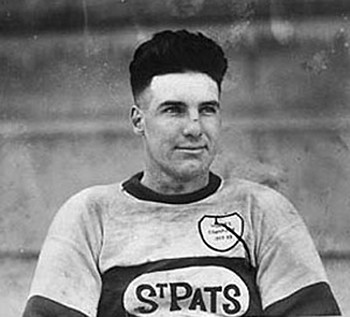
Toronto St Pats Babe Dye 1920-21
Babe Dye during the 1920-21 season

1921-22 again saw the St. Patricks led by Dye's 31 goals and 38 points in 24 games, as Toronto would defeat the Senators 5-4 in a two-game, total goals series to capture the O'Brien Trophy and earn the right to play for the Stanley Cup against the Vancouver Millionaires, champions of the Pacific Coast Hockey League.

The series was a best-of-five and all games were played in Toronto. The Millionaires won Game 1 and Dye scored in overtime to even the series at 1 game apiece. Vancouver shut out Toronto 3-0 in Game 3, only to have the St. Patricks return the favor 6-0 in Game 4. Dye took control of the deciding Game 5, scoring four goals to lead the St. Patricks to a 5-1 victory and the Stanley Cup.

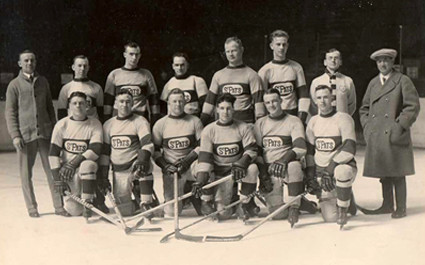
1921-22 St Patricks
1921-22 Stanley Cup Champion Toronto St. Patricks

The next two seasons Toronto would finish in third place, and miss out on the playoffs both times.

Babe Dye St Pats 1923-24
Dye in 1922-23 wearing the Stanley Cup champions patch on his sweater

Dye again led the team in scoring both seasons, with 37 points in 1922-23 and just 19 in 1923-24, but still enough to lead the club.

1923-24 Toronto St Patricks team
The 1923-24 Toronto St Patricks

Dye rebounded with 38 goals and 46 points in 1924-25 to lead the team for the fifth season in a row and Toronto again returned to the playoffs, only to lose out to the Montreal Canadiens 5 goals to 2.

Another Hall of Famer, Jack Adams, would finally unseat Dye as the club's leading scorer, as he managed 21 goals and 26 points to Dye's 23 points in 1925-26, but Toronto would fail to reach the playoffs.

Jack Adams St Pats
Jack Adams led the St. Pats in scoring in 1925-26

St. Pats Owner Querrie then lost a lawsuit to the notorious Eddie Livingstone, the one time owner of the previous Toronto franchise known as the Toronto Blueshirts of the NHA, and, as a result, decided to put the team up for sale. The club was purchased by Conn Smythe for $160,000 and, when he took control of the team on February 14, 1927, immediately changed the club's name to the Toronto Maple Leafs, bringing an end to the St. Pats name during the 1926-27 season.

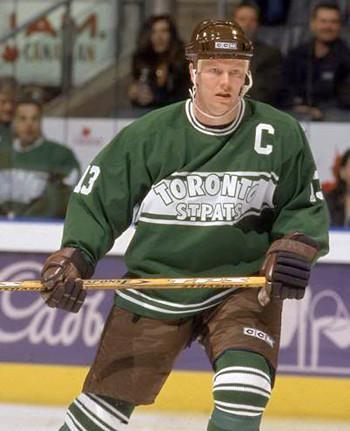
On March 2, 2002, the Toronto Maple Leafs wore the green jerseys of the 1926-27 St. Patricks, along with brown pants and helmets, to celebrate the 75th anniversary of the franchise changing their name to the Maple Leafs in a 3-3 tie against the Buffalo Sabres, led by captain Mats Sundin's two goals.

Sundin St Pats
Mat Sundin in the green of the 1926-27 St. Patricks in 2002

Today's featured jersey is a 2016-17 Toronto Maple Leafs St. Patricks Throwback Auston Matthews jersey that will be worn tonight against the Chicago Blackhawks as a part of the Maple Leafs centennial celebration.

The original 1919-20 St. Pats jerseys were alternating green a white hoops on the body, while the sleeves were green with a single white band and white cuffs. For 1920-21, the sweaters were solid green with white cuffs, collar and waist stripe. They reverted to their original horizontally striped sweaters for 1921-22.

For 1922-23, the location of the sweater's colors were reversed, with the result being a predominately white look now that the arms were white with a green band and cuffs. This style was worn for three seasons through 1924-25 and this is the style which will be worn this evening.

It was back to an all-green look for 1925-26, including the collar and cuffs, with the only white being three narrow stripes along the waist.

Finally, for the team's final season as the St. Patricks, they added a white chest band trimmed with narrow white stripes and reduced the three narrow waist stripes to two. With the sale of the club to Smythe, this jersey would not finish out the season, as it was immediately replaced by a solid white sweater with a green maple leaf crest, with the team colors permanently changing to blue and white for the 1927-28 season.

It would be the St. Patricks final green jersey with the white chest band of 1926-27 which would become the basis for Toronto's throwback jersey worn in March of 2002 on the 75th Anniversary of Smythe's ownership and resulting name change to the Maple Leafs.

One unique feature of today's throwback jersey is the use of separate white boxes for each digit on the back of the jersey done in the style teams used to employ in the days of multi-striped barberpole jerseys.

Toronto Maple Leafs St Pats 2016-17 F jersey
Toronto Maple Leafs St Pats 2016-17 B jersey
 

hit counter for blogger