History of Jersey 83-93 Banner sm photo History of Jersey 83-93 Banner sm.jpg
Showing posts with label New Jersey Devils. Show all posts

Friday, June 9, 2017

2002-03 New Jersey Devils Martin Brodeur Jersey

The New Jersey Devils  finished atop the Atlantic Division standings with a record of 46-20-10, good for 108 points. The highlight of their season was a one month stretch from January 5th to February 5th in which they won 12, tied 1 and lost 1, including a 6 game winning streak and a 9 game unbeaten run.

The #2 seeded Devils moved quickly through the playoffs, defeating both the Boston Bruins and Tampa Bay Lightning in five games before coming up against the Ottawa Senators, who took the Devils to a Game 7, which New Jersey won by a goal on the road to reach the finals.

There, they were paired up against the Mighty Ducks of Anaheim, the surprising #7 seed from the Western Conference, who had knocked out both the #1 seeded Detroit Red Wings and #2 Dallas Stars on their way to the finals.

It was the Devils third finals appearance in four years and many expected the veteran, battle-tested Devils to have an easy time over the finals debutant Mighty Ducks, who finished 13 points behind New Jersey in the standings.

Game 1 saw the Devils make their intentions clear with a 3-0 blanking of the Mighty Ducks on goals by Jeff Friesen early in the second and by Grant Marshall at 5:34 of the third before Friesen sealed the game with an empty net goal in the final half minute of the game. Martin Brodeur's 5th shutout of the playoffs came on just 16 saves.

Friesen Devils photo Friesen Devils.jpg
Jeff Friesen had two goals in Game 1 and five in the Finals

Game 2 was more of the same, as Brodeur again recorded a shutout on 16 saves yet again. Former Mighty Duck Oleg Tverdovsky set up a pair of goals for the Devils in period two by Patrik Elias and Scott Gomez. Friesen chipped in his 8th of the playoffs 4:22 into the third to put the game out of reach for Anaheim, who headed back to California without having scored a single goal in New Jersey.

Brodeur Devils photo Brodeur Devils 2_1.jpg
Martin Brodeur opened the Finals with two shutouts

New Jersey tied Game 3 at 2-2 with a goal at 9:11 of the third, but could not get the game winner before Ruslan Salei won it for the Mighty Ducks at 6:59 of overtime.

Former Devil Steve Thomas spoiled Brodeur's shutout bid at 39 seconds of overtime to win Game 4 for Anaheim to even the series after four games. Jean-Sebastien Giguere's shutout came after 26 saves.

Giguere Ducks photo Giguere Ducks.jpg
Jean-Sebastien Gigiuere

Game 5 back in New Jersey was even for the first half, with each team having scored 3 goals before a video review confirmed Jay Pandolfo's goal at 9:02 of the second was not kicked in, giving the Devils a lead they would not relinquish. Jamie Langenbrunner would score a pair of third period goals to put the game out of reach at 6-3.

 photo Langenbrunner Devils.jpg
Jamie Langenbrunner had two goals in Game 5

Game 6 back in Anaheim is best remembered for Scott Stevens thunderous hit on Paul Kariya, which left him laying motionless on the ice for several minutes. To everyone's surprise, Kariya not only returned to the game, but scored a goal at 17:15 of the second period to restore the Mighty Ducks three goal cushion they gained in the first period on their way to a 5-2 win to force a deciding Game 7 back in New Jersey.

Game 7, played on this date in 2003, saw the Devils get on the board first when Mike Rupp scored the first playoff goal of his career at 2:22 of the second period. Friesen scored yet again ten minutes later to give New Jersey a two goal lead with just 20 minutes remaining in the season.

While the Mighty Ducks out shot the Devils 10-6 in the third period, it was Friesen scoring his 10th goal of the playoffs at 16:16 to give the Devils a comfortable 3-0 margin. The Mighty Ducks were never able to solve Brodeur, who finished the game with 24 saves and an NHL record seventh playoff shutout of the playoffs and his third of the finals to give New Jersey their third Stanley Cup Championship in eight years. The win was the Devils 12th on home ice, also a record.
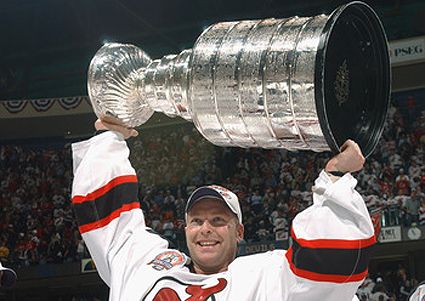
Brodeur Stanley Cup 2003, Brodeur Stanley Cup 2003
Martin Brodeur set a playoff shutout record with seven
on his way to winning the Stanley Cup in 2003

Rupp's goal was the first time in Stanley Cup history that a player's first career goal be the Stanley Cup winning goal. The Devils win at home concluded only the third time in NHL history, and the first since 1965, that the home team won every game in the finals.

Langenbrunner led all playoff scorers in goals with 11 and was tied for the points lead at 18 with Scott Niedermayer (2 goals, 16 assists). John Madden was close behind with 16 points and Friesen's 10 goals were one back of Langenbrunner's 11. Add in the fine defensive efforts of Stevens and Niedermayer, along with Colin White and Brian Rafalski, helping Broduer to the shutout record, the candidates for the Conn Smythe Trophy were numerous, so it certainly caught many off guard when Giguere was named the winner over Broduer despite Brodeur setting the playoff shutout record and winning their head to head battle for the cup 12 goals to 18. It was only the fifth time a player on the losing team won the award since it was first handed out in 1965.

Broduer was later recognized with his first Vezina Trophy for his league leading 41 wins and 9 shutouts as well as his 2.02 goals against average and .914 save percentage.

Brodeur 2003 awards, Brodeur 2003 awards
Brodeur with the Jennings Trophy, Stanley Cup and Vezina Trophy

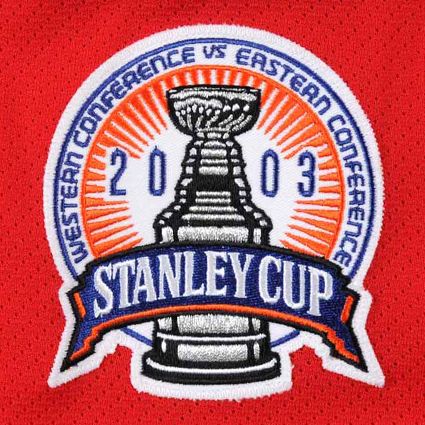
Today's featured jersey is a 2002-03 New Jersey Devils Martin Brodeur jersey as worn during the 2003 Stanley Cup Finals. This jersey is distinguished by the 2003 Stanley Cup Finals patch worn by both the Devils and the Mighty Ducks, a tradition which began back in the 1989 finals and has continued ever since.

Club president and general manager Lou Lamoriello steadfastly refused to change the now classic Devils jersey. Lamoriello joined the Devils in 1987, inheriting their red and green jerseys in the process. For the 1992-93 season the team changed their color scheme by changing the green to black and simplifying their jerseys striping pattern. The club has stuck with with look ever since, including the name and number fonts. They have also refused to introduce any sort of alternate third jersey and were able to maintain their traditional sweaters even through the transition to the new Reebok Edge jerseys introduced in 2007.
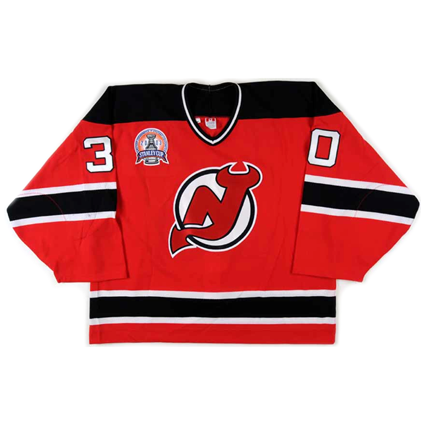
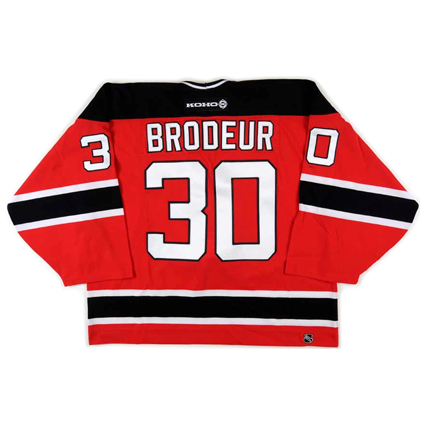
New Jersey Devils 02-03 jersey, New Jersey Devils 02-03 jersey
New Jersey Devils 02-03 P jersey, New Jersey Devils 02-03 P jersey

Bonus jersey: Today's bonus jersey is a 2002-03 New Jersey Devils Scott Stevens jersey. Stevens veteran leadership, legendary hard hits and solid defense was a primary reason that the Devils enjoyed such consistent success in his 12 seasons with the club. In 2006 his #4 was the first number retired by the Devils.

New Jersey Devils 2002-03 jersey photo New Jersey Devils 2002-03 F.jpg
New Jersey Devils 2002-03 jersey photo New Jersey Devils 2002-03 B.jpg
New Jersey Devils 2002-03 jersey photo New Jersey Devils 2002-03 P.jpg

Our video segment today begins with Stevens hit on Kariya in Game 6.


Next, highlights of Game 7 from the 2003 Stanley Cup Finals when New Jersey clinched the Stanley Cup.


Finally, a montage of highlights from the entire playoffs by the CBC.


Sunday, May 14, 2017

1981-82 Colorado Rockies Steve Tambellini Jersey

As a rookie in junior hockey during the 1975-76 season, Steve Tambellini loudly announced his presence with 38 goals and 97 points in 72 games with the Lethbridge Broncos, earning WCHL Rookie of the Year honors. He reaffirmed his talent by raising his goal total the following season to 42, despite playing in 17 less games!
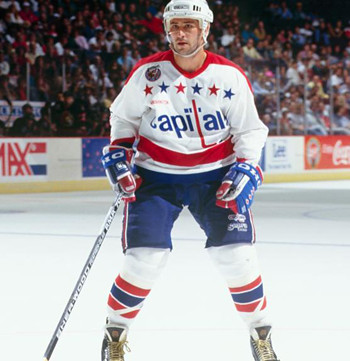
In his final season of junior hockey, Tambellini, born on this date in 1958, finished third in the league in scoring with a team leading 155 points from 75 goals and 80 assists in 66 games. During the season, he would make his international debut for Canada with 2 goals and 2 assists on his way to earning a bronze medal at the 1978 World Junior Tournament. Following the season, Tambellini was drafted in the first round by the New York Islanders in the 1978 NHL Entry Draft.

He would spend the following season with the Fort Worth Texans of the CHL, notching 25 goals and 52 points. He also made his NHL debut with a single game with the Islanders.

In 1978-80, Tambellini spent the entire season with the Islanders, but saw the ice in only 45 games in a limited role, but was able to score his first 5 NHL goals as well as 8 assists. While he did not play in any games in the playoffs, the powerful Islanders would go on to win their first Stanley Cup, and Tambellini's name was engraved on the cup based on his regular season contributions.

Tambellini Islanders, Tambellini Islanders

After playing 61 games with the Islanders in 1980-81, Tambellini, deemed expendable due to the incredible depth and scoring ability of the Islanders roster in the early stages of it's Stanley Cup dynasty, was sent westward, along with goaltender Chico Resch, to the Colorado Rockies, where he added 6 goals to his season total to record his first 20 goal season with 25 in all. After scoring 18 points in 13 games with Colorado, Tambellini joined Team Canada for the 1981 World Championships.

Playing a much larger role with the offensively challenged Rockies, Tambellini scored 29 goals and 59 points, good for second place on the club while playing on a line with veteran Lanny McDonald and Paul Gagne.

Tambellini Rockies, Tambellini Rockies

Tambellini was headed back east for the 1982-83 season when the Rockies franchise relocated to New Jersey, where they were renamed the Devils. There, the center registered his third consecutive season of at least 25 goals and his second consecutive season of leading the club in goals.

During the off season, it was once more back west, as Tambellini was involved in a deal which sent him to the Calgary Flames. After his first season of 73 games, he would be limited to just 47 games the second season.

He then moved even further west, signing a free agent contract with the Vancouver Canucks for the 1985-86 season, but was limited to 48 games with a knee injury and later a broken thumb. He bounced back with 72 games in 1986-87.

Tambellini Canucks, Tambellini Canucks

His final NHL season saw him still with the Canucks, but he also took the uncommon for then step of playing for Canada during the 1988 Olympics, which were held in Canada while the NHL regular season was still in progress, scoring a goal and three assists.

Tambellini Canada, Tambellini Canada

Not quite done with playing hockey, Tambellini played 10 games in Switzerland for Zurcher SC in Swiss second division in 1988-89 and a full season with EC Villacher SV in Austria, where he went out in style, scoring 44 goals and 81 points in 38 games to close out his playing career.

In all, he scored 160 NHL goals and 310 points in 553 games.

Today's featured jersey is a 1981-82 Colorado Rockies Steve Tambellini jersey worn during his only full season with the Rockies prior to their move to New Jersey the following season.

The Rockies kept the same jersey style as they had worn while the Kansas City Scouts for their entire run in Colorado, only with a new Colorado themed crest based on the state flag.


Colorado Rockies 1981-82 jersey photo Colorado Rockies 1981-82 F jersey.jpg
Colorado Rockies 1981-82 jersey photo Colorado Rockies 1981-82 B jersey.jpg

Bonus jersey: Today's bonus jersey is a 1982-83 New Jersey Devils Steve Tambellini jersey from the Devils first season after relocating from Colorado when Tambellini led the club in goals. The Devils would wear these red and green jerseys for their first 10 seasons before changing their colors to red and black, finally escaping the endless comparisons to having "Christmas colors".

The only two patches ever worn on this style came in the jerseys final season of 1991-92 when they wore the NHL 75th Anniversary patch on their left chest and a discreet Devils 10th Anniversary patch on the rear hem of their jerseys next to the CCM branding, perhaps the smallest patch ever worn on an NHL jersey.

New Jersey Devils 82-83 jersey, New Jersey Devils 82-83 jersey

Extra bonus jersey: Today's extra bonus jersey is a 1988 Team Canada Steve Tambellini jersey as worn during the 1988 Olympics held in Calgary. While all the teams were contractually obligated to wear Tackla jerseys for the Olympics, Canada chose to wear their Canadian manufactured CCM jerseys for the Games, which resulted in them receiving a $100,000 fine despite covering up the CCM logo on the rear hem with a piece of twill.

Canada 1988 jersey, Canada 1988 jersey
Photo courtesy of Classic Auctions

Thursday, April 6, 2017

1983-84 Montreal Canadiens Claude Lemieux Jersey

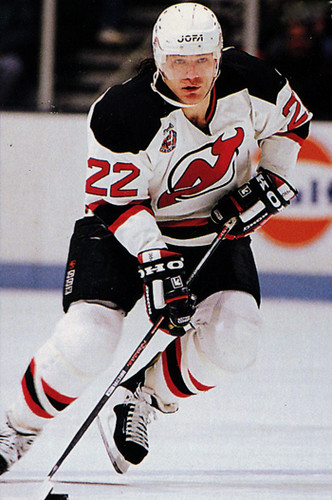
Hate him or love him, Claude Lemieux is one of the most polarizing, yet accomplished players in NHL history.

His junior hockey resume begins with the Trois-Rivieres Draveurs of the Quebec Major Junior Hockey League for the 1982-83 season when Lemieux scored 28 goals and 66 points in 62 games while announcing his presence with 213 penalty minutes. Lemieux was then drafted 26th overall by the Montreal Canadiens during the 1983 NHL Entry Draft.

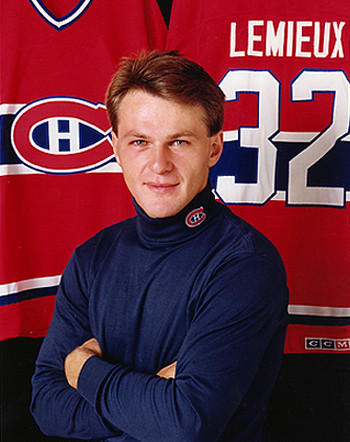
Lemieux Canadiens 1
Lemieux was drafted in 1983 by the Montreal Canadiens

He returned to junior hockey for the 1983-84 season, now with the Verdun Juniors. His rugged style of play was still in full effect, as he amassed 227 penalty minutes in 51 games played while raising his offensive game to a new level with 41 goals and 45 assists for 86 points, more than a point and a half per game. He also made his NHL debut with the Canadiens that season, seeing action in 8 games with a goal and an assist. He also appeared in two playoff games for the Nova Scotia Voyageurs of the American Hockey League after scoring 20 points in 9 playoff games for Verdun.

He returned to Verdun once more for the 1984-85 season, now as the team captain. He lit up the scoreboard with 58 goals and 66 assists for 124 points in 52 games and continued his torrid pace in the postseason with 23 goals and 40 points in just 14 playoff games, which earned him the Guy Lafleur Trophy as the QMJHL Playoff MVP.

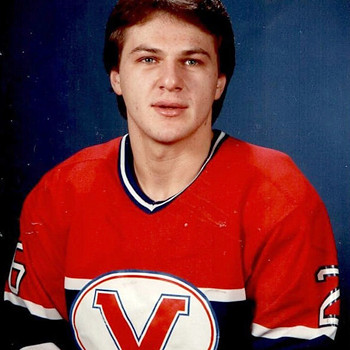
Lemieux Verdun
Lemieux was the playoff MVP for Verdun in 1985

That season Lemieux also made his international debut for Canada at the 1985 World Juniors, scoring 3 goals and 5 points in 6 games as Canada captured the gold medal.

Lemieux continued to develop during the 1985-86 season with 58 games with the Sherbrooke Canadiens of the AHL, scoring 21 goals and 53 points in 58 games. He also played ten games with Montreal in the NHL with a goal and an assist before becoming a vital member of the club during the playoffs where he scored an eye opening 10 goals in 20 games, with four of those goals being game winners as Montreal would win the first Stanley Cup of his career.

Lemieux Stanley Cup Montreal 1986
Lemieux won the Stanley Cup with Montreal in 1986

That performance led to Lemieux playing full time for the Canadiens in the 1986-87 season, playing in 76 games with 27 goals and 53 points. Montreal went on another extended playoff run, with Lemieux scoring 13 points in 17 games. He was also named to the squad of NHL All-Stars who took on the Soviet Union in the two game Rendez-vous '87 that took the place of the traditional NHL All-Star Game that season.

Before the start of the next NHL season, Lemieux once again suited up for Canada, this time at the 1987 Canada Cup, where he contributed a goal and an assist in 6 games as Canada would defeat the Soviet Union in a three game final to win the tournament.

Lemieux would play three more seasons for Montreal, which included reaching the 30 goal mark for the first time with 31 in 1987-88. Montreal again reached the Stanley Cup Finals in 1989 before falling in seven games to the Calgary Flames. His final season with Montreal was ruined by an abdominal strain just as the season was getting underway which limited him to 39 games.

Before the start of the 1990-91 season, Lemieux was traded to the New Jersey Devils for Sylvain Turgeon and erased any doubts he was back to full health by playing in 78 games while scoring 30 goals for the second time. He has his first 40 goal season in 1991-92 with 41 in 74 games.

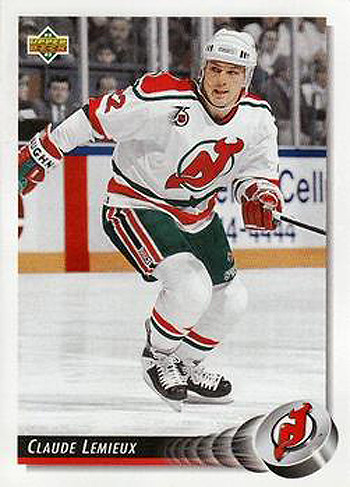
Lemieux Devils 2
Lemieux scored 40 goals during the Devils final season in red and green jerseys

In 1992-93, Lemieux again reached the 30 goal mark while he set career highs with 51 assists and 81 points to lead the Devils in scoring for the second consecutive season.

Lemieux Devils 3
Lemieux set a career high in points in 1992-93 in the Devils new red and black jerseys

While he was limited to 18 goals and 44 points in 1993-94, the Devils made it to the Conference Finals before losing in overtime of Game 7 in an epic series against the eventual champion New York Rangers.

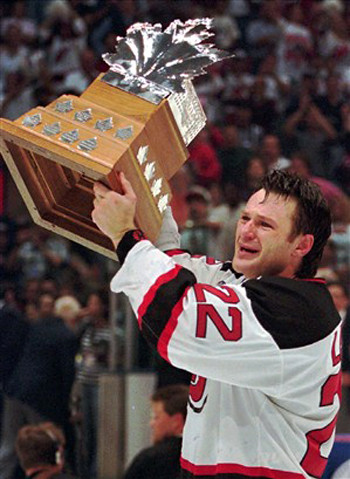
The 1994-95 season was delayed by labor problems, but once the postseason got underway, Lemieux's game came to life and he scored 13 goals and 16 points in 20 playoff games as the Devils won the Stanley Cup, with Lemieux being named the winner of the Conn Smythe Trophy as the playoff MVP.

Lemieux Conn Smythe
Lemieux won the Conn Smythe Trophy as the 1995 Playoff MVP

Winning the cup would prove to be Lemieux's final game with New Jersey, as he was involved in a three way trade that saw him wind up being traded to the Colorado Avalanche for their first season of play after the Quebec Nordiques were relocated to Denver.

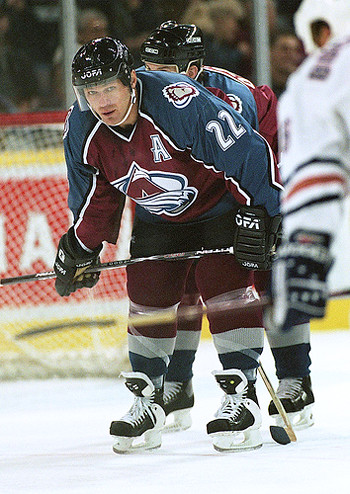
The Nordiques were a talented team on the rise before moving to Colorado, but the arrival during the season of goaltender Patrick Roy elevated the club to another level. Additionally, playing with the likes of Joe Sakic and Peter Forsberg revitalized Lemieux's offensive game, as he immediately scored 39 goals and 71 points, both the second highest of his career.

Lemieux Avalanche 1
After winning a Stanley Cup and Conn Smythe,
the Devils traded Lemieux to the Avalanche

In the playoffs, Colorado eliminated the Vancouver Canucks, Chicago Blackhawks and began an intense rivalry with the Detroit Red Wings before sweeping the upstart Florida Panthers in four games to win Lemieux's second consecutive Stanley Cup, making him just the fifth player to ever win back-to-back cups with two different teams.

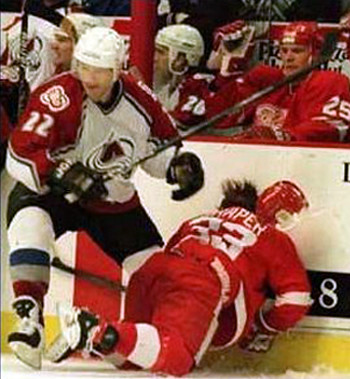
The flash point of the Avalanche rivalry with the Red Wings can be traced back to a check from behind by Lemieux on Detroit's Kris Draper, who smashed face first into the top edge of the boards, breaking his jaw, nose and cheekbone which resulted in a concussion and facial reconstructive surgery. Lemieux was suspended for two games by the NHL, while many felt the severity of the incident deserved a harsher penalty. The animosity was genuine between the two clubs, as voiced by Detroit's Dino Ciccarelli, who lamented after the series, "I can't believe I shoot that guy's firggin' hand after the game. That pisses me right off."

Lemieux Draper hit
Draper falling to the ice after being nailed by Lemieux

In the fall of 1996, Lemieux was once again called upon by Canada, this time for the 1996 World Cup of Hockey.

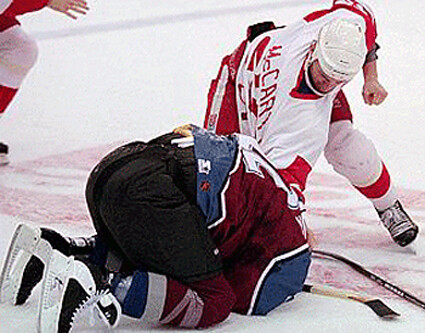
Lemieux was limited by injuries in 1996-97, but once again rose to the moment in the playoffs. After scoring 11 goals in 45 regular season games, he scored 13 goals in 17 playoff games. The Red Wings were also gunning for Lemieux during the regular season. During their fourth meeting on March 26, 1997, the Red Wings Darren McCarty suckerpunched Lemieux with a right hook, ripped his helmet off and rained blows on Lemieux, who covered up after the sneak attack. McCarty then drilled Lemieux repeatedly with violent punches before dragging him over to the boards and kneeing him in the head before the officials restrained him.

McCarty Lemieux
McCarty's attack on Lemieux in retribution for his hit on Draper

This fight also led to numerous other brawls, most notably when goaltenders Roy and Mike Vernon staged a slugfest at center ice which left Roy bloodied. Appallingly, McCarty would only receive a double minor for roughing for his attack which would have landed anyone else in jail had it happened in public.

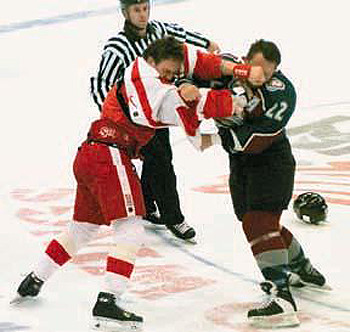
Lemieux would fight McCarty again right off the opening faceoff on a game on November 11, 1997, as McCarty would change move from right wing to left wing to line up opposite McCarty for a chance to restore his reputation after being accused of "turtling" when he covered up after being flattened by McCarty's sneak attack the previous March.

Lemieux McCarty 2
Lemieux and McCarty fought again for a second time
in one of hockey's all-time best rivalries

Lemieux would go on to score 26 goals and 53 points that season while the Avalanche and Red Wings would engage in another bout of mayhem when late in the season the two teams would stage another brawl that featured goaltenders Roy and Chris Osgood.

After playing a full season of 82 games with 27 goals and 51 points, Lemieux and the Avalanche would make it to the Conference Finals, but fall to the eventual champion Dallas Stars.

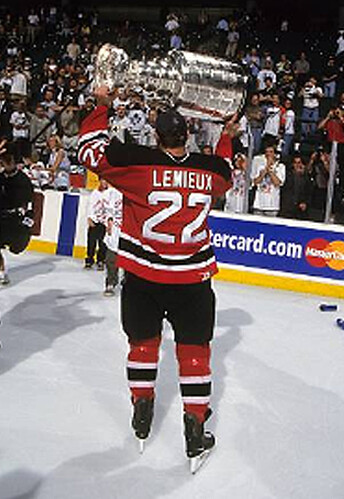
After 13 games of the 1999-00 season, Lemieux was traded back to New Jersey, where he scored 17 goals and 38 points in 70 games, which included Lemieux playing in his 1,000th NHL game on this date in 2000 against the Buffalo Sabres. The Devils qualified for the playoffs, Lemieux's 15th consecutive postseason dating back to 1986. New Jersey swept Florida, defeated the Toronto Maple Leafs in 6, outlasted the Philadelphia Flyers in 7 and won the third Stanley Cup of Lemieux's career by defeating Dallas in 6 games.

Lemieux Devils 2000
Lemieux won his fourth Stanley Cup in 2000

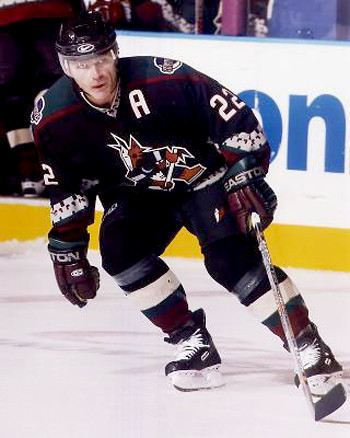
Once again, lifting the cup brought a close to his time in New Jersey, as Lemieux signed as a free agent with the Phoenix Coyotes for the 2000-01 season. He would play in just 46 games for the Coyotes that season before returning to play a full schedule of 82 games in 2001-02, scoring 41 points.

Lemieux Coyotes 1
Lemieux signed as a free agent with Phoenix

He would return to Phoenix for a third season, but after 36 games, he was traded to the Stars where he would play the final 32 games of his NHL career.

Lemieux did play in 7 games with EV Zug in Switzerland in 2003-04 as well as 5 playoff games to close out his career.

Or so we thought...

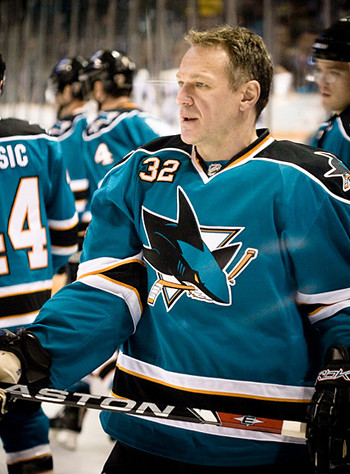
After four full seasons away from the ice, Lemieux unexpectedly made a comeback at the age of 43! Oddly, Lemieux played pair of games with the China Sharks of the Asian Hockey League and then 23 games with the Worcester Sharks of the AHL before being recalled by the San Jose Sharks, returning to the NHL for the first time  in nearly six years. He would play 18 games with San Jose with one assist and 21 penalty minutes before retiring for a second time that summer.

Lemieux Sharks 1
Seemingly out of nowhere, Lemieux was back in the NHL with the Sharks

Lemieux would play in the NHL playoffs 18 of his 19 seasons, playing in 234 postseason games with 80 goals, 78 assists and 158 points as well as 529 penalty minutes. His 234 games played are fourth all-time and his 19 game winning goals in the playoffs are second only to Wayne Gretzky's 24. His 80 playoff goals rank ninth all-time.

Lemieux would finish with 1,215 games played with 379 goals and 407 assists for 786 points with 1,777 penalty minutes. He would win a Conn Smythe Trophy in 1995 and four Stanley Cups with Montreal in 1986, New Jersey in 1996, Colorado in 1996 and the Devils again in 2000.

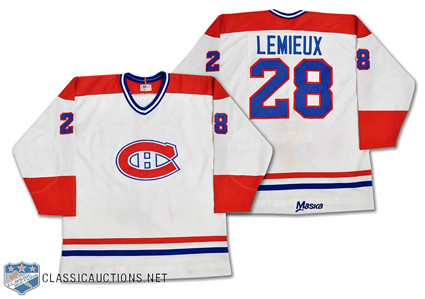
Today's first featured jersey is a 1983-84 Montreal Canadiens Claude Lemieux jersey from his rookie season.

Montreal Canadiens 1983-84 jersey

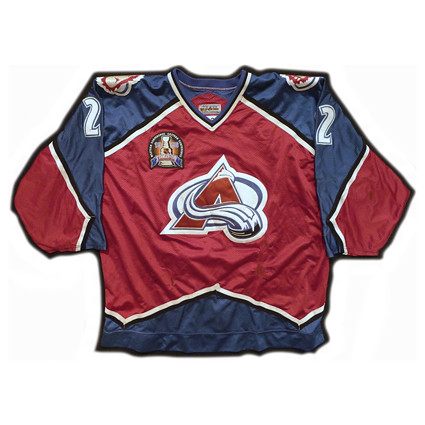
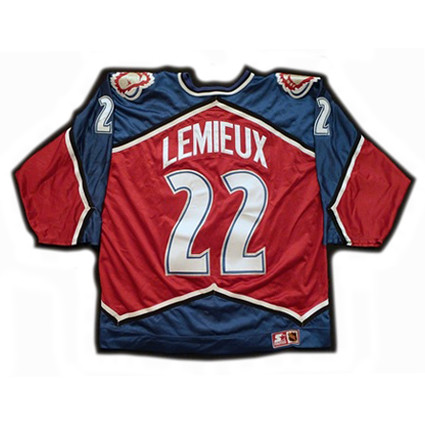
Today's second featured jersey is a 1995-96 Colorado Avalanche Claude Lemieux jersey worn during the 1996 Stanley Cup Finals.

The Avalanche would burst onto the scene with unique jerseys with zig-zag arm and waist stripes that mimicked a mountain range and a unique burgundy and blue color scheme, unlike anything that has ever been worn in the NHL. They would win a pair of Stanley Cups in this style which would be used all the way through the 2006-07 season.

Colorado Avalanche 1995-96 F jersey
Colorado Avalanche 1995-96 B jersey

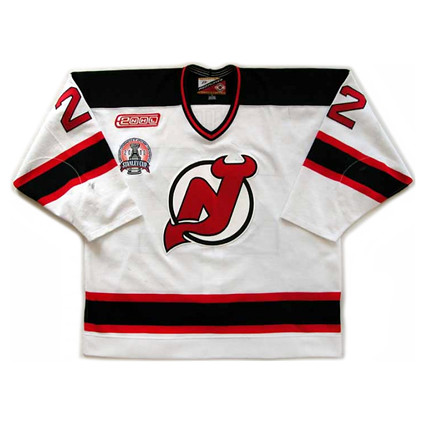
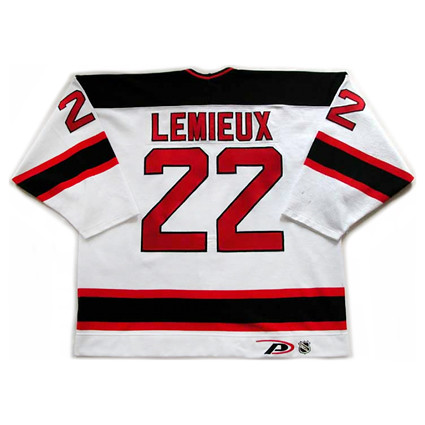
Today's third featured jersey is a 1999-00 New Jersey Devils Claude Lemieux jersey worn during the 2000 Stanley Cup Finals.

The Devils would still be wearing their original red and green jerseys during Lemieux's first two seasons until changing to their new red and black colors for the 1992-93 season. They would win three Stanley Cups to date in this style jersey, which remains in use unchanged through today, surviving the change to the Reebok Edge jerseys in 2007-08, which killed off many styles, including those worn above by the Avalanche.

New Jersey Devils 1999-00 F jersey
New Jersey Devils 1999-00 B jersey

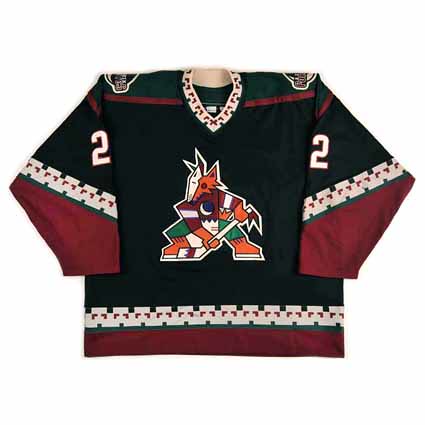
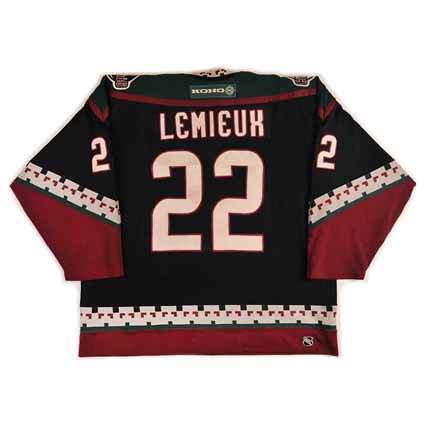
Bonus jersey: Today's bonus featured jersey is a 2000-01 Phoenix Coyotes Claude Lemieux jersey. When the Winnipeg Jets relocated to Phoenix for the 1996-97 season, they turned the hockey world on its ear with these unusual jerseys with Southwest inspired colors and Native American striping patterns in addition to their somewhat busy and rather bizarre logo, not to mention their unique choice of font for the names and especially numbers.

This style was worn for 12 seasons until a complete, and we mean complete overhaul of their identity package when they moved into their new arena, which changed the team colors, logo and, of course, their jerseys, bringing an end to the era of their highly unique and unusual original jerseys.

With this being the 20th Anniversary of the Coyotes, the team revived their original black jerseys for two games as celebratory throwbacks.

Phoenix Coyotes 2000-01 F jersey
Phoenix Coyotes 2000-01 B jersey

In today's video section, we hope you have some time on your hands today, as McCarty and Lemieux meet up for the first time ever to discuss the incident and what led up to it, thirteen years after the incident. It's a fascinating insight into "The Code" among hockey players and the mindset of both McCarty and Lemieux both then and now and the respect they have for each other. It's quite possibly the most interesting interview we've ever posted on Third String Goalie.


Tuesday, March 21, 2017

1981-82 Washington Capitals Bobby Carpenter Jersey

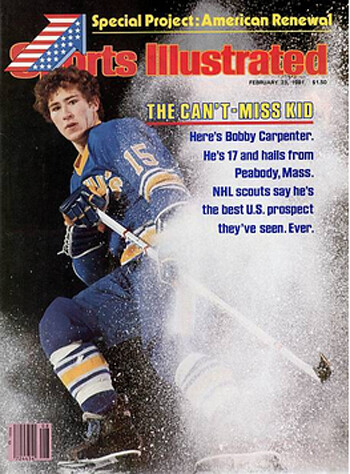
After playing three seasons at St. John's Preparatory School in Massachusetts from 1978 to 1981, Bobby Carpenter was drafted right out of high school by the Washington Capitals third overall in the first round of the 1981 NHL Entry Draft after becoming the first American hockey player to ever appear on the cover of Sports Illustrated earlier that year when he was labeled the "Can't Miss Kid". With his selection third overall, Carpenter became the highest US-born player ever taken and the first American chosen in the first round and the top five of an NHL Draft.

Carpenter SI
Carpenter appeared on the cover of Sports Illustrated while still in high school

Before being drafted, Carpenter had also played for the United States at the 1981 World Junior Championships, scoring an impressive 5 goals and 9 points in 5 games.

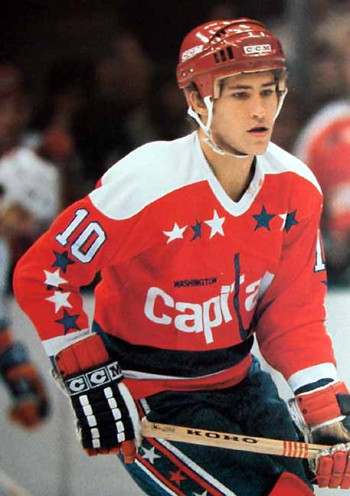
Carpenter defied the odds and never played a single game of college or minor league hockey, making the Capitals straight out of his first training camp, becoming the first player to go directly from a US High School directly to the NHL when he made his debut on October 7, 1981, which included a goal and an assist that night, with his assist coming just 12 seconds into the start of his career! His acclimation time to the hard hitting world of the NHL was virtually non-existent, as the 18-year-old rookie scored 32 goals and added 35 assists for 67 points in 80 games straight out of the box in 1981-82. His 32 goals included scoring 4 in a game vs. the St. Louis Blues on February 25, 1982.

Carpenter Capitals 3
Carpenter had a remarkable rookie season with 32 goals while still a teenager

He essentially repeated those numbers during his second season of 1982-83, avoiding any anticipated sophomore slump with another 32 goals and 37 assists for 69 points. Carpenter showed remarkable consistency in his third season with 68 points from 28 goals and 40 assists in 1983-84.

Before the 1984-85  season began, Carpenter again suited up for the United States, this time at the 1984 Canada Cup tournament, scoring a goal and 5 points in 6 games.

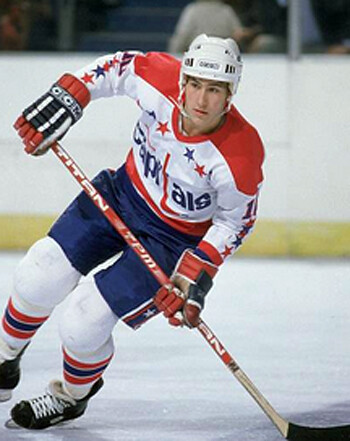
His 1984-85 season was one for the record books, as Carpenter, playing on a line with Mike Gartner, first broke Joey Mullen's record of 41 goals by an American on February 13th before setting his sights on another milestone, which he achieved on this date in 1985 when he became the first American to ever score 50 goals in an NHL season in a 3-2 loss against the Montreal Canadiens. He would finish the season with a career highs with 53 goals, 42 assists and 95 points.

Carpenter Capitals
Carpenter was the first American to score 50 goals

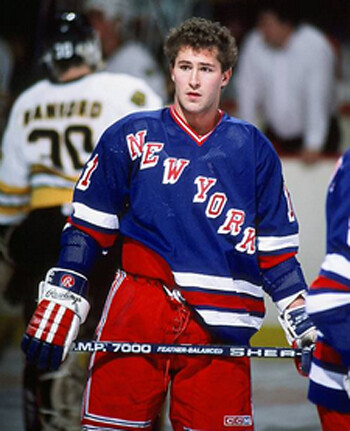
After singing a four year contract with the Capitals prior to the 1985-86 season, Carpenter saw his statistics regress to 27 goals and 56 points, while his penalty minutes rose to 105 from a previous high of 87. His 1986-87 season got off to a quite poor start with just 5 goals and 12 points in 22 games as he clashed with his head coach Bryan Murray, which led to a trade to the New York Rangers. While in Manhattan, Carpenter fought to find his way, with just 2 goals and 8 assists in 28 games with the Rangers before yet another trade before the season was over, this time to the Los Angeles Kings in the deal that brought Marcel Dionne to the Rangers.

Carpenter Rangers
Carpenter's time in New York was brief

With the Kings, his struggles continued, with only 2 goals and 5 points in 10 games. His 27 total points that season were equal to his lowest previous goal total in what was surely a lost season for Carpenter.

Following the NHL season, Carpenter pulled double duty for the United States, first playing in the only World Championships of his career, scoring a pair of goals and 4 points in 10 games. Later that fall, he again joined the American squad for the 1987 Canada Cup tournament, contributing a goal and 3 points in 5 games.

Looking for a fresh start, Carpenter scored 19 goals for the Kings in 71 games on his way to 52 points in 1987-88 after missing time due to a torn rotator cuff.

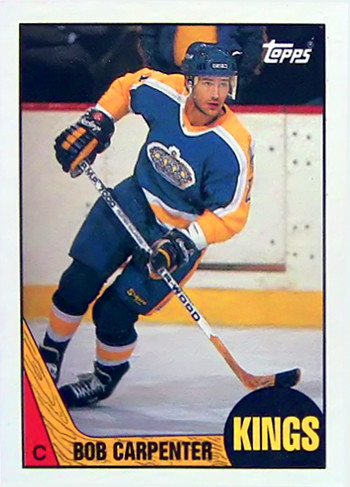
Carpenter Kings 2
Carpenter in the Kings gold and purple

He was on pace for a similar season with Los Angeles in 1988-89, having scored 11 goals and 26 points after 39 games, having been limited by a broken right thumb and wrist in a New Year's Even exhibition game against the Soviet club Dynamo Riga, but Carpenter was again traded back across the country once more, this time to the Boston Bruins in his home state of Massachusetts. With Boston, Carpenter played in just 18 games due to breaking his other thumb, scoring 5 goals and 14 points.

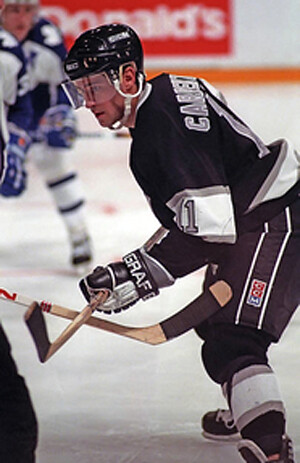
Carpenter Kings
The Kings changed their look during Carpenters time with the team

Carpenter had a nice rebound in 1989-90, scoring 25 goals and 56 points in 80 games, his highest point total in four years. He missed the start of the 1990-91 season due to a knee injury in training camp. Once back on the ice, he played in 29 games, scoring 8 goals and 16 points before a shattered kneecap in early December ended his season.

His 1991-92 season was also limited, this time to 60 games, derailing a fine season during which he had scored 25 goals and 48 points while on a pace to score 65 points that season.

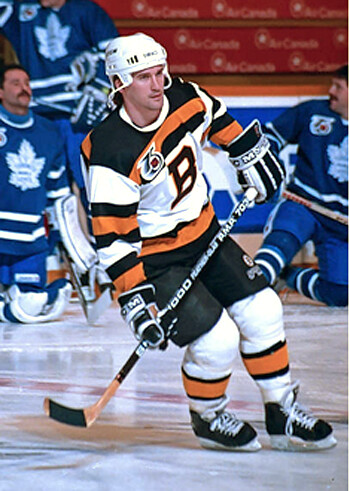
Carpenter Bruins
Carpenter in the Bruins 1991-92 Turn Back the Clock jersey

Due to concerns about his knee, the Bruins did not offer Carpenter a new contract, and he then signed as a free agent with his original club, the Capitals. He played 68 games with Washington in 1992-93, scoring 11 goals and 28 points.

 Carpenter Capitals 2
Carpenter's return to Washington lasted only one season

When the Capitals did not pick up their option on his contract, Carpenter signed with the New Jersey Devils as a free agent for the 1993-94 season after earning a roster spot during a training camp tryout.

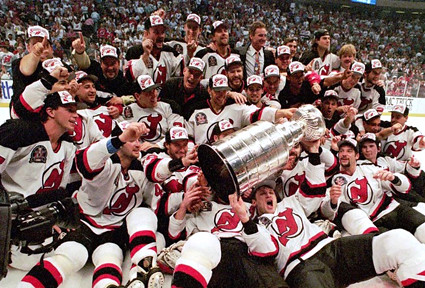
After playing 76 games for the Devils with 33 points that first season, Carpenter would play in 41 of the Devils 48 games in the lockout shortened 1994-95 season. By now his role as a featured offensive player had changed, and in his new role as a defensive checking forward under the guidance of Devil's head coach Jacques Lemaire, he managed 5 goals and 16 points and was a +19. In the playoffs, Carpenter played in 17 of the Devils 20 playoff games as they defeated the Detroit Red Wings to capture the only Stanley Cup of his career.

New Jersey Devils 1995 Stanley Cup
The Devils celebrate winning the Stanley Cup in 1995

He would go on to play four more seasons with New Jersey, although he was often battling injuries which limited him to between 52 and 66 games, which included playing in his 1,000th NHL game on October 19, 1996. He would retire in 1999, never again scoring more than 27 goals after his record setting 53 goal season.

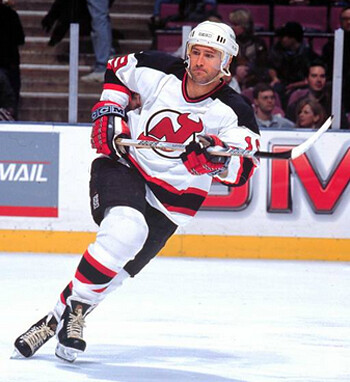
Carpenter Devils
Carpenter would play six seasons in New Jersey

He would finish his career with 1,178 games played with 320 goals and 408 assists for 728 points and a Stanley Cup championship. In 2007 Carpenter was inducted into the United States Hockey Hall of Fame.

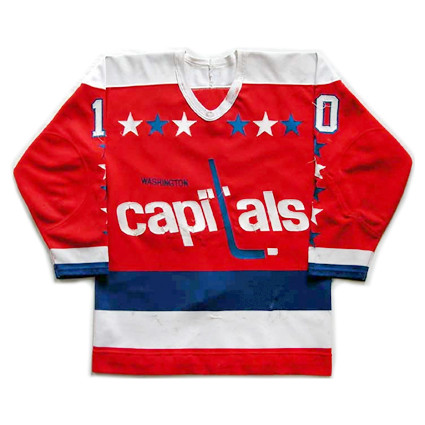
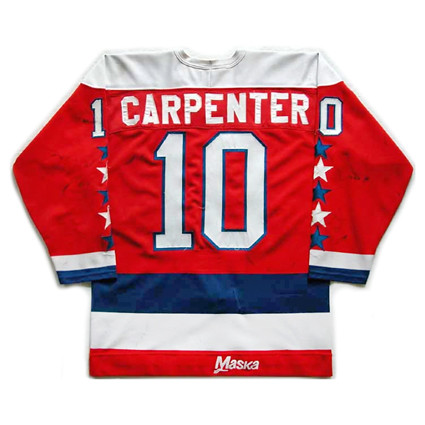
Today's featured jersey is a 1981-82 Washington Capitals Bobby Carpenter jersey as worn during his rookie season following his being drafted third overall, making him not only the highest American ever drafted at the time, but also the first American taken in the first round of the NHL Draft.

The Capitals wore their star-spangled jerseys from their inception in 1974-75 through the 1994-95 season. They brought back their original white jersey for the 2011 Winter Classic, the annual NHL outdoor game held on New Year's Day. They would wear the throwback white version as their third jersey for four seasons until changing to the red version as their alternate for the 2015-16 season.

Washington Capitals 1981-82 F jersey
Washington Capitals 1981-82 B jersey

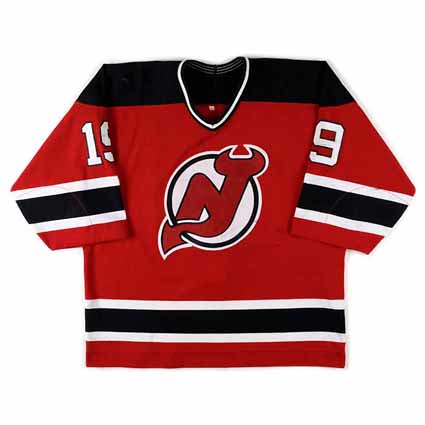
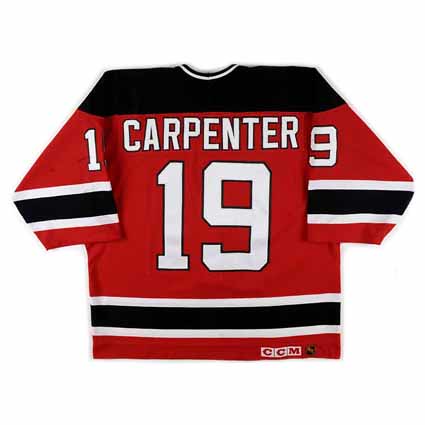
Today's featured jersey is a 1994-95 New Jersey Devils Bobby Carpenter jersey as worn during the season the Devils won the only Stanley Cup of Carpenter's career.

The Devils originally wore red and green jerseys for a decade after their move to New Jersey from Colorado, where they were known as the Rockies in 1982-83. In 1992-93 the club changed to new red and black jerseys and they have remained unchanged ever since while steadfastly refusing to add a third jersey as well.

New Jersey Devils 1994-95 F jersey
New Jersey Devils 1994-95 B jersey

Today's video section looks back at Carpenter's time with the Capitals, recounting his best offensive seasons.


hit counter for blogger