History of Jersey 83-93 Banner sm photo History of Jersey 83-93 Banner sm.jpg
Showing posts with label 1991 Canada Cup. Show all posts

Friday, September 16, 2016

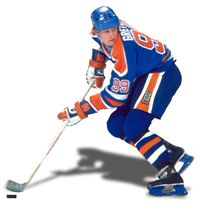
1991 Team Canada Wayne Gretzky Jersey

The 1991 Canada Cup was the fifth and final Canada Cup, which rose out of the success of the 1972 Summit Series, which pitted the Canadian professionals against the best of the Soviet Union for the first time, as the Canadians were not permitted at the time to compete in the Olympics and the vast majority of them were occupied by the NHL playoffs during the annual World Championships.

Canada won the first edition in 1976 against Czechoslovakia, followed by the Soviet defeating Canada in 1981. Canada then defeated Sweden in 1984. The Canadians got their revenge on the Soviets in their thrilling 1987 rematch.

Four years later the final Canada Cup tournament began on August 31st with a field that included the host Canadians, Czechoslovakia, Finland, the Soviet Union, Sweden and the United States.

1991 Canada Cup program photo 1991 Canada Cup program.jpg

The tournament opened with a shocker, as Finland tied the Canadians 2-2. The United States announced their intentions to be a factor with a 6-3 win over the Swedes followed by another apparent surprise, the Czechs having an easy time of it with a 5-2 win over the Soviets.

Jagr photo Jaromir_Jagr.jpg
A young Jaromir Jagr, wearing #15, had just one NHL season under his belt

The Soviets though, were in a period of turmoil at home politically, the fall of the Soviet Union was less than a year away and the sporting authorities feared further defections of some of their star players. Additionally, some players simply declined to play for the team, such as Alexander Mogilny, who was now in the NHL and didn not want to play for his former head coach Viktor Tikhonov. Missing from the 1987 roster were Slava Fetisov, Vladimir Krutov, Igor Larionov, Valeri Kamensky, Sergei Makarov and left at home to prevent them from defecting were Pavel Bure and Vladimir Konstantinov.

Fedorov 1991 Canada Cup photo Fedorov 1991 Canada Cup.png
Sergei Fedorov

The United States got a reality check when Canada won handily 6-3 on September 2nd. Sweden kicked the Soviets while they were down 3-2 and Finland prevailed in a tight 1-0 win over the Czechs.

Selanne photo Teemu_Selanne.jpg
Teemu Selanne prior to his record setting NHL rookie season

Three days later on the 5th, Canada survived as the lone unbeaten team with a 4-1 defeat of Sweden while the Soviets pummeled the Finns 6-1. The USA righted their ship with a 4-2 win over the Czechs.

Day four of the competition on September 7th saw the Canadians continue to roll with a 6-2 win over the Czechs followed by something that had never happened before, as the United States defeated the Soviets 2-1, their first win over the Soviet Union in five Canada Cup tournaments. Finland prevailed 3-1 over Nordic rivals Sweden in the day's third game.

The final day of the round robin portion saw Canada finish without a loss and eliminate the Soviets with a 3-3 tie. The United States defeated Finland 4-4 to tie Canada with 8 points from a 4-1 record. Sweden beat the Czechs 5-2 to place in the top four and qualify for the playoffs and send the Czechs packing.

The Semifinals  on September 11th saw the United States qualify for it's first final with a resounding 7-3 hammering of Finland, while the Canadians did the same, easily dispatching Sweden 4-0 to set up the first all North American final, which was a best-of-three format.

Game 1 in Montreal, Quebec was played on September 14th and saw the hosts get out to a 1-0 lead after one period on a goal by Eric Desjardins at 4:22. Steve Larmer then put Canada up 2-0 at 5:20. This was followed by a hit by Gary Suter on Canadian captain Wayne Gretzky, who he checked from behind into the end boards, knocking the Canadian captain out of the tournament. Even more infuriating to the Canadian fans, Suter responded with a goal for the US at 10:31 to keep the United States in the game heading into the third down by just one.

Suter's goal turned out to be the only one the Americans would get past Canadian goalie Bill Ranford. The Canadians would get two more goals by Mike Richter from Mark Messier and Brent Sutter to cement the victory for Canada.

Richter photo Mike_Richter.jpg
American goaltender Mike Richter

Game 2 was played in Hamilton, Ontario and was a must-win for the United States. Both teams had good chances early, but new Canadian captain Messier opened the scoring at 13:39. Just 20 seconds later, Steve Larmer set the US back on their heels with a second Canada goal in a relative blink of the eye.

Down, but not out, the Americans rallied with goals by Jeremy Roenick at 3:45 on the power play, and after keeping Canada off the board, tied the game at 11:02 when Kevin Miller beat Ranford to make it 2-2.

With the game tied over halfway through the third period, Larmer broke in on Richter shorthanded and scored to put the Canadians back up by one at 3-2, giving them a lead they would never relinquish.

Larmer Chelios photo Larmer Chelios.jpg
Canadian hero Steve Larmer and Chris Chelios of the USA

The US was unable to solve Ranford and the Canadian defense and a Dirk Graham empty net goal at 19:18 provided the final 4-2 margin, giving Canada their fourth Canada Cup in five tries and making them the only team to go through an entire Canada Cup undefeated at 6-0-2.

Messier Canada Cup photo Messier 1991 Canada Cup.jpg
Mark Messier hoists the Canada Cup

Ranford photo Bill Ranford.jpg
Tournament MVP Ranford

Despite missing the final game, Gretzky led all scorers with 4 goals and 12 points in 7 games, followed by hero Larmer, who had 6 goals and 5 assists for 11 points. Brett Hull and Mike Modano led the United States in scoring, each with 2 goals and 9 points to tie for third in tournament scoring.

Gretzky photo Wayne_Gretzky.jpg
Wayne Gretzky led all scorer despite missing the final game

Today's featured jersey is a 1991 Team Canada Wayne Gretzky jersey. Canada would wear this style jersey for all five of the Canada Cup tournaments with it's half-maple leaf crest done in the same style as the tournament trophy. Both the home white and road red jerseys would feature a heavily screen printed crest and sleeve logos rather than a sewn on twill crest.

Canada 1991 CC jersey photo Canada 1991 CC F jersey.jpg
Canada 1991 CC jersey photo Canada 1991 CC B jersey.jpg

In today's video section, the final few minutes of the final game plus the trophy presentation and post game celebrations of the final Canada Cup game ever.


Friday, September 9, 2016

1991 Soviet Union Vitali Prokhorov Jersey

On this day in 1991 the end of an era arrived as the Soviet Union National Team played their final game in a major international tournament.

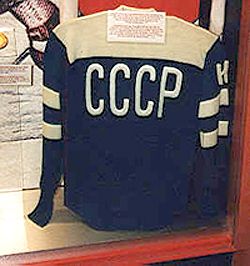
The Soviets announced their arrival on the international hockey scene in fine style (while wearing blue jerseys!), taking the gold medal home from the 1954 World Championships in their first attempt. The Soviets had only started playing ice hockey in 1946 and stunned the hockey world with their 7-2 victory over Canada in the final.

1954 Soviet Union team photo 1954SovietUnionteam.jpg
The Soviet Union won the World Championship on their debut in 1954

After a silver medal in the 1955 World Championships, the Soviet Union claimed it's first Olympic gold medal in 1956 with a perfect 7-0 record.

1956 Soviet Union Olympic team photo 1956SovietUnionOlympicteam-1.jpg
The 1956 Olympic gold medalists from the Soviet Union

After a string of silver and bronze medals from 1957 to 1961, the era of Soviet dominance swung into high gear with ten consecutive gold medals from 1963 to 1972, which included a trio of consecutive Olympic golds in 1964, 1968 and 1972. Their run was interrupted by a silver at the 1972 World Championships before reeling off another four straight from the 1973 World Championships to the 1976 Olympics.

1976 Soviet Union team photo 1976SovietUnionOlympicTeam.png
The Soviet Union National Team poses with their 1976 Olympic gold medals

Five more World Championship titles followed from 1978 to 1983 and their sixth Olympic gold in eight tries in 1984. The final chapter of the Soviet National team saw them win the World Championships in 1986, the Olympics in 1988 and their final two Worlds in 1989 and 1990, the last gold medal for the Soviet Union National Team.

 photo 1988SovietUnionOlympicteam-1.png
The final Olympic gold medal for the Soviets came in 1988

With the political landscape at home undergoing a historic upheaval, the Soviet Union was unsure if they would even send a team to compete in the 1991 Canada Cup, but they eventually took part. Having suffered the loss of young star Alexander Mogilny to defection and players such as Slava Fetisov, Vyacheslav Bykov, Andrei Khomutov, Pavel Bure and Vladimir Konstantinov all unavailable due to commitments with professional clubs in the NHL and Europe, Evgeny Davydov left off the squad for refusing to sign a contract with the Red Army club team, and the refusal of Latvian goaltender Arturs Irbe to play for the Soviet National Team any further for personal political reasons, the Soviets did eventually decided to field a team just a few weeks before the tournament.

The Soviets set the tone for their tournament with an opening 5-2 loss to Czechoslovakia. A 3-2 loss to Sweden followed before showing signs of life when they pounded Finland 6-1. A 2-1 loss to the United States put their participation in peril.

With one playoff round berth remaining up for grabs, Czechoslovakia, Sweden and the Soviet Union were tied at 2 points apiece with a single game remaining. Before the Soviets could even take to the ice, Sweden defeated Czechoslovakia, knocking the Soviet Union out of the upcoming playoff round.

In their final game, the best they could hope for was to deny Canada the top seed going forward. Ravil Khaidarov scored for the Soviets at 3:13 of the first, but the period ended even when Canada scored at 14:47 on the power play.

Fedorov 1991 Canada Cup photo Fedorov 1991 Canada Cup.png
Sergei Fedorov

Andrei Kovalenko scored unassisted at 7:46 followed but Canada's Bill Ranford stopped Vitali Prokhorov from converting a penalty shot less than a minute to give Canada a boost by keeping the score at 2-1.

Steve Larmer evened the score for Canada at 7:15 of the third following a penalty to Soviet goaltender Mikhail Shtalenkov. Alexander Semak put the Soviet Union back on top with under seven minutes to play, but Canada's Brent Sutter tied the game with 5:18 to play.

Mikhail Shtalenkov 1991 Canada Cup photo Mikhail Shtalenkov 1991 Canada Cup.png
Mikhail Shtalenkov

The game would remain tied at the end, giving Canada the top spot in the Round Robin stage and bring a quiet end to the history of the Soviet Union National Team following 37 years of excellence.

From 1954 to the 1991 Worlds, the Soviet Union took home a medal in every World Championship and Olympic Games, a streak of 39 out of 40. The only time they do not appear on the podium is 1962 when they did not participate due to international politics outside of the sporting world.

In addition to the World Championships and Olympics, the Soviets won the championship in 1981, placed second in 1987 and third in 1976, lost in the semifinal in 1984 in the first four Canada Cup tournaments.

Today's featured jersey is a 1991 Soviet National Team Vitali Prokhorov jersey. This style was a huge departure from the minimalist Soviet designs of the past. Prior to the 1991 Canada Cup, the vast majority of Soviet jerseys were simple red jerseys with a few basic white stripes and one color white numbers adorned with "CCCP" across the chest in a very basic font.

Just the addition of yellow accents and running the CCCP logo at an upwards diagonal by Tackla in the 1989 was considered flashy by Soviet standards.

The addition of the bold use of black, the stylized font used for the CCCP logo and the full length sleeve stripes made for an arresting look which seemed more at home in the NHL, while still retaining the intimidating look of The Big Red Machine, even if the team's roster had changed.

There was an early prototype of this jersey made with an even more arresting hammer and sickle logo, but that style was never used in competition but remains available in replica versions, and is in fact much more commonly found that the actual 1991 Canada Cup game worn version featured here.

Soviet Union 1991 jersey
photo courtesy of Classic Auctions

Our video section today begins with a tribute to Soviet hockey history and their many successes.


Next, classic Soviet hockey footage is shown as Igor Larionov's daughters Alyonka and Diana sing Ave Maria prior to a legends game outdoors in Moscow's Red Square.

Tuesday, September 9, 2014

1991 Soviet Union Vitali Prokhorov Jersey

On this day in 1991 the end of an era arrived as the Soviet Union National Team played the final game in it's history.

The Soviets announced their arrival on the international hockey scene in fine style (while wearing blue jerseys!), taking the gold medal home from the 1954 World Championships in their first attempt. The Soviets had only started playing ice hockey in 1946 and stunned the hockey world with their 7-2 victory over Canada in the final.

1954 Soviet Union team photo 1954SovietUnionteam.jpg
The Soviet Union won the World Championship on their debut in 1954

After a silver medal in the 1955 World Championships, the Soviet Union claimed it's first Olympic gold medal in 1956 with a perfect 7-0 record.

1956 Soviet Union Olympic team photo 1956SovietUnionOlympicteam-1.jpg
The 1956 Olympic gold medalists from the Soviet Union

After a string of silver and bronze medals from 1957 to 1961, the era of Soviet dominance swung into high gear with ten consecutive gold medals from 1963 to 1972, which included a trio of consecutive Olympic golds in 1964, 1968 and 1972. Their run was interrupted by a silver at the 1972 World Championships before reeling off another four straight from the 1973 World Championships to the 1976 Olympics.

1976 Soviet Union team photo 1976SovietUnionOlympicTeam.png
The Soviet Union National Team poses with their 1976 Olympic gold medals

Five more World Championship titles followed from 1978 to 1983 and their sixth Olympic gold in eight tries in 1984. The final chapter of the Soviet National team saw them win the World Championships in 1986, the Olympics in 1988 and their final two Worlds in 1989 and 1990, the last gold medal for the Soviet Union National Team.

 photo 1988SovietUnionOlympicteam-1.png
The final Olympic gold medal for the Soviets came in 1988

With the political landscape at home undergoing a historic upheaval, the Soviet Union was unsure if they would even send a team to compete in the 1991 Canada Cup, but they eventually took part. Having suffered the loss of young star Alexander Mogilny to defection and players such as Slava Fetisov, Vyacheslav Bykov, Andrei Khomutov, Pavel Bure and Vladimir Konstantinov all unavailable due to commitments with professional clubs in the NHL and Europe, Evgeny Davydov left off the squad for refusing to sign a contract with the Red Army club team, and the refusal of Latvian goaltender Arturs Irbe to play for the Soviet National Team any further for personal political reasons, the Soviets did eventually decided to field a team just a few weeks before the tournament.

The Soviets set the tone for their tournament with an opening 5-2 loss to Czechoslovakia. A 3-2 loss to Sweden followed before showing signs of life when they pounded Finland 6-1. A 2-1 loss to the United States put their participation in peril.

With one playoff round berth remaining up for grabs, Czechoslovakia, Sweden and the Soviet Union were tied at 2 points apiece with a single game remaining. Before the Soviets could even take to the ice, Sweden defeated Czechoslovakia, knocking the Soviet Union out of the upcoming playoff round.

In their final game, the best they could hope for was to deny Canada the top seed going forward. Ravil Khaidarov scored for the Soviets at 3:13 of the first, but the period ended even when Canada scored at 14:47 on the power play.

Andrei Kovalenko scored unassisted at 7:46 followed but Canada's Bill Ranford stopped Vitali Prokhorov from converting a penalty shot less than a minute to give Canada a boost by keeping the score at 2-1.

Steve Larmer evened the score for Canada at 7:15 of the third following a penalty to Soviet goaltender Mikhail Shtalenkov. Alexander Semak put the Soviet Union back on top with under seven minutes to play, but Canada's Brent Sutter tied the game with 5:18 to play.

The game would remain tied at the end, giving Canada the top spot in the Round Robin stage and bring a quiet end to the history of the Soviet Union National Team following 37 years of excellence.

From 1954 to the 1991 Worlds, the Soviet Union took home a medal in every World Championship and Olympic Games, a streak of 39 out of 40. The only time they do not appear on the podium is 1962 when they did not participate due to international politics outside of the sporting world.

In addition to the World Championships and Olympics, the Soviets won the championship in 1981, placed second in 1987 and third in 1976, lost in the semifinal in 1984 in the first four Canada Cup tournaments.

Today's featured jersey is a 1991 Soviet National Team Vitali Prokhorov jersey. This style was a huge departure from the minimalist Soviet designs of the past. Prior to the 1991 Canada Cup, the vast majority of Soviet jerseys were simple red jerseys with a few basic white stripes and one color white numbers adorned with "CCCP" across the chest in a very basic font.

Just the addition of yellow accents and running the CCCP logo at an upwards diagonal by Tackla in the 1989 was considered flashy by Soviet standards.

The addition of the bold use of black, the stylized font used for the CCCP logo and the full length sleeve stripes made for an arresting look which seemed more at home in the NHL, while still retaining the intimidating look of The Big Red Machine, even if the team's roster had changed.

There was an early prototype of this jersey made with an even more arresting hammer and sickle logo, but that style was never used in competition but remains available in replica versions, and is in fact much more commonly found that the actual 1991 Canada Cup game worn version featured here.

Soviet Union 1991 jersey

Our video section today begins with a tribute to Soviet hockey history and their many successes.


Next, classic Soviet hockey footage is shown as Igor Larionov's daughters Alyonka and Diana sing Ave Maria prior to a legends game outdoors in Moscow's Red Square.

Thursday, September 9, 2010

1991 Soviet Union Vitali Prokhorov Jersey

On this day in 1991 the end of an era arrived as the Soviet Union National Team played the final game in it's history.

The Soviets announced their arrival on the international hockey scene in fine style (while wearing blue jerseys!), taking the gold medal home from the 1954 World Championships in their first attempt. The Soviets had only started playing ice hockey in 1946 and stunned the hockey world with their 7-2 victory over Canada in the final.

1954 Soviet Union team photo 1954SovietUnionteam.jpg
The Soviet Union won the World Championship on their debut in 1954

After a silver medal in the 1955 World Championships, the Soviet Union claimed it's first Olympic gold medal in 1956 with a perfect 7-0 record.

1956 Soviet Union Olympic team photo 1956SovietUnionOlympicteam-1.jpg
The 1956 Olympic gold medalists from the Soviet Union

After a string of silver and bronze medals from 1957 to 1961, the era of Soviet dominance swung into high gear with ten consecutive gold medals from 1963 to 1972, which included a trio of consecutive Olympic golds in 1964, 1968 and 1972. Their run was interrupted by a silver at the 1972 World Championships before reeling off another four straight from the 1973 World Championships to the 1976 Olympics.

1976 Soviet Union team photo 1976SovietUnionOlympicTeam.png
The Soviet Union National Team poses with their 1976 Olympic gold medals

Five more World Championship titles followed from 1978 to 1983 and their sixth Olympic gold in eight tries in 1984. The final chapter of the Soviet National team saw them win the World Championships in 1986, the Olympics in 1988 and their final two Worlds in 1989 and 1990, the last gold medal for the Soviet Union National Team.

 photo 1988SovietUnionOlympicteam-1.png
The final Olympic gold medal for the Soviets came in 1988

With the political landscape at home undergoing a historic upheaval, the Soviet Union was unsure if they would even send a team to compete in the 1991 Canada Cup, but they eventually took part. Having suffered the loss of young star Alexander Mogilny to defection and players such as Slava Fetisov, Vyacheslav Bykov, Andrei Khomutov, Pavel Bure and Vladimir Konstantinov all unavailable due to commitments with professional clubs in the NHL and Europe, Evgeny Davydov left off the squad for refusing to sign a contract with the Red Army club team, and the refusal of Latvian goaltender Arturs Irbe to play for the Soviet National Team any further for personal political reasons, the Soviets did eventually decided to field a team just a few weeks before the tournament.

The Soviets set the tone for their tournament with an opening 5-2 loss to Czechoslovakia. A 3-2 loss to Sweden followed before showing signs of life when they pounded Finland 6-1. A 2-1 loss to the United States put their participation in peril.

With one playoff round berth remaining up for grabs, Czechoslovakia, Sweden and the Soviet Union were tied at 2 points apiece with a single game remaining. Before the Soviets could even take to the ice, Sweden defeated Czechoslovakia, knocking the Soviet Union out of the upcoming playoff round.

In their final game, the best they could hope for was to deny Canada the top seed going forward. Ravil Khaidarov scored for the Soviets at 3:13 of the first, but the period ended even when Canada scored at 14:47 on the power play.

Andrei Kovalenko scored unassisted at 7:46 followed but Canada's Bill Ranford stopped Vitali Prokhorov from converting a penalty shot less than a minute to give Canada a boost by keeping the score at 2-1.

Steve Larmer evened the score for Canada at 7:15 of the third following a penalty to Soviet goaltender Mikhail Shtalenkov. Alexander Semak put the Soviet Union back on top with under seven minutes to play, but Canada's Brent Sutter tied the game with 5:18 to play.

The game would remain tied at the end, giving Canada the top spot in the Round Robin stage and bring a quiet end to the history of the Soviet Union National Team following 37 years of excellence.

From 1954 to the 1991 Worlds, the Soviet Union took home a medal in every World Championship and Olympic Games, a streak of 39 out of 40. The only time they do not appear on the podium is 1962 when they did not participate due to international politics outside of the sporting world.

In addition to the World Championships and Olympics, the Soviets won the championship in 1981, placed second in 1987 and third in 1976, lost in the semifinal in 1984 in the first four Canada Cup tournaments.

Today's featured jersey is a 1991 Soviet National Team Vitali Prokhorov jersey. This style was a huge departure from the minimalist Soviet designs of the past. Prior to the 1991 Canada Cup, the vast majority of Soviet jerseys were simple red jerseys with a few basic white stripes and one color white numbers adorned with "CCCP" across the chest in a very basic font.

Just the addition of yellow accents and running the CCCP logo at an upwards diagonal by Tackla in the 1989 was considered flashy by Soviet standards.

The addition of the bold use of black, the stylized font used for the CCCP logo and the full length sleeve stripes made for an arresting look which seemed more at home in the NHL, while still retaining the intimidating look of The Big Red Machine, even if the team's roster had changed.

There was an early prototype of this jersey made with an even more arresting hammer and sickle logo, but that style was never used in competition but remains available in replica versions, and is in fact much more commonly found that the actual 1991 Canada Cup game worn version featured here.

Soviet Union 1991 jersey

Our video section today begins with a tribute to Soviet hockey history and their many successes.


Next, classic Soviet hockey footage is shown as Igor Larionov's daughters Alyonka and Diana sing Ave Maria prior to a legends game outdoors in Moscow's Red Square.


hit counter for blogger