History of Jersey 83-93 Banner sm photo History of Jersey 83-93 Banner sm.jpg
Showing posts with label Ottawa Silver Seven. Show all posts

Saturday, January 16, 2016

1905 Ottawa Silver Seven Frank McGee Jersey

Born in 1882, Frank McGee excelled at sports, rowing, playing lacrosse and rugby, which included winning a Canadian championship in 1898. But what McGee is best remembered for was his goal scoring prowess at hockey.

In 1900, at the age of 17, while playing in a charity exhibition game with a local Canadian Pacific Railway team, McGee permanently lost the sight in one eye when hit with a high stick. He quit playing to become a referee, but quickly returned to playing despite the risk of losing the vision in his remaining good eye.

After playing junior and intermediate level hockey in his native Ottawa, he joined the Ottawa Hockey Club for the 1903 season. He appeared in six of the club's eight games and immediately showed his offensive skills with 14 goals to place second overall in the Canadian Amateur Hockey League.

In the CAHL playoffs, McGee and Ottawa faced off against the Montreal Victorias in a two-game total-goal series for the rights to the Stanley Cup. Game 1 finished tied at 1-1, with McGee held scoreless. Ottawa roared to life in Game 2, however, as McGee led the Ottawa onslaught with a hat trick as they overpowered the Victorias 8-0. As a result of their 9-1 triumph, Ottawa became league champions were declared holders of the cup for the first time in club history.

Two days later the new champions were challenged for their new trophy by the Rat Portage Thistles in a best-of-three series. Game 1 went to Ottawa 6-2, with McGee scoring twice. Two days later, Ottawa successfully defended their trophy with a 4-2 win, with McGee scoring twice more, including the cup winning goal at 8:20 of the first half, as the game had yet to be divided into three periods. As a reward for their victory, each member of the squad would receive a silver nugget, which gave birth to the team's new nickname, The Silver Seven.
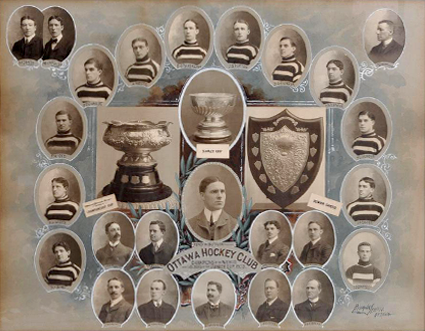
1903 Ottawa Senators Hockey Club Pictures, Images and Photos
The Stanley Cup champion 1903 Ottawa Hockey Club

Before the 1904 CAHL season began, Ottawa faced another challenge for the Stanley Cup, this from the Winnipeg Rowing Club. A best-of-three series, play began on December 30th, 1903. When the series concluded on January 4, 1904, the Silver Seven prevailed after a 9-1 win, a 6-2 loss and a 2-0 shutout in Game 3.

Ottawa had a tumultuous 1904 season, as they withdrew from the CAHL after only four games and joined the new Federal Amateur Hockey League, but did not participate in any of the FAHL regular season games. In the four CAHL games Ottawa did compete in, McGee scored 12 times, which was still good enough to place him fifth in the final scoring totals.

After leaving the CAHL, the Silver Seven would face a cup challenge from the Toronto Marlboros, whom they would turn away 2 games to none in their best-of-three challenge in late February of 1904.

Once the FAHL regular season was concluded, it's regular season champions, the Montreal Wanderers met the Silver Seven to compete in a two-game, total-goal series for the FAHL championship and the rights to the Stanley Cup that went with it. At least that was the plan. The first game ended in a 5-5 tie when the Wanderers refused to play overtime with the same referee in charge and then had the temerity to demand the series begin anew as a best-of-three! When the trustees of the cup ordered the series to continue as planned, the Wanderers abandoned their challenge, leaving the Silver Seven as FAHL champions despite their having played but a single tie game in league competition! During the tie game, McGee added another goal to his career total.

A final challenge to Ottawa was arranged for one week later, this from Brandon Wheat Cities in another best-of-three format, which the Silver Seven turned away with a pair of victories. While McGee had only played in four regular season games during the 1904 season, he skated in eight cup challenge games, scoring 21 times as the Silver Seven turned away no less than four separate challengers.

In their first full season of FAHL competition in 1905, Ottawa came first with a 7-1 record as McGee would tie for the league lead with 17 goals, but he would score his while playing in two less games than Jack Marshall. The highlight of McGee's regular season would be a five goal performance on February 4th.

During the season, the Dawson City Nuggets would travel 4,000 miles from the Yukon to challenge Ottawa. Their trip would take a month to complete and include traveling on foot, by sled dog, automobile, ship and train. Game 1 of the best-of-three would go to Ottawa by a score of 9-2, with McGee scoring once. Game 2 on this date in 1905 would be one for the ages, as Ottawa continued to pile up goals at a furious pace, eventually winning by an unfathomable 23-2 final score with McGee setting a record which still stands today, as he scored an incredible 14 times! Eight of McGee's goals were consecutive and came in under nine minutes of playing time.

As league champions, Ottawa retained the cup and was challenged once again by the Rat Portage Thistles. McGee did not play in Game 1, which was won by the Thistles 9-3. McGee returned for Games 2 and 3, which were won by Ottawa 4-2 and 5-4 with McGee scoring three times.
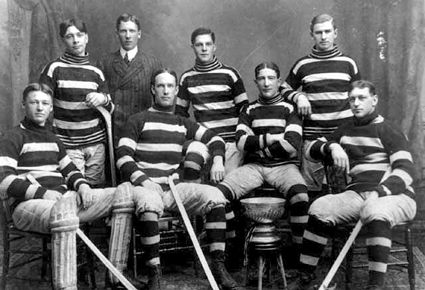
1905 Ottawa Silver Seven Pictures, Images and Photos
The Stanley Cup champion 1905 Ottawa Silver Seven

For the 1906 season, the Silver Seven moved to the new Eastern Canada Amateur Hockey Association. They tied for the best record at 9-1. McGee was third in league scoring with 28 goals in seven games, which included an eight goal performance on March 3rd.

Ottawa would face two challenges during the regular season, first from Queen's University in a best-of-three. After Game 1 went the way of the Silver Seven 16-7, there was little doubt that the cup would change hands, which was confirmed by a 12-7 score in Game 2. McGee scored four times in Game 1.

Just prior to the end of the regular season, Ottawa again had to face a cup challenge, this from Smiths Falls in another best-of-three series. Ottawa had little trouble defending it's now three year grip on the Stanley Cup, as they won two straight by scores of 6-5 and 8-2. In all, McGee scored 15 times in the four cup challenge games that season.

The final two games of McGee's career came in the ECAHA playoffs on March 14th and 17th, 1906. The series was a two-game, total-goal affair. The Montreal Wanderers put in an early claim on the cup with a resounding 9-1 win in the first game.

Ottawa was down, but not out, as they entered Game 2, but 12 minutes in, Montreal scored again to increase their lead to nine goals. McGee got Ottawa on the board in the first half and again before the half ended to help cut the margin to 10-4. The Silver Seven would come out flying in the second half, and score six consecutive goals to even the series at 10-10! In the final seven minutes of the contest, Lester Patrick would score to put Montreal in front and then end the three year reign of the Silver Seven with an empty net goal in the final seconds.

It would be McGee's final game as a hockey player in a career which spanned four seasons, divided between 23 regular season games in which he scored 71 goals, an average of more than three per game. Mc Gee would also participate in 22 playoff and Stanley Cup challenge games during which he would score 63 times, including his record 14 in one game in 1905, all while only having vision in one eye.

Frank Patrick was quoted as saying about McGee, "He was even better than they say he was. He had everything - speed, stick handling, scoring ability and was a punishing checker. He was strongly built but beautifully proportioned and he had an almost animal rhythm."

Following his retirement as a player at just 23 years of age, said to be because his government job would not allow him to travel. Despite having vision in only one eye, he somehow was accepted into the military at age 32. His certificate of examination noted that McGee could "see the required distance with either eye" after he apparently tricked the doctor by covering his bad eye with first one hand and then the other during his exam.

He began to serve in May of 1915 before suffering a knee injury when his vehicle was hit by an artillery shell. While out of action he was given the opportunity to take a non-combat posting in the northwest of France far from the battle, but chose instead to return to the front in August only to be killed in action on September 16, 1916. His body was never recovered.

Frank McGee
Lieutenant Frank McGee

McGee was later elected to the Hockey Hall of Fame in the first class to be inducted in 1945.

Today's featured jersey is a 1905 Ottawa Silver Seven Frank McGee jersey as worn during his record setting 14 goal game against Dawson City. The Senators trademark red, black and white horizontal "barberpole" stripes were first adopted in 1903, and except for one season with vertical stripes in 1910-11, remained in use through the original Senators final season in Ottawa of 1933-34, with the addition of the letter "O" crest from 1929-30 on.

Ottawa Silver Seven Senators 1905 jersey

Saturday, October 24, 2015

1903 Ottawa Senators Bouse Hutton Jersey

One of history's most accomplished multi-sport talents, John "Bouse" Hutton, was born on this date in 1877. His hockey career began in 1899 with two appearances for the Ottawa Hockey Club, then members of the Canadian Amateur Hockey League.

Bouse Hutton
John "Bouse" Hutton

Hutton, a goaltender, then took the reigns by playing in 7 of the team's 8 games in 1900, completing the season with a 2.71 goals against average which was second best in the CAHL. He would go undefeated in 1901 with a 7-0-1 record to carry Ottawa to the league championship while lowering his goals against average to 2.50 to lead the league.

1901 Ottawa Senators
The 1901 Ottawa Hockey Club

After the conclusion of the hockey season, Hutton also played in goal for the Ottawa Capitals for the summer lacrosse season and won the inaugural Minto Cup as the top senior team in Canada.

Bouse Hutton Capitals
A Bouse Hutton lacrosse card

He would again tie for the best goals against average in 1902 at 1.70, which included a pair of shutouts while once again playing in all 8 games. Prior to the start of the winter hockey season, Hutton would win another championship, only this one as a fullback for the Ottawa Rough Riders of Canadian football.

Ottawa would return to the top spot in the standings in 1903 as Hutton again contributed a pair of shutouts.

At the conclusion of the regular season, Ottawa defeated the Montreal Victorias in a two-game total goals series. After a 1-1 tie in the opening game, Ottawa cruised to the title with a 8-0 romp in game two to be awarded the Stanley Cup as league champions. Four days later they defended the cup by defeating the Rat Portage Thistles 6-2 and 4-2 in a best-of-three.

1903 Ottawa Senators Hockey Club
The 1903 holders of the Stanley Cup - The Ottawa Silver Seven

Prior to the start of the 1904 season, Ottawa, now known as "The Silver Seven" after the players were each awarded a silver nugget for winning the Stanley Cup, defended their trophy against a challenge from the Winnipeg Rowing Club. They successfully turned back the visitors in their best-0f-three series by winning the first game 9-1 and, after dropping the second 6-2, retained the cup following their 2-0 win as Hutton added another shutout to his record.
As the landscape of the hockey world was an unsettled one during it's formative years, Hutton won all four of Ottawa's games in the CAHL before the team withdrew from the league at mid-season.

Having retained possession of the cup despite leaving the CAHL, Ottawa would easily turn back the challenge of the Toronto Marlboros 6-3 and 11-2 in their best-of-three series in late February. A week later a two-game total goal series was arranged against the Montreal Wanderers. Regulation time of the first game ended 5-5, Montreal refused to play an overtime, demanding the game be considered a no-contest and requested the series start over as a best-of-three. When that proposal was turned down, Montreal abandoned their challenge and Ottawa not only retained the cup, but were also named champions of the Federal Amateur Hockey League (the league the Wanderers were members of and Ottawa was scheduled to join the following season after leaving the CAHL) despite never having played a game in the league at the time!

The Silver Seven had one more challenge to face that season, this from the Brandon Wheat Cities club, whom Ottawa would easily handle 6-3 and 9-3. Hutton's record in Ottawa's cup challenge games was 6-1-1 with a 2.90 goals against.

Following the 1904 hockey season Hutton retired from hockey to focus on lacrosse where he won a second Minto Cup with the Capitals. Following their championship, the Capitals toured England and won 23 out of 24 games.

Having been retired from hockey for five years, Huton returned to the ice in 1909 with a new club named the Ottawa Senators in the same FAHL as his original team, the Ottawa Silver Seven, who had by then moved onto yet another league. In five games, Hutton finished with a record of 3-2 with one shutout to end his career for good.

Hutton was elected to the Hockey Hall of Fame in 1962.

Today's featured jersey is a 1903 Ottawa Silver Seven Bouse Hutton jersey with the Senators trademark black, red and white horizontal "barberpole" stripes. This style of jersey was first adopted in 1903, and except for one season with vertical stripes in 1910-11, remained in use through the original Senators final season in Ottawa of 1933-34, with the addition of the letter "O" crest from 1929-30 on.

Ottawa Senators 1903 jersey

Wednesday, June 3, 2015

1897 Ottawa Hockey Club Alf Smith Jersey

Born on this date in 1873, Alf Smith was an early hockey pioneer who began his career with the Ottawa Hockey Club of the Amateur Hockey Association of Canada (AHAC) in 1895 at the age of 22. He played three seasons for the club, recording a total of 24 goals in 24 games.

1985 Ottawa Hockey Club
The 1895 Ottawa Hockey Club with rookie Smith
seated on a stool second from the left

During the 1898 season Smith was playing for the Ottawa Capitals in a lower division of the AHAC but was ruled ineligible to compete when it was discovered he had accepted a $100 bonus for playing for the Capitals lacrosse team. The ruling kept Smith off the ice for the next three years but not away from hockey, as he coached the Ottawa Hockey Club to the 1901 Canadian Amateur Hockey League championship.

1901 Ottawa Hockey Club
The 1901 Ottawa Hockey Club with coach Smith
pictured in the bottom left corner

Smith returned to active play as a professional in 1902 as a member of the Pittsburgh Athletic Club of the Western Pennsylvania Hockey League in fine style, scoring 11 times in 14 games.

He returned to his hometown of Ottawa in 1903 and coached the Ottawa Hockey Club, now nicknamed "The Silver Seven" to their first Stanley Cup against the Montreal Victorias with a dominant 9-1 margin in their two-game, total-goals series.

Smith was then reinstated as an amateur for the 1904 season, but also retained his duties as the team's coach while playing right wing. This was the beginning of a run of success for Smith and the legendary Silver Seven, as they retained the Stanley Cup in ten consecutive challenges from March of 1903 to March of 1906, defeating the Rat Portage Thistles (2 games to 1 just days after defeating the Victorias), the Winnipeg Rowing Club (2 games to 1 in January 1904), the Toronto Marlboros (2 games to none in February of 1904) and retained the cup after a challenge by the Montreal Wanderers was abandoned. In a complicated turn of events, the first game of the total goals series was tied at 5-5, but Montreal refused to play overtime! The Wanderers demanded that the game be declared a no-contest and proposed that the series start over as a best of three, but the trustees of the cup decreed that the series continue as scheduled and Montreal refused to travel to Ottawa to continue the series, allowing Ottawa to retain possession of the cup.

Alf Smith Ottawa
The reinstated Smith in the Silver Seven's iconic barberpole sweater

With that bit of ugliness behind them, the Silver Seven defeated Brandon Wheat Cities 2 games to none nine days later in March of 1904. In one of the stories that made the Stanley Cup famous, the Dawson City Nuggets travelled 4,000 miles to Ottawa all the way from the Yukon, including by bicycle, train, steamship and even dogsled as well as having to walk several hundred miles on foot, only to be greeting by the greatest team of the era, who slaughtered the visitors 9-2 followed by a score of 23-2.

Smith and the Silver Seven retained the rights to the cup by winning the 1905 Federal Amateur Hockey League championship and then withstood a challenge from the Rat Portage Thistles 2 games to 1 in March of 1905.

1905 Ottawa Silver Seven Pictures, Images and Photos
The 1905 Ottawa Silver Seven, with player and coach
Alf Smith sitting astride the Stanley Cup

The next to fail to unseat Ottawa was Queen's University, who went down 2 games to none in February of 1906 followed a week later by the Smiths Falls Hockey Club, again 2 games to none.

During the period of the Silver Seven's dominance, Smith scored 34 regular season goals in 22 games as well as 32 goals in 18 playoff contests. Ottawa lost their grip on the Stanley Cup following a second place finish in the Eastern Canada Hockey Amateur Hockey Association's 1907 season although Smith scored 17 times in 9 games.

With his ECAHA season over, the Kenora Thistles attempted to add Smith to their roster for the Stanley Cup series against Brandon Wheat City, but he was excluded by the trustees. For their series against the Montreal Wanderers on March of 1907, Smith was again added to the Thistles roster and again ruled ineligible. However, the series began with Smith playing and the trustee. Mr. Foran, was informed that Montreal had dropped it's protest, which was actually not the case. The trustee then threatened to take the cup back to Ottawa, but the teams played the series anyway, with Montreal winning.

Back with Ottawa, now using their final name of the Senators, for the 1908 season, Smith had a strong campaign, scoring 12 goals in nine games. The next season was an eventful one for Smith as he returned to Pittsburgh to join the Duquesne hockey club of the WPHL only to be suspended after three games for rough play. He next joined the Pittsburgh Bankers, only to suffer the same treatment, again being suspended for rough play after just two games. Clearly not a fit for the WPHL, he returned to Ottawa and joined a Federal Hockey League team he founded also named the Senators.

He also coached the Ottawa Cliffsides to the Allan Cup championship that same season. With his playing days over, Smith then concentrated on his coaching career, which included managing the Renfrew Millionaires, the Ottawa Hockey Club, now known as the Senators and was the first coach of the New York Americans of the NHL in 1926.

In all, Smith played in 107 games over 15 seasons, scoring 135 goals. He was inducted into the Hockey Hall of Fame in 1962.

Today's featured jersey is an 1897 Ottawa Hockey Club Alf Smith jersey. The Ottawa Hockey Club would evolve through a series of white sweaters while they were loosely known as the "Generals", which included this simple white sweater with a plain black "O" with beveled corners. Their sweaters became slightly more elaborate with red sleeves and a rounded red "O" before returning to their iconic red, black and white barberpole jerseys around 1904 when they became known as "The Silver Seven".

Ottawa Hockey Club 1897 sweater

While this is the best photo we can find of Smith wearing this style, here is an illustration of the complete, simple sweater.

Ottawa Hockey Club 1897 illustration

Thursday, April 23, 2015

1903 Ottawa Silver Seven Harry Westwick Jersey

Accompished at both lacrosse and hockey, Harry "Rat" Westwick was born on this date in 1876 amd earned his derisive nickname when a journalist covering a rival club from Quebec called him a "miserable, insignificant rat".

He played junior hockey for the Ottawa Aberdeens in 1893 before joining the senior level, fledgling Ottawa Hockey Club for the 1894-95 season. The club had been formed in 1893, but hockey was in such a state of infancy at the time that they were the first club in all of Ontario, and as such, had no opponents to play against!

1985 Ottawa Hockey Club photo 1985OttawaHockeyClub.jpg
The 1895 Ottawa Hockey Club

Westwick actually started as the club's goaltender for his first pair of games, a win and a loss. Westwick would score his first goal for the club that season after being moved up to the rover position after his quick skating ability was recognized.

During the summer he played lacrosse for the Ottawa Capitals, who were accused of paying their players. Those accusations got Westwick suspended from the hockey club. He denied the charges and was reinstated. Eventually, he would play in 8 games of the 1895-96 season, scoring 8 goals. He would play another 8 games in 1896-97, scoring 6 goals that season. After scoring a single goal in five games of the 1897-98 season, accusations of player payments once again arose, the Westwick would again be suspended by the Canadian Amateur Athletic Union.

Westwick returned to the Ottawa Hockey Club for the 1900-01 season with his scoring touch still intact, as he registered 6 goals in 7 games that season for eighth overall in the Canadian Amateur Hockey League. The 1901-02 season saw him hit double digits for the first time, scoring 11 goals in 8 games to lead the club in scoring and finish third overall in the CAHL.

1901 Ottawa Senators photo 1901OttawaHockeyClub-1.jpg
The 1901 Ottawa Hockey Club,
known in it's early days as the Generals

For the 1902-03 season, Westwick contributed 6 goals in 6 games, as Ottawa finished tied atop the standings with the Montreal Victorias at 6-2, which necessitated a playoff. The first game ended tied at 1-1, but Ottawa stormed to an 8-0 victory in Game 2 to lay claim to the first Stanley Cup in team history. Two days after earning the rights to the cup for surpassing the Victorias as CAHL champions, the Ottawa Hockey Club would have to defend their new trophy against the Rat Portage Thistles, who they easily defeated 6-2 and 4-2 for a 10-4 win in the two-game, total goals series.

1903 Ottawa Senators Hockey Club photo 1903OttawaSenatorsHockeyClub.png
The 1903 holders of the Stanley Cup - the Ottawa Hockey Club

The Ottawa Hockey Club players would each receive a silver nugget for their championship, which quickly led to the team becoming known as the Ottawa Silver Seven. While Westwick was limited to only two games of the 1903-04 regular season, he would score 5 goals. The Silver Seven would controversially leave the CAHL during the season, but the trustees of the cup ruled that it belonged to Ottawa and not the eventual winners of the CAHL.

During the early part of the CAHL season, Ottawa would defend the cup from a challenge made by the Winnipeg Rowing Club. Westwick led Ottawa with 4 goals during their opening 9-1 win. Winnipeg rebounded with a 6-2 win in Game 2, although Westwick had one of the two Ottawa goals. They then retained the Stanley Cup with a 2-0 win in the decisive Game 3.

Harry Westwick Senators photo Harry Westwick Ottawa.png
Harry "Rat" Westwick in the barberpole stripes that would become Ottawa's trademark jersey for over 30 seasons after being adopted in 1903. It's difficult to tell in black and white photos, but the upper half of the dark stripe is red, while the lower half is black.

1904 would also see the end of Westwick's lacrosse career, which began in 1896, and included three world championships with the Ottawa Capitals club, the final one coming in 1901.

Ottawa became members of the Federal Amateur Hockey League for 1904-05, Westwick's finest, as he set a career high with 15 goals in 6 games, placing third in league scoring. Following Ottawa's league championship, they took part in the most famous Stanley Cup challenge ever, as the Dawson City Nuggets traveled 4,000 miles from the Yukon, a journey which took a month and included travel by dog sled, bicycle, several hundred miles on foot, steamship and eventually a train. Game 1 went to the champion Silver Seven 9-2 with Westwick contributing 2 goals before Game 2 turned into a farce, with mighty Ottawa winning 23-2 with Westwick adding 5 goals to teammate Frank McGee's 14.

1905 Ottawa Silver Seven photo OttawaSilverSeven.jpg
The 1905 Ottawa Silver Seven with Westwick standing in the upper left

For the 1905-06 the CAHL and the FAHL came together to form a new league, which was named the Eastern Canada Amateur Hockey Association. During the ECAHA season, The Silver Seven defended the cup with a pair of dominating 16-7 and 12-7 wins over Queen's University in late February, with Westwick scoring four during the first game. Just prior to the end of the regular season, another challenge from Smiths Falls was turned away after a 6-5 and an 8-2 win game them a two game sweep in their best-of-three series.

The ECAHA season ended with the Silver Seven and the Montreal Wanderers tied with 9-1 records, setting up a championship playoff with the cup on the line. A 9-1 win in Game 1 gave Montreal a huge advantage in their two-game, total goals series. Still, Ottawa fought back in Game 2. While the Wanderers scored the first goal of the game, three Ottawa goals cut the deficit to 10-4. After another Ottawa goal to open the second half, Westwick scored twice to narrow the margin to 10-7. Three straight goals by Harry Smith evened the series at 10-10, leading to a five minute standing ovation by the home fans. Smith was then penalized and sent off for the remainder of the game and Lester Patrick scored the game winner for Montreal with a minute and a half left to play before adding another with just seconds remaining to end the three year long Ottawa stranglehold on the Stanley Cup which lasted from March 10, 1903 through March 8, 1906 and included the successful defense of nine challenges.

Westwick scored 14 goals in the 9 games of the 1906-07 season for Ottawa, and then their season concluded, he joined the Kenora Thistles for their final regular season game and then participated in their Stanley Cup defense versus the Wanderers.

For the 1907-08 season, Westwick was back with the Senators, scoring 10 goals in 10 games before one final season of play in 1908-09, scoring 3 more goals in 6 games played.

He would total 92 goals in 93 regular season games as well as 25 more goals in 24 playoff and Stanley Cup challenge games. Westwick was elected to the Hockey Hall of Fame in 1963, giving him the last laugh over the journalist who dubbed him a "miserable, insignificant rat".

Today's featured jersey is a 1903 Ottawa Silver Seven Harry Westwick jersey with the Senators trademark black, red and white horizontal "barberpole" stripes. This style of jersey was first adopted in 1903, and except for one season with vertical stripes in 1910-11, remained in use through the original Senators final season in Ottawa of 1933-34, with the addition of the letter "O" crest from 1929-30 on.

Harry Westwick Senators photo Westwick 1903 Ottawa Silver Seven.jpg

Thursday, January 16, 2014

1905 Ottawa Silver Seven Frank McGee Jersey

Born in 1882, Frank McGee excelled at sports, rowing, playing lacrosse and rugby, which included winning a Canadian championship in 1898. But what McGee is best remembered for was his goal scoring prowess at hockey.

In 1900, at the age of 17, while playing in a charity exhibition game with a local Canadian Pacific Railway team, McGee permanently lost the sight in one eye when hit with a high stick. He quit playing to become a referee, but quickly returned to playing despite the risk of losing the vision in his remaining good eye.

After playing junior and intermediate level hockey in his native Ottawa, he joined the Ottawa Hockey Club for the 1903 season. He appeared in six of the club's eight games and immediately showed his offensive skills with 14 goals to place second overall in the Canadian Amateur Hockey League.

In the CAHL playoffs, McGee and Ottawa faced off against the Montreal Victorias in a two-game total-goal series for the rights to the Stanley Cup. Game 1 finished tied at 1-1, with McGee held scoreless. Ottawa roared to life in Game 2, however, as McGee led the Ottawa onslaught with a hat trick as they overpowered the Victorias 8-0. As a result of their 9-1 triumph, Ottawa became league champions were declared holders of the cup for the first time in club history.

Two days later the new champions were challenged for their new trophy by the Rat Portage Thistles in a best-of-three series. Game 1 went to Ottawa 6-2, with McGee scoring twice. Two days later, Ottawa successfully defended their trophy with a 4-2 win, with McGee scoring twice more, including the cup winning goal at 8:20 of the first half, as the game had yet to be divided into three periods. As a reward for their victory, each member of the squad would receive a silver nugget, which gave birth to the team's new nickname, The Silver Seven.

1903 Ottawa Senators Hockey Club Pictures, Images and Photos
The Stanley Cup champion 1903 Ottawa Hockey Club

Before the 1904 CAHL season began, Ottawa faced another challenge for the Stanley Cup, this from the Winnipeg Rowing Club. A best-of-three series, play began on December 30th, 1903. When the series concluded on January 4, 1904, the Silver Seven prevailed after a 9-1 win, a 6-2 loss and a 2-0 shutout in Game 3.

Ottawa had a tumultuous 1904 season, as they withdrew from the CAHL after only four games and joined the new Federal Amateur Hockey League, but did not participate in any of the FAHL regular season games. In the four CAHL games Ottawa did compete in, McGee scored 12 times, which was still good enough to place him fifth in the final scoring totals.

After leaving the CAHL, the Silver Seven would face a cup challenge from the Toronto Marlboros, whom they would turn away 2 games to none in their best-of-three challenge in late February of 1904.

Once the FAHL regular season was concluded, it's regular season champions, the Montreal Wanderers met the Silver Seven to compete in a two-game, total-goal series for the FAHL championship and the rights to the Stanley Cup that went with it. At least that was the plan. The first game ended in a 5-5 tie when the Wanderers refused to play overtime with the same referee in charge and then had the temerity to demand the series begin anew as a best-of-three! When the trustees of the cup ordered the series to continue as planned, the Wanderers abandoned their challenge, leaving the Silver Seven as FAHL champions despite their having played but a single tie game in league competition! During the tie game, McGee added another goal to his career total.

A final challenge to Ottawa was arranged for one week later, this from Brandon Wheat Cities in another best-of-three format, which the Silver Seven turned away with a pair of victories. While McGee had only played in four regular season games during the 1904 season, he skated in eight cup challenge games, scoring 21 times as the Silver Seven turned away no less than four separate challengers.

In their first full season of FAHL competition in 1905, Ottawa came first with a 7-1 record as McGee would tie for the league lead with 17 goals, but he would score his while playing in two less games than Jack Marshall. The highlight of McGee's regular season would be a five goal performance on February 4th.

During the season, the Dawson City Nuggets would travel 4,000 miles from the Yukon to challenge Ottawa. Their trip would take a month to complete and include traveling on foot, by sled dog, automobile, ship and train. Game 1 of the best-of-three would go to Ottawa by a score of 9-2, with McGee scoring once. Game 2 on this date in 1905 would be one for the ages, as Ottawa continued to pile up goals at a furious pace, eventually winning by an unfathomable 23-2 final score with McGee setting a record which still stands today, as he scored an incredible 14 times! Eight of McGee's goals were consecutive and came in under nine minutes of playing time.

As league champions, Ottawa retained the cup and was challenged once again by the Rat Portage Thistles. McGee did not play in Game 1, which was won by the Thistles 9-3. McGee returned for Games 2 and 3, which were won by Ottawa 4-2 and 5-4 with McGee scoring three times.

1905 Ottawa Silver Seven Pictures, Images and Photos
The Stanley Cup champion 1905 Ottawa Silver Seven

For the 1906 season, the Silver Seven moved to the new Eastern Canada Amateur Hockey Association. They tied for the best record at 9-1. McGee was third in league scoring with 28 goals in seven games, which included an eight goal performance on March 3rd.

Ottawa would face two challenges during the regular season, first from Queen's University in a best-of-three. After Game 1 went the way of the Silver Seven 16-7, there was little doubt that the cup would change hands, which was confirmed by a 12-7 score in Game 2. McGee scored four times in Game 1.

Just prior to the end of the regular season, Ottawa again had to face a cup challenge, this from Smiths Falls in another best-of-three series. Ottawa had little trouble defending it's now three year grip on the Stanley Cup, as they won two straight by scores of 6-5 and 8-2. In all, McGee scored 15 times in the four cup challenge games that season.

The final two games of McGee's career came in the ECAHA playoffs on March 14th and 17th, 1906. The series was a two-game, total-goal affair. The Montreal Wanderers put in an early claim on the cup with a resounding 9-1 win in the first game.

Ottawa was down, but not out, as they entered Game 2, but 12 minutes in, Montreal scored again to increase their lead to nine goals. McGee got Ottawa on the board in the first half and again before the half ended to help cut the margin to 10-4. The Silver Seven would come out flying in the second half, and score six consecutive goals to even the series at 10-10! In the final seven minutes of the contest, Lester Patrick would score to put Montreal in front and then end the three year reign of the Silver Seven with an empty net goal in the final seconds.

It would be McGee's final game as a hockey player in a career which spanned four seasons, divided between 23 regular season games in which he scored 71 goals, an average of more than three per game. Mc Gee would also participate in 22 playoff and Stanley Cup challenge games during which he would score 63 times, including his record 14 in one game in 1905, all while only having vision in one eye.

Frank Patrick was quoted as saying about McGee, "He was even better than they say he was. He had everything - speed, stick handling, scoring ability and was a punishing checker. He was strongly built but beautifully proportioned and he had an almost animal rhythm."

Following his retirement as a player at just 23 years of age, said to be because his government job would not allow him to travel. Despite having vision in only one eye, he somehow was accepted into the military at age 32. His certificate of examination noted that McGee could "see the required distance with either eye" after he apparently tricked the doctor by covering his bad eye with first one hand and then the other during his exam.

He began to serve in May of 1915 before suffering a knee injury when his vehicle was hit by an artillery shell. While out of action he was given the opportunity to take a non-combat posting in the northwest of France far from the battle, but chose instead to return to the front in August only to be killed in action on September 16, 1916. His body was never recovered.

Frank McGee
Lieutenant Frank McGee

McGee was later elected to the Hockey Hall of Fame in the first class to be inducted in 1945.

Today's featured jersey is a 1905 Ottawa Silver Seven Frank McGee jersey as worn during his record setting 14 goal game against Dawson City. The Senators trademark red, black and white horizontal "barberpole" stripes were first adopted in 1903, and except for one season with vertical stripes in 1910-11, remained in use through the original Senators final season in Ottawa of 1933-34, with the addition of the letter "O" crest from 1929-30 on.

Ottawa Silver Seven Senators 1905 jersey

Sunday, April 15, 2012

What if the Original Ottawa Senators Never Folded?

We don't make a habit of posting NHL jersey concepts here at Third String Goalie since there are several websites that specialize in being the home for jersey concepts, and do a fine job of it, but recently while researching an upcoming story we came across a set of concepts unlike any we had ever seen before that really caught our eye for their creativity and sense of history.

The idea behind this set of concepts was "What if the original Ottawa Senators never folded?", which was proposed by John Baranowski, a member of the Chris Creamer's Sports Logos Community who goes by "hockey week". John was also the play by play announcer for the Mercyhurst University hockey team and is looking for a new team to work for.

Here is John's look at the history of the Ottawa Senators and would could have been - had they survived past 1934.
What if the original Ottawa Senators never moved to St. Louis and then folded? This is the sequel to my study of the Montreal Maroons, and I have to say that this one was much tougher. The biggest question i faced was "Would they drop the Barber Pole stripes?" In my research of the non-NHL teams Ottawa has had since the Senators folded, the barber pole has been everywhere. The city is proud of it, they embrace it, I once heard from a Senators fan discussing new jerseys "If it isn't a barber pole, it sucks." I think the franchise would think much the same, considering they twice wore patches saying how awesome they are.

Their alternate history is a struggle with "is the barber pole ok?" I also figure that this team has won 11 Stanley Cups, and is older than the trophy itself, coming to be in 1883. They were the first powerhouse, and would have a pretty good sway over the league. So without further adieu, the history of the Senators.

The following images are from NHLuniforms.com, the Hockey Uniform Database, to give you a full picture of where I was working from.
1917-21
Ottawa Senators Sweater History, Ottawa Senators Sweater History
1921-22
Ottawa Senators Sweater History, Ottawa Senators Sweater History
1922-23
Ottawa Senators Sweater History, Ottawa Senators Sweater History
1923-24
Ottawa Senators Sweater History, Ottawa Senators Sweater History
1924-27
Ottawa Senators Sweater History, Ottawa Senators Sweater History
1927-28
Ottawa Senators Sweater History, Ottawa Senators Sweater History
1928-29
Ottawa Senators Sweater History, Ottawa Senators Sweater History
1929-30
Ottawa Senators Sweater History, Ottawa Senators Sweater History
1930-31
Ottawa Senators Sweater History, Ottawa Senators Sweater History
1932-34
Ottawa Senators Sweater History, Ottawa Senators Sweater History

At this point, John's imagination and creativity takes over and he documents his version of the Senators jersey history from 1934-35 through to the present day. Come along for a ride through the very striped history of the Ottawa Senators.
1934-37
The Senators take a slight change to their sweaters, bringing the white shoulders back from 1931.
Ottawa Senators Jersey History, Ottawa Senators Jersey History
1937-39
Black pants are added.
Ottawa Senators Jersey History, Ottawa Senators Jersey History
1939-41
With the Black Hawks copying their barber pole, the Senators are forced to adopt a white sweater for certain games, essentially removing a whole bunch of stripes. The number box also gets bigger.
Ottawa Senators Jersey History, Ottawa Senators Jersey History
1941-45
The striping on the white sweater changes slightly.
Ottawa Senators Jersey History, Ottawa Senators Jersey History
1945-51
The full barber pole is dropped as a black version of the white sweater (and a white logo) are introduced as part of trying to modernize.
Ottawa Senators Jersey History, Ottawa Senators Jersey History
1951-56
The barber pole is brought back...sorta. TV cameras couldn't handle the many stripes, and it looked like a big mess on the CBC, so the Senators enlarge all the stripes.
Ottawa Senators Jersey History, Ottawa Senators Jersey History
The Senators introduce a new logo around the same time as the Black Hawks were redesigning their look. It incorporates the O they had for decades, the Peace Tower from Parliament flying the Red Ensign flag, surrounded by the red and white maple leaves from the National Seal, finished with the three-branched leaves from the symbol on the flag. (I'm no logo designer, I just wanted to add something to the big 0).
Ottawa Senators Jersey History, Ottawa Senators 1950's Logo
1956-68
The jerseys get simpler, feature the new logo, and look classy on Hockey Night in Canada. this is their "Original Seven" sweater.
Ottawa Senators Jersey History, Ottawa Senators Jersey History
1968-73
With all the crazy new sweater designs of the Class of 1967, the Senators bring back the barber pole on the sleeves.
Ottawa Senators Jersey History, Ottawa Senators Jersey History
1965
The logo updates to the modern Canadian flag.
Ottawa Senators Jersey History, Ottawa Senators 1970's Logo
1973-79
The Senators add names, as per NHL regulation.
Ottawa Senators Jersey History, Ottawa Senators Jersey History
1979-83
Just like the Bruins, the Senators decide to simplify their sweaters, removing a good number of sleeve stripes.
Ottawa Senators Jersey History, Ottawa Senators Jersey History
1983-84
The Senators celebrate their 100th Anniversary, setting the stage for Montreal's a few decades later, by bringing back sweaters from the past, notably the first actual sweater pictured (though with a larger logo and numbers) for use in certain games. Notice on the 1921 sweater, instead of saying "1921-22" for the championship patch, it gives tally marks, implying that there will be more cups in their future. Considering they won 11 prior to 1934, I don't think it's that much of a stretch to think that the original powerhouse would get 6 more by this point.
Ottawa Senators Jersey History, Ottawa Senators Jersey History
They wear this patch for the season, using their original logo from their Sporting Club days.
Ottawa Senators Jersey History, Ottawa Senators 100th Anniversary Logo
1984-91
Back to the classic sweaters.
Ottawa Senators Jersey History, Ottawa Senators Jersey History
1991-92
For the NHL's 75th Anniversary, a throwback is introduced. The Senators treat it nonchalantly, they've been there, done that.
Ottawa Senators Jersey History, Ottawa Senators Jersey History
1992-98
Back to the classic sweaters.
Ottawa Senators Jersey History, Ottawa Senators Jersey History
1998-2007
The Senators get in on the 3rd jersey craze by adding a red alternate. It will remain until the Edge switchover.
Ottawa Senators Jersey History, Ottawa Senators Jersey History
2007-2009
The RBK Edge switchover did not work well for Ottawa. RBK insists that the barber pole cannot be done with the system (as they recently told the Ottawa 67's in our history), so the Sens do what they can.
Ottawa Senators Jersey History, Ottawa Senators Jersey History
2009-present
The Senators insist that RBK fix their barber pole sleeves, threatening to sue out of the uniform contract. They get their way. Also, coming full circle, a third jersey is introduced, taking their Edge jerseys and barber-poling the whole thing, making the team come full circle: the Barber Pole is cool again.
Ottawa Senators Jersey History, Ottawa Senators Jersey History
And that's the history of the Senators, if they managed to stick around. I tried for a 20s-ish looking font, and really, number fonts weren't a big focus for me. Honestly, I wish I had more sports-looking fonts.
Now that was a fun ride! We really like how John explains the changes in styles with an awareness of what other teams were actually doing as time passes.

We agree with his self assessment on the number fonts, as we would have liked to have seen more traditional block fonts for the numbers and names through the mid-90's, as off the wall, unusual fonts were not used in the NHL until the arrival of the Tampa Bay Lightning's paintbrush numbers in 1994-95.

Highlights for us are how he introduces a second sweater in 1939 and then takes the Senators out of the barberpole era in 1945 before evolving their logo into something beyond the simple 1920's "O", perhaps suggesting even introducing it earlier on the new white sweater in 1939 or 1945.

He then hits the mark by bringing back the 1956-57 jersey as their Turn Back the Clock jersey for 1991-92 rather than creating something new, as all the Original 6 clubs revived an old sweater for the NHL's 75th Anniversary and did not create anything brand new. He also gets points for not creating a red sweater until the arrival of the third jersey craze of the late 1990's.

He's also spot on with his thoughts on the transition to the Edge jerseys of 2007, as horizontal stripes were on the outs with Reebok, only some teams stood their ground and demanded they remain.

Also, for those of you unfamiliar with the pre-NHL history of the original Senators franchise, the odd looking logo for the 1891 sweater he proposes for the 1983-84 centennial of the franchise and the 100 seasons logo comes from these sweaters worn when the club was simply known as the Ottawa Hockey Club and nicknamed the Generals, which we would describe as a "winged athlete's leg", repeated three times in a circle. Even being aware of the pre-NHL (founded in 1917) Senators gets major points for John in our book!


Big thanks to John for letting us reprint his work and we hope you liked the trip through time with John's creativity as our guide.


hit counter for blogger