History of Jersey 83-93 Banner sm photo History of Jersey 83-93 Banner sm.jpg
Showing posts with label New York Americans. Show all posts

Monday, June 5, 2017

1927-28 Ottawa Senators Harry "Punch" Broadbent Jersey

Born on July 13, 1892, Harry "Punch" Broadbent, after playing four seasons for various teams in the Ottawa city league, began his professional career with his hometown Ottawa Senators for the 1912-13 season when the Senators were members of the National Hockey Association, the forerunner to the NHL. Broadbent averaged more than a goal per game with 20 as well as being credited with a pair of assists for a total of 22 points from 18 games, good for seventh in the league as a rookie.

 photo BroadbentSenators1911.jpg
Rookie Harry Broadbent in the short-lived Senators vertically striped sweater

The following season he was limited by injuries to 17 games of Ottawa's 20 games, scoring 6 goals and 13 points, but rebounded in 1914-15 with 24 goals and 27 points while playing in all of the Senators' 20 games, which placed him fourth overall in NHA scoring. The Senators would go on to win the league playoffs and advance to the Stanley Cup Finals against the Pacific Coast Hockey Association's Vancouver Millionaires, where Broadbent would score 3 of the Senators 8 goals in their 3 game series.

 photo BroadbentSenators1914-15.jpg
Broadbent in the Senators 1914-15 flag crested jerseys

It would prove to be his last hockey for some time, as he would miss three seasons while serving in the Canadian military during World War I, for which he was awarded the Military Medal. By the time he returned to the Senators, they were now members of the fledgling National Hockey League for it's second ever season, which at the time consisted of a mere three clubs, Ottawa, the Montreal Canadiens and the Toronto Arenas!

Broadbent eased back into hockey with only 4 goals in just 8 games and added 2 more in 5 playoff games. He returned to form in 1919-20 with 19 goals and 23 points in 20 games to finish in the top ten in NHL scoring. The Senators advanced to the Stanley Cup Finals by winning both halves of the split NHL season and captured the first Stanley Cup championship of Broadbent's career.

Broadbent Senators photo BroadbentSenators.jpg

The 1920-21 season was all but lost, as Broadbent's rights were dealt to the Hamilton Tigers, but he refused to report. After six days his rights were then sold to the Canadiens, but again he would not budge. Finally, seven weeks later, Broadbent's rights were transferred back to the Senators by the NHL. Eventually, he would play in just 9 regular season games and 6 playoff games as the Senators would defeat the Millionaires for their second consecutive Stanley Cup.

On December 24, 1921, just three games into the 1921-22 season, Broadbent scored his second goal of the season as well as racking up three assists, all of which came in a span of 3:15 of the third period in a 10-0 win over the Canadiens,

He scored the game winning goal on Dec. 28th in overtime to defeat the Canadiens again, only this time in Montreal. His fourth goal of the season helped Ottawa defeat Hamilton on New Year's Eve. He tallied another goal to open the scoring in a 3-2 loss to the Toronto St. Patricks on January 4th. Three days later he found the back of the net twice to defeat the Canadiens yet again, nudging his goal total to 7 and kicking his scoring pace into a higher gear.

Two goals and two assists followed on January 11th in a 7-2 defeat over Toronto before Broadbent added another pair of goals to close out the scoring in a 5-2 win in the return match against the St. Patricks in Toronto three days later. Montreal was on the receiving end of another beating, this one 10-6, as Broadbent registered a hat trick by the time the game was 23 minutes old. The spotlight was not all his though, as teammate Cy Denneny also had a hat trick while Sprague Cleghorn and Odie Cleghorn combined for 6 goals, with Odie netting 4 to take top honors in a losing effort.

A second hat trick followed on January 21, which included extended his scoring streak just 2:45 into the game, which was won by Hamilton 7-6 in overtime, who were led by Joe Malone's hat trick.

Broadbent's goal scoring streak reached ten games in Ottawa on January 25th when he scored twice in the first 2:30 of the third period in a 4-2 win over the Tigers. Goal #20 arrived on January 28th at the 12:00 mark of the second period, followed exactly two minutes later by goal #21 as the Senators held on to defeat Toronto 2-1, meaning Broadbent was a perfect eight for eight in scoring in Senators games in January.

The streak continued into February with another pair of goals against Montreal, a 4-2 win for Ottawa. While the Senators pounded Hamilton 10-6 on February 4th, Broadbent continued his goal scoring streak, extending his streak to 13 games and Ottawa's lead to 6-0 at the time, but his run of multiple goal games ended at eight and included 18 goals during that span dating back to January 7th.

While the Tigers exacted their revenge on the Senators with a 9-1 thrashing of the Senators, Broadbent's streak continued as he registered his 25th goal of the season just after the game's midway point.

The streak then reached 15 games at the 11:45 mark of the second period in a 4-4 tie at home against the St. Patricks. Broadbent's streak was pushed to 16 games with a pair of goals in another tie, this one 6-6 versus the Canadiens in Montreal.

Finally on February 18th, 1922, goaltender Howard Lockhart and the Tigers ended the longest goal scoring streak in league history, a record which still stands today, over 90 years later. During the 16 game goal scoring streak, Broadbent tallied 27 goals, an average of nearly 1.7 per game, a streak which included two hat tricks and nine multiple goal games.

Broadbent would follow being held off the scoresheet with three goals in his next two games to pass the 30 goal mark and finish the season with a staggering 32 goals and 46 points in 24 games to win the NHL scoring title by 7 points over teammate Denneny.

Broadbent would spend two more seasons in Ottawa, including winning another Stanley Cup in 1923, his third in four seasons, before being sold to the Montreal Maroons, along with goaltender Clint Benedict, just prior to the 1924-25 season. He would play for the Maroons for three seasons, which included winning his fourth Stanley Cup in 1926.

Broadbent Maroons 1924-25 photo BroadbentMaroons1924-25.jpg
Broadbent during his first season with the Maroons

For the 1927-28 season, Broadbent was dealt back to the Senators, but his return lasted only a single season that resulted in just 3 goals and 5 points in 43 games. Ottawa then sold Broadbent, now 36 years old, to the New York Americans for his final NHL season of 1928-29.

 photo BroadbentSensChampsJersey.jpg
Broadbent during his return season with the Senators

He would finish his career with 122 goals and 167 points in 302 games, four Stanley Cups. one NHL scoring title and one goal scoring record which has now stood for over 90 years and counting.

Broadbent was elected to the Hockey Hall of Fame on this date in 1962.

Broadbent autograph photo Broadbentautograph.png

Today's featured jersey is a 1927-28 Ottawa Senators Harry "Punch" Broadbent jersey from his final season in Ottawa. This sweater has the Stanley Cup Champions patch worn on the upper left chest to commemorate the Senators final Stanley Cup title in franchise history, a frequent practice of the Senators in the 1920's, as they also wore championship patches in 1921-22 and 1923-24. This patch was the inspiration for the sleeve patches on the current Senators alternate jerseys.

Ottawa Senators Jersey photo OttawaSenators27-28jersey.png

Bonus jersey: Today's bonus jersey is a 1928-29 New York Americans Punch Broadbent jersey. This sweater is from Broadbent's final season in the NHL. The Americans wore their star spangled sweaters from their inaugural season of 1925-26 (pre-dating the New York Rangers by one season) through the 1937-38 season. The franchise would last through the 1941-42 season before folding, leaving the NHL with just six teams for the next 25 years.

New York Americans 1928-29 jersey photo NewYorkAmericans1928-29Fjersey.jpg
New York Americans 1928-29 jersey photo NewYorkAmericans1928-29Bjersey.jpg

Wednesday, December 7, 2016

1937-38 New York Americans Ching Johnson Jersey

Ivan "Ching" Johnson was born on this date in 1897 and played football and lacrosse as a youth. At the age of 19 he joined the Canadian Expeditionary Force and fought for three years in France during World War I. It was not until he returned from Europe that he played his first competitive hockey for the Winnipeg Monarchs in 1919 at the age of 21.

He relocated to Eveleth, Minnesota and competed for three years for the Eveleth Reds in the United States Amateur Hockey Association before the defenseman moved down to Minneapolis in 1923 to play for first the Minneapolis Millers, followed by the Minneapolis Rockets and then back to the Millers over the course of the next three seasons.

 photo Ching Johnson Millers 1925.jpg
Johnson with the Minneapolis Millers

Despite being of Irish decent, he was given the nickname "Ching" due to people believing he had an Asian appearance. He was also known as "Ivan the Terrible" for his hard hitting style of play and was often seeing grinning after a hard hit, given or received.

With the expansion of the NHL taking place during the 1920's, the brand new New York Rangers recruited Johnson as well as his Millers defensive partner Taffy Abel. Being 28 years old, Johnson insisted on a three year contract, believing it would be the only one he would he would ever sign.

1933-34 Johnson card

During his second season, Johnson was amass 146 penalty minutes, second only to the legendary Eddie Shore's 165. He set a personal high that season with ten goals, was voted team MVP by the Rangers fans and got his name engraved on the Stanley Cup as the Rangers took home top honors during only their second season of play, the first American team in NHL history to win the cup, although all of the games in the finals were played in Montreal due to the circus occupying Madison Square Garden at the time!

He missed all but six games of the following season due to a broken ankle and had to be evacuated from the hospital in Montreal due to a fire! He returned in time for the playoffs as the Rangers returned to the finals.

He was signed to a new three year deal, now aged 31, but again missed a large portion of the season due to a broken jaw, which led to him wearing an unusual protective headgear.

Ching Johnson headgear
Johnson wearing a steel device to protect his broken jaw

He avoided injury in 1930-31 to play in all 44 of the Rangers games that season and was rewarded by being named to the league's second All-Star Team. His popularity and fame began to grow when he was named to the first All-Star Team and finished just one vote short of being named the winner of the Hart Trophy as the league's MVP the following season.

In 1932-33 Johnson was again a first team All-Star and helped lead the Rangers to their second Stanley Cup championship. The next season he was a participant in the league's first All-Star Game, a benefit for the Maple Leafs Ace Bailey, who's career was ended by a violent hit by Shore.

1932-33 New York Rangers
The 1932-33 Stanley Cup Champion New York Rangers

Such was Johnson's popularity that he was included in the 1933 Goudey Sport Kings Gum trading 48 card set, along with the likes of sporting legends Ty Cobb, Babe Ruth, Red Grange, Jim Thorpe, Kunte Rockne and Bobby Jones, one of only four hockey players in the set, along with Shore, Howie Morenz and Bailey.

Johnson Sport Kings Gum 1933
1933 Sport Kings Gum Ching Johnson card

He would play three more seasons with the Rangers, the last of which while also serving as the team's defensive coach. Following that 1936-37 season Johnson asked the Rangers for his release. He was signed by the New York Americans for one final NHL season at the age of 39 in 1937-38. He played in 31 games, but failed to register a point for the second consecutive season. This brought a close to his 12 year NHL career, far outlasting his original three year contract.

Even though his NHL playing days were over, Johnson returned to the Minneapolis Millers as a player coach for two seasons, drawing large crowds. After retiring from play at 41, he continued to coach as well as working as an on-ice official, which included an incident when working as a linesman when he forgot he was no longer in the role of a player and hit an unsuspecting puck carrier with a bodycheck!

Johnson was elected to the Hockey Hall of Fame in 1958.

Ching Johnson Hall of Fame
Johnson accepting his Hall of Fame plaque

Today's featured jersey is a 1937-38 New York Americans Ching Johnson jersey as worn during his only season with the Americans.

The Americans began play in 1925, the year before the Rangers, and remained in New York until 1941 prior to changing their name to the Brooklyn Americans (although they continued to play in Manhattan's Madison Square Garden!) for their final season of 1941-42 until falling by the wayside, leaving the NHL with "The Original 6".

Best known for their star-spangled home jerseys, the Americans introduced a white road jersey in 1933. They changed to today's featured style in 1935 and it remained in use through the 1938-39 season until the crest underwent some modifications the following season.

Ching Johnson 37-38 Americans

We cannot believe we found this one, an interview with Ching Johnson from 1933!

Saturday, November 26, 2016

1925-26 New York Americans Billy Burch Jersey

On this date in 1925 the New York Americans were accepted into the NHL and would play as tenants of the brand new (and third) Madison Square Garden in New York City.

The club was founded by Thomas Duggan, who had actually been granted three franchises back in 1923, but was required to wait until the completion of construction of Madison Square Garden before the team could take to the ice. The club benefited from the demise of the Tigers in Hamilton, when Duggan's financial backer, mobster "Big Bill" Dwyer, who made his fortune as a prohibition bootlegger, bought the rights to the Tigers players to stock the Americans roster.

Their first game, on October 9, 1925, was against fellow expansion brothers the Pirates in Pittsburgh in a contest won by the Americans 2-1 in overtime. Future Hockey Hall of Famer and team captain Billy Burch scored the first goal in team history at 6:12 of the second period, assisted by veteran Ken Randall. Pittsburgh evened the score at 9:45 on a goal by the great Lionel Conacher, who would play a role in Americans team history later on. The third period went by with no scoring, sending the game into an extra period where defenseman Charlie Langlois won the game for New York with an unassisted, short-handed goal at 3:10 to get the franchise off to a fine start.

After four road games to start the season, the Americans would finally play their first game in their new home, which was not originally designed with the ability to create a sheet of ice.

Madison Square Garden 1925, Madison Square Garden 1925
Madison Square Garden in 1925

Duggan arranged for Madison Square Garden owner Tex Rickard to come to Montreal with Dwyer, who would arrange to properly lubricate Tex with some of his underground liquor production before the Canadiens game he was about to witness. The sight of the sold out arena, combined with the dazzling display put on by Canadiens star Howie Morenz suitably impressed Rickard, who agreed to modify the plans for Madison Square Garden to include ice making capabilities on the condition that Morenz be present for opening game. Thus the first opponent hosted by the Americans was none other than Morenz and the Canadiens, who defeated the home team by a score of 3-1 in front of 17,422 curious New Yorkers who saw Morenz seal the victory for Montreal with their third goal at 4:15 of the third period.

1925 Americans program, 1925 Americans program
A program from the Americans first season

Despite stocking their roster with the players from the first place Tigers club, the team finished fifth out of seven with a 12-20-4 record, led by Burch in scoring with 22 goals, quite nearly one-third of the team's total of 68, and 25 points.

1925-26 New York Americans team, 1925-26 New York Americans team
The 1925-26 New York Americans

Still, despite the placing in the standings, the Americans season overall was deemed such a success at the gate that Rickard obtained his own NHL franchise for the 1926-27 season, which would be nicknamed Tex's Rangers. With the addition of not only a second team in Madison Square Garden, but also Chicago and Detroit joining the league, the NHL was split into two divisions, with the Americans being placed in... the Canadian Division! The extra travel over the border took it's toll on the club and they once more finished out of the playoffs with a 17-25-2 record. Burch again led he club in scoring with 19 goals and 27 points, ten more than Conacher, who was obtained from the cash strapped Pirates.

The Americans sank to last in the Canadian Division in 1927-28 with just 11 wins in the face of 27 losses and 6 ties. To make matters worse, the New York Rangers, owned by their landlord Rickard, won the Stanley Cup in only their second year of existence! From the beginning of the two clubs competing for the same fan base. The Rangers, who were coached by the elegant and respected Lester Patrick, became the team of choice for the upper class of Manhattan while the Americans, perhaps tainted by being associated the jailed bootlegger Dwyer, who was arrested 11 days before the Americans first game and spent the entire first season locked up, were the "working class" team, who somehow failed to capture the imagination of the fanbase in the same manner as the stylish and immediately successful Rangers.

Goaltender Roy Worters was obtained from Pittsburgh to solidify the Americans defense, and the club responded with their first winning record, finishing 19-13-12 for second place in their division and their first playoff berth - against their rival Rangers, who won the two-game, total-goals series 1-0 on a dramatic goal at 29:50 of overtime of the second game. Burch led the club in scoring for the third time in four seasons and Worters was named the Hart Trophy winner as league MVP.

1928-29 New York Americans team, 1928-29 New York Americans team
The 1928-29 New York Americans

The team plunged to fifth place in the 1929-30 season under new head coach Conacher and missed the postseason for what would be the first of six consecutive seasons. Norman Himes, who led the team in scoring in 1928, set a new club records with 28 goals and 50 points, breaking Burch's mark of 36.

Himes again led the club in scoring in 1931-32, although he came back down to Earth with just 24 points. While the Americans finished "fourth" in the Canadian Division, it was due to attrition, as the Ottawa Senators had not competed that season due to financial difficulties, which meant the Americans actually came in last and missed out on the playoffs for the third season in a row. Additionally, the Pirates had by now moved to Philadelphia for a single, dismal 4 win season and closed up shop for good, unable to survive the Great Depression.

The 1932-33 Americans were led in scoring by Himes for the fourth consecutive season as Worters continued to hold down the duties in goal while their won/loss record continued to slip, now down to 15-22-11, a mark essentially duplicated in 1933-34 at 15-23-10. Eddie Burke led the club offensively with 20 goals and 30 points in 46 games. The Americans introduced a second, white sweater for the 1933-34 season, making them only the second team to have two styles following Toronto in 1927. The struggling team attempted a merger at this point with the equally poor Ottawa Senators, which was turned down by the NHL Board of Governors.

 photo Alex Woods Americans.jpg
Goaltender Alex Woods wearing the Americans new white sweater
with the shield crest, worn for just two seasons, 1933-34 and 1934-35

The club had a difficult time in 1934-35 with just 12 wins and their sixth straight, and ninth out of ten seasons of their existence, with no playoffs. Meanwhile, the Rangers not only had yet to have a losing season, made the playoffs in every single one of their now nine seasons and had also delivered a second Stanley Cup by then, which had arrived in 1933.

Another issue for the "Amerks" was Dwyer's inability to recognize the benefits of stability. The club literally had a different head coach every season for their first six seasons, as Tommy Gorman, Newsy Lalonde, Shorty Green, Gorman again, Lionel Conacher and Eddie Gerard all took turns behind the bench until Gerard managed to hold onto the job for two seasons in a row, but only two seasons, as Bullet Joe Simpson then took the helm for three seasons, 1932-33 to 1934-35. Meanwhile, Patrick remained behind the bench for the Rangers' first 13 seasons, and won while doing it, winning 281 games while the Americans would only manged to win 255 during their entire 17 years.

 photo 1935-36 MSG program cover.jpg
A 1935-36 Madison Square Garden program cover, which contained
information on both MSG tenants, the Americans and the Rangers

The world turned upside down in 1935-36, as not only did Sweeney Schriner lead both the Americans and the NHL in scoring, but the Americans finally returned to the postseason guided by new head coach and general manager Red Dutton, while the Rangers missed out on the playoffs for the first time in their history! Oddly enough, the Rangers kept their streak of winning records intact at 19-17-12, while the Americans streak of losing records continued for the fifth straight season but it was enough for the Americans to finish third in the Canadian Division to advance to the postseason. They made the most of the opportunity, and defeated the Chicago Black Hawks 3-0 before staying close enough in a 5-4 loss in Game 2 to win their first ever playoff series 7-5 in total goals. Round 2 went to Toronto, who won the best-of-three 2 games to 1.

Sweeney Schriner, Sweeney Schriner
NHL scoring champion Sweeney Schriner

On the business side of the operation, owner Dwyer, now finding it difficult to pay the bills with the end of prohibition, saw the club taken over by the league. Dwyer was given a second chance, but could not pay off his debts and the league took full control for the 1937-38 season.

After 1936-37, which saw the Americans out of the playoffs once again following a 15-29-4 mark in Worters ninth and final season in goal for the Americans, the club posted only the third winning season in their history when they won 19, lost 18 and tied 11 thanks to Dutton acquiring veterans Ching Johnson and Hap Day.

Ching Johnson 37-38 Americans, Ching Johnson 37-38 Americans
Ching Johnson

Schriener again led the team in scoring with 21 goals and 8 points and the Americans finally got the best of the Rangers, knocking them out of the playoffs in a hard fought Round 1, winning 2-1 in overtime of Game 1, losing 4-3 in Game 2 before winning Game 3 by a score of 3-2 "on the road" at Madison Square Garden in an epic four overtimes in what was then the fourth longest game in league history and arguably the highlight of the Americans franchise history. Despite winning Game 1 of Round 2 versus Chicago, the Black Hawks rebounded with two straight wins to eliminate the Americans.

The Americans qualified for the postseason with a losing record once more at 17-21-10 thanks to the demise of the Montreal Maroons leaving the NHL as one seven team division, with the top six qualifying for the playoffs. Schriner led the team in scoring for the fourth consecutive season with 44 points but a quick exit from the playoffs followed, as they failed to score a goal in either game against the Maple Leafs.

Financial troubles led to Schriner departing for Toronto in exchange for four players. Also of note, the club acquired the great defenseman Eddie Shore late in the season from Boston. The now 37 year old Shore played the final ten games of his career, as well as three playoffs games, as the Americans scrapped their way to a sixth place finish, with their 15-29-4 record surpassing the Canadiens, who won only 10 times. The Americans drew the Detroit Red Wings, who defeated them 2 games to 1 to end Shore's career. Meanwhile, the Rangers captured their third Stanley Cup, while the Americans had yet to win three playoff series.

Eddie Shore Americans, Eddie Shore Americans
Eddie Shore during his brief time with the Americans

The Americans hit bottom in 1940-41 after being forced to sell of their best players in an attempt to stay solvent, coming in a distant last with a dismal 8-29-11 record, the only team to score less than 100 goals and the only to allow more than 147, with 186 against.

Desperate to improve their financial situation, the club changed it's name for the 1941-42 season to the Brooklyn Americans in hopes of connecting with the fans across the East River in Brooklyn despite retaining Madison Square Garden in Manhattan as their home arena due to the lack of a suitable arena in Brooklyn. The team improved record-wise to 16-29-3, but despite scoring 34 more goals while allowing 11 less and improving 8 points in the standings, the Americans finished last in the NHL and missed out on the playoffs once again.

With the arrival of World War II, the Americans were hit harder than most due to their already weak financial position. With many players off to serve in the war, combined with travel restrictions and Dutton's inability to actually relocate the team to Brooklyn, the team suspended operations with the intent of regrouping and coming back after the war. Despite an effort to build a new arena in Brooklyn as a home for the team in 1945, the NHL finally cancelled the franchise formally in 1946. The departure of the Americans from the NHL after the 1941-42 season formally began the "Original 6" era, as no new franchises would begin play until 1967 and metropolitan New York would not have a second team again until 1972 with the arrival of the New York Islanders.

In all, the Americans played 17 seasons, qualifying for the playoffs just five times despite only three winning records in their history.

Today's featured jersey is a 1925-26 New York Americans Billy Burch jersey as worn during the Americans inaugural season. When the Americans took to the ice, it was in their new, star-spangled sweaters, unlike any seen before in the NHL, and we dare say ever since, thanks to it's more than three dozen stars.

The Americans first wore their star spangled sweaters for all games during their first eight seasons, either home or road, before adding a white alternate jersey in 1933. They would wear both jerseys through the 1937-38 season, which was the last for the original stars and stripes jersey. For their final four seasons, only the white jerseys were worn for all games.

New York Americans 25-26 jersey, New York Americans 25-26 jersey
Photo courtesy of Classic Auctions

Extra bonus jersey: Today's extra bonus jersey is a 1935-36 New York Americans Lorne Carr jersey. After wearing sweaters emblazoned with "New York" for their first five seasons, the Americans reversed the wording on the sweaters, making "Americans" the main crest beginning with the 1930-31 season. This style then remained in use for the remainder of their classic stars and stripes jerseys through 1937-38.

New York Americans 1935-36 jersey photo New York Americans 1935-36 jersey.jpeg
Photo courtesy of Classic Auctions

Extra extra bonus jersey: Today's extra extra bonus jersey is a 1935-36 New York Americans Harry Oliver jersey from the middle era of the Americans run in the NHL. Through 1932-33 New York had worn only variations of their original sweaters, but with the concept of separate home and road jerseys made necessary due to the expanding league seeing now multiple teams wearing red or blue sweaters, the Americans introduced a white change sweater for the first time in 1933. That first white sweater, with it's shield crest, lasted two seasons until being replaced by today's bonus jersey for the 1935-36 season.

Oddly, the original look with it's multiple stripes was dropped for 1938-39, leaving this white style as their only sweater for two seasons until an evolution in their look brought a new design for 1940-41, ending today's bonus jerseys' run after six seasons, with the floundering club having just two years left to play prior to folding.

 photo NewYorkAmericans1935-36jersey.jpg
Photo courtesy of Classic Auctions

Extra extra extra bonus jersey: Today's extra extra extra bonus jersey is a 1941-42 Brooklyn Americans Tom Anderson jersey as worn during the Americans final season.

Anderson was named the winner of the Hart Trophy as league MVP after setting a league scoring record for defensemen with 41 points in 48 games. He played eight NHL seasons, with his MVP season being his last, as military duty brought his NHL career to a premature end. He remains just one of three Hart Trophy winners not inducted into the Hockey Hall of Fame.

The Americans adopted their first white jersey, complete with red stripes down the arms and red cuffs, back in 1933. There would be frequent changes in the cresting and waist stripe colors and thickness until the desperate name change to "Brooklyn" in 1941, despite the team never actually playing in Brooklyn.

This game worn example no longer has it's original number 7 on the back, but it's outline is still clearly visible thanks in part to the bleeding of the dye of the red digit's blue outline.

Brooklyn Americans 1941-42 jersey photo Brooklyn Americans 1941-42 F jersey.jpg
Brooklyn Americans 1941-42 jersey photo Brooklyn Americans 1941-42 B jersey.jpg
Photo courtesy of Lelands.com

Today's video is a look at the history of the New York Americans.

Wednesday, November 25, 2015

1929-30 New York Americans Moe Roberts Jersey

After playing junior hockey for the Boston Unicorns of the United States Amateur Hockey Association in 1924-25, goaltender Moe Roberts made his NHL debut on December 8, 1925 substituting for the injured Doc Stewart in a 3-2 Bruins win against the Montreal Maroons while he was the Bruins practice goalie and stick boy! Roberts was a mere 19 years old at the time, making him the youngest goaltender to ever play in the NHL, a record which would stand for nearly twenty years until the 17 year old Harry Lumley made his debut for the New York Rangers in 1943-44.

Roberts would play one additional game for the Bruins on December 11th, a 5-3 loss to the short-lived Pittsburgh Pirates before Stewart was fit to return.

 photo Roberts Boston Bruins.jpg
Moe Roberts set an NHL record for being the league's
youngest player which stood for 18 years

Roberts then spent the seven seasons in the Canadian-American Hockey League, beginning with the New Haven Eagles in 1926-27 with a 18-14-0 record and a 2.00 goals against average. After one more season with New Haven, Roberts joined the Philadelphia Arrows beginning with the 1928-29 season. Oddly, he had a losing 12-21-7 record that season despite a 1.76 goals against.

For the 1929-30 season, his goals against average rose more than a goal per game to 2.94, but his record improved to 20-18-2 as the Arrows found their offensive game, doubling their season total from 60 to 120.

Roberts would spend one more season with the Arrows in 1930-31 before returning to New Haven for the 1931-32 season. He also returned to the NHL for one game with the New York Americans on March 10, 1932 to replace an injured Roy Worters, a 5-1 win over the rival New York Rangers.

After playing the 1932-33 season for New Haven, Roberts joined the Cleveland Indians of the IHL for the 1933-34 season. He was limited to 35 games as he was recalled by the Americans of the NHL for another 6 games.

Moe Roberts Indians photo MoeRobertsIndians.jpg
This photo is signed with Roberts' given name "Maurice", but we question, based on the hairline and shape of the players face, if this really is Roberts during his time with the Cleveland Indians in 1933-34

He would play the entire 1934-35 season with the newly renamed Cleveland Falcons before an unsettled 1935-36 season where Roberts played 13 games for the Falcons, 1 game for the Syracuse Stars and 15 for the Rochester Cardinals, all of the IHL.


Roberts Rochester photo Roberts Barons 2.png
Roberts during his brief spell with Rochester

The Falcons were renamed the Cleveland Barons for the 1937-38 season and Roberts would play for the Barons for the next six seasons, where Roberts enjoyed a run of success with four winning and one .500 record during the six, which included Calder Cup championships in both 1939 and 1941.

Roberts played the majority of the 1941-42 season with the Barons as well as 3 games with the Pittsburgh Hornets after 16 seasons before his military obligations with the United States Navy due to World War II took him away from the game.

Roberts Barons photo Roberts Barons.png
Roberts won two Calder Cups with the Barons

Five years after his last game, Roberts suited up for 24 games for the Washington Lions of the Eastern Amateur Hockey League before retiring from active play.

He returned to the game as the arena manager of the Milwaukee Gulls of the USHL in 1950-51 and then became the assistant team trainer for the Chicago Black Hawks the following season, which included putting on the pads during practice.

It was while on the Black Hawks staff on this date in 1951 that their goaltender Lumley, the same player who broke Roberts record as the youngest goaltender in NHL history, was injured in a game against the Detroit Red Wings. Roberts was pressed into service on an emergency basis 18 years after his last NHL appearance, setting a record as the oldest player in NHL history, which stood until Gordie Howe surpassed him in 1979. Roberts remains the oldest goaltender in league history.

Roberts final NHL totals were 10 games played with a 3-5 record and records at one time for being both the youngest and oldest players in the NHL. He was inducted into the United States Hockey Hall of Fame in 2005.

Today's featured jersey is a 1929-30 New York Americans Moe Roberts jersey. We will admit, this photo gives us some trouble. Roberts only played for the Americans in 1931-32 and 1933-34, but during those seasons, according to our favorite source NHLUniforms.com, the Americans wore jerseys with "AMERICANS" across the front with less sleeve stripes beginning in 1930-32.

Roberts is pictured here with a jersey featuring "NEW YORK" as the main cresting, which was used by the franchise from 1925-26 through 1929-30, all of which had more sleeve stripes, including several thin ones as pictured below.

Based on the pattern of striping on the body below the "NEW YORK", one stripe of one color with all the stripes below being a different color, we believe this was the style worn by the Americans from 1927-28 to 1929-30 and photographed with a blue filter, which would render the red areas darker and the blue areas lighter. We then colorized the photo to reflect this belief.

Now, why would Roberts be wearing a two year old 1929-30 jersey in 1931-32? Were teams not quite so fussy back then? Would a one game call up be given whatever spare jersey was around? Would a one game call up even be photographed in the first place? Perhaps this picture is from 1933-34 when Roberts was with the team for six games, making this 1929-30 jersey even more of an anomaly. We have our favorite opinion, but no way of knowing the real story behind this discrepancy.

Roberts New York Americans photo Roberts  Americans 2.jpg

Monday, October 19, 2015

1930-31 New York Americans Roy Worters Jersey

Born on this date in 1900, goaltender Roy Worters first played junior hockey for the Parkdale Canoe Club in the 1918-19 season, winning 7 of the 8 games he played. He followed that with a 3-0 record in 1919-20 for the Toronto Canoe Club and then followed that by helping Toronto capture the second ever Memorial Cup on a roster which included future Hockey Hall of Famers Billy Burch and Lionel Conacher. as they defeated the Selkirk Fishermen in a two-game, total goals series 15-5.

 photo 1919-20 Toronto Canoe Club team.jpg
The 1920 Memorial Cup champion Toronto Canoe Club

During the 1920-21 season Worters was 7-2-1 for the Porcupine Gold Miners, but a high sticking incident resulted in him being suspended for the entire 1921-22 season. Worters returned to the ice in 1922-23 playing for the Toronto Argonauts of the Ontario Hockey Association in senior hockey.

He moved to the United States for the 1923-24 season, his first of two with the Pittsburgh Yellow Jackets of the United States Amateur Hockey Association, where he continued his dominant ways, reeling off a 15-5 record with 7 shutouts and a stellar 1.23 goals against average during the regular season and a 9-3-1 playoff record, highlighted by an even better 0.86 goals against average thanks to his 5 playoff shutouts on the way to a national championship.

The 1924-25 season saw Worters return to the Yellow Jackets, going 25-10-4 with a 0.81 goals against average followed by a 6-1-1 playoff mark and a second consecutive national championship.

 photo Pittsburgh Yellow Jackets 1923-24 US Champions.jpg
Worters won US championships in 1924 and 1925 with the Yellow Jackets

Nearly the entire Yellow Jackets roster became the NHL expansion club, the Pittsburgh Pirates for the 1925-26 season. Worters excelled in goal to keep the Pirates competitive, as evidenced by his 7 shutouts and 1.90 goals against average in 35 games which allowed the first year club to be one of only three of the seven teams to advance to the playoffs. In one notable game, Worters stopped 70 of the 73 shots taken by the New York Americans.

Worters Pirates photo WortersPirates.jpg
Worters broke into the NHL with the Pittsburgh Pirates

The Pirates had a down year in 1926-27, but rebounded in 1927-28 to return to the playoffs in the now ten team NHL as Worters posted 10 shutouts. Following the season Worters turned down a contract offer from the Pirates, which eventually led to a trade to the Americans for the 1928-29 season which reunited him with his junior hockey, Yellow Jackets and Pirates teammate Conacher for two more seasons.

Worters arrival in New York was a memorable one, as he became the first goaltender in NHL history to post back-to-back shutouts in his first two games for a new club. That season also saw the Americans rise from 28 points the previous season (9th out of 19) to 50 points (4th of 10), a 22 point improvement in just a 44 game season on the back of Worters 13 shutouts and 1.15 goals against average. His fine season was recognized with him becoming the first goaltender to win the Hart Trophy as the league's MVP. It would be another 21 years before another goaltender would win the Hart Trophy.

 photo 1928-29 New York Americans team.jpg
The 1928-29 New York Americans, featuring Hart Trophy winner Worters
Note the early "New York" crested sweaters

Two seasons later Worters led the NHL with a 1.61 goals against average, which earned him the 1931 Vezina Trophy.

Of note, during the 1929-30 season, Worters was loaned to the Montreal Canadiens for a game on February 27, 1930 to fill in for an injured George Hainsworth, which Montreal won 6-2.

 photo Worters 33-34 OPC.jpg
A 1933-34 O-Pee-Chee Roy Worters card

The Americans were falling on tough times, hit hard by the recession and competition from the New York Rangers, with whom they shared their Madison Square Garden home, and for the remaining six seasons of Worters career he would never again post a winning record.

Worters Americans photo Worters Americans 2.jpg

He would continue to post shutouts at a regular rate, totaling 22 over his final six seasons to give him a career total of 66 in 484 games. So well respected was the diminutive 5' 3" Worters, that he was named the Americans team captain for the 1932-33 season, one of just six goaltenders to ever captain an NHL team before a rule change in 1948 which prevented goaltenders from being a team captain. His 5' 3" height also made him the shortest player in NHL history.

 photo 1935-36 New York Americans team.jpg
The 1935-36 New York Americans. See if you can spot the 5' 3" Worters!

Worters finished his NHL career in 1937 with final career totals of 171-229-83 and a career 2.27 goals against.

He was elected to the Hockey Hall of Fame in 1969.

Today's featured jersey is a 1930-31 New York Americans Roy Worters jersey as worn by Worters during the season in which he would win the Vezina Trophy.

When the Americans debuted in 1925-26, the had "New York" across the chest of their star-spangled sweaters. The following year they swapped the colors, making the shoulders red and added player names to the back of their sweaters for just one experimental season. The red shoulders would remain through the 1929-30 season.

1930-31 would see a redesign of the club's uniforms more in line with the United States flag, as the stars would return to being in a blue shoulder field, while the body would have alternating red and white stripes for the first time. This style would remain essentially unchanged through the 1937-38 season, save for the stripes on the body becoming wider and fewer in 1935.

 photo New York Americans 1930-31 F.jpg
New York Americans 1930-31 jersey photo New York Americans 1930-31 B.jpg

Today's video is about the New York Americans.

Friday, October 9, 2015

1941-42 Brooklyn Americans Tom Anderson Jersey

Hockey "returns" to Brooklyn, New York tonight for the first time since the conclusion of the 1941-42 season when the Brooklyn Americans played their final games before folding, leaving the NHL with just six teams for the next 24 years.

Metropolitan New York would not have a second team again for 29 years until 1972 with the arrival of both the New York Raiders of the WHA and the NHL's New York Islanders, who were strategically placed in the region to counter the arrival of the WHA.

For the 1925-26 NHL season, a new franchise began play as tenants of the brand new (and third) Madison Square Garden in New York City.

The club was founded by Thomas Duggan, who had actually been granted three franchises back in 1923, but was required to wait until the completion of construction of Madison Square Garden before the team could take to the ice. The club, named the New York Americans, benefitted from the demise of the Tigers in Hamilton, when Duggan's financial backer, mobster "Big Bill" Dwyer, who made his fortune as a prohibition bootlegger, bought the rights to the Tigers players to stock the Americans roster.

Their first game was against fellow expansion brothers the Pirates in Pittsburgh in a contest won by the Americans 2-1 in overtime. Future Hockey Hall of Famer and team captain Billy Burch scored the first goal in team history at 6:12 of the second period, assisted by veteran Ken Randall. Pittsburgh evened the score at 9:45 on a goal by the great Lionel Conacher, who would play a role in Americans team history later on. The third period went by with no scoring, sending the game into an extra period where defenseman Charlie Langlois won the game for New York with an unassisted, short-handed goal at 3:10 to get the franchise off to a fine start.

After four road games to start the season, the Americans would finally play their first game in their new home, which was not originally designed with the ability to create a sheet of ice.

Madison Square Garden 1925, Madison Square Garden 1925
Madison Square Garden in 1925

Duggan arranged for Madison Square Garden owner Tex Rickard to come to Montreal with Dwyer, who would arrange to properly lubricate Tex with some of his underground liquor production before the Canadiens game he was about to witness. The sight of the sold out arena, combined with the dazzling display put on by Canadiens star Howie Morenz suitably impressed Rickard, who agreed to modify the plans for Madison Square Garden to include ice making capabilities on the condition that Morenz be present for opening game. Thus the first opponent hosted by the Americans was none other than Morenz and the Canadiens, who defeated the home team by a score of 3-1 in front of 17,422 curious New Yorkers who saw Morenz seal the victory for Montreal with their third goal at 4:15 of the third period.

1925 Americans program, 1925 Americans program
A program from the Americans first season

Despite stocking their roster with the players from the first place Tigers club, the team finished fifth out of seven with a 12-20-4 record, led by Burch in scoring with 22 goals, quite nearly one-third of the team's total of 68, and 25 points.

1925-26 New York Americans team, 1925-26 New York Americans team
The 1925-26 New York Americans

Still, despite the placing in the standings, the Americans season overall was deemed such a success at the gate that Rickard obtained his own NHL franchise for the 1926-27 season, which would be nicknamed Tex's Rangers. With the addition of not only a second team in Madison Square Garden, but also Chicago and Detroit joining the league, the NHL was split into two divisions, with the Americans being placed in... the Canadian Division! The extra travel over the border took it's toll on the club and they once more finished out of the playoffs with a 17-25-2 record. Burch again led he club in scoring with 19 goals and 27 points, ten more than Conacher, who was obtained from the cash strapped Pirates.

The Americans sank to last in the Canadian Division in 1927-28 with just 11 wins in the face of 27 losses and 6 ties. To make matters worse, the New York Rangers, owned by their landlord Rickard, won the Stanley Cup in only their second year of existence! From the beginning of the two clubs competing for the same fan base. The Rangers, who were coached by the elegant and respected Lester Patrick, became the team of choice for the upper class of Manhattan while the Americans, perhaps tainted by being associated the jailed bootlegger Dwyer, who was arrested 11 days before the Americans first game and spent the entire first season locked up, were the "working class" team, who somehow failed to capture the imagination of the fanbase in the same manner as the stylish and immediately successful Rangers.

Goaltender Roy Worters was obtained from Pittsburgh to solidify the Americans defense, and the club responded with their first winning record, finishing 19-13-12 for second place in their division and their first playoff berth - against their rival Rangers, who won the two-game, total-goals series 1-0 on a dramatic goal at 29:50 of overtime of the second game. Burch led the club in scoring for the third time in four seasons and Worters was named the Hart Trophy winner as league MVP.

1928-29 New York Americans team, 1928-29 New York Americans team
The 1928-29 New York Americans

The team plunged to fifth place in the 1929-30 season under new head coach Conacher and missed the postseason for what would be the first of six consecutive seasons. Norman Himes, who led the team in scoring in 1928, set a new club records with 28 goals and 50 points, breaking Burch's mark of 36.

Himes again led the club in scoring in 1931-32, although he came back down to Earth with just 24 points. While the Americans finished "fourth" in the Canadian Division, it was due to attrition, as the Ottawa Senators had not competed that season due to financial difficulties, which meant the Americans actually came in last and missed out on the playoffs for the third season in a row. Additionally, the Pirates had by now moved to Philadelphia for a single, dismal 4 win season and closed up shop for good, unable to survive the Great Depression.

The 1932-33 Americans were led in scoring by Himes for the fourth consecutive season as Worters continued to hold down the duties in goal while their won/loss record continued to slip, now down to 15-22-11, a mark essentially duplicated in 1933-34 at 15-23-10. Eddie Burke led the club offensively with 20 goals and 30 points in 46 games. In hockey sweater news, the Americans introduced a second, white sweater, making them only the second team to have two styles following Toronto in 1927. The struggling team attempted a merger at this point with the equally poor Ottawa Senators, which was turned down by the NHL Board of Governors.

The club had a difficult time in 1934-35 with just 12 wins and their sixth straight, and ninth out of ten seasons of their existence, with no playoffs. Meanwhile, the Rangers not only had yet to have a losing season, made the playoffs in every single one of their now nine seasons and had also delivered a second Stanley Cup by then, which had arrived in 1933.

Another issue for the "Amerks" was Dwyer's inability to recognize the benefits of stability. The club literally had a different head coach every season for their first six seasons, as Tommy Gorman, Newsy Lalonde, Shorty Green, Gorman again, Lionel Conacher and Eddie Gerard all took turns behind the bench until Gerard managed to hold onto the job for two seasons in a row, but only two seasons, as Bullet Joe Simpson then took the helm for three seasons, 1932-33 to 1934-35. Meanwhile, Patrick remained behind the bench for the Rangers' first 13 seasons, and won while doing it, winning 281 games while the Americans would only manged to win 255 during their entire 17 years.

The world turned upside down in 1935-36, as not only did Sweeney Schriner lead both the Americans and the NHL in scoring, but the Americans finally returned to the postseason guided by new head coach and general manager Red Dutton, while the Rangers missed out on the playoffs for the first time in their history! Oddly enough, the Rangers kept their streak of winning records intact at 19-17-12, while the Americans streak of losing records continued for the fifth straight season but it was enough for the Americans to finish third in the Canadian Division to advance to the postseason. They made the most of the opportunity, and defeated the Chicago Black Hawks 3-0 before staying close enough in a 5-4 loss in Game 2 to win their first ever playoff series 7-5 in total goals. Round 2 went to Toronto, who won the best-of-three 2 games to 1.

Sweeney Schriner, Sweeney Schriner
NHL scoring champion Sweeney Schriner

On the business side of the operation, owner Dwyer, now finding it difficult to pay the bills with the end of prohibition, saw the club taken over by the league. Dwyer was given a second chance, but could not pay off his debts and the league took full control for the 1937-38 season.

After 1936-37, which saw the Americans out of the playoffs once again following a 15-29-4 mark in Worters ninth and final season in goal for the Americans, the club posted only the third winning season in their history when they won 19, lost 18 and tied 11 thanks to Dutton acquiring veterans Ching Johnson and Hap Day.

Ching Johnson 37-38 Americans, Ching Johnson 37-38 Americans
Ching Johnson

Schriener again led the team in scoring with 21 goals and 8 points and the Americans finally got the best of the Rangers, knocking them out of the playoffs in a hard fought Round 1, winning 2-1 in overtime of Game 1, losing 4-3 in Game 2 before winning Game 3 by a score of 3-2 "on the road" at Madison Square Garden in an epic four overtimes in what was then the fourth longest game in league history and arguably the highlight of the Americans franchise history. Despite winning Game 1 of Round 2 versus Chicago, the Black Hawks rebounded with two straight wins to eliminate the Americans.

The Americans qualified for the postseason with a losing record once more at 17-21-10 thanks to the demise of the Montreal Maroons leaving the NHL as one seven team division, with the top six qualifying for the playoffs. Schriner led the team in scoring for the fourth consecutive season with 44 points but a quick exit from the playoffs followed, as they failed to score a goal in either game against the Maple Leafs.

Financial troubles led to Schriner departing for Toronto in exchange for four players. Also of note, the club acquired the great defenseman Eddie Shore late in the season from Boston. The now 37 year old Shore played the final ten games of his career, as well as three playoffs games, as the Americans scrapped their way to a sixth place finish, with their 15-29-4 record surpassing the Canadiens, who won only 10 times. The Americans drew the Detroit Red Wings, who defeated them 2 games to 1 to end Shore's career. Meanwhile, the Rangers captured their third Stanley Cup, while the Americans had yet to win three playoff series.

Eddie Shore Americans, Eddie Shore Americans
Eddie Shore during his brief time with the Americans

The Americans hit bottom in 1940-41 after being forced to sell of their best players in an attempt to stay solvent, coming in a distant last with a dismal 8-29-11 record, the only team to score less than 100 goals and the only to allow more than 147, with 186 against.

Desperate to improve their financial situation, the club changed it's name for the 1941-42 season to the Brooklyn Americans in hopes of connecting with the fans across the East River in Brooklyn despite retaining Madison Square Garden in Manhattan as their home arena due to the lack of a suitable arena in Brooklyn. The team improved record-wise to 16-29-3, but despite scoring 34 more goals while allowing 11 less and improving 8 points in the standings, the Americans finished last in the NHL and missed out on the playoffs once again.

With the arrival of World War II, the Americans were hit harder than most due to their already weak financial position. With many players off to serve in the war, combined with travel restrictions and Dutton's inability to actually relocate the team to Brooklyn, the team suspended operations with the intent of regrouping and coming back after the war. Despite an effort to build a new arena in Brooklyn as a home for the team in 1945, the NHL finally cancelled the franchise formally in 1946.

In all, the Americans played 17 seasons, qualifying for the playoffs just five times despite only three winning records in their history.

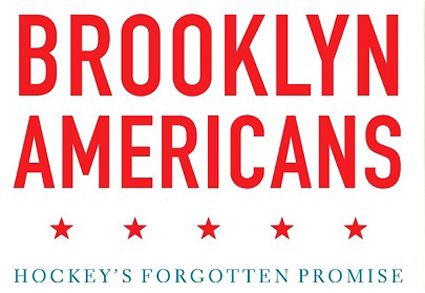
With the New York Islanders first official game in Brooklyn tonight at their new home, the Barclays Center, The Brooklyn Historical Society is now hosting an exhibit titled: "Brooklyn Americans: Hockey's Forgotten Promise".

Brooklyn Americans exhibit logo photo Brooklyn Americans exhibit logo.jpg

The exhibit, which opened on September 23rd will be on display through March 27, 2016, features programs from the 1920's and 1930's, team photos, scrapbooks and other memorabilia, including Chuck Rayner's goalie stick, Worters' skates, a sweater worn by GM Dutton and Pat Egan's warmup jacket. The gallery will be open Wednesday through Sunday from noon to 5 PM and is located at 128 Pierrepont Street in Brooklyn at the corner of Clinton Street in Brooklyn Heights.

It also features original footage of the team in action and recorded interviews with former Brooklynites who either played or were fans of hockey in Brooklyn.

BHS Exhibit photo BHS Photo.png
The Brooklyn Americans exhibit at the Brooklyn Historical Society
photo ©Scott Rudd

"With the imminent arrival of the New York Islanders in the borough, we are thrilled to be uncovering the history of hockey in Brooklyn," said Deborah Schwartz, President of the Brooklyn Historical Society. "We hope that visitors not only walk away with a new understanding of hockey history, but also a better appreciation of how far Brooklyn has come."

Today's featured jersey is a 1941-42 Brooklyn Americans Tom Anderson jersey as worn by defenseman and recently converted left winger Anderson during the Americans final season. Anderson was named the winner of the Hart Trophy as league MVP after setting a league scoring record for defensemen with 41 points in 48 games. He played eight NHL seasons, with his MVP season being his last, as military duty brought his NHL career to a premature end. He remains one of three Hart Trophy winners not elected into the Hockey Hall of Fame.

The Americans adopted their first white jersey, complete with red stripes down the arms and red cuffs, back in 1933. There would be frequent changes in the cresting and waist stripe colors and thickness until the desperate name change to "Brooklyn" in 1941, despite the team never actually playing in Brooklyn.

This game worn example no longer has it's original number 7 on the back, but it's outline is still clearly visible on the back, thanks in part to the bleeding of the dye of the red digit's blue outline.


Brooklyn Americans 1941-42 jersey photo Brooklyn Americans 1941-42 F jersey.jpg
Brooklyn Americans 1941-42 jersey photo Brooklyn Americans 1941-42 B jersey.jpg
Photo courtesy of Lelands.com

Bonus jersey: Today's bonus jersey is a 1925-26 New York Americans Billy Burch jersey as worn during the Americans inaugural season. When the Americans took to the ice, it was in their new, star-spangled sweaters, unlike any seen before in the NHL, and we dare say ever since, thanks to it's more than three dozen stars.

The Americans first wore their star spangled sweaters for all games during their first eight seasons, either home or road, before adding a white alternate jersey in 1933. They would wear both jerseys through the 1937-38 season, which was the last for the original stars and stripes jersey. For their final four seasons, only the white jerseys were worn for all games.

New York Americans 25-26 jersey, New York Americans 25-26 jersey
Photo courtesy of Classic Auctions

Extra bonus jersey: Today's extra bonus jersey is a 1935-36 New York Americans Harry Oliver jersey from the middle era of the Americans run in the NHL. Through 1932-33 New York had only worn variations of their original sweaters, but with the concept of separate home and road jerseys made necessary due to the expanding league seeing now multiple teams wearing red or blue, the Americans introduced a white sweater for the first time in 1933. That first white sweater, with it's shield crest, lasted two seasons until being replaced by today's bonus jersey for the 1935-36 season.

Oddly, the original look with it's multiple stripes was dropped for 1938-39, leaving this white style as their only sweater for two seasons until an evolution in their look brought a new design for 1940-41, ending today's bonus jerseys' run after six seasons, with the floundering club having just two years left to play prior to folding.

 photo NewYorkAmericans1935-36jersey.jpg
Photo courtesy of Classic Auctions

Today's video is a look at the history of the New York Americans.


hit counter for blogger