Showing posts with label Gartner Mike. Show all posts
Friday, October 14, 2016
1991-92 New York Rangers Mike Gartner Jersey
Mike Gartner started his pro career with the Cincinnati Stingers of the World Hockey Association, having just turned 19 years old, below the NHL minimum age of 20 at the time.
His 27 goals and 52 points that season for the Stingers got the attention of the general mangers in the NHL, and Gartner was drafted 4th overall by the Washington Captials in the summer of 1979 following the demise of the Stingers as well as the WHA.
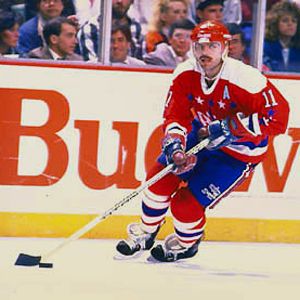
As a rookie with the Capitals, Gartner scored 36 goals, beginning a streak of 30 goals or more seasons that would eventually reach into the mid 90's.
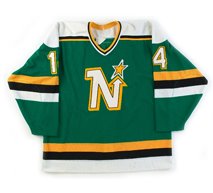
In ten seasons with the Capitals, Gartner would average 39.7 goals per season and never less than 35 until the 1988-89 season when he was traded to the Minnesota North Stars 56 games into the season while currently at 26 goals. He would, however, score an additional seven goals in Minnesota to keep his streak going at ten seasons.
After enjoying so much stability in Washington, Gartner's time in Minnesota would be brief, as he was dealt to the New York Rangers after 67 games in 1989-90, but not before scoring 34 goals with the North Stars. After joining the Rangers, he would add 11 more to his season total which allowed him to reach the 40 goal mark for the sixth time.
Three consecutive 40 goal seasons in Manhattan followed, which included scoring his 500th NHL goal on this date in 1991. He would later surpass the 600 goal barrier as well as 1,000 points, prior to Gartner once more being on the move, this time to his hometown Toronto Maple Leafs. His 28 goals in 71 games in New York and the six he scored in 10 games with the Maple Leafs pushed his 30 goal streak to an NHL record 15 consecutive seasons.
The strike shortened season of 1994-95 only allowed Gartner to play in 38 games, limiting him to just 12 goals and unfairly ending his streak of 30 goal seasons at 15.
Back to a full season schedule in 1995-96, Gartner would run his 30 goal season total up to 16 with 35 goals. The Maple Leafs would trade Gartner to the Phoenix Coyotes in time for their first season in the desert, having just relocated from Winnipeg. There, Gartner would achieve his 17th season of 30 goals or more in his career, also a league record, when he scored twice on this date in 1997 in a 5-0 win over the Tampa Bay Lightning. His second goal of the night was also the 1,300th point in his NHL career.
Gartner would play one final season in the NHL with Phoenix. He would play in 60 games and score 12 goals, which included his 700th career goal, only the fifth player to ever reach that mark.
His final career totals are 708 goals, good for sixth all time, and 627 assists for 1,335 points.
While Gartner set records for his consistent goal scoring, he was probably better known for his speed, winning the always popular and high profile "Fastest Skater Competition" at the NHL All-Star Game each of the three times he entered, including 1993 when he scored four goals and was named the MVP of the All-Star Game.
During his career he would play in seven NHL All-Star Games and following his career he was inducted into the Hockey Hall of Fame in 2001 and his #11 was retired by the Capitals in 2008.
Today's featured jersey is a 1991-92 New York Rangers Mike Gartner jersey which features NHL 75th Anniversary patch on the upper left chest, while every other club, save the Philadelphia Flyers, wore the patch on their upper right chest. Having a unique patch placement when compared to other clubs is a common occurrence for the Rangers, due to the "R" of the diagonal Rangers cresting on their jerseys occupying the traditional location for patches. In general, the Rangers place additional patches on their right shoulder, but have used the left shoulder on occasion as well, as was the case with the 9/11 memorial ribbon patch.
Patches worn on the right shoulder include the Stanley Cup 100th Anniversary, the 1994 NHL All-Star Game, 1994 Stanley Cup Finals, the Rangers 75th and 85th Anniversary patches.
The only time the Rangers were able to join the flock was in 1999-00 when the NHL 2000 patch was a horizontal design, short enough to fit above the "R" in the space remaining.
Here is a great career retrospective of Mike Gartner's career on the occasion of his induction into the Hockey Hall of Fame, followed by his speech. The audio is a tad bit distorted, but still listenable.
Labels:
Gartner Mike,
New York Rangers
Friday, March 6, 2015
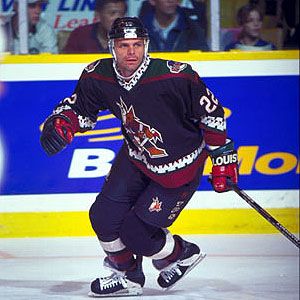
1996-97 Phoenix Coyotes Mike Gartner Jersey
Mike Gartner started his pro career with the Cincinnati Stingers of the World Hockey Association, having just turned 19 years old, below the NHL minimum age of 20 at the time.
His 27 goals and 52 points that season for the Stingers got the attention of the general mangers in the NHL, and Gartner was drafted 4th overall by the Washington Captials in the summer of 1979 following the demise of the Stingers and the WHA.
As an NHL rookie with the Capitals, Gartner scored 36 goals, beginning a streak of 30 goals or more seasons that would eventually reach into the mid 90's.
In ten seasons with the Capitals, Gartner would average 39.7 goals per season and never less than 35 until the 1988-89 season when he was traded to the Minnesota North Stars 56 games into the season while currently at 26 goals. He would, however, score an additional seven goals in Minnesota to keep his streak going at ten seasons.
After enjoying so much stability in Washington, Gartner's time in Minnesota would be brief, as he was dealt to the New York Rangers after 67 games in 1989-90, but not before scoring 34 goals with the North Stars. After joining the Rangers, he would add 11 more to his season total which allowed him to reach the 40 goal mark for the sixth time.
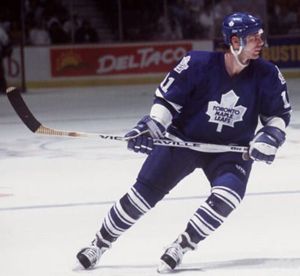
Three consecutive 40 goal seasons in Manhattan followed, which included Gartner scoring his 500th NHL goal during the 1991-92 season. He would later surpass the 600 goal barrier as well as 1,000 points, prior to once more being on the move, this time to his hometown Toronto Maple Leafs. Gartner's 28 goals in 71 games in New York and the six he scored in 10 games with the Maple Leafs pushed his 30 goal streak to an NHL record 15th consecutive season.
The strike shortened season of 1994-95 only allowed Gartner to play in 38 games, limiting him to just 12 goals and unfairly ending his streak of consecutive 30 goal seasons at 15, a league record which still stands today which would not be tied until 2007 by Jaromir Jagr.
Back to a full season schedule in 1995-96, Gartner would run his 30 goal season total up to 16 with 35 goals. The Maple Leafs would trade Gartner to the Phoenix Coyotes in time for their first season in the desert, having just relocated from Winnipeg. There, Gartner would achieve his 17th season of 30 goals or more in his career, also a league record and one which has never been equalled, when he scored at 9:46 of the second period on this date in 1997. His second goal of the night at 1:56 of the third period in a 5-0 Phoenix win over the Tampa Bay Lightning saw Gartner reach a milestone with the 1,300th point in his NHL career.
Gartner would play one final season in the NHL with Phoenix, scoring 12 goals in 60 games, which included his 700th career goal, making him only the fifth player to ever reach that milestone along with legends Wayne Gretzky, Gordie Howe, Marcel Dionne and Phil Esposito.
For the curious, Gretzky finished his career with 15 seasons of 30 goals or more which included a streak of 13 consecutive, which was ended with an injury shortened 1992-93 season of 45 games and just 16 goals. Gretzky did return to the lineup in time for the playoffs and led the Kings to the Stanley Cup Finals, adding another 15 goals in 24 games, giving him 31 combined for the season. Even if allowed to call 1992-93 a "30 goal season", he would still only equal Gartner's 15 consecutive seasons of 30 goals and ultimately fall short of Gartner's with 16 total.
Gartner's final career totals are 708 goals, still good for seventh all time, and 627 assists for 1,335 points.
While Gartner set records for his consistent goal scoring, he was probably better known for his speed, winning the always popular and high profile "Fastest Skater Competition" at the NHL All-Star Game each of the three times he entered, including 1993 when he scored four goals and was named the MVP of the All-Star Game.
During his career he would play in seven NHL All-Star Games and following his career he was inducted into the Hockey Hall of Fame in 2001 and his #11 was retired by the Capitals in 2008.
Today's featured jersey is a 1996-97 Phoenix Coyotes Mike Gartner jersey from the season during which he scored 30 or more goals for a record 17th time.
Phoenix arrived on the scene in 1996-97, having relocated from Winnipeg, and introduced the most unconventional jersey striping in the league, based on Native American blanket patterns from the American Southwest. Phoenix would wear the same home white and road black jerseys for seven consecutive seasons before a complete redesign in 2003-07 to coincide with a move to their new arena, brining to a close one of the most "Love it or Hate it" chapters in NHL jersey history.
Bonus jersey: Today's bonus jersey is a 1985-86 Washington Capitals Miek Gartner jersey from the club Gartner spent the majority of his NHL career.
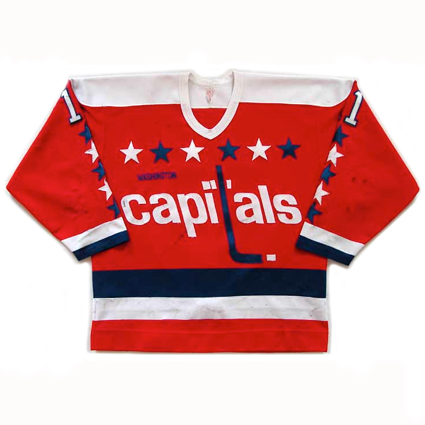
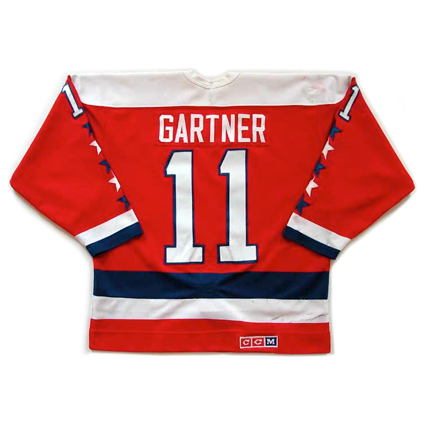
This jersey features the five stars down the sleeves, which the Capitals jerseys had from 1974-75 until 1982-83 until going to just four stars for two seasons until reverting back to five again for the 1985-86 season.
Phoenix arrived on the scene in 1996-97, having relocated from Winnipeg, and introduced the most unconventional jersey striping in the league, based on Native American blanket patterns from the American Southwest. Phoenix would wear the same home white and road black jerseys for seven consecutive seasons before a complete redesign in 2003-07 to coincide with a move to their new arena, brining to a close one of the most "Love it or Hate it" chapters in NHL jersey history.
Bonus jersey: Today's bonus jersey is a 1985-86 Washington Capitals Miek Gartner jersey from the club Gartner spent the majority of his NHL career.
This jersey features the five stars down the sleeves, which the Capitals jerseys had from 1974-75 until 1982-83 until going to just four stars for two seasons until reverting back to five again for the 1985-86 season.
Here is a great career retrospective of Mike Gartner's career on the occasion of his induction into the Hockey Hall of Fame, followed by his speech. The audio is a tad bit distorted, but still listenable.
Labels:
Gartner Mike,
Phoenix Coyotes,
Washington Capitals
Wednesday, October 29, 2014
1985-86 Washington Capitals Mike Gartner Jersey
Mike Gartner , born on this date in 1959, started his pro career with the Cincinnati Stingers of the World Hockey Association, having just turned 19 years old, below the NHL minimum age of 20 at the time.
His 27 goals and 52 points that season for the Stingers got the attention of the general mangers in the NHL, and Gartner was drafted 4th overall by the Washington Captials in the summer of 1979 following the demise of the Stingers as well as the WHA.
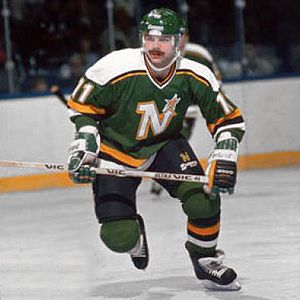
As a rookie with the Capitals, Gartner scored 36 goals, beginning a streak of 30 goals or more seasons that would eventually reach into the mid 90's.
In ten seasons with the Capitals, Gartner would average 39.7 goals per season and never less than 35 until the 1988-89 season when he was traded to the Minnesota North Stars 56 games into the season while currently at 26 goals. He would, however, score an additional seven goals in Minnesota to keep his streak going at ten seasons.
After enjoying so much stability in Washington, Gartner's time in Minnesota would be brief, as he was dealt to the New York Rangers after 67 games in 1989-90, but not before scoring 34 goals with the North Stars. After joining the Rangers, he would add 11 more to his season total which allowed him to reach the 40 goal mark for the sixth time.
Three consecutive 40 goal seasons in Manhattan followed, which included scoring his 500th NHL goal during the 1991-92 season. He would later surpass the 600 goal barrier as well as 1,000 points, prior to Gartner once more being on the move, this time to his hometown Toronto Maple Leafs. His 28 goals in 71 games in New York and the six he scored in 10 games with the Maple Leafs pushed his 30 goal streak to an NHL record 15 consecutive seasons.
The strike shortened season of 1994-95 only allowed Gartner to play in 38 games, limiting him to just 12 goals and unfairly ending his streak of 30 goal seasons at 15, a league record which still stands today and would not be tied until 2007 by Jaromir Jagr.
Back to a full season schedule in 1995-96, Gartner would run his 30 goal season total up to 16 with 35 goals. The Maple Leafs would trade Gartner to the Phoenix Coyotes in time for their first season in the desert, having just relocated from Winnipeg. There, Gartner would achieve his 17th season of 30 goals or more in his career, also a league record and one which has never been equalled. His second goal of the night was also the 1,300th point in his NHL career.
Gartner would play one final season in the NHL with Phoenix. He would play in 60 games and score 12 goals, which included his 700th career goal, on the fifth player to ever reach that mark.
His final career totals are 708 goals, good for sixth all time, and 627 assists for 1,335 points.
While Gartner set records for his consistent goal scoring, he was probably better known for his speed, winning the always popular and high profile "Fastest Skater Competition" at the NHL All-Star Game each of the three times he entered, including 1993 when he scored four goals and was named the MVP of the All-Star Game.
During his career he would play in seven NHL All-Star Games and following his career he was inducted into the Hockey Hall of Fame in 2001 and his #11 was retired by the Capitals in 2008.
Today's featured jersey is a Gartner's featured jersey is a 1985-86 Washington Capitals Miek Gartner jersey. This jersey features the five stars down the sleeves, which the Capitals jerseys had from 1974-75 until 1982-83 until going to just four stars for two seasons until reverting back to five again for the 1985-86 season.
Bonus jersey: Today's bonus jersey is a 1991-92 New York Rangers Mike Gartner jersey which features NHL 75th Anniversary patch on the upper left chest, while every other club, save the Philadelphia Flyers, wore the patch on their upper right chest. Having a unique patch placement when compared to other clubs is a common occurrence for the Rangers, due to the "R" of the diagonal Rangers cresting on their jerseys occupying the traditional location for patches. In general, the Rangers place additional patches on their right shoulder, but have used the left shoulder on occasion as well, as was the case with the 9/11 memorial ribbon patch.
Patches worn on the right shoulder include the Stanley Cup 100th Anniversary, the 1994 NHL All-Star Game, 1994 Stanley Cup Finals, the Rangers 75th and 85th Anniversary patches.
The only time the Rangers were able to join the flock was in 1999-00 when the NHL 2000 patch was a horizontal design, short enough to fit above the "R" in the space remaining.
Here is a great career retrospective of Mike Gartner's career on the occasion of his induction into the Hockey Hall of Fame, followed by his speech. The audio is a tad bit distorted, but still listenable.
Labels:
Gartner Mike,
New York Rangers,
Washington Capitals
Friday, November 11, 2011
11/11/11
This being 11/11/11, we at Third String Goalie are taking a look at the best players to ever wear #11.
Notable players to have worn #11 include Bobby Carpenter, Kevin Dineen, Vic Hadfield, Walt McKechnie, Ulf Nilsson, Hall of Famer Bill Quackenbush and Charlie Simmer among many others.
Two active players wearing #11 we anticipate will have their numbers retired are Ottawa Senators captain Daniel Alfredsson and long time Montreal Canadiens captain Saku Koivu.
Alfressson has played all of his 16 seasons with the Senators and holds club records for goals, assists and points as well as games played. Remarkably, his 1,023 points are nearly twice as many as the Jason Spezza's 532. He was named team captain in 1999-00 and has remained so for 13 seasons.
Alfredsson's featured jersey is a 1995-96 Ottawa Senators jersey. This was worn during Alfredsson's rookie season when he won the Calder Trophy and has the Smitty patch in memory of Brian Smith, a Senators reporter who was murdered that year.
Koivu played 13 seasons with the Canadiens, with nine of those as team captain, tied with the legendary Jean Beliveau for the longest tenure. Koivu holds the distinction of being the first European to captain the Canadiens. Koivu overcame cancer during his career and made an emotional comeback to the game after missing nearly the entire 2001-02 season, receiving an eight-minute long standing ovation. For his dedication to hockey, he received the Masterton Trophy in 2002. He is currently 6th all-time in assists for Montreal and has also won the King Clancy Trophy for leadership qualities on and off the ice and making a significant humanitarian contribution to his community.
Koivu's featured jersey is a 2002-03 Montreal Canadiens jersey with the Hockey Fights Cancer patch worn during the season after Koivu's return from his bout with cancer.
Four players have had #11 retired in their honor in league history, the first of which was Brian Sutter of the St. Louis Blues. The oldest of the six Sutter brothers, he played 11 seasons with the Blues, the last nine of them as team captain. The season following his retirement he was named the coach of the team, a position he held for four seasons. He was known as an extremely hard working player who was responsible in the defensive zone yet still managed two forty goal seasons.
Sutter's featured jersey is a 1984-85 St. Louis Blues jersey from the only season they wore this exact jersey. This was the first season with the "Blues" script above the team logo, and for the next two seasons with the script logo, red trim was added to the jersey.
Mike Gartner had his number retired by the Washington Capitals after spending the first 10 of his 19 seasons with Washington. He is sixth in games played for the Capitals, second in all time Capitals goals, assists and points. He would go on to play with the Minnesota North Stars, New York Rangers, Toronto Maple Leafs and Phoenix Coyotes in a career that would include 1,432 games played, 708 goals, 627 assists and 1,335 points. He was known for his blazing speed and holds the NHL record with 15 consecutive seasons of 30 goals or more and the most 30 goal seasons with 17. Gartner was only the fifth player to reach 700 goals for a career, was the 1993 NHL All-Star Game MVP and was inducted into the Hockey Hall of Fame in 2001.
Gartner's featured jersey is a 1985-86 Washington Capitals jersey. This jersey features the five stars down the sleeves, which the Capitals jerseys had from 1974-75 until 1982-83 until going to just four stars for two seasons until reverting back to five again for the 1985-86 season.
The next player to have his #11 lifted to the rafters was Buffalo Sabres legend and cornerstone, Gilbert Perreault. He was the franchise's first ever draft pick, taken first overall in 1970 thanks to a spin of a wheel which came up #11, giving the Sabres the first pick in the draft.
Perreault would play 17 seasons in Buffalo and is widely regarded as one of the most gifted and skillful playmaking centers to ever play the game. He would win the Calder Trophy and Lady Byng Trophy during his career. Despite retiring in 1987, he still holds franchise records for games played, goals, assists and points as well as game winning goals and shots on goal. He is the only Sabre with over 500 goals and his 1,326 points are over 500 more than the next highest Sabre. He was team captain for five seasons and is the only Sabre to ever wear #11. Perreault was inducted into the Hockey Hall of Fame in 1990.
Perreault's featured jersey is a 1983-84 Buffalo Sabres jersey. The Sabres played with essentially the same jerseys from 1970 to 1996 with only slight variations, such as eliminating the original tie-neck collars in 1978, the same year they added shoulder logos.
This jersey proved so popular with the Sabres fans that it was brought back as a third jersey in 2006-07 and was modernized for a new third jersey again in 2008, which then became the primary jersey in 2010.
The best player to ever wear #11 has the distinction of having his number retired by two different teams. Mark Messier is known as one of the greatest leaders in hockey history ranks second on the all-time list in points, playoff points and games. He won six Stanley Cups, five with the Edmonton Oilers and a memorable one with the New York Rangers to end their 54 year drought.
He played the first 12 seasons of his career with the Oilers, three of which were as team captain. After five championships with Edmonton, Messier moved to the New York Rangers for six seasons, all of which were as team captain. When the Rangers won the Stanley Cup in 1994, Messier became the only man in league history to captain two different teams to the championship. After leaving the Rangers he moved to the Vancouver Canucks for three seasons as captain before returning to the Rangers for a second time, where he would spend the final four seasons of his 25 year career.
During his career he won the Hart Trophy twice, the Conn Smythe Trophy and the Pearson Award twice. He played in 16 NHL All-Star Games. The Rangers retired his #11 in 2006 and the Oilers did the same in 2007. Messier was inducted into the Hockey Hall of Fame in 2007.
Messier's first featured jersey is a 1989-90 Edmonton Oilers jersey as worn on May 24th, 1990 as he was awarded the Stanley Cup after a 4-1 victory over the Bruins in Boston. It was the first and only time that the Oilers would win the cup in their blue road jersey.
This jersey also features the 1990 Stanley Cup Finals patch on the left chest, only the second time the finals patches were worn, and the first time in it's now traditional location on the right chest.
Messier's second featured jersey is a 1993-94 New York Rangers jersey as worn when Messier famously was handed the Stanley Cup after leading the Rangers to the championship. The Rangers are the only team to wear the patch on their right shoulder due to the diagonal RANGERS cresting on the front of the jersey interfering with the standard location on the right chest.
Friday, October 14, 2011
1991-92 New York Rangers Mike Gartner Jersey
Mike Gartner started his pro career with the Cincinnati Stingers of the World Hockey Association, having just turned 19 years old, below the NHL minimum age of 20 at the time.
His 27 goals and 52 points that season for the Stingers got the attention of the general mangers in the NHL, and Gartner was drafted 4th overall by the Washington Captials in the summer of 1979 following the demise of the Stingers as well as the WHA.
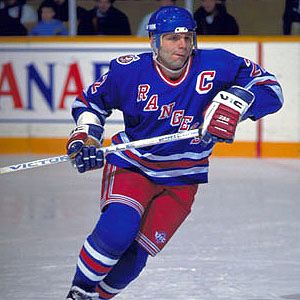
As a rookie with the Capitals, Gartner scored 36 goals, beginning a streak of 30 goals or more seasons that would eventually reach into the mid 90's.
In ten seasons with the Capitals, Gartner would average 39.7 goals per season and never less than 35 until the 1988-89 season when he was traded to the Minnesota North Stars 56 games into the season while currently at 26 goals. He would, however, score an additional seven goals in Minnesota to keep his streak going at ten seasons.
After enjoying so much stability in Washington, Gartner's time in Minnesota would be brief, as he was dealt to the New York Rangers after 67 games in 1989-90, but not before scoring 34 goals with the North Stars. After joining the Rangers, he would add 11 more to his season total which allowed him to reach the 40 goal mark for the sixth time.
Three consecutive 40 goal seasons in Manhattan followed, which included scoring his 500th NHL goal on this date in 1991. He would later surpass the 600 goal barrier as well as 1,000 points, prior to Gartner once more being on the move, this time to his hometown Toronto Maple Leafs. His 28 goals in 71 games in New York and the six he scored in 10 games with the Maple Leafs pushed his 30 goal streak to an NHL record 15 consecutive seasons.
The strike shortened season of 1994-95 only allowed Gartner to play in 38 games, limiting him to just 12 goals and unfairly ending his streak of 30 goal seasons at 15.
Back to a full season schedule in 1995-96, Gartner would run his 30 goal season total up to 16 with 35 goals. The Maple Leafs would trade Gartner to the Phoenix Coyotes in time for their first season in the desert, having just relocated from Winnipeg. There, Gartner would achieve his 17th season of 30 goals or more in his career, also a league record, when he scored twice on this date in 1997 in a 5-0 win over the Tampa Bay Lightning. His second goal of the night was also the 1,300th point in his NHL career.
Gartner would play one final season in the NHL with Phoenix. He would play in 60 games and score 12 goals, which included his 700th career goal, on the fifth player to ever reach that mark.
His final career totals are 708 goals, good for sixth all time, and 627 assists for 1,335 points.
While Gartner set records for his consistent goal scoring, he was probably better known for his speed, winning the always popular and high profile "Fastest Skater Competition" at the NHL All-Star Game each of the three times he entered, including 1993 when he scored four goals and was named the MVP of the All-Star Game.
During his career he would play in seven NHL All-Star Games and following his career he was inducted into the Hockey Hall of Fame in 2001 and his #11 was retired by the Capitals in 2008.
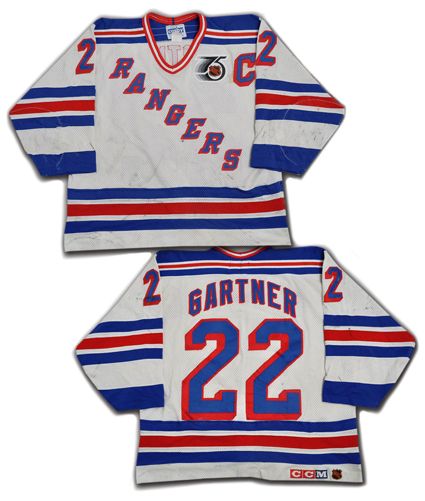
Today's featured jersey is a 1991-92 New York Rangers Mike Gartner jersey which features NHL 75th Anniversary patch on the upper left chest, while every other club, save the Philadelphia Flyers, wore the patch on their upper right chest. Having a unique patch placement when compared to other clubs is a common occurrence for the Rangers, due to the "R" of the diagonal Rangers cresting on their jerseys occupying the traditional location for patches. In general, the Rangers place additional patches on their right shoulder, but have used the left shoulder on occasion as well, as was the case with the 9/11 memorial ribbon patch.
Patches worn on the right shoulder include the Stanley Cup 100th Anniversary, the 1994 NHL All-Star Game, 1994 Stanley Cup Finals, the Rangers 75th and 85th Anniversary patches.
The only time the Rangers were able to join the flock was in 1999-00 when the NHL 2000 patch was a horizontal design, short enough to fit above the "R" in the space remaining.
Here is a great career retrospective of Mike Gartner's career on the occasion of his induction into the Hockey Hall of Fame, followed by his speech. The audio is a tad bit distorted, but still listenable.
Labels:
Gartner Mike,
New York Rangers
Saturday, March 6, 2010
1985-86 Washington Capitals Mike Gartner Jersey
Mike Gartner started his pro career with the Cincinnati Stingers of the World Hockey Association, having just turned 19 years old, below the NHL minimum age of 20 at the time. His 27 goals and 52 points that season for the Stingers got the attention of the general mangers in the NHL, and Gartner was drafted 4th overall by the Washington Captials in the summer of 1979 following the demise of the Stingers and the WHA.
As a rookie with the Capitals, Gartner scored 36 goals, beginning a streak of 30 goals or more seasons that would eventually reach into the mid 90's.
In ten seasons with the Capitals, Gartner would average 39.7 goals per season and never less than 35 until the 1988-89 season when he was traded to the Minnesota North Stars 56 games into the season while currently at 26 goals. He would, however, score an additional seven goals in Minnesota to keep his streak going at ten seasons.
After enjoying so much stability in Washington, Gartner's time in Minnesota would be brief, as he was dealt to the New York Rangers after 67 games in 1989-90, but not before scoring 34 goals with the North Stars. After joining the Rangers, he would add 11 more to his season total which allowed him to reach the 40 goal mark for the sixth time.
Three consecutive 40 goal seasons in Manhattan followed, which included his surpassing the 500 and 600 goal barriers as well as 1,000 points, prior to Gartner once more being on the move, this time to his hometown Toronto Maple Leafs. His 28 goals in 71 games in New York and the six he scored in 10 games with the Maple Leafs pushed his 30 goal streak to an NHL record 15 consecutive seasons.
The strike shortened season of 1994-95 only allowed Gartner to play in 38 games, limiting him to just 12 goals and unfairly ending his streak of 30 goal seasons at 15.
Back to a full season schedule in 1995-96, Gartner would run his 30 goal season total up to 16 with 35 goals. The Maple Leafs would trade Gartner to the Phoenix Coyotes in time for their first season in the desert, having just relocated from Winnipeg. There, Gartner would achieve his 17th season of 30 goals or more in his career, also a league record, when he scored twice on this date in 1997 in a 5-0 win over the Tampa Bay Lightning. His second goal of the night was also the 1,300th point in his NHL career.
Gartner would play one final season in the NHL with Phoenix. He would play in 60 games and score 12 goals, which included his 700th career goal, on the fifth player to ever reach that mark.
His final career totals are 708 goals, good for sixth all time, and 627 assists for 1,335 points.
While Gartner set records for his consistent goal scoring, he was probably better known for his speed, winning the always popular and high profile "Fastest Skater Competition" at the NHL All-Star Game each of the three times he entered, including 1993 when he scored four goals and was named the MVP of the All-Star Game.
During his career he would play in seven NHL All-Star Games and following his career he was inducted into the Hockey Hall of Fame in 2001 and his #11 was retired by the Capitals in 2008.
Today's featured jersey is a CCM 1985-86 Washington Capitals Mike Gartner jersey.
This jersey features the five stars down the sleeves, which the Capitals jerseys had from 1974-75 until 1982-83 until going to just four stars for two seasons until reverting back to five again for the 1985-86 season.


Here is a great career retrospective of Mike Gartner's career on the occasion of his induction into the Hockey Hall of Fame, followed by his speech. The audio is a tad bit distorted, but still listenable.
Labels:
Gartner Mike,
Washington Capitals
Subscribe to:
Posts (Atom)