History of Jersey 83-93 Banner sm photo History of Jersey 83-93 Banner sm.jpg
Showing posts with label Poland. Show all posts

Thursday, April 13, 2017

1998 Poland National Team Mariusz Czerkawski Jersey

Born on this date in Poland in 1972, Mariusz Czerkawski began playing for GKS Tychy's junior team in 1988-89. During his second season with Tychy, Czerkawski showed his promise with 35 goals and 46 points in 30 games. He would play one more season for GKS with 25 goals and 40 points in 24 games.

During his time playing club hockey in Poland, he also participated in several international tournaments for his national team, first playing in the 1989 European U18 Junior Tournament B Pool as a 16 year old, scoring 5 goals and 11 points in 5 games and helping Poland earn a promotion to the Top Division.

He got to enjoy the fruits of his labor in 1990, again playing for Poland's U18 team at the World Championships. There, he scored 9 goals and 12 points in 6 games, an average of 2 points per game. Of note, he finished fourth in scoring behind future NHLers such as Slava Kozlov and Espen Knutsen and ahead of  Sergei Zholtok, Mikael RenbergAlexei Kovalev, Jere Lehtinen and Martin Straka. His obvious talents were rewarded with a roster spot on the Polish World Junior U20 team despite being just 17 years old.

Czerkawski again pulled double duty for Poland in 1991, only this time playing in first the U20 World Juniors B Pool, where he dominated with 12 goals and 15 points in 7 games to lead the tournament in scoring on his way to being named the tournament MVP. He was again rewarded for his efforts when he was a part of the Poland National Team at the 1991 World Championship B Pool at the senior level as an 18 year old. Playing with players much older than he was did not phase Czerkawski, as he scored 6 goals and 8 points in 7 games, helping Poland earn a promotion to the newly expanded Top Division for 1992, as four promotion spots were up for grabs that year.
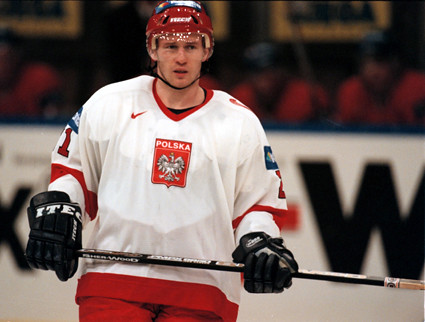
Czerkawski Poland 1
Czerkawski in the red and white of Poland

His success on the international scene led to Czerkawski being drafted during the 1991 NHL Entry Draft by the Boston Bruins in the fifth round, #106 overall.

Needing tougher competition to continue his development if he were to make it to the NHL, Czerkawski moved to Sweden for the 1991-92 season, joining Djurgardens IF in the Eliteserien. He found the going somewhat more difficult but acquitted himself with 8 goals and 13 points in 39 games. That season he also made his Olympic debut, playing at the 1992 Games in Albertville, France. Later that spring, he also returned to the World Championships, only now in the Top Division for the first time.
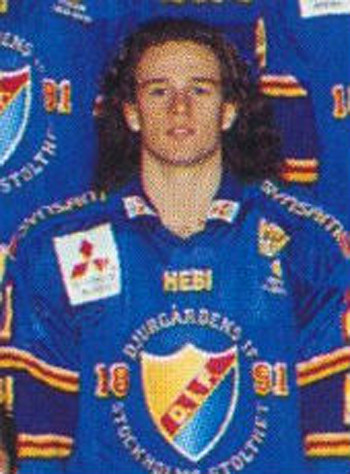
Czerkawski Djurgardens 1
Czerkawski moved to Sweden to continue is development

For the 1992-93 season, Czerkawski played with Hammarby IF in the second level of Swedish hockey, where he had a fine season with 39 goals and 69 points in only 32 games. He also asserted himself with 74 penalty minutes.

He was back with Djurgardens for the 1993-94 season, scoring at nearly a point per game clip this time around, as he scored 13 times on his way to 34 points in 39 games played. Once Djurgardens was eliminated from the playoffs, Czerkawski made his NHL debut with the Bruins, playing in 4 regular season games, scoring twice before playing an additional 13 playoff games, adding 3 goals and 6 points to the Bruins effort. On his debut, Czerkawski became the first Polish born and trained player in NHL history.

The start of the 1994-95 season was delayed by labor issues, and Czerkawski signed on with Espoo Blues of the Finnish SM-Liiga. He played in 7 games for the Blues with 9 goals and 12 points before returning to North America for the resumption of play in the NHL. In 47 games with Boston, he scored 12 goals and 26 points.
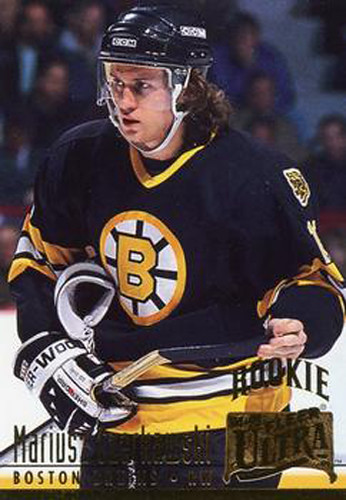
Czerkawski Bruins 1
Czerkawski played 80 games for the Bruins
divided over the course of two seasons

Czerkawski returned to the Bruins for the 1995-96 season, and after 11 points in 33 games, he was involved in a trade that sent himself, Sean Brown and a first round draft pick to the Edmonton Oilers for goaltender Bill Ranford. During the second half of the season with Edmonton, Czerkawski had 12 goals and 29 points.

He played the entire 1996-97 season with the Oilers, seeing action in 76 games, scoring 26 goals and 47 points before an additional 12 playoff games.
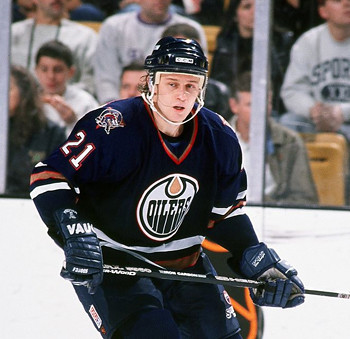
Czerkawski Edmonton 1
Czerkawski played a season and a half with the Oilers

Just before the 1997-98 season, Czerkawski was traded to the New York Islanders for Dan LaCouture. At first, the move affected his offensive output, as he scored roughly half the number of points he had the year before with the Oilers. Czerkawski also returned to the international scene for the first time in six years when he played in the World Championships B Pool Qualifying Round in early November for the Poles.
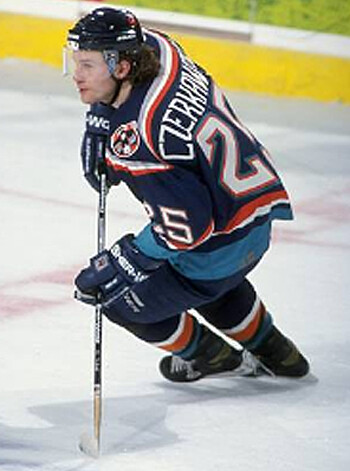
Czerkawski Islanders 4
Czerkawski was with the Islanders during their final
season with the controversial Fisherman jerseys

Over the next two seasons Czerkawski's offensive game not only returned, but thrived. In 1998-99 he scored 20 goals for the second time in his NHL career with 21 on his way to 38 points followed by setting career highs in 1999-00 with 35 goals, 35 assists and 70 points to far and away lead the Islanders in scoring, 28 points more than Brad Isbister in second! His fine season was rewarded by being named to the 2000 NHL All-Star Game.
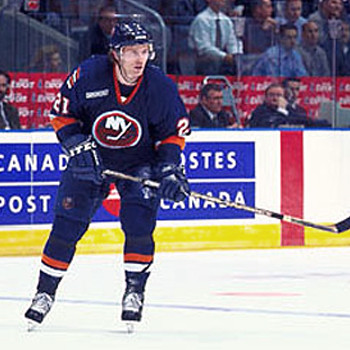
Czerkawski Islanders 21
Czerkawski had a career year in 1999-00
and played in the NHL All-Star Game

Coming off his success in the NHL, Czerkawski scored 4 goals and 11 points in Poland's effort at the 2000 World Championships B Pool.
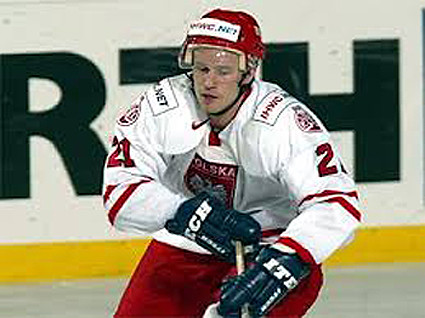
Czerkawski Poland 2
Czerkawski played for Poland 11 times during his career 

Czerkawski played every one of the Islanders games over the course of the next two seasons, again reaching 30 goals in 2000-01 while serving as an assistant team captain for New York. After scoring 62 points that season, he numbers slipped to 22 goals and 51 points in 2001-02. In 2001, the IIHF World Championship ladder system was renovated, and when Czerkawski returned to play for Poland in 2002, they were now placed in the expanded Top Division, Czerkawski's second time participating at the top level since first doing so in 1992.
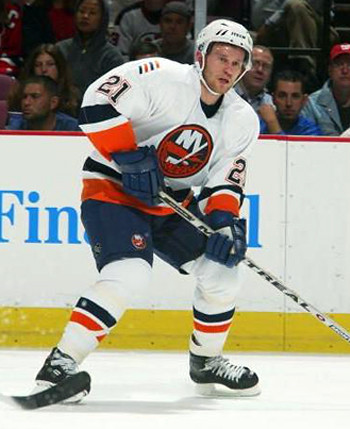
Czerkawski Islanders 1

Czerkawski was traded to the Montreal Canadiens following the season for Arron Asham and a draft pick. The fit was not a good one for Czerkawski, and he only played half a season for the Canadiens with just 5 goals and 14 points in 43 games. He also played 20 games for the Hamilton Bulldogs down in the American Hockey League with 20 points in 20 games as well as 6 postseason games with the Bulldogs.

He then returned to the Islanders when he signed as a free agent for the 2003-04 season, where he returned to form with 25 goal sand 49 points playing in 81 games that season.
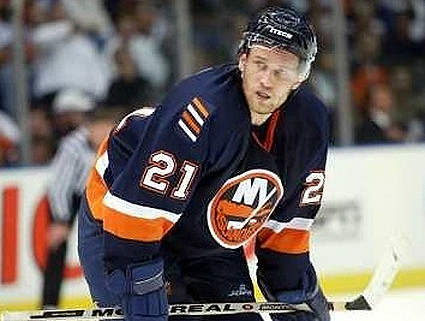
Czerkawski Islanders 3
Czerkawski was back with the Islanders for the 2003-04 season

With the 2004-05 NHL season cancelled by the lockout, Czerkawski returned to Djurgardens IF in Sweden where he scored 15 times on his way to 24 points in 46 games. He also took part in the Olympic qualification rounds for Poland, leading the way with 6 goals and 10 points in 6 games. While Poland won the pre-qualification Group E tournament at home in November of 2004 over the Netherlands, Lithuania and Croatia, they were overmatched in the final qualification tournament against Latvia, Belarus and Slovenia.
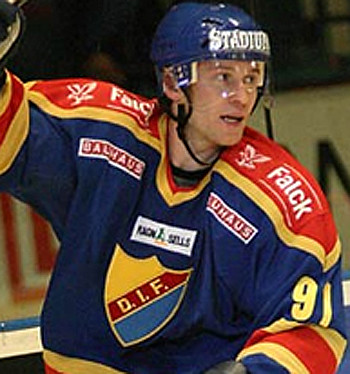
Czerkawski Djurgardens 2
Czerkawski rejoined Djurgardens IF for 2004-05

The NHL returned to the ice in 2005-06, and by now Czerkawski was a member of the Toronto Maple Leafs, having signed as a free agent. It was not a good fit and, after being a healthy scratch for most of the season, he would only play in just 19 games in Toronto, scoring just 4 goals and a lone assist before being claimed off waivers near the trade deadline by his original NHL club, the Bruins. He played in 16 games to finish out the Bruins schedule with an identical 4 goals and one assist. Czerkawski made his final international appearance for Poland that spring, playing in the 2006 World Championships Division 1 Group B tournament, leading the Poles with 3 goals and 7 points in 5 games.

For the 2006-07 season, Czerkawski returned to Europe and signed with Rapperswil-Jona Lakers in the Swiss National League A. He excelled with 21 goals and 41 points in 43 games for second on the team in overall scoring. For the 2007-08 season, he exceeded a point per game with 22 goals and 53 points in 49 games, again second on the club by a single point to effectively bring an end to his career, but Czerkawski did appear in a single game for GKS Tychy where it all began in Poland during the 2008-09 season.
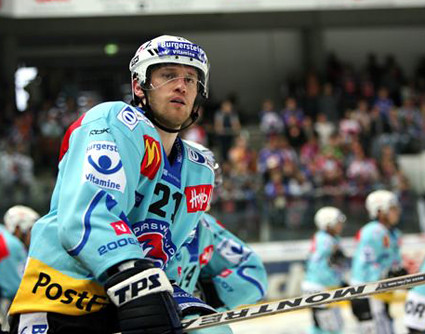
Czerkawski Jona 1
Czerkawski returned to Europe with Rapperswil-Jona

His final NHL totals were 745 games played with 215 goals and 220 assists for 435 points as well as an additional 15 points in 42 playoff games in 12 NHL seasons. He remains far and away the most successful NHLer ever from Poland with 390 more than Krzysztof Oliwa's 45.

Internationally, Czerkawski played for Poland on 11 occasions, scoring 44 goals and 73 points in 61 games combined between the junior and senior levels.

Today's featured jersey is a 1998 Poland National Team Mariusz Czerkawski jersey as worn at the 1998 World Championship Group B in Slovenia.

Poland played its first international game back in 1926 with a best World Championship finish of 4th in 1931. They have appeared in 65 World Championships and have played in Division 1 every year since 2003. In their effort to return to the Top Division, they won promotion from Division 1 Group B in 2014 and have finished 3rd in Division 1 Group A in 2015 and 2016.

To date, they have participated in 13 Olympics and were in six consecutive Games during the 1970s and 1980s, but not have qualified for the Olympics since their last appearance in 1992.
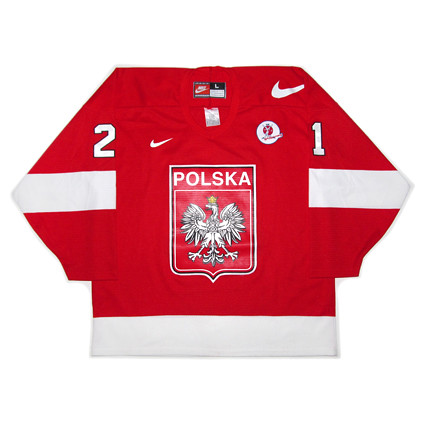
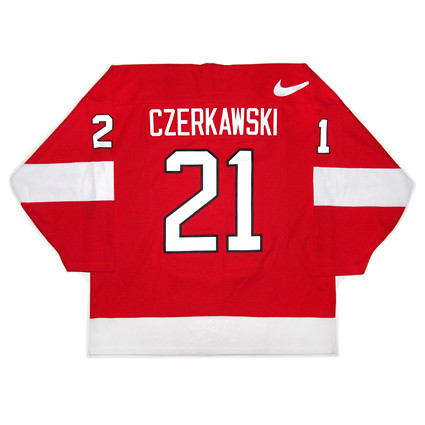
Poland 1998 F jersey
Poland 1998 B jersey

Bonus jersey: Today's bonus jersey is a 1998 Djurgardens IF Mariusz Czerkawski jersey. Djurgardens IF was founded in 1922 in Stockholm, Sweden and are 16-time Swedish champions and twice have won the European Cup.
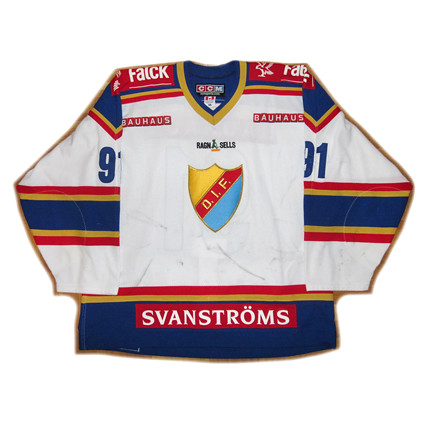
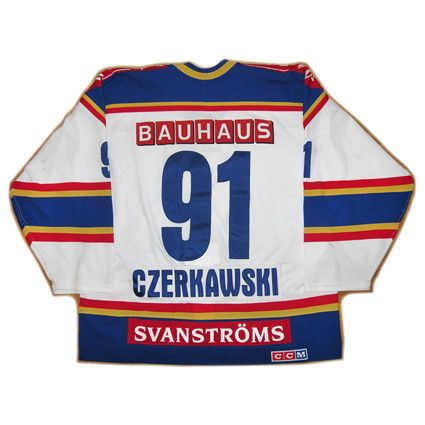
Djurgardens 2004-05 IF F jersey
Djurgardens IF 2004-05 B jersey

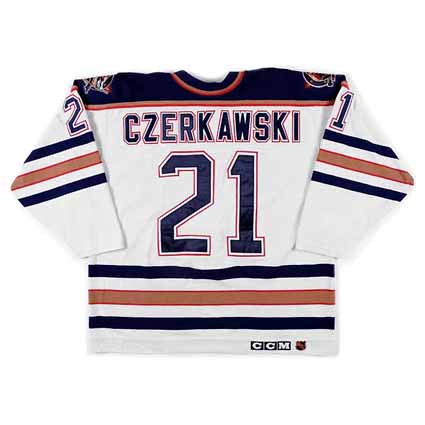
Extra bonus jersey: Today's extra bonus jersey is a 1996-97 Edmonton Oilers Mariusz Czerkawski jersey. Czerkawski joined the Oilers in 1995-96 for their final season in their blue and orange classic jerseys worn during the era when they won five Stanley Cups. For Czerkawski's second season in Edmonton, the club debuted this new, more mature look, with the blue now several shades darker and the bright orange replaced by bronze with the addition of subtle red trim.

This style lasted from 1996-97 through 2006-07. The jersey style was replaced by a new Reebok Edge jersey in 2007-08 but the midnight blue and bronze color scheme remained until 2011-12 when the transformation back to their original look was completed in 2012-13 when the midnight blue jersey, which had been reduced to third jersey status for 2011-12, was retired.
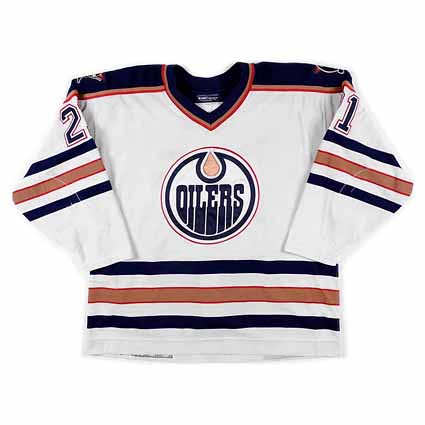
Edmonton Oilers 1996-97 F jersey
Edmonton Oilers 1996-97 B jersey

Today's video section is a package of Czerkawski highlights while he was with the Islanders set to some raucous music. We're calling this one volume optional.

Friday, November 9, 2012

2007 Poland National Team Jaroslaw Rzeszutko Jersey

To update our previous post about the 2014 Winter Olympic Preliminary Qualification Phase, in which Croatia advanced to the Olympic Pre-Qualification Phase, Groups G, H and J will take place this weekend, with competition in Groups H and J having already begun and the winners determined in all groups on Sunday.

33 teams applied for the 12 spots in the Olympics, with 9 of those places being already guaranteed to the nations ranked 1-9 following the World Championships earlier this year, meaning the remaining 24 must participate in a qualification process to determine which fortunate three others will have the thrill of participating in the actual Olympic Games in Sochi.

Croatia (currently ranked 30th in the IIHF World Rankings) advanced to Group G with three easy wins, 9-2 over Mexico (34th), a 15-2 blowout over Israel (40th) and secured their place in the next phase with a 6-2 win over Serbia (31) in Group K back in September at home in Zagreb, narrowing the field to 30 clubs at present.

Serbia Israel 2012, Serbia Israel 2012
Serbia and Israel began the road to Sochi in the opening game of the Preliminary Qualification Phase

Group G now consists of host Hungary (ranked 19th), the Netherlands (24), Lithuania (25) plus Croatia, who currently compete in Division IIA, one level below the Netherlands and Lithuania and two below Division IA Hungary in the IIHF World Championships ladder system, making Croatia's chances of advancing a long shot. Play in Group G gets underway today, Friday, in Budapest.

“It will be a lot different from this tournament because here we were the best team and in Budapest we will have stronger opponents,” Croatian forward Petar Trstenjak said back in September, “but I hope we will have a bigger roster and that we won’t lose by high scores.” in a quote which illustrates the reality of the enormous task and long odds of Croatia advancing.

Play in Group H began yesterday among hosts Ukraine (20), Poland (23), Estonia (26) and Spain (29) with Poland thrashing Estonia 8-0 putting them on course to square off against Ukraine on Sunday following Ukraine's 7-0 romp over Spain.

Poland Estonia, Poland Estonia
Action from Poland's win over Estonia

Poland and Spain meet in todays early game, followed by Estonia vs. Ukraine in the second game in Kiev. 

Ukraine Spain, Ukraine Spain
Hosts Ukraine began their Olympic quest in fine style over Spain

Group J began earlier today in Japan, with Great Britain (21) losing in a shootout to South Korea (28) 5-4 after Great Britain led 3-1 after one period.

Korea Great Britain, Korea Great Britain
Korea scores in the shootout to defeat Great Britain

Hosts Japan (22) defeated Romania (27) 2-0 in the second game. Japan now takes on rivals South Korea Saturday evening in Nikko, preceded by Romania against Great Britain.

Romania Japan, Romania Japan
Japan pressures Romania on their way to a victory

The winners of Groups G, H and J will not be advancing to the Olympics just yet, however, as they must participate in another phase of the competition, the Final Olympic Qualification, which will take place from February 7th to 10th in 2013.

Things get much tougher for those teams advancing from the Pre-Qualification Round Groups G, H and J, as they are slotted into Groups D, E and F, where teams ranked 10-18 await.

Group D is being hosted by Germany (10) and will consist of Austria (15) and Italy (16) plus the addition of a winner from the previous round, to be determined by their ranking.

Group E sees Latvia (11) hosting France (14) and Kazakhstan (17) plus a qualifier while Group F will take place in Denmark (12) with Belarus (13) and Slovenia (18) waiting the final qualifier.

Only then will the winners of those three groups gain an entry into the actual 2014 Winter Olympic hockey tournament in Sochi a year later where Russia (1), Slovakia (6) and the United States (7) in Group A, Finland (2), Canada (5) and Norway (8) in Group B and the Czech Republic (3), Sweden (4) and Switzerland (9) in Group C await the final three survivors of the three step qualification process which began in September 2012 in Croatia.

While little publicized and virtually unknown in North America, the Olympic qualification tournament can provide some some of the most dramatic moments, particularly in Groups D, E and F with an actual berth in the Olympics on the line, as making it to the games in as good as a gold medal for the participants of the lower ranked nations and is a source of tremendous pride for all involved to compete at the highest level on sport's biggest stage against the world's best.

The most memorable game in Olympic qualification history took place in January of 2005 to decide who would advance to Torino, Italy in 2006. Group B held in Riga, Latvia saw Belarus gain two points in the standings by defeating Poland, while Latvia knocked off Slovenia 2-1. Belarus took care of Slovenia the next day 7-2 while Latvia kept pace by beating Poland 3-1, setting up the final winner-take-all game against Belarus.

Belarus opened the scoring of the deciding game at 5:16 of the first and stretched their lead to two at 12:06 before Latvia answered at 18:33. The second period was played even, with each team scoring one with Belarus going back up by two at 1:49 before former Boston Bruin Grigori Panteleev scored 18 seconds later to return the margin to one in favor of Belarus.

Belarus put themselves in a good position to win the group and advance with a goal at 9:11 of the third to make the score 4-2 for Belarus.

Now in desperation mode, Latvia pulled goalie Edgars Masalskis during a Latvian powerplay with just six minutes remaining in the game and down by 2 goals. The gamble paid off as Latvia scored at the 15:11 mark to reduce the margin again to 1.

1:47 later the Latvians thrilled the home crowd by getting the equalizer at even strength, leaving just three minutes to decide who would claim the final remaining spot in the Olympics. Alexsandrs Semjonovs then sent the home fans into rapture by finishing the comeback and punching Latvia's ticket to Italy just 33 seconds later to complete the three goal outburst in two minutes and twenty seconds in what would become known as "The Miracle in Riga", considered by some the greatest achievement in Latvian sports since they regained their independence in 1991.

Today's featured jersey is a 2007 Poland National Team Jaroslaw Rzeszutko jersey. This jersey was first worn during the 2007 IIHF Division I Group A World Championships, which were held in Innsbruck, Austria. The jerseys were then re-used in the IIHF's Group D Olympic Qualification Tournament, which was held in Sanok, Poland from November 6th to 9th, 2008.

Poland 2007 jersey, Poland 2007 jersey

This particular jersey is from our friends at WorldHockeyJerseys.com, the number one source of game-worn jerseys from national teams of the International Ice Hockey Federation. Nick and Mike have supplied us at Third String Goalie with a number of our jerseys, including those from Estoina, Belgium, Great Britain, Hungary, Iceland, Poland, the Netherlands and Spain. To view their home page on ebay and check for any upcoming auctions, please click here.

Today's video is the magnificent Latvian comeback that would become known as "The Miracle in Riga" which would propel them into the 2006 Winter Olympic hockey tournament.


At the 2006 Olympics in Torino, Latvia was placed in Group B with Slovakia, Russia, Sweden, the United States and fellow qualifier Kaszakhstan. Goaltender Arturs Irbe played brilliantly and held the United States to a 3-3 tie in their opening game, but they were then defeated four straight times to finish last in their group. They ended the tournament classified 12th out of 12 teams, but nothing could erase the excitement of "The Miracle in Riga" and no one, and we mean no one, has a better time at the games than the fans from Latvia, who were only there thanks to a miracle.


Friday, April 8, 2011

1997-98 Poland National Team Mariusz Cerkawski Jersey

On this date in 1976, the greatest upset in World Championship history occurred when Poland defeated the Soviet Union 6-4.

Just two months earlier, the Soviet Union had won it's fourth straight Olympic gold medal, which included a 16-1 defeat of Poland. And when it came to the World Championships, the Soviets had won 12 out of the last 13 championships.

The Soviet roster contained some of the most recognizable stars in international hockey history, beginning with Vladislav Tretiak in goal, defenseman Valeri Vasiliev and forwards Valeri Kharlamov, Boris Mikhailov and Alexander Maltsev among others.

Combined, this team had only lost one game since 1972, while outscoring their opposition 294-63 in the previous four major tournaments. In the last seven games in which the two countries had met, the Soviets had won by scores of 9-3, 20-0, 8-3, 17-0, 13-2, 15-1 and 16-1.

About the only things Poland had in it's favor going into the game was that the tournament was being held in Poland and it was the opening game of the tournament, perhaps allowing Poland an shot at the Soviets before they had a chance to hit their stride.

The best Poland could simply hope for was to keep the score as low as possible. A win was simply out of the question.

Believing his team would have little trouble scoring, Soviet head coach Boris Kulagin opted to leave Tretiak on the bench and started Alexander Sidelnikov in goal. The Poles thrilled the 10,000 home fans in attendance when they not only scored at 10:21 of the first period on a goal by Mieczyslaw Jaskierski, but a goal that gave them a lead. Four minutes later, lighting struck twice when Ryszard Nowinski scored again to increase the lead to two goals at the end of the first period.

Surely the Soviets were threatened with Siberian exile between periods, and began to correct the aberration that was the first period when Mikhailov scored just 31 seconds into the second period.

Rather than giving in to the inevitable, the Poles amazingly responded when Wieslaw Jobczyk made it 3-1 at 2:44, once more igniting the home fans, but before they had a chance to settle back into their seats, Jaskierski sent the arena into pure bedlam when, just 16 seconds later, he netted his second goal of the game to push the lead to three.

Kulagin had seen the error of his ways, and pulled Sidelnikov a minute later, inserting Tretiak into the game. Buoyed by the arrival of Tretiak, the Soviets got one back at 5:14 when Alexander Yakushev scored to make the score 4-2, but the now confident home team responded quickly yet again when Jobczyk's second goal of the game found the back of the net at 6:40 to restore the three goal lead. The remainder of the period was scoreless, leaving the Soviets 20 minutes to score three to tie and four to win, and based on their most recent 16-1 win just two months prior, four goals in a period was well within the Soviet reach.

During the final period, the Polish fans sang and cheered continuously, and for the first 13 minutes, their team kept the Soviets off the scoreboard until Kharlamov made it 5-3 with seven minutes remaining, but Polish goaltender Andrzej Tkacz held the Soviets at bay as the fans continued to cheer throughout.

Jobczyk completed his hat trick with 20 seconds remaining with "the Katowice arena a complete madhouse" before Kharlamov scored a meaningless goal with five seconds remaining to make the final score 6-4 before the emotional scene of the Poles and their fans filling the building with the Polish national anthem.

Photobucket
Wieslaw Jobczyk completes his hat trick against the Soviet Union

The Poles returned to Earth the next day with a 12-0 loss to Czechoslovakia and were eventually relegated to the B Pool at the end of the tournament, making their shocking defeat of the Soviets just that much more remarkable.

Poland played it's first international game back in 1926 and played in its first Olympics in 1928 and competed in 13 of the next 15 Olympics up through 1992, but has failed to qualify since then.

Photobucket
Polish goaltender Andrzej Tkacz tries to fend off Valeri Kharlamov in the 1972 Winter Olympics

Their first World Championship participation came in 1930 and a good run of form saw them finish with a series of fifth place finishes in the first half of the 1970's, but since 1977 they have generally competed in Pool B, now called Division 1, having earned five promotions to the Top Division, but never managing to stay up following their promotion. Conversely, they have never been relegated to Division 2, one of only eight countries that can make that claim.

After their best period of competitiveness from the 1950's to the 1970's, they have been passed over by several countries, especially with the breakup of the Soviet Union resulting in a number of newer, competitive countries claiming places in the Top Division that would have been within Poland's reach before.

In recent times, Poland has seen a two born and raised native sons compete in the NHL, beginning with Mariusz Czerkawski, who played in 12 NHL seasons with Boston, Edmonton, the Islanders, Canadiens and Maple Leafs beginning in 1993. Czerkawski played in 745 games, scoring 435 points.

Joining him three years later was the rugged Krzysztof Oliwa, who skated in 410 games for New Jersey, which included winning a Stanley Cup in 2000, Columbus, Pittsburgh, the Rangers, Bruins and Flames, scoring 45 points and accumulating 1,447 penalty minutes over the course of nine seasons.

There have been other Polish-born players in the NHL, such as goaltender Peter Sidorkiewicz and Wojtek Wolski, but they emigrated to Canada as youth and did not play in Poland prior to making it in the NHL.

Today's featured jersey is a Nike 1998 Poland National Team Mariusz Cerkawski jersey as worn in the 1998 World Championships Pool B.

Czerkawski was drafted by the Boston Bruins in 1991 after playing in Poland. From there he played three seasons in Sweden before making a late season debut with the Bruins. A right wing, Czerkawski was probably best remembered for his time as a New York Islander, where he played for five seasons, which included two 30 goal seasons and setting career highs with 35 points and 35 assists for 70 points in 1999-00.

Poland 1998 F
Poland 1998 B

Today's first featured video is a highlight collection of Mariusz Czerkawski.


Next, a compliation of Krzysztof Oliwa fights with perhaps even a goal thrown in for variety.


Thursday, April 8, 2010

1997-98 Poland National Team Mariusz Cerkawski Jersey

On this date in 1976, the greatest upset in World Championship history occurred when Poland defeated the Soviet Union 6-4.

Just two months earlier, the Soviet Union had won it's fourth straight Olympic gold medal, which included a 16-1 defeat of Poland. And when it came to the World Championships, the Soviets had won 12 out of the last 13 championships.

The Soviet roster contained some of the most recognizable stars in international hockey history, beginning with Vladislav Tretiak in goal, defenseman Valeri Vasiliev and forwards Valeri Kharlamov, Boris Mikhailov and Alexander Maltsev among others.

Combined, this team had only lost one game since 1972, while outscoring their opposition 294-63 in the previous four major tournaments. In the last seven games in which the two countries had met, the Soviets had won by scores of 9-3, 20-0, 8-3, 17-0, 13-2, 15-1 and 16-1.

About the only things Poland had in it's favor going into the game was that the tournament was being held in Poland and it was the opening game of the tournament, perhaps allowing Poland an shot at the Soviets before they had a chance to hit their stride.

The best Poland could simply hope for was to keep the score as low as possible. A win was simply out of the question.

Believing his team would have little trouble scoring, Soviet head coach Boris Kulagin opted to leave Tretiak on the bench and started Alexander Sidelnikov in goal. The Poles thrilled the 10,000 home fans in attendance when they not only scored at 10:21 of the first period on a goal by Mieczyslaw Jaskierski, but a goal that gave them a lead. Four minutes later, lighting struck twice when Ryszard Nowinski scored again to increase the lead to two goals at the end of the first period.

Surely the Soviets were threatened with Siberian exile between periods, and began to correct the aberration that was the first period when Mikhailov scored just 31 seconds into the second period.

Rather than giving in to the inevitable, the Poles amazingly responded when Wieslaw Jobczyk made it 3-1 at 2:44, once more igniting the home fans, but before they had a chance to settle back into their seats, Jaskierski sent the arena into pure bedlam when, just 16 seconds later, he netted his second goal of the game to push the lead to three.

Kulagin had seen the error of his ways, and pulled Sidelnikov a minute later, inserting Tretiak into the game. Buoyed by the arrival of Tretiak, the Soviets got one back at 5:14 when Alexander Yakushev scored to make the score 4-2, but the now confident home team responded quickly yet again when Jobczyk's second goal of the game found the back of the net at 6:40 to restore the three goal lead. The remainder of the period was scoreless, leaving the Soviets 20 minutes to score three to tie and four to win, and based on their most recent 16-1 win just two months prior, four goals in a period was well within the Soviet reach.

During the final period, the Polish fans sang and cheered continuously, and for the first 13 minutes, their team kept the Soviets off the scoreboard until Kharlamov made it 5-3 with seven minutes remaining, but Polish goaltender Andrzej Tkacz held the Soviets at bay as the fans continued to cheer throughout.

Jobczyk completed his hat trick with 20 seconds remaining with "the Katowice arena a complete madhouse" before Kharlamov scored a meaningless goal with five seconds remaining to make the final score 6-4 before the emotional scene of the Poles and their fans filling the building with the Polish national anthem.

Photobucket
Wieslaw Jobczyk completes his hat trick against the Soviet Union

The Poles returned to Earth the next day with a 12-0 loss to Czechoslovakia and were eventually relegated to the B Pool at the end of the tournament, making their shocking defeat of the Soviets just that much more remarkable.

Poland played it's first international game back in 1926 and played in its first Olympics in 1928 and competed in 13 of the next 15 Olympics up through 1992, but has failed to qualify since then.

Photobucket
Polish goaltender Andrzej Tkacz tries to fend off Valeri Kharlamov in the 1972 Winter Olympics

Their first World Championship participation came in 1930 and a good run of form saw them finish with a series of fifth place finishes in the first half of the 1970's, but since 1977 they have generally competed in Pool B, now called Division 1, having earned five promotions to the Top Division, but never managing to stay up following their promotion. Conversely, they have never been relegated to Division 2, one of only eight countries that can make that claim.

After their best period of competitiveness from the 1950's to the 1970's, they have been passed over by several countries, especially with the breakup of the Soviet Union resulting in a number of newer, competitive countries claiming places in the Top Division that would have been within Poland's reach before.

In recent times, Poland has seen a two born and raised native sons compete in the NHL, beginning with Mariusz Czerkawski, who played in 12 NHL seasons with Boston, Edmonton, the Islanders, Canadiens and Maple Leafs beginning in 1993. Czerkawski played in 745 games, scoring 435 points.

Joining him three years later was the rugged Krzysztof Oliwa, who skated in 410 games for New Jersey, which included winning a Stanley Cup in 2000, Columbus, Pittsburgh, the Rangers, Bruins and Flames, scoring 45 points and accumulating 1,447 penalty minutes over the course of nine seasons.

There have been other Polish-born players in the NHL, such as goaltender Peter Sidorkiewicz and Wojtek Wolski, but they emigrated to Canada as youth and did not play in Poland prior to making it in the NHL.

Today's featured jersey is a Nike 1998 Poland National Team Mariusz Cerkawski jersey as worn in the 1998 World Championships Pool B.

Czerkawski was drafted by the Boston Bruins in 1991 after playing in Poland. From there he played three seasons in Sweden before making a late season debut with the Bruins. A right wing, Czerkawski was probably best remembered for his time as a New York Islander, where he played for five seasons, which included two 30 goal seasons and setting career highs with 35 points and 35 assists for 70 points in 1999-00.

Poland 1998 F
Poland 1998 B

Today's first featured video is a highlight collection of Mariusz Czerkawski.


Next, a compliation of Krzysztof Oliwa fights with perhaps even a goal thrown in for variety.


Friday, January 15, 2010

2008 Poland National Team Jaroslaw Rzeszutko Jersey

With play starting in the 2010 Winter Olympics in Vancouver one month from tomorrow, the actual process to determine which countries would compete in the competition started quite a long time ago.

While the top nine teams were automatically seeded into the 2010 Olympics nearly two years ago based on the 2008 IIHF World Rankings, the remaining three spots needed to be earned via a qualification process similar to the one used for the soccer World Cup, with various teams seeded into groups also based on the IIHF World Rankings.

The top nine countries seeded into the 2010 Olympic tournament were Belarus, Canada, the Czech Republic, Finland, Russia, Slovakia, Sweden, Switzerland and the United States.

The first games of the Olympic Pre-Qualification actually took place on September 4th to the 7th back in 2008 when Bulgaria, Spain, Mexico and Turkey all met to decide which which one of the four would move onto the 2010 Olympic Qualifications Preliminary Round, with Spain advancing.

Once in the Preliminary Round, three groups of four would meet from November 6th to the 9th in 2008 to decide which three countries would advance to the Final Olympic Qualifying Round in February of 2009.

In the Preliminary Round, Kazakstan, Estonia, The Netherlands and Group A winner Spain met in Group B, with Kazakhstan emerging as the clear winner.

Group C included Hungary, Lithuania, Croatia and Serbia with undefeated Hungary advancing, while in Group D, Japan, also undefeated, emerged from their hard-fought group which also included Poland, Great Britain and Romania.

Next up was the Final Olympic Qualifying, which took place on February 5th to the 8th of 2009.

Group E consisted of host Germany, Austria, Slovenia and Japan with Germany winning three of three to advance to Vancouver, including two close battles, 2-1 over Austria and 2-1 over Slovenia.

In Group F host Latvia, Italy, Ukraine and Hungary met with Latvia taking an important 4-2 win over Ukraine on it's way to an undefeated record.

Meanwhile, in Group G host Norway, Denmark, France and Kazakhstan squared off with Norway toughing it out in a very balanced group by beating Kazakhstan 2-1, France 3-2 and Denmark 5-3 to earn their trip to Vancouver.

With Germany, Latvia and Norway advancing, the final groups for next month's Olympic tournament now look like this;

Group A
  1. Canada
  2. United States
  3. Switzerland
  4. Norway
Group B
  1. Russia
  2. Czech Republic
  3. Slovakia
  4. Latvia
Group C
  1. Sweden
  2. Finland
  3. Belarus
  4. Germany
Today's featured jersey is a Tackla 2008 Poland National Team Jaroslaw Rzeszutko game worn jersey, as used in the 2010 Olympic Preliminary Round Group D in Sanok, Poland.

While Poland did not advance to the Final Qualifying, they did defeat Great Britain 3-2 in a shootout and dominate Romania 9-1 before falling in the final and deciding game of the group, 3-1 to Japan.

This jersey was also previously worn during the IIHF 2008 Division I Group A World Championships in Innsbruck, Austria by a different player, where Poland finished 3rd out of 6 with two wins, one overtime win, one overtime loss and one defeat.

This jersey is all dye-sublimated, except for the embroidered Comarch sponsorship patches sewn onto each arm and the IIHF 100th Anniversary patch sewn onto the lower back of the jersey.

Poland 2007 F
Poland 2007 B
Poland 2007 P1 Poland 2007 P2

Rzeszutko plays for Energa Stoczniowiec in Gdansk in the Polish League.

Here's some game action between Poland and Lithuania, with Poland wearing jerseys just like ours.


hit counter for blogger