History of Jersey 83-93 Banner sm photo History of Jersey 83-93 Banner sm.jpg
Showing posts with label Vancouver Canucks. Show all posts

Tuesday, April 28, 2026

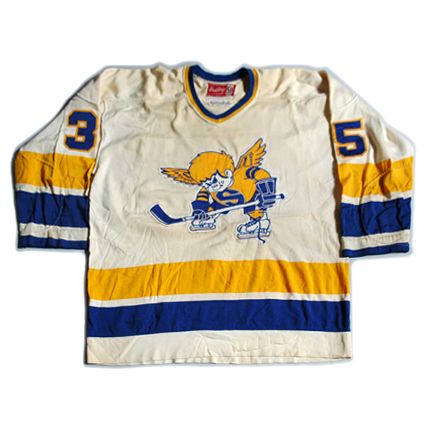
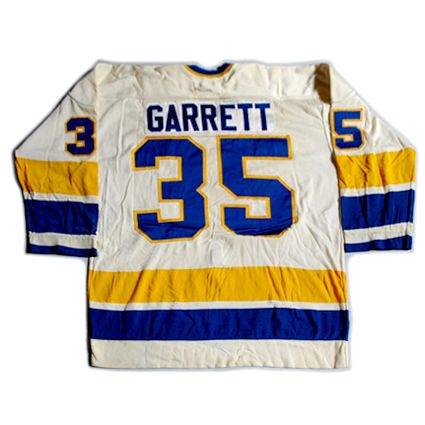
1973-74 Minnesota Fighting Saints John Garrett Jersey

Perhaps no other players personifies life in the World Hockey Association better than John Garrett, who passed away today at the age of 74.

Drafted by the St. Louis Blues in the 1971 NHL Entry Draft, Garrett, faced with the prospect of life in the minor leagues riding buses and playing in a dingy old rink for little pay while trying to crack an NHL lineup instead cast his lot with the Minnesota Fighting Saints of the WHA for a higher salary, playing time in a top professional league in a brand new, state-of-the-art arena, featuring cutting edge clear dasherboards! It was a no-brainer for many minor league players in the early 1970's to make the jump to the WHA.

In Minnesota, Garrett split time with former US Olympian Mike Curran, before becoming the number one goalie in 1974-75 with 58 appearances and a 30-23-2 record. The following season Garrett had already played in 52 of the Fighting Saints 59 games, going 26-22-4, when the franchise folded mid-season.
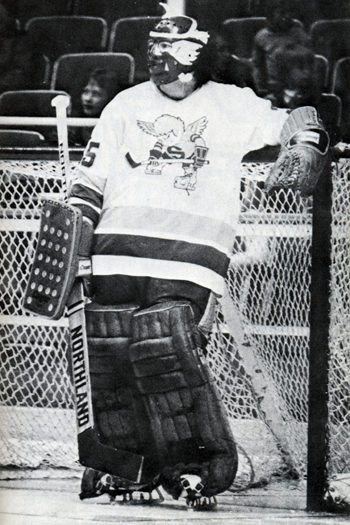
Garrett Fighting Saints
Minnesota Fighting Saint John Garrett - note the clear boards behind him

Garrett's services were then snapped up by the Toronto Toros where their unsettled goaltending situation saw six different men play at least seven games, with none more than 26. While Garrett remained with the franchise for the next two seasons, nothing in the WHA was that simple, as the franchise relocated for the 1976-77 season to the deep south of the United States, finding a new home in Birmingham, Alabama of all places!

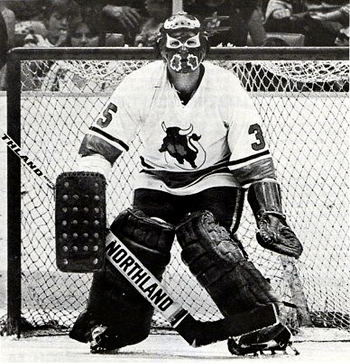
Garrett Bulls
Garrett joined the Toros after the Fighting Saints folded
Garrett's veteran experience and strong play immediately earned him the starting job and he patrolled the crease for 65 games that season and he was named a First Team WHA All-Star. He also played in 58 games in the 1977-78 season when the "Baby Bulls" were stocked with several players under the age of 20, something never before tried in major professional hockey.

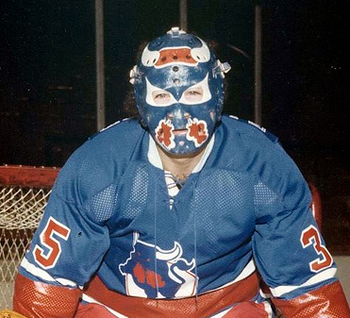
Garrett Bulls
Garrett with his excellent snorting bull mask in Birmingham
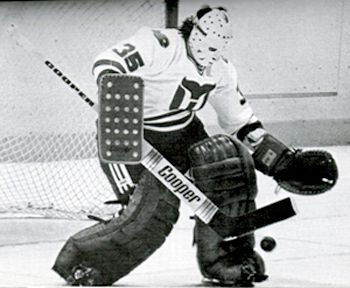
A trade in September saw him dealt to the New England Whalers where he split the goaltending duties with Al Smith for the final season of the WHA. For 1979-80, the Whalers, now renamed the Hartford Whalers, joined the NHL along with the Quebec Nordiques, Edmonton Oilers and Winnipeg Jets.

During his time in the WHA, Garrett saw and lived through it all. A franchise folding mid-season, a franchise relocation, a trade and eventually a change in leagues!

Garrett led the Whalers in appearances in 1979-80 and 1980-81 with 52 and 54, respectively. With the Whalers failing to qualify for the playoffs in 1981, Garrett was chosen to be a member of Team Canada at the World Championships.

Garrett Whalers
Garrett with the Whalers in their new NHL era jerseys
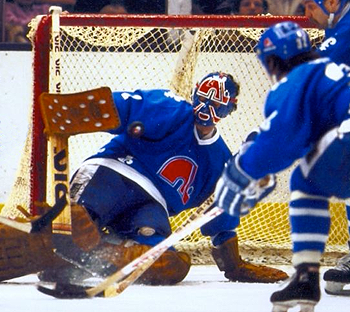
He began the 1981-82 season with Hartford prior to being traded to another WHA refugee club, the Quebec Nordiques in January of 1982 to back up Dan Bouchard.

Garrett Nordiques
Garrett was traded to Quebec in 1982
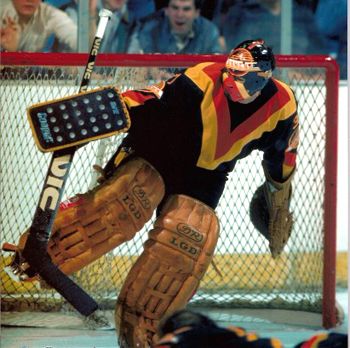
With Bouchard again getting the majority of the playing time in 1982-83, and the Nordiques wanting to make room for future starter Clint Malarchuk, Garrett was again dealt in February 1983 to the Vancouver Canucks. While he was unable to displace established starter Richard Brodeur, Garrett did play three seasons in Vancouver to close out his NHL career.

Garrett Canucks
Garrett's final stop in his NHL career was with the Canucks
Garrett's career concluded with 530 games played, 216 wins, 242 losses and 52 ties between the two leagues combined.

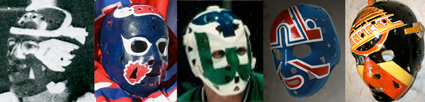
John Garrett masks
John Garrett's goalie mask history

Today's featured jersey is a 1973-74 Minnesota Fighting Saints John Garrett jersey. The Fighting Saints original jerseys featured the "S" logo and were worn for the first half of their first season before being replaced by the "little saint" logo. None of the original Fighting Saints jerseys survived, as they had their crests removed and were given to the local Hastings High School to reuse.

Fighting Saints jerseys are some of the most sought after of the WHA game worn jerseys, thanks in part to their classic look, fantastic logo, die-hard fan base and limited availability.

1973-74 Minnesota Fighting Saints

Bonus Jersey: Our bonus jersey is a 1977 WHA All-Star John Garrett jersey as worn in the game in Hartford, Connecticut, won by the East All-Stars 4-2.

1977 WHA All-Star jersey
photo courtesy of Classic Auctions

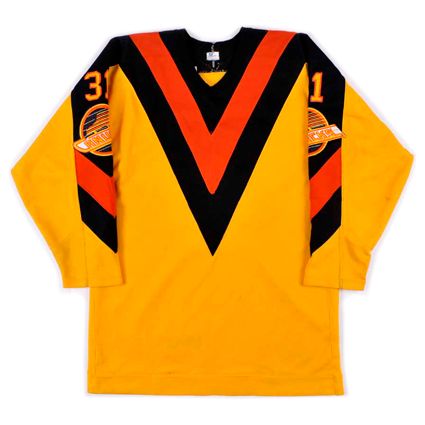
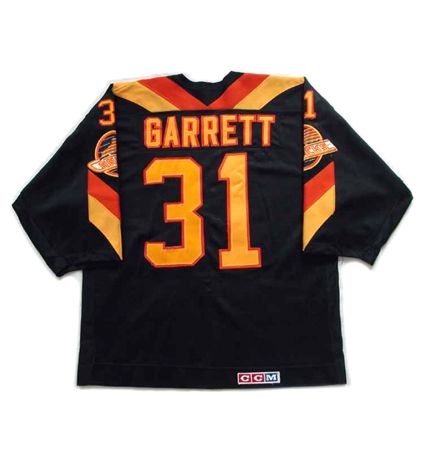
Extra bonus Jersey: Our extra bonus jersey is a 1982-83 Vancouver Canucks John Garrett jersey. Moving forward in Garrett's career, he joined the NHL with the Whalers inclusion in the expansion in 1979-80 and made his way to Vancouver after a stint with the Nordiques in between.

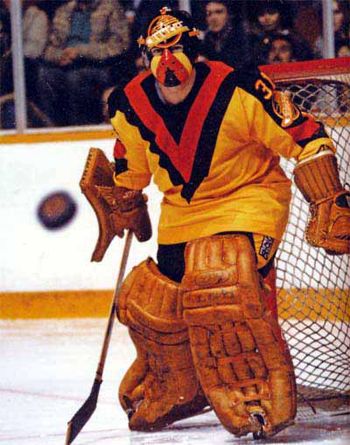
Vancouver had debuted their controversial "flying V" jerseys in 1978-79 with one color black number and single color orange names. In Garrett's first season with the Canucks, the numbers became a sharp looking two color, as the black was now outlined in the orange, while the names were changed to a higher contrast black from the original orange. This was also the first season when the sleeve numbers moved to the more traditional location at the top of the arms, having originally been down at the wrists!


Today's extra bonus jersey has had Garrett's original nameplate removed unfortunately.


photo Garrett Canucks gold.jpg
Note the excessive length of the jersey, which is
bordering on the proportions of a ladies dress

Sharp eyed readers will notice the proportions of this jersey being "off", as the team has lengthened the jersey considerably, making look not unlike a dress when worn by Garrett, in an effort to surreptitiously reduce the size of Garrett's five hole between his legs!

photo Vancouver Canucks 1982-83 F jersey.jpg
photo Vancouver Canucks 1982-83 B jersey.jpg

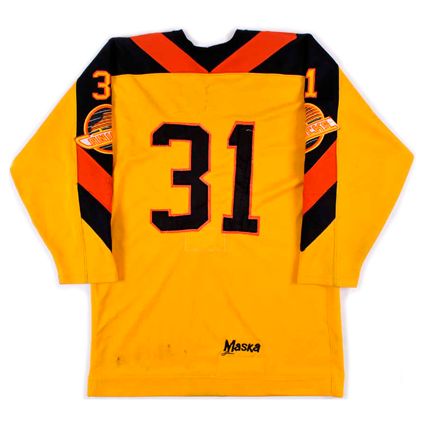
Extra extra bonus Jersey: Our extra extra bonus jersey is a 1984-85 Vancouver Canucks John Garrett jersey.

This jersey displays an interesting history, having originally been worn by teammate Brodeur as a #35 jersey, which was then converted to #31 for Garrett, as evidenced by traces of the original #5 digit, signs of a nameplate change as well as some of Brodeur's trademark modifications, such as the sleeves having been shortened as well as having side panels added to the body.

1984-85 was the final season for this style and the only season it was produced by CCM.
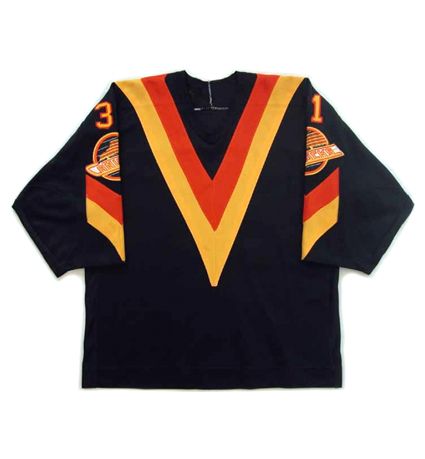

photo Vancouver Canucks 1984-85 F jersey.jpg
photo Vancouver Canucks 1984-85 B jersey.jpg

Thursday, May 4, 2017

1969-70 Los Angeles Kings Leon Rochefort Jersey

After two seasons with the Trois-Rivieres Lions of the Quebec Junior Hockey League, Leon Rochefort joined the Guelph Biltmores for the 1957-58 season. As a part of the New York Rangers system, he played alongside future Hall of Famers Rod Gilbert and Jean Ratelle. In two seasons with Guelph, Rochefort put up identical 35 point seasons playing 52 and then 54 games.
He turned pro in 1959-60 with the Trois-Rivieres Lions of the Eastern Professional Hockey League, scoring 27 goals and 49 points in 70 games as a center.

The following season of 1960-61, Rochefort played with the Kitchener-Waterloo Beavers, also of the EPHL. That season he had 20 goals and 38 points in 65 games while also making his NHL debut with the Rangers, playing in a lone game.

Rochefort, born on this date in 1939, spent the entire 1961-62 season with the Beavers and saw his scoring output increase with 33 goals and 60 points in 69 games.

He made strides toward becoming a full time NHL player in 1962-63 by playing in 23 games with the Rangers, scoring his first 5 NHL goals and 9 points. The remainder of his season saw him play in 50 games with the Baltimore Clippers of the American Hockey League with 14 goals and 34 assists.

 photo Rochefort Rangers 1.jpg
Rochefort during his early days with the Rangers

Before the 1963-64 season, the Rangers made a seven player trade that sent Rochefort, Dave Balon, Len Ronson and Gump Worsley to the Montreal Canadiens in exchange for Phil Goyette, Don Marshall and Jacques Plante. Montreal was looking to revive their fortunes, as they had been eliminated from the playoffs in the first round three years running after having won five straight Stanley Cups from 1956-60.

Unfortunately for Rochefort, the Canadiens lineup was loaded from the start, and Rochefort spent the vast majority of the next three seasons playing for the Quebec Aces of the AHL, highlighted by averaging a point per game in 1965-66 with 35 goals and 72 points in 71 games played.

 photo Rochefort Aces 1.jpg
The Quebec Aces Leon Rochefort

During that three year span from 1963-64 to 1965-66, Rochefort played in 13 regular season games for Montreal, but during the 1966 Stanley Cup playoffs, he saw action in four of the Canadiens ten playoff games, scoring a goal and an assist as Montreal would go on to defeat the Toronto Maple Leafs in four straight and the Detroit Red Wings in six to win the championship, earning Rochefort his name on the Stanley Cup.

 photo Rochefort Canadiens 3.jpg
Rochefort won a Stanley Cup with Montreal in 1966

Rochefort was limited by injuries during the 1966-67 season, and finished with 8 games for the Aces in the AHL and 27 with Montreal, where he scored 9 goals and 16 points. He also participated in ten playoff games with the Canadiens with a goal and an assist.

The NHL expanded dramatically for the 1967-68 season, doubling in size from six teams to now 12. The expansion gave Rochefort's career a fresh start, as he was selected by the Philadelphia Flyers in the 1967 Expansion Draft and led the first year club in goals in 27 in 74 games played as he finished third on the team with 42 points.

 photo Rochefort Flyers 3.jpg
Rochefort led the first year Flyers in goals

He returned to the Flyers for the 1968-69 season, with 65 games played and 35 points. After the conclusion of the season, Rochefort was traded by Philadelphia to his original club, the Rangers, on June 6th, only to have the Rangers deal Rochefort to the Los Angeles Kings three days later.

 photo Rochefort Kings 1.jpg
Rochefort spend one season with Los Angeles

In 76 games for the Kings, he scored 9 goals and 32 points. Once more, Rochefort was traded during the offseason, as Los Angeles sent him back to the Canadiens in three for three trade. The situation in Montreal was not very different than before, as Rochefort played ten games in the minor leagues for the Montreal Voyageurs before 57 regular season games back in the NHL with the Canadiens in a checking role, which saw his previous point production drop by half to 15 points. He did see action in 10 playoff games as Montreal would win the second Stanley Cup of Rochefort's career.

 photo 1970-71 Montreal Canadiens team.png
The 1970-71 Stanley Cup champion Montreal Canadiens

For the 1971-72 season, Rochefort found himself on the roster of the Red Wings after being traded a week after the Canadiens Stanley Cup victory. He would score 17 goals with Detroit in 64 games on his way to 29 points.

 photo Rochefort Red Wings 1.jpg
Rochefort was dealt to Detroit a week after winning a Stanley Cup

In 1972-73, he would play 20 games for Detroit only to be traded yet again, this time to the upstart Atlanta Flames. In 54 games with Atlanta, the veteran Rochefort would score 9 goals and 27 points.

He would play a second season with the Flames with similar results, this time 10 goals and 22 points.

 photo Rochefort Flames 1.jpg
Rochefort's veteran presence was welcomed on the young Flames

Probably used to it by now, Rochefort was traded for the seventh time in his NHL career, as the Flames sent him west to the Vancouver Canucks just prior to the start of the 1974-75 season.

He played well in Vancouver, scoring 18 goals and 29 points, his highest total in five years.

 photo Rochefort Canucks 1.jpg
After the seventh trade of Rochefort's career to the Canucks, the
airbrushers at O-Pee-Chee apparently put Rochefort in a body cast

Rochefort had one final season of hockey to play, which saw him in 11 games for the Canucks before playing in 60 games with the Tulsa Oilers of the Central Hockey League, where he proved he could still play, scoring 25 goals and 40 assists for 65 points, putting up similar numbers to what he had done a decade earlier for the Aces.

His final NHL totals were 617 games played with 121 goals and 147 assists for 268 points and a pair of Stanley Cups with Montreal.

Today's featured jersey is a 1969-70 Los Angeles Kings Leon Rochefort jersey as worn during Rochefort's only season in Los Angeles.

The Kings first took to the ice in 1967-68 wearing this style jersey with one color numbers. After two seasons of play, they added a white outline to the crest and the numbers. Names arrived the next season on the home gold jerseys and the purple stripe moved to the bottom of the jerseys in 1971-72. Names came to the back of the purple road jerseys in 1977-78 and the jerseys remained in use through the 1979-80 season.

 photo Los Angeles Kings 1969-70 F jersey.jpg
 photo Los Angeles Kings 1969-70 B jersey.jpg

Bonus jersey: Today's bonus jersey is a 1973-74 Atlanta Flames Leon Rochefort jersey worn during his two year stint in Atlanta.

The Flames were founded in 1972-73 in response to the arrival of the new World Hockey Association. The striping on the jerseys was changed slightly from the original three stripe pattern to a five stripe "Northwestern" pattern for the remainder of their time in Atlanta through the 1979-80 season, with the only other change being the addition of names on the back in 1977-78.


 photo Atlanta Flames 1973-74 F jersey.jpg
 photo Atlanta Flames 1973-74 B jersey.jpg


Extra bonus jersey: Today's extra bonus jersey is a 1974-75 Vancouver Canucks Leon Rochefort jersey worn during Rochefort's final stop on his hockey tour of North America, which took him from New York to Montreal to Philadelphia across the country to Los Angeles and back to Montreal to Detroit to Atlanta back across the continent to Vancouver.

The original Canucks jerseys had sizeable white V's inside the arm stripes. Two seasons later, the striping patterns were changed on the arms and waist. Vancouver's jerseys would remain the same through the 1977-78 jersey until the docile green and blue jerseys were replaced by their savage black, gold and orange Flying V style.

 photo Vancouver Canucks 1974-75 F jersey.jpeg
 photo Vancouver Canucks 1974-75 B jersey.jpeg

Saturday, February 18, 2017

1989-90 Buffalo Sabres Alexander Mogilny Jersey

Born on this date in 1969, Alexander Mogliny, just 20 years old, made a choice that would affect the rest of his life.

While in Stockholm, Sweden, having just completed winning a gold medal at the 1989 World Championships, Mogilny made the life changing decision to become the first Soviet player to defect, leaving behind his family but escaping the totalitarian rule of the communist system, and iron-fisted Soviet old school coach Viktor Tikhonov in particular, whom Mogilny felt would make his life not only at the rink, but outside of hockey, miserable for years to come due to his independent nature.

Mogilny Soviet Union, Mogilny Soviet Union
Mogilny while playing for the Soviet Union National Team

The story begins at the 1988 NHL Entry Draft when the Sabres, with one of their two picks in the fifth round, selected one of the most exciting young players in the world, Alexander Mogilny with the 89th overall pick. While many Soviet players had been chosen in the NHL draft before, it was generally in much later rounds when taking a flyer on a player unlikely to ever appear in an NHL game was worth the roll of the dice with an essentially meaningless pick.

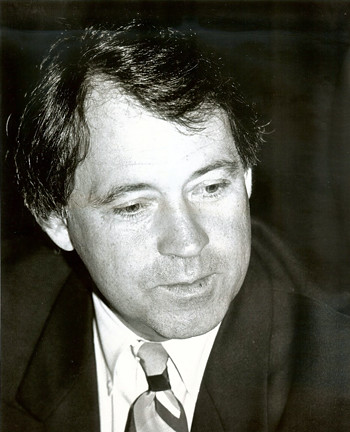
Gerry Meehan, the Sabres general manager explains, "I would never have used the draft pick if I didn’t think he would be coming,” Meehan said. “The attitude then was, ‘There’s no way this guy is going to come out. He’s too big a young star.’ It was my view that it was inevitable that, sooner or later, the Russians were going to have to let their players come and play on a world stage other than the Olympics and the World Championship.”

Gerry Meehan
Gerry Meehan

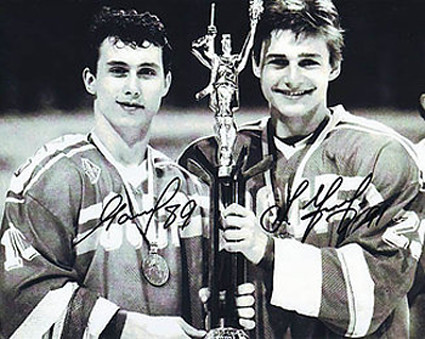
At the beginning of 1989, former Sabre Don Luce, the club's Director of Amateur Evaluation, traveled to Anchorage, Alaska to to 1989 World Junior Tournament. There, Pavel Bure and linemates Mogilny and Sergei Fedorov, were finishing third (Bure) and tied for fourth (Mogliny and Fedorov) in tournament scoring while leading the Soviets to a 6-1 record and the gold medal. Luce met briefly with Mogilny in Anchorage and gave him a business card, cementing Mogilny's decision to defect at the first opportunity.
 

Mogilny Fedorov CCCP
Alexander Mogilny and Sergei Fedorov

That opportunity arrived four months later when the Soviets were given two days in Stockholm after winning the 1989 World Championship. Luce, at home in North America, received a phone call on this date in 1989 from a man who claimed to be Mogilny's agent, Sergei Fomitchev. Unsure if he was really in contact with Mogilny, he asked Fomitchev to have Mogilny repeat what he had said to him in Anchorage. Told then that he had not played very well, Mogilny had stated "I show you next game", prior to scoring a hat trick against Canada to clinch the gold medal.

After Mogilny repeated the phrase, Luce and Meehan were on a plane to Sweden three hours later, arriving midday on May 3rd. While waiting for Fomitchev to return from shopping, the got an urgent call saying Mogilny's defection had to happen right away because it would be his best opportunity to get away.

They met at a mall and drove off. The next two days were spent moving from hotel to hotel to avoid being found while Meehan worked with the U. S. Embassy to arrange the necessary paperwork.

At one point Mogilny, from the far eastern part of Russia where few players have originated from, attempted to call home and midway through the conversation the call was disconnected, giving rise to Mogilny's fears that the call had been traced and the authorities knew where they were.

The day they left they abandoned their rental car and took a taxi to the airport, and once inside the security gates, their fears of the Soviet officials was over. With that, Mogliny had become the first Soviet athlete to defect in 45 years.


 Meehan remembers, “He asked me in his broken English, ‘Am I free now?’ " And I said, ‘Yeah, you’re free.’ And he went over and had a beer. He couldn’t believe it. He said ‘free’, he didn’t say ‘safe’. He said ‘free’. I found that to be kind of poignant.”

Fedorov defected less than a year later at the 1990 Goodwill Games in Seattle and shortly afterwards, the Iron Curtain fell allowing Bure to join the NHL without having to defect.

During his rookie season in the NHL, wearing he number 89 presented to him by the Sabres owner Seymour H. Knox III in recognition of his place in the draft where Buffalo selected him and the year of his defection, Mogilny would play 65 games, scoring 15 goals and 43 points as he became acclimated to living in North America and learning a new language and culture. "It was a huge adjustment to come to the NHL. The language barrier was the toughest part. Lack of communication affected me both on and off the ice. It also took some time to get used to the airline travel. I had to deal with a fear of flying," Mogilny recalled.


Mogilny broke into the NHL with Buffalo

He would double his goal total the following season to reach 30 for the first time.


The arrival of Pat Lafontaine in Buffalo would give Mogilny a world class teammate to work with and his point totals took another jump upwards, finishing 1991-92 with 39 goals and 84 points and became the first Russian on an NHL All-Star Team. Given a year to work together and now fully integrated into life in the United States and the NHL, Mogilny had one of the greatest seasons in league history in 1992-93. He would score 127 points from 51 assists and a remarkable 76 goals in 77 games. His 76 goals remain tied for fifth all-time in a single season with Teemu Selanne and Phil Esposito.

With Lafontaine limited to just 38 games over the next two seasons, Mogilny was named team captain in his absence, the first European to ever captain an NHL club, but his production suffered as a result of the missing Lafontaine.

Mogilny Captain, Mogilny Captain 
Mogilny as captain of the Sabres

He was then traded to the Vancouver Canucks and reunited with Bure for the 1995-96 season, in which he would score 55 goals and 107 points, the second highest of his career in both categories.

Mogilny Bure Canucks, Mogilny Bure Canucks 
The Russian duo of Mogilny and Bure reunited in Vancouver

After five seasons of diminishing point totals in Vancouver, from 107 to 73, then 45 twice, he was dealt to the New Jersey Devils late in the 1999-00 season, having previously enjoyed the most minimal playoff success to that point in his career, having only escaped the first round once in ten seasons.

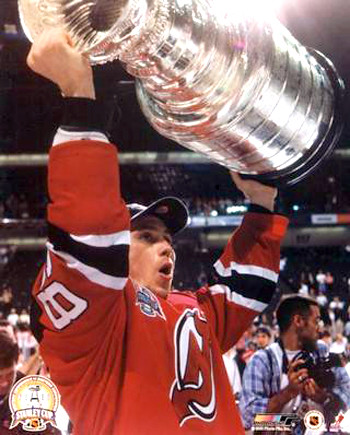
Prior to leaving the Soviet Union, Mogilny had already, just ten days after his 19th birthday, won a gold medal at the 1988 Olympics and then added he World Championship gold just days before his defection. Now with the Devils, Mogilny would see his first extended playoff run, which would eventually lead to a Stanley Cup championship. When he won the Stanley Cup with the New Jersey Devils, he became just the ninth player in history to join the Triple Gold Club.

Mogilny Stanley Cup
Mogliny joined the Triple Gold Club in 2000

The move to New Jersey was a positive one for Mogilny, as he would regain his scoring touch and exceed 40 goals for only the third time in his career, with 43 goals during an 83 point season and another run to the Stanley Cup Finals in 2000-01.

He would sign with the Toronto Maple Leafs for the 2001-02 season, where he would play for three seasons, including winning the
Lady Byng Trophy in 2003 and scoring his 1,000th point in 2003-04, before returning to the Devils for the final season of his career in 2005-06 before retiring with 473 goals and 1032 points in 990 games.

Mogilny Devils, Mogilny Devils
Mogilny had a 40 goal season while finishing his career with the Devils

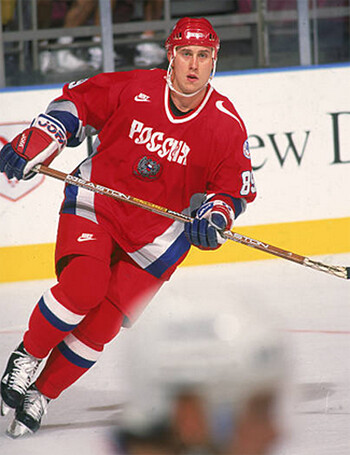
Following his defection, Mogilny would never play for the Soviet Union again and he would eventually suit up for Russia just once in the 1996 World Cup of Hockey, cutting short what was destined to be a fine, if not outstanding, international career.

Mogliny Russia
Mogilny's lone international appearance for Russia
came during the 1996 World Cup of Hockey

When asked following his career about the reasons for his defection, Mogilny responded, “Why did I do it? I did it for freedom. If the bird can fly and the fish can swim, you have to be able to move around the world and be free and not watched constantly. If a human being doesn’t have freedom, that’s not life. It’s like living in a cage. To me, you might as well be dead.”

Today's jersey is a 1989-90 Buffalo Sabres Alexander Mogilny jersey. This jersey sports Mogilny's distinctive #89, which is based on the year of his defection from the Soviet Union and also features the Sabres 20th Anniversary patch worn in Mogilny's rookie season following his defection earlier that year.

The Sabres wore this style from their inaugural season of 1970-71 through the 1995-96 season when a complete makeover of their identity package saw them adopt new colors and a new logo for a decade until a return to their traditional blue and gold colors, which eventually included a return to a modernized version of this classic jersey in 2010-11 after having used this style as an alternate jersey in 2006-07 and again in 2008-09 to 2009-10.

Buffalo Sabres 89-90 jersey photo BuffaloSabres89-90F.jpg
Buffalo Sabres 89-90 jersey photo BuffaloSabres89-90B.jpg
 photo BuffaloSabres89-90P.jpg

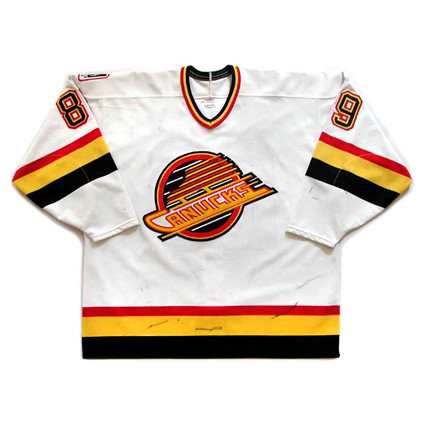
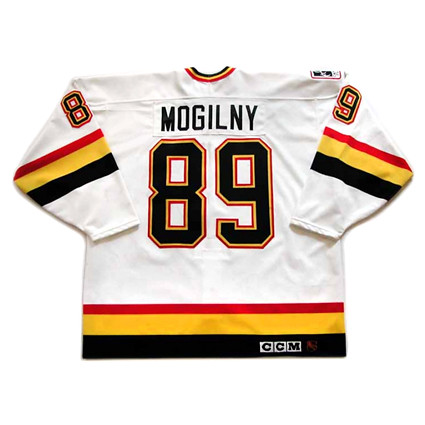
Bonus jersey: Today's bonus jersey is a 1995-96 Vancouver Canucks Alexander Mogilny jersey during his first season in Vancouver when he scored 55 goals and 107 points, the second highest of his career.

Vancouver introduced this white home jersey in 1989-90 after a decade of wearing gold jerseys at home. This style was worn through the 1996-97 season when the club got a complete makeover, with new colors and a new logo.


Vancouver Canucks 1995-96 F jersey
Vancouver Canucks 1995-96 B jersey

Extra bonus jersey: Today's extra bonus jersey is a 2003-04 Toronto Maple Leafs Alexander Mogilny jersey from the season during which he scored his 1,000th NHL point.


The evolution of this Maple Leafs jersey began back in the 1992-93 season when Toronto adopted a brand new style jersey with a more traditional look based on a sweater first worn back in 1934-35, only now paired with their modern Maple Leafs crest. The jersey first evolved with the adoption of a modern name and number font in 1997-98. While the name remained unchanged, the curvy numbers were replaced in 2000-01 with a return to a more classic block font for the numbers, although now trimmed in blue and outlined in silver, the first time a third color had been used on a Maple Leafs jersey since World War II, when the lettering on the crest was red for a few seasons.


The retro style maple leaf secondary logo was replaced by a new "TML" monogram at the same time the number font was changed in 2000-01.


Toronto Maple Leafs 2003-04 jersey, Toronto Maple Leafs 2003-04 jersey

Extra extra bonus jersey: Today's extra extra bonus jersey is a 1988-89 CSKA Moscow Alexander Mogilny jersey from Red Army's 13th consecutive Soviet Championship League title under Tikhonov just weeks prior to Mogilny defecting to the west.

Mogilny's departure in early May after that year's World Championships in Sweden, effectively marked the end of an era for Tikhnov and the supremacy of CSKA, as prior to the following season Slava Fetisov, Igor Larionov and Vladimir Krutov left the Soviet Union with permission of the authorities to play in the NHL, bringing to a close Red Army's unparalleled streak of championship dominance.


CSKA Red Army 88-89 jersey, CSKA Red Army 88-89 jersey

In today's video section, an interview with Mogliny from the 1989 World Junior Championships in January, a few months prior to his defection in April after the World Championships. He sticks to the party line quite well, giving little hint as to what was to follow, or at least that's what the interpreter tells us...


Here is a look at the some of the career highlights of Mogilny.


Here, Mogilny scores his 70th goal of the 1992-93 season, only the seventh player to reach 70 in NHL history.


Speaking of the remarkable 1992-93 season, here is a brief feature story on the partnership between Mogilny and Lafontaine.


Finally, an excellent documentary about Mogliny's defection narrated by Meehan that runs 23 minutes and is well worth your time.


Sunday, February 12, 2017

1975-76 Vancouver Canucks Dennis Ververgaert Jersey

Since the demise of the Brooklyn Americans in 1942, the NHL consisted of just six member teams, commonly referred to as "The Original Six". Finally, following the success of the Los Angeles Dodgers and San Francisco Giants in Major League Baseball on the west coast, the idea of expanding the NHL was first brought up in 1963, partly due to fears that the Western Hockey League was intending to operate as a major league in the near future and also in hopes of making the league more attractive to American television networks with coast-to-coast appeal.
 
The original discussions promoted San Francisco and Vancouver as acceptable locations with Los Angeles and St. Louis also as potential candidates in March of 1965.

In February of 1966, applications were received from groups from Los Angeles, Pittsburgh, Minnesota, Philadelphia, San Francisco, Baltimore, Buffalo and the only Canadian application from Vancouver.

In the end, franchises were awarded to Oakland (across the bay from San Francisco), Los Angeles, Minnesota, Philadelphia, Pittsburgh and...

St. Louis?

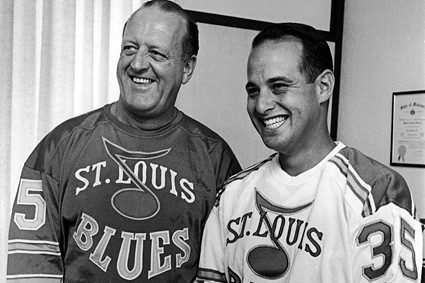
St Louis Blues first jerseys
The Blues were a surprise inclusion in the 1967 NHL expansion

The decision to exclude Vancouver caught many by surprise, especially those involved in the construction of the brand new Pacific Coliseum in Vancouver, and angered not only the locals, but all of Canada, since the six chosen cities were all in the United States. Various reasons emerged to explain the surprise inclusion of St. Louis, despite the fact there was no formal proposal from a group representing St. Louis!

Reportedly, Toronto and Montreal did not want to share Canadian TV revenues with a third club and support for expansion from Chicago was contingent on the creation of a team in St. Louis, which would result in the sale of the run-down St. Louis Arena, which just conveniently happened to be owned by the Chicago Black Hawks ownership group at the time...

St Louis Arena
The St. Louis Arena dated back to 1929

Less than a year later the Oakland Seals franchise was having financial difficulties and an apparent deal was struck to move the club to Vancouver. The NHL however, did not want to see one of their brand new franchises moved so quickly and killed the deal. In exchange for avoiding a lawsuit, the NHL promised Vancouver a team in the next expansion, which occurred in 1970 when Buffalo and Vancouver were granted entry into the NHL at a cost of $6 million, three times the cost in 1967.

1970-71 Vancouver Canucks team photo photo 1970-71 Vancouver Canucks team photo.jpg
The inaugural 1970-71 Vancouver Canucks

Life for the Vancouver Canucks in the NHL the first few seasons was predictably rough, as the other six expansion franchises who began play in 1967-68 had a three year head start on the Canucks, not to mention the established powerhouses of the Original 6. Even tougher for the Canucks, they were placed in the "East" Division with the Boston Bruins, New York Rangers, Montreal Canadiens, Toronto Maple Leafs, Detroit Red Wings and their expansion cousins the Buffalo Sabres, while the West Division was comprised of the "Second 6" and the Chicago Black Hawks.

The Top 10 scoring leaders that season were all from Original 6 teams and nine of those resided in the East Division with the Canucks. That first season the Canucks were 0-4 against the Montreal Canadiens before managing a pair of late season ties on their way to a 24-26-8 record and a 6th place finish in the East, ahead of only the Red Wings by a single point.

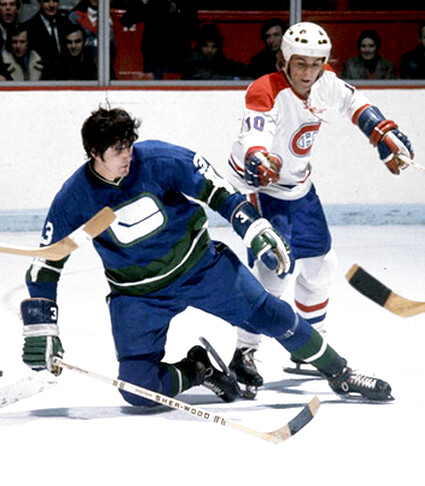
Quinn Lafleur
Pat Quinn defends against Montreal's Guy Lafleur

1971-72 was a bit less successful than their debut season, as they dropped to last place in the East with a 20-50-8 record. Although they had four more wins than the Sabres, they fell behind them in the standings due to just 8 ties versus Buffalo's league leading 19. Montreal again dominated the series between the two clubs, including three overpowering shutouts by scores of 6-0, 7-0 and 5-0 on their way to sweeping the Canucks 5 games to none.

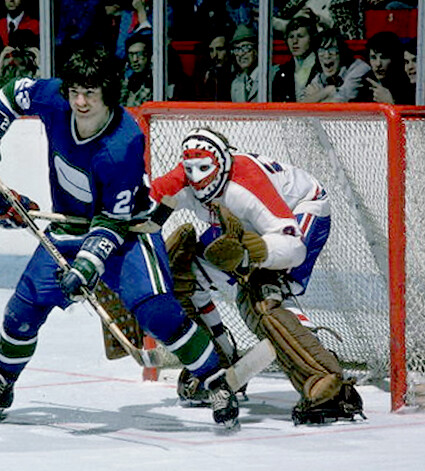
Vancouver v Montreal 2
Ken Dryden and the Canadiens dominated the Canucks

Vancouver showed little improvement with a 22-47-9 record, but were spared the basement due to the arrival of the expansion New York Islanders in 1972-73. Montreal again swept the board against Vancouver, taking all six meetings including wins of 9-1, 3-0 and 7-3.

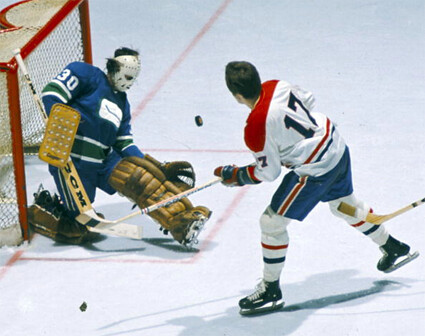
Vancouver v Montreal 4
Montreal's winning streak continued in 1972-73

For 1974-75, the Canucks were paroled from the mighty East Division and placed in the brand new Smythe Division with the Chicago Black Hawks, Minnesota North Stars, St. Louis Blues and expansion Kansas City Scouts. The resulting change in the Canucks schedule, as well as the team gaining experience and confidence from playing together for several seasons now, saw them leap up to a 38-32-10 record on their way to not only a Division championship, but their first playoff appearance. Still the specter of the Canadiens loomed, as they defeated the Canucks in all four regular season appearances and eliminated them from the playoffs.

Vancouver v Montreal 5
Bob Gainey kept the pressure on the Canucks

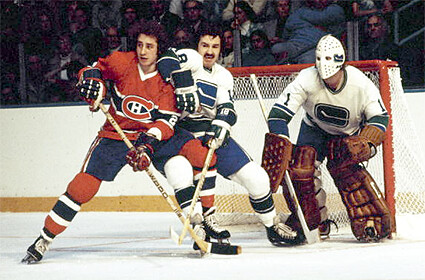
The losing streak continued in 1975-76 with a 6-4 loss on November 29th, a 2-2 tie on December 20th. Another 2-2 tie on January 27th extended the Canucks streak of futility against Montreal to 30 games (0-25-5) prior to their meeting on this date in 1976 in Montreal.

Defenseman Mike Robitaille opened the scoring for the Canucks with an unassisted goal at 6:34 against the Canadiens Ken Dryden. Ron Sedlbauer added to the Canucks lead a minute later with his 12th goal of the season at 7:32. The Canucks leading scorer that season, Dennis Ververgaert, scored on the power play at 15:15 with both Mario Tremblay and Bob Gainey in the penalty box for Montreal. Sedlbauer shocked the fans at the forum with his second goal of the period at 18:09 to put the visitors up by a score of 4-0 after just 20 minutes while dominating play with a 16-8 lead in shots on goal.

Ron Sedlbauer
Ron Sedlbauer

Ververgaert extended the Canucks lead at 2:46 of the second before the Canadiens began their comeback. Jim Roberts scored to get Montreal on the board at 8:55 and Peter Mahovlich cut the lead to 5-2 at 17:07 of the second period.

Ververgaert Canucks
Dennis Ververgaert

Bobby Lalonde counted Mahovlich's goal just 1:36 into the third period to restore the Canucks four goal lead. Vancouver held Montreal off the board for the first half of the period, but the Canadiens showed signs of life with a pair of goals less than 30 seconds apart at the midway point of the period with scores from Mahovlich and Doug Risebrough at 10:26 and 10:55 to make the score 6-4 with plenty of time remaining for the defending Stanley Cup champions to come back.

Goaltender Ken Lockett held off the Canadiens for the remainder of the game, eventually making 31 saves on 35 shots as the Canucks played a disciplined game and stayed out of the penalty box the rest of the way to secure their first regular season win over the Canadiens in franchise history, and accomplish it on the road in the always tough Montreal Forum.

Ken Lockhart
Ken Lockett delivered the Canucks first win over Montreal

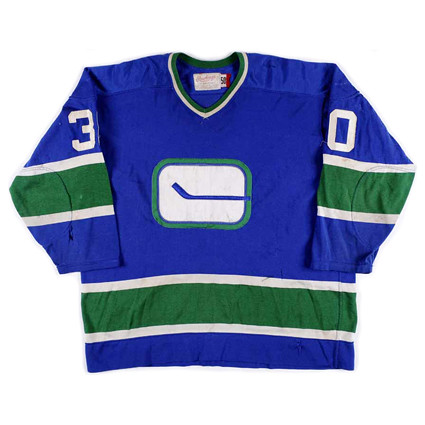
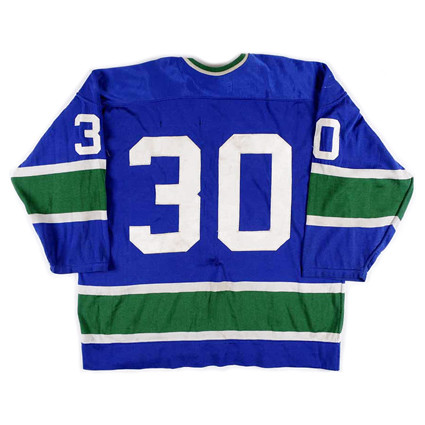
Today's featured jersey is a 1975-76 Vancouver Canucks Dennis Ververgaert jersey as worn during the Canucks first ever win against the Montreal Canadiens after five winless seasons and 30 tries. Ververgaert contributed to the Canucks win with a pair of goals that night.

The Canucks original jerseys had a pair of wide green stripes on the waist and arms, as well as a white "V" over the green stripes on the sleeves. This style lasted for only two seasons before a change to a single green stripe which was trimmed in white. No names were worn on the back until 1977.

Ververgaert was drafted third overall in 1973 by the Canucks and made the jump from junior hockey straight to the NHL. As a rookie he scored 26 goals. Two seasons later he had a career season, netting 37 goals and totaling 71 points. He had two more 20-goal seasons in his six seasons as a Canuck. He as traded to the Philadelphia Flyers halfway through the 1978-79 season. After a year and a half with the Flyers, Ververgaert's final NHL season was spent with the Washington Capitals. In all, he scored 176 goals and 392 points in eight NHL seasons and was the Canucks second leading goal scorer during their first decade.

Vancouver Canucks 75-76 F
Vancouver Canucks 75-76 B

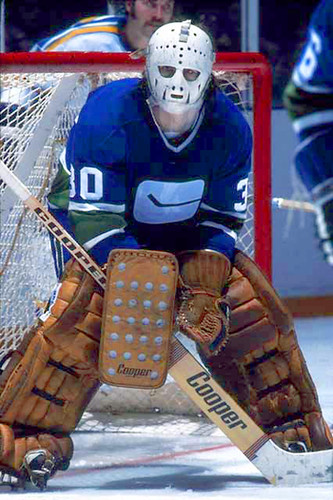
Today's featured jersey is a 1975-76 Vancouver Canucks Ken Lockett jersey as worn during the Canucks first ever win against the Montreal Canadiens after five winless seasons and 30 tries. Lockett contributed to the Canucks win with 31 saves on 35 shots that night.

Vancouver Canucks 1975-76 F jersey
Vancouver Canucks 1975-76 B jersey
Our video section today has home movies of the Canucks taken in 1976, featuring some overly dramatic music which tries to make the footage of warmups seems rather important, but still a nice look at the Canucks jerseys of the day.


Here, the rookie Ververgaert slugs it out with Wayne Cashman of the Bruins, showing no intimidation as he establishes himself in the NHL.


Finally, Ververgaert welcomes a young Mark Messier to the NHL in a fight that seems like it was never going to end.


hit counter for blogger