History of Jersey 83-93 Banner sm photo History of Jersey 83-93 Banner sm.jpg

Saturday, July 10, 2010

1999 Mystery Alaska John Biebe Jersey

July by the Numbers settles down with some popcorn and a movie for jersey #10.

Released in 1999, Mystery, Alaska tells the story about the small town of Mystery located in the far reaches of Alaska.

Mystery Alaska cover photo MysteryAlaskaCover.jpg

When their weekly Saturday pickup hockey game is glorified by a cover story in Sports Illustrated (by a former town resident), the magazine article gives birth to the idea of the town hosting an exhibition game against the NHL's New York Rangers in a nationally televised event.

 photo mystery-alaskaSaturdayGame.jpg

Just prior to the announcement of the challenge from the Rangers, town Sheriff John Biebe (portrayed by Academy Award winner Russell Crowe), a 13-year veteran of the Saturday Game, is cut from the squad in favor of teenager Stevie Weeks. who looks remarkably like a certain Sidney Crosby.

 photo WeeksampBiebe.jpg
Weeks and Biebe
 (nice touch having Weeks wearing an Alaska Anchorage Seawolves t-shirt)

With the planned arrival of the Rangers, and big city values, the townsfolk begin to stress over the event and relationships become strained as the pressure mounts. Additionally, their planned game of "pond hockey" evolves into a standard game with boards and blue lines, which turn the rules back in favor of the NHL's Rangers.

Now off the team, Biebe is originally asked to coach the team, but when town Judge Walter Burns (the legendary Burt Reynolds) becomes the coach, he immediately reinstates Biebe to the squad and installs him as captain.

Crowe and Reynolds photo CroweandReynolds.jpg
Sheriff Biebe and Judge Burns

With the day of the game now upon them, the team hits the ice decked out in gorgeous new jerseys never seen before in the movie.

Mystery Alaska

After going up 2-0 after one period, the Rangers come storming back in the second to take a 5-2 lead heading into the third. The team from Mystery regroups and fights back to within 5-4, only to hit the crossbar with their goalie pulled to come within an eyelash of tying the club from the NHL, earning the respect of the Rangers and the town.

In fact, the Rangers were so impressed that two of the players from Mystery actually get tryouts with a Rangers minor league affiliate, which means with those players leaving town, Biebe is now back as a member of the Saturday Game.

Mystery Alaska

Today's featured jersey is a 1999 Mystery Alaska John Biebe jersey. The color of buckskin with a leather lace-up collar, the jerseys feature a simple "M" logo and all the graphics done in black with cream trim, the jerseys are perhaps the finest ever in a hockey movie, as they capture the feeling and spirit of the wild Alaskan landscape in which the town's pond rests.

Mystery-Alaska Biebe F jersey photo Mystery-AlaskaBiebeFjersey.jpg
 photo Mystery-AlaskaBiebeBjersey-1.jpg

Today's video section begins with the trailer for Mystery, Alaska.


Next up the Saturday Game, which put the town on the map.


Finally, the boys from Mystery face off against the New York Rangers while wearing their new team jerseys.


Friday, July 9, 2010

1992-93 University of Maine Black Bears Paul Kariya Jersey

July by the Numbers takes us back to school with jersey #9.

The University of Maine hockey program was founded in 1977 and joined the Division II Eastern College Athletic Conference and the conference was upgraded to Division I in 1979. The Black Bears remained in the ECAC through the 1983-84 season before leaving to join the newly formed Hockey East conference.

Hockey East was formed in response to the fear that the Ivy League schools in the ECAC would leave that conference to form their own new league, which it turned out never came to pass.

With traditional college hockey powers Boston College, Boston University and Providence in the league, Hockey East gained immediate respectability and began it's first season with seven member clubs, which included the Black Bears.

It was tough going for Maine that first season in Hockey East, finishing a distant last with a 2-26-0 record under new coach Shawn Walsh. 1986-87 saw improvement with their first winning record in Hockey East, a 19-12-1 mark, good for third in the league followed by a stellar 20-4-2 record to win the league's regular season title in 1987-88 and made it to the national semifinals. While they placed second in the 1988-89 regular season, Maine captured it's first Hockey East playoff championship that season and again advanced to the Frozen Four.

The team remained a strong contender, with second place finishes the following two seasons, which included another Frozen Four appearance in 1991 before again winning both the Hockey East regular season and playoff championship in 1991-92 behind Hobey Baker Award winner Scott Pellerin.

The arrival of Canadian Paul Kariya from Vancouver and the goaltending duo of Garth Snow (21-0-1) and Mike Dunham (21-1-1) led the Black Bears to a memorable season. Kariya became the first freshman to win the Hobey Baker Award following his 33 goals and 91 assists for 124 points in just 51 games as Maine destroyed all before them, going 42-1-2, (with their only loss coming in overtime) winning the Hockey East regular season and playoff championship, as well as taking the first NCAA national championship in school and Hockey East history after staging a come from behind win after entering the third period trailing the defending champion Lake Superior State Lakers 4-2 when Jim Montgomery scored a hat trick, all on assists from Kariya, to propel Maine to the title.

Kariya Maine
Paul Kariya of Maine

Following the 1992-93 championship, Maine win the Hockey East regular season title in 1995, the conference playoff title in 2000 and 2004 and made it to the national championship final again in 1995 against Hockey East rival Boston University, won their second championship in 1999 (captained by Paul Kariya's brother Steve Kariya) and again reached the championship final in 2002 and 2004 in seven Frozen Four appearances.

Hockey East members have won the national championship a total of seven times, two by Maine in 1993 and 1999, two by Boston University in 1995 and 2009 and three by Boston College in 2001, 2008 and 2010, giving Hockey East, and the city of Boston, the last three in a row.

Today's featured jersey is a 1992-93 University of Maine Black Bears Paul Kariya jersey. This jersey has to be one of the Holy Grails of college hockey jerseys. Not only is this University of Maine jersey one of the most gorgeous, traditional looking jerseys, but it was worn by a college hockey legend, Paul Kariya, a 15 year NHL veteran who is just 11 points shy of 1,000 for his professional career.
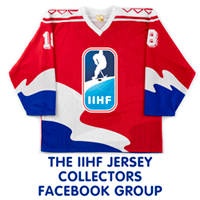
The classic matching "Northwestern" stripes on the waist and arms, as well as the colored shoulder yoke with white trim by all rights should be the standard template for all hockey teams. When done in it's two shades of blue with white trim, it only gets more attractive. Add in the collegiate script logo on the front and it's nothing short of perfection.

Maine Black Bears jersey

Today's video features players from the 1993 national championship team recalling the title game and their third period comeback.


Next, an interview with Jim Montgomery and Paul Kariya, who teamed up to capture the 1993 National Championship for Maine, the first for Hockey East.


Finally, a look at the ridiculous skills Kariya possessed in college.


Thursday, July 8, 2010

1974-75 Michigan Stags Dan Gruen Jersey

July by the Numbers continues with jersey #8 from the Michigan Stags.

The Los Angeles Sharks were one of the original WHA clubs, formed in 1972. Following their second season, they were sold to new owners, who relocated the team to Detroit and renamed them the Michigan Stags. They were hoping to take advantage of the NHL's Detroit Red Wings current losing ways and develop a rivalry with the Toronto Toros.

Gary Desjardins Stags,Gary Desjardins Stags
Gary Desjardins in net for the Stags

Keeping the red and black color scheme of the Sharks and hoping to fill the Cobo Arena's 12,000 seats, things did not work out as planned. The Stags carried over the poor play on the ice of the last placed Sharks and could not secure a TV deal either. When attendance averaged 3,000 per game, the club ran into money problems which forced the trade of star Marc Tardif to the Quebec Nordiques in early December.

Six weeks later the Stags were no more, with the owners folding the team on January 19th after only 61 games, even before legendary Red Wing Gordie Howe could return to Detroit for a game.

With the league now as owners, a week later the team was resurrected and placed in Baltimore, now known as the Blades, where they finished the remaining 17 games of the schedule, going a dismal 3-13-1, prior to folding after the season.

Today's featured jersey is a 1974-75 Michigan Stags Dan Gruen jersey. The Stags used the same basic jersey as their predecessor Sharks, only with a new, nicely executed logo, with the Stag's legs forming a subtle "M" for Michigan. While not the most dynamic logo ever, it was clean and graphic and has aged very well.

Michigan Stags jersey

Today's audio file is some classic Stags radio play-by-play action from a game versus the New England Whalers in the 1974-75 season.


Wednesday, July 7, 2010

1990-91 Italy National Team Bob Manno Jersey

July by the Numbers crosses the Atlantic Ocean and heads to Italy for jersey #7.

Bob Manno, a defenseman, began his NHL career with the Vancouver Canucks in 1976-77. He played with the Canucks for five seasons, splitting time between the NHL and CHL with a high of 52 games in 1978-79.

Bob Manno Canucks
Bob Manno while with the Canucks

He signed as a free agent with the Toronto Maple Leafs in 1981-82 and played in 72 games that season, scoring an NHL career high 50 points. He was rewarded by playing in the NHL All-Star Game appearance that season. Following the regular season, Manno made his debut for the Italy National Team at the 1982 World Championships.

This led to him playing a year with HC Merano in the Italian Serie A followed by another World Championship experience with Italy in 1983.

He returned to North America and the NHL for the next two seasons, splitting time between the Red Wings (62 games) and the AHL (12), followed by a full season with Detroit in 1984-85, his last in the NHL.

He returned to Italy and HC Merano for the 1985-86 season, racking up 106 points in 36 games for the high powered Eagles, who were led by one time New York Ranger Mark Morrison's 147 points and former Maple Leaf Frank Nigro's 132 as Merano won the championship for the first time in it's history.

With Italy now down in the B Pool, Manno returned to action in the World Championships for the third time. One more season with Merano followed with another appearance for Italy in the World Championships in 1987 before he moved to HC Fassa for 1987-88 and 1988-89. After missing the 1988 Worlds, he contributed 5 assists in 7 games for Italy in 1989, his best showing in the World Championships to date, recognized by being named Best Defenseman in the tournament.

1989-90 had Manno on the move to HC Milano Saim for three seasons, including a championship in 1991, his second in Serie A. He was also named Best Defenseman in Serie A that year. He also made his final two World Championship appearances in 1990 and 1991, when he raised his personal best to 7 points in 7 games in 1991.

Manno closed out his international career in style, competing in his first Olympics in Albertville, France in 1992, where he scored a goal and 2 assists in 7 games.

He wound up his professional career with two seasons playing for the HC Bolzano Foxes, which included another Serie A Best Defenseman award in 1992.

Following his playing career, he moved into coaching, first in Italy and later in the German DEL.

Today's featured jersey is a 1990-91 Italy National Team Bob Manno jersey, one of the craziest national team jerseys ever produced.

The traditional approach begins at the shoulders with the white yoke and traditional Tackla diamond logos and the classic blue color of Italian National Team jerseys, but once one moves down to the ITALIA crest, tradition gets thrown out the window and the insanity begins with no less than 40 vertical stripes of varying widths and lengths on the body alone, interrupted on the front by five horizontal striping sections which create even more visual noise, bearing in mind that the Italian flag is comprised of vertical stripes!

If that weren't enough, the vertical striping frenzy continues on the sleeves, with 13 more stripes on each arm.

With just one jersey looking so incredibly busy sitting still, one can only imagine what five of them looked like on the ice, all in motion at the same time!

Truly one of the most visually jarring hockey jerseys in the history of the sport, and worn by someone who also had to wear the Canucks controversial "Flying V"!

1990-91 Italian National Team

Here is ERC Ingolstadt coach Bob Manno speaking in front of the press following a win after a game in Germany in early 2009. Fortunately for all involved he's dressed better than his old Italian National Team jersey.


Tuesday, July 6, 2010

1972-73 Ottawa Nationals Brian Gibbons Jersey

July by the Numbers checks in at #6 today with a short-lived team from the World Hockey Association.

One of the founding members of the WHA, the Ottawa Nationals got off to a late start after adding a second owner in a better financial position than the original, but failed to come to obtain an agreement to play in Toronto's Maple Leaf Gardens. Management subsequently found their home in Ottawa where they played in the 10,000 seat Ottawa Civic Centre but averaged just 3,000 fans per game.

Due to their late start, the team was unable to secure any star players as several of the other clubs were able to do in order to attract the attention of the fans and media heading in to the WHA's debut season.

The team was led in scoring by former Maple Leaf, Bruin and Golden Seal Wayne Carleton, who led the team with 42 goals and 49 assists for 91 points in 75 games. No other player was able to reach 30 goals or 70 points. The Nationals goaltending duties was split between former Penguin Les Binkley and the quirky Gilles Gratton, who played in 51 of the team's games, going 25-22-3.

The Nationals finished in fourth place in the East Division with a slightly less than .500 record at 35-39-4, but qualified for the playoffs, where they would face the New England Whalers.

Unfortunately for the Nationals, the city of Ottawa demanded a $100,000 payment prior to the playoffs for the right to play in the arena through the end of the following season, which the club decided against paying. This led the team to once more look toward Toronto, where they struck a deal to play their playoff games at Maple Leaf Gardens, kicking off the seemingly endless WHA franchise relocation that would plague the league until the dreaded franchise demise became the norm beginning in 1976 when another Ottawa club, the Civics, became the first to fold completely.

Having lost their first two games 6-3 and 4-3 in Boston, the Nationals returned "home" to face the New England Whalers. They won Game 3 4-2, but lost Game 4 by a decisive 7-3 score while averaging 5,000 fans a game. The Whalers closed out the series with a 5-4 win back in Boston to end the Nationals season, and as it turned out, the Nationals themselves, as the team was sold following the season to John Bassett, who kept the team in Toronto beginning with the 1973-74 season and renamed them the Toros.

Today's featured jersey is a 1972-73 Ottawa Nationals Brian Gibbons jersey. This is a very attractive jersey for it's day and the addition of the extra blue stripe trimmed in white just under the shoulder yoke makes it very unique. We especially like the white name on the red nameplate placed directly on top of that stripe.

The team logo is also very bold and well executed, although we always felt it looked more like a corporate logo, for a railroad in particular, rather than a pro hockey team.

Still, a very nice jersey and one that lived an all too short life.

Ottawa Nationals jersey

Here is a history of the formation of the WHA and some of the first players to join the upstart league.


Monday, July 5, 2010

1976-77 Cincinnati Stingers Dave Inkpen Jersey

July by the Numbers checks in at #5 with a classic jersey from the World Hockey Association.

The Cincinnati Stingers were granted their franchise on May 6, 1973 but had to wait until their new home arena, the Riverfront Coliseum, was constructed before they could begin play in the 1975-76 season. The team took part in the WHA drafts while they waited for the arena to be ready, drafting Dean Talafous of Wisconsin with their first pick, and loaning out Dennis Sobchuk and John Hughes to the Phoenix Roadrunners to keep them active.

Once they had a completed home, they reclaimed their players and set out to fill their roster. They were led in scoring their first season by former Buffalo Sabre Rick Dudley, who led the team with 43 goals and 81 points in 74 games. They club finished with a respectable 35-44-1 record and only missed out on the playoffs by 2 points. Their 71 points were 12 more than the Edmonton Oilers, who somehow managed to qualify for the postseason thanks to a quirk in the always off-beat WHA!

Rich Leduc's 107 and Blaine Stoughton's 104 points led the Stinger attack in 1976-77 with Sobchuk right behind with 96 to place 7th, 9th and 10th in the WHA scoring race. Both Leduc and Stoughton netted 52 goals, fourth best in the league. The club finished in second place in the Eastern Conference with a team record 83 points, but were eliminated in the first round of the playoffs. That season also saw the debut of future coach and TV commentator Barry Melrose on defense. Following the season a proposed WHA merger with the NHL that would have included the Stingers was defeated by a single vote.

The 1977-78 season saw one of the more unusual jersey related occurrences in hockey history when Robbie Ftorek joined the club after the demise of the Roadrunners. Current team veteran Claude Larose had worn #8 for the past two seasons and Ftorek had also been wearing #8 as a tribute to former Boston Bruin Fleming Mackell. Neither wanted to relinquish their favorite number, so they had the team petition the league and permission was granted for both players to wear #8 during the season!

Ftorek went on to lead the club in scoring by a wide margin with 109 points, well clear of Dudley's 71. Ftorek's 59 goals were third overall in the WHA. In the standings, the Stingers finished seventh in the one-division now shrinking WHA, two points out of the playoffs.

Ftorek again led the team in points in 1978-79 with 116, while Peter Marsh was tops in goal scoring with 43. New, and notable additions to the Stingers roster included goalie Mike Liut, future 700 goal scorer Mike Gartner and eventual six-time Stanley Cup winner Mark Messier, who failed to impress with one goal in 47 games. Three seasons later he would score 50 for the Edmonton Oilers in the NHL.

The Stingers were eliminated from the playoffs in Round 1, two games to one by the New England Whalers, but not before winning their one and only playoff game in team history 6-3 at home in Game 2.

Following the season, the WHA agreed to a one-sided merger plan with the NHL, which allowed Winnipeg, New England, Quebec and Edmonton to join the NHL as expansion franchises, while the owners of both Cincinnati and the Birmingham Bulls were given a cash payment of $3.15 million as a buy-out, putting an end to the Stingers franchise after just four years on the ice.

Today's featured jersey is a 1976-77 Cincinnati Stingers Dave Inkpen jersey. With the Stingers name lending itself to a multi-stripe theme, it's a wonder the Stingers jerseys were as reserved as they were.

The Stingers logo is a wonderful piece of graphic design and looks as modern today as it did when it was first conceived and has always been one of our favorites.

1976-77 Cincinnati Stingers Jersey

Our first video is a profile of former Stinger Blaine Stoughton.


Here is amateur footage of the minor league Cincinnati Clyclones playing while wearing Stingers throwback jerseys.



Sunday, July 4, 2010

2002-03 Rochester Americans Rory Fitzpatrick Jersey

July by the Numbers reaches #4 with the most appropriate jersey possible.

The United States of America celebrates it's Independence Day on July 4th, marking the date in 1776 it declared it's independence from Great Britian when it adopted the Declaration of Independence.

The day is traditionally marked with parades, cookouts and picnics, pubic displays of the flag, carnivals and fairs, concerts, baseball games before the day concludes with fireworks celebrations all across the nation.

Fireworks

Massachusetts was the first state to recognize July 4th as a state celebration in 1781 and the first documented use of the phrase "Independence Day" dates back to 1791 and it became an official federal holiday in 1870.

The patriotically named Rochester Americans were founded in 1956, making them the second oldest franchise in the American Hockey League by far, with the third oldest still active team having been founded in 1992.

The Americans have made it to the Calder Cup Finals 16 times, having won the championship six times, first in a run of success that encompassed 1965, 1966 and 1968 as well as an appearance in the finals in 1967, the only team to reach the finals in four consecutive seasons. Other championship titles came in 1983, 1987 and most recently in 1996.

Well known players from the early days of the Rochester franchise include goalie Gerry Cheevers, future Islanders coach Al Arbour, Bruins coach and TV commentator Don Cherry, Jim Pappin and Mike Walton.

After a down period in the late 1960's under the ownership of the Vancouver Canucks, when the team finished last for four straight seasons, local owners purchased the club and installed the dynamic Cherry as coach and general manager, which paid dividends as the Americans finished with the best regular season record in 1973-74.

The Americans were later purchased by the owners of the Buffalo Sabres, which led to their becoming the Sabres AHL affiliate, a partnership which lasted from 1979 to 2008, the longest such partnership in AHL history at 29 years, which included three championships.

Two numbers have been retired by the team in honor of three players, the #6 for Red Armstrong and #9 for both Dick Gamble and Jody Gage, who broke Gamble's team scoring records.

Recognizable names to have played for the Americans include Maxim Afingenov, Donald Audette, Martin Biron, Brian Campell, Randy Cunneyworth, Benoit Houge, Ales Kotalik, Uwe Krupp, Mike Milbury, Ryan Miller, Jason Pominville, Darren Puppa, Thomas Vanek and even Grant Fuhr.

Today's featured jersey is a 2002-03 Rochester Americans Rory Fitzpatrick jersey. With it's red, white and blue color scheme, patriotic sheild logo and #4, we couldn't think of a more appropriate jersey for the Fourth of July, as it even features sponsorship from a local Chevrolet dealer. All you need while wearing this one would be for your mom to serve you some apple pie!

With it's shield crest, classic Northwestern striping pattern and shoulders decorated with basic stars, this jersey's understated elegance creates a timeless look often left behind in this modern age of excessive piping and gimmicky fonts. A true classic jersey in every sense.

Rochester Americans jersey

Today's video section begins with Gage scoring his 14th goal of the playoffs in Game 7 of the 1987 Calder Cup Finals, leading to the Americans to their fifth Calder Cup championship.


Here is a further look at Jody Gage, an AHL MVP and member of the AHL Hall of Fame.


Saturday, July 3, 2010

2002-03 Halifax Mooseheads Milan Jurcina Jersey

July by the Numbers crosses the Canadian border for jersey #3 today.

Founded in 1994, the Halifax Mooseheads, the Mooseheads were the idea of Harold MacKay, a regional sales manager for Moosehead Breweries, who felt the time was right to obtain a franchise for the Quebec Major Junior Hockey League, one of three major junior hockey leagues across Canada.

Halifax had teams in the American Hockey League prior to the formation of the Mooseheads, and when the Citadels relocated to Cornwall, the time seemed right to try major junior hockey rather than minor pro hockey. With Moosehead Breweries President and CEO Derek Oland on board with the plan and the vital financial backing, the Mooseheads came to be in time for the 1994-95 QMJHL season despite overcoming the logistical difficulties of all the league's other teams being located exclusively in Quebec at the time.

Players from that first season, in which the Mooseheads qualified for the playoffs, to make an impact in the NHL were goaltender John-Sebastien Giguere and Jody Shelley.

Giguere Mooseheads
John-Sebastien Giguere

More future NHL players arrived, with Marc Chouinard coming in 1995, Alex Tanguay in 1996 and Ladislav Nagy in 1998.

Tanguay Mooseheads
Alex Tanguay

The Mooseheads were chosen to host the Memorial Cup in 2000. It was an exciting time for the Mooseheads as goaltender and future NHLer Pascal Leclaire, aided by a pair of hat tricks by Ramzi Abid, defeated WHL champions Kootaney Ice and OHL champs the Barrie Colts in their first two games. The success of their hosting the Memorial Cup led to Halifax being chosen as host of the 2003 World Junior Championships.

The clubs best season came in 2002-03 when they had their only 100 point season when a 44-15-10 record gave them 101 points to win the Maritimes Division. The Mooseheads made the QMJHL's playoff championship final for the President's Cup for first time that season, falling in seven games.

They returned to the President's Cup Finals again in 2005, only to run into the buzzsaw that was the Sidney Crosby led Rimouski Oceanic.

The club has now retired the numbers of Tanguay (#18), Shelley (#25) and Giguere (#47) and Brandon Benedict is the team's all time leading scorer, with 303 points from 1998 to 2003, 88 points more than second place Brandon Reid and 89 more than Tanguay.

Today's featured jersey is a 2002-03 Halifax Mooseheads Milan Jurcina Jersey. This jersey draws it's influences from the Pittsburgh Penguins and their innovative pointed shoulder yoke and the Mighty Ducks of Anaheim's groundbreaking diagonal waist striping in an attractive forest green and red color palette.

Halifax Mooseheads jersey

Our video section today consists of the Halifax Mooseheads 2010-11 season promotional film, highlighting the passion, energy and excitement of Canadian major junior hockey, followed by last season's film.


Friday, July 2, 2010

1999-00 Detroit Vipers Chris McAlpine Jersey

July by the Numbers continues onto jersey #2.

Back in 1969, the Salt Lake Golden Eagles were founded and played in both the WHL and CHL prior to moving to the IHL in 1984. The team was sold in 1994 to Palace Sports and Entertainment, who owned the Detroit Pistons of the NBA, who relocated the club to the Detroit area to play in The Palace of Auburn Hills in time for the 1994-95 season.

A sponsorship agreement with the Chrysler Corporation led to the franchise being named the Detroit Vipers after Chrysler's Dodge Viper model.

1996 Dodge Viper

The Vipers were an immediate hit at the box office, breaking the IHL attendance record in their first season with an average of 17,000 per game, something a number of NHL clubs would love to duplicate.

Led by Daniel Shank's 44 goals and Peter Ciavaglia's 81 points, the Vipers won the league's Northern Division, but were ousted in round 1 of the playoffs.

They again led the league in attendance in 1995-96 when Lonnie Loach led the team with 86 points. They defeated Indianapolis to advance to the second round of the playoffs before bowing out.

1996-97 saw the arrival of Russian Sergei Samsonov and IHL All-Star Stan Drulia to support Ciavaglia and Todd Simon, who led the team with 72 points each. Drulia followed with 71 and Samsonov was named Rookie of the Year following his 64 point campaign. The Vipers won the North Division with a league-best 122 points and entered the post season as favorites for the title.

Goaltender Rich Parent, who brought a 31-13-4 mark into the playoffs, guided the team past the Michigan K-Wings, the Quebec Rafales and the Cleveland Lumberjacks to reach the Turner Cup Finals against the Long Beach Ice Dogs. The Vipers won Game 1 at home 5-3, but lost Game 2 3-0. They took Games 3 and 4 in Long Beach, but the Ice Dogs stayed alive by winning Game 5 at home 2-1. Back on home ice for Game 6, Detroit clinched the championship with a 2-0 blanking of the Ice Dogs, led by Ciavaglia's 33 playoff points in 21 games.

1997-98 will be remembered for a one off appearance by the nearly 70 year old Gordie Howe, which made him the only player to appear in a professional game in six different decades.

Gordie Howe Vipers

The Vipers again won their division and were led by Dan Kesa and Steve Walker in points with 77 and 76 respectively. Jeff Reese took the bulk of the goaltending duties and in 46 games went 27-9-8. The team returned to the finals again, but despite taking a 3 games to 2 lead, lost the final two games to the Chicago Wolves.

Their success on the ice continued in 1998-99 when they scored 100 points in the standings for the fifth straight season, the first professional team to do so in their first five seasons. Drulia led the team with 75 points. The playoffs saw them reach the conference finals before losing in overtime of Game 7.

The Palace Sports and Entertainment organization purchased the Tampa Bay Lightning of the NHL in 1999, which had a tremendous adverse effect on the Vipers, where were now the Lightning's top minor league affiliate. The struggling Lightning called up many of the Vipers better players throughout the season, plummeting the once strong and stable Vipers to the depths of the league, where they finished last with 52 points, 26 less than the second-worst team. Walker's 46 points led the club, his low total a reflection of the state of the franchise.

2000-01 was a repeat of the previous season, as Detroit again managed only 52 points in the standings, a distant last in the league. Martin Cibak was the leading scorer with just 38 points.

The Vipers were now last in league attendance and the IHL was in deep trouble as a league as well. Only four teams had NHL affiliations, travel costs had risen as the league expanded and finally the league folded after the 2000-01 season after 56 years of operation. Six of the 11 remaining IHL clubs survived by joining the AHL, but the Vipers were not included as one of the six and ceased operations on June 4, 2001 when the IHL ended for good.

The story of the Detroit Vipers is a melancholy one, flying high in attendance and in the standings, setting records for success on both fronts and winning a championship, followed by a complete collapse both on the ice and at the box office in two short seasons, flaming out like a shooting star.

Today's featured jersey is a 1999-00 Detroit Vipers Chris McAlpine jersey. While the Vipers were a success on the ice for the majority of their existence, their jerseys were not.

Unfortunately the team relocated to Detroit at a time when the color palette of sports was changing due to the commerical success of the San Jose Sharks teal jerseys, first introduced in 1991.

The Vipers brash color scheme included the trendy 90's colors of dark eggplant and aqua for their jerseys, with garish red striping. Add in the overly complicated Vipers logo and you are left with one seriously ugly eyesore of a jersey that was neither classy, timeless or attractive in any way. And you should see the font they originally used in 1994-95 for the numbers. Terrible! Fortunately Gordie Howe wore the home white version of the jersey, which was somewhat less appalling.

Detroit Vipers jersey

Today's video begins with a look at the madness and mayhem of minor league hockey. Perhaps all the hard hits and fights were a result being angry about having to wear those horrible colored jerseys.


This next video was produced by the team and given to season ticket holders which celebrates their Turner Cup Championship in 1997.

Thursday, July 1, 2010

1996 Team Canada Martin Brodeur Jersey

With the lack of significant historical events in hockey history in July, we have decided to reprise a little different approach to the heart of summer. Every day in July we are going to feature a jersey whose number on the back matches the current date.

Simple, eh?

It's a chance for us to showcase some jerseys that frankly aren't related to a Stanley Cup victory, milestone goal or even a player's birthday. We call it "July by the Numbers".

So, for July 1st, we begin at the beginning and kick things off with a jersey that carries the #1, and you just knew it was going to be a goaltender, didn't you?

July 1st is "Canada Day", which celebrates the enactment in 1867 of the British North America Act which united New Brunswick, Nova Scotia and the Province of Canada, which was comprised of what would be divided into Ontario and Quebec as part of the process, into a single country.

On June 20, 1868, the Governor General issued a proclamation asking for Canadians to celebrate the anniversary of the confederation. It became an official holiday in 1879 and was originally called "Dominion Day". As most residents considered themselves to still be primarily British, the holiday was not observed with any official celebration until 1917 and not widely observed as a uniquely Canadian holiday until as recently as 1958 when the government began to organize Dominion Day celebrations with a military parade in full dress uniform, called "Trooping the Colour", on Parliament Hill, followed by a band concert and fireworks display.

Dominion Day reached an important milestone in 1967 with the countries centennial, by which time Canadians became more proud of their independence from Britain. Televised concerts and other events from the nation's capital of Ottawa raised the profile of the event, while the government began to promote Dominion Day beyond the capital by giving grants to cities across the country to help fund local events.

While many people had began calling July 1st "Canada Day" informally, the new name was officially adopted in 1982. Today communities across Canada will celebrate with festivities such as parades, carnivals, picnics, air shows, concerts and fireworks, with the organized events on Parliament Hill the main event, with Queen Elizabeth sometimes in attendance, as she will be today in 2010, her first appearance since 1997.

On the jersey front, while the hockey season is completed by July 1st, the Toronto Blue Jays baseball club annually wears a special red jersey on Canada Day.

Canada Day Blue Jays jersey

Today's featured jersey is a 1996 Canada National Team Martin Brodeur jersey, worn during the inaugural 1996 World Cup of Hockey. While you may be more accustomed to seeing Brodeur wear his more familiar #30, veteran Bill Randford was also on the Canadian roster for the tournament and wore the #30 based on his greater seniority.

This "waving flag" style jersey is one of the most attractive national team jerseys and features the larger 4 inch size 1996 World Cup of Hockey patch used by the teams that wore Bauer jerseys. Only Canada wore the patch on their chest, while all the other teams in the tournament wore their patches on the left sleeve.
Canada 1996
Canada 1996
Canada 1996

Our video section begins with a salute to canada from Flippy Cat.


We know you want to be a Canadian. After watching this, you will agree too.


To sum up what it is to be Canadian, we present Joe.


No mention of Canada would seem complete without the man who penned "The Good Old Hockey Game", Stompin' Tom Connors.


Wednesday, June 30, 2010

2001-02 Detroit Red Wings Kris Draper Jersey

On this date in 1993, the Detroit Red Wings acquired Kris Draper from the Winnipeg Jets for "future considerations".

"We ended up giving them a buck," said Red Wings executive Jim Devellano. "Doug MacLean actually did that deal," Devellano recalls. "He was our assistant general manager at the time, and he was running our farm team at Adirondack. Doug knew Draper was a good minor-leaguer. So Draper went to Adirondack fro three-quarters of a year and then came up to us."

In a most unusual career path, Draper, then age 18, played for the Canadian National Team in 1988-89 and 1989-90 for two full seasons of 60 and 62 games, which included two trips to the World Junior Championships. Following his first season with the National Team, Draper was drafted at the end of Round 3, 62nd overall, by the Winnipeg Jets.

The next season he played seven games for the Moncton Hawks of the AHL, made his NHL debut with three games for the Jets and then, after having already played in the AHL and NHL, made his junior hockey debut with the Ottawa 67's of the OHL, the exact opposite of the normal feeder system path taken by 99.9% of all players.

He spent the next two seasons with Moncton while squeezing in 10 games with the Jets in 1991-92 and seven in 1992-93. Having now played only 20 NHL games in the four years since he was drafted, he was considered an expendable minor-leaguer and sent to the Red Wings in return for one dollar - not even enough to purchase a new puck.

The Red Wings sent him to their top minor league affiliate in Adirondack, also in the AHL, for 46 games to start the 1993-94 season before he was called up for the second half of the season by Detroit, scoring 13 points in 39 games 0n a checking line with Kirk Maltby and either Joey Kocur or Darren McCarty. This began a long term relationship with the Red Wings, as Draper filled a vital, if less glamourous, role on the Red Wings roster at a time when the Red Wings, under the leadership of coach Scotty Bowman, who arrived the same season as Draper, evolved from first playoff exits to championship contender.

Never expected to be a goal scorer, it would take Draper nine seasons with Detroit until he would score even 30 points, and to date has but one season (2003-04) in which he reached 40 exactly, which included the only 20 goal season of his career when he netted 24, nine more than his next highest. And what was Draper's reward for the best offensive season of his career? Being named with winner of the Selke Trophy for the Best Defensive Forward of the year.

After a loss in the finals in 1995 and the confrence finals in 1996, Detroit won their first Stanley Cup in 42 years in 1997. Following the championship, Draper gave the Red Wings owners Mike and Marian Illitch a dollar and said, "Here you go. Investment paid in full!"

The Red Wings would go back to back by taking the title again in 1998. In Bowman's last year at the helm, Detroit won it all again in 2002 and returned to the finals again in 2008 to win the fourth Stanley Cup of Draper's career.

He has now become only the 5th player in Red Wings history to play in 1,000 games and his longevity has enabled him to move into the top 25 scorers in club history despite his modest annual point totals. He currently sits at #23 with 350 points. His 212 playoff games are second all-time to Nicklas Lidstrom's 247.

Not a bad investment for a dollar.

Draper is also a eager to play for Team Canada when possible. Despite the limited opportunities to compete in the World Championships due to the Red Wings frequent long runs deep into the playoffs, Draper has skated for Canada in the World Championships in 2000, 2001, 2003 when he earned a gold medal, and 2005, earning a silver medal, whenever the Red Wings suffered an unexpectedly early playoff exit when many players would chose to stay home following the long grind of an NHL season and the disappointment of a first round playoff defeat.

He was also chosen as a member of the championship winning team at the 2004 World Cup of Hockey.

Today's featured jersey is a 2001-02 Detroit Red Wings Kris Draper jersey as worn during the Stanley Cup Finals in 2002 when the Red Wings defeated the Carolina Hurricanes in five games to capture the third of four Stanley Cups of Draper's career to date. This jersey features the 2002 Stanley Cup Finals patch, worn annually by the two teams who square off for the Championship in the final series.

2001-02 Detroit Red Wings jersey

In our first video today, Kris Draper gets a day with the Stanley Cup.


Here, Draper is interviewed on the occasion of his 1,000th game in a Red Wings uniform.


Finally, Drapers in interviewed in the locker room immediately after winning his fourth Stanley Cup in 2008.


hit counter for blogger