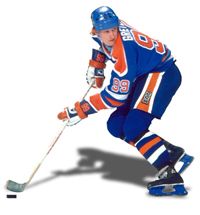
With the passing of hockey legend Gordie Howe last Friday, we pay tribute to one of the greatest
players in hockey history, today with our third installment of Gordie Howe Week here at Third String Goalie.
Gordie in the early 1960's with sons and future teammates Mark and Marty
The Houston Aeros of the WHA were originally slated to play in Dayton, Ohio, but never got off the ground, so owner Paul Deneau moved the club to Houston, Texas in time for the inaugural World Hockey Association season of 1972-73.
The Aeros, led in scoring by Gord Labossiere's 96 points in 78 games, had a cast of inexperienced journeymen players with an absolute minimum NHL experience, unlike other teams like the Quebec Nordiques, who could boast of long-time Montreal CanadienJ. C. Tremblay or the Winnipeg Jets star Bobby Hull.
Still, the Aeros finished second in the West Division and qualified for
the playoffs and won a round before their season ended.
The inaugural 1972-73 Houston Aeros
Things changed, and in the biggest way possible, for the 1973-74 season. The Aeros had signed brothers Mark Howe and Marty Howe to a pair of four-year, $400,000 contracts in early June of 1973
and two weeks later, they lured the boys' father and NHL legend, the
45-year-old Gordie,
who had already been inducted into the Hockey Hall of Fame following
his retirement from the Detroit Red Wings after 25 seasons back in 1971. It's safe to
say that Howe's 1,687 games of NHL experience was greater than the rest
of the Aeros roster combined. His return to the ice made him the first player to ever return to action afterbeing inducted into the Hall of Fame.
"My only regret is I'm sorry I'm not the Gordie Howe I was ten years ago to fulfill the goals the Aeros have in store for me. It's not too often an individual gets a second chance and that's what the Aeros have given me," Howe said. "A chance to play with my sons."
Gordie, Mark and Marty Howe together in Houston
Gordie had surgery to improve his arthitic bad wrist and relished the opportunity to play with his sons. The elder Howe's well-earned reputation for toughness ensured that his son's would have plenty of time and space to learn their craft professionally, as any player who laid a big hit on Mark or Marty was sure to be paid back with interest by Gordie at the first available opportunity!
Gordie immediately led the team in scoring with an even 100 points, good for third place in the league, as the Aeros had the best record in the league by 11 points. Additionally, Gordie was also named the league's Most Valuable Player in 1974, a trophy that would be renamed in his honor in 1976 - while he was still an active player! In the playoffs that season Houston swept the Jets in four and survived an all out war with the Minnesota Fighting Saints in six games to advance to the Avco Cup Finals.
Ted Taylor and Gord Gallant battle it out during the
memorable Aeros vs. Fighting Saints 1974 playoff series
Once in the finals, the Aeros swept the Chicago Cougars in four straight, giving the Aeros their first WHA title and Howe his first championship since back in 1955 with Detroit.
The WHA Champion 1973-74 Houston Aeros
Following
the overwhelming success of the 1972 Summit Series between Canada's
NHL professionals versus the Soviet Union, a second attempt to catch
lightning in a bottle happened in 1974 when the best players of the WHA
took on the Soviets. During 1972, Howe was in retirement and did not participate, while Bobby Hull
was blacklisted for having jumped from the NHL to the WHA at the time,
but both featured in the 1974 edition. Also, wherever Gordie went, so did Mark and
Marty, who where both also on the Team Canada roster.
Howe and Hull share some thoughts during the 1974 Summit Series
After
starting out with a tie and a 4-1 win, Canada looked to be competitive
with the Soviets, but the last six games saw the Soviets win 4 with a
pair of ties, giving the Soviets the series 4-1-3. The
1974 Summit Series would be Howe's only international competition of
his career. He would finish fourth in tournament scoring with 3 goals
and 7 points in the 8 games of the series. The original expectation in 1973 was that Gordie, who also signed a four-year contract, would play one year and then move into the team's front office. That was not to be however, as Gordie returned for a second WHA season. While Larry Lund led the club with 108 points, Gordie duplicated his output from the season prior with 99 points while Mark contributed 76 points from the blueline after 79 the year before.
The Aeros again won the West Division with the league's best record by 14 points and dispatched the Cleveland Crusaders in five and the San Diego Mariners in four prior to sweeping the Nordiques in the finals to defend their title and become the first repeat winner in WHA history.
The back-to-back champion Aeros pose with the AVCO Cup
Howe would once again lead the Aeros in scoring in 1975-76 with 102 points, 26 clear of his son Mark and Frank Hughes, but would only place 10th in the scoring race in the now wide-open WHA. Still, the Aeros were a solid all around team and once more led the league in regular season points with 106 points. The gap was narrowed to the rest of the league however, as Winnipeg tied them with 106, coming on one less win, and the Nordiques just two back at 104.
The battle tested Aeros knocked out the Mariners in six and the New England Whalers in seven, the first time anyone went the distance with Houston, to return to the finals for the third season in a row. The high powered Jets won a pair of one goal games in Houston and pulled away to win a pair of games back at home in Winnipeg to end the Aeros reign as league champions.
Howe keeping a close eye on the action
The following season saw Gordie limited to 62 games and 68 points, yet once again the Aeros had the best regular season total for the fourth year in a row after the arrival of the Howe family. After defeating the Oilers in round one, the Jets once again ended the Aeros championship aspirations in six games in the semifinals in what would be his final game with the Aeros, as the Howe's contracts had now ended and they moved to the New England Whalers for the 1977-78 season.
The addition of the Howes to the WHA in 1973 gave the league a huge boost in credibility and exposure while allowing the legend of "Mr. Hockey" to continue to grow.
The once retired Howe spent four seasons with Houston
Today's featured jersey is a 1973-74 Houston Aeros Gordie Howe jersey. This
classic jersey combines a vintage font running diagonally across the
front in the time-honored manner paired with a simple striping pattern
topped off with a star on each shoulder proving less is more when it
comes to an effective and timeless hockey jersey.
We have seen a number of different variations for Gordie Howe Aeros
jerseys, including his full name on the back with serifed letters as
seen on today's featured jersey, "G. HOWE", also using the same serifed
letters, and finally his full name on the back with standard, sans-serif
block letters.
Research indicates that the "G. Howe" variation was from the pre-season of Howe's first year with Houston, meaning all genuine Howe Aeros game worn jerseys should have his full name on the back.
Bonus jerseys: Today's bonus jerseys are the trio of Mark, Gordie and Marty's 1973-74 Houston Aeros jerseys all pictured here together.
Extra bonus jersey: Today's extra bonus jersey is a Team Canada 1974 Summit Series Gordie Howe jersey. Oddly, the jerseys worn by the Canadians in 1974 did not have the players names on the back, and instead all read "INTERNATIONAL", unlike the 1972 Team Canada jerseys, which all had "CANADA" rather than the player names.
With the passing of hockey legend Gordie Howe last Friday, we pay tribute to one of the greatest
players in hockey history, today with our second installment of Gordie Howe Week here at Third String Goalie.
How opened the decade of the 1960's by continuing the dominating form her showed throughout the 1950's, as, following his 28 goal, 73 point season, Howe would be named the winner of the Hart Memorial Trophy as the league MVP for the fifth time overall and third time in four years.
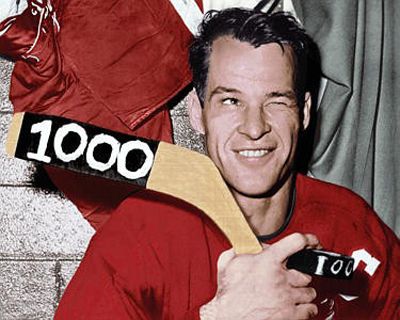
During the 1960-61 season, Howe registered an assist in a 2-0 win over the Toronto Maple Leafs to score the 1,000th NHL point of his career on November 27th, 1960, becoming the first
player in the 44 year history of the league to reach the 1000 point milestone, doing so in just his 938th game.
It would be another eight years before Jean Beliveau would become the second to reach 1,000 points and another 20 years before Howe would score his final point, keeping in mind that he already had 14 years in the league behind him at this stage, which would be a good career for the average player.
Howe celebrating becoming the first player in NHL history to score 1000 points
On March 14th, 1962, Howe beat the New York Rangers Gump Worsely to become only the second player to ever reach 500 goals in the NHL.
Howe on the occasion of his 500th NHL goal
Early in the 1963-64 season Howe would surpass Maurice "Rocket" Richard when he scored his 545th goal on November 10, 1963 to become the NHL's all-time goal scoring leader when he beat the Montreal Canadiens Charlie Hodge at the Detroit Olympia in front of his thrilled home fans.
Howe surpasses Richard for the career goal scoring record
At the conclusion of the 1962-63 season, Howe captured the Art Ross Trophy for the sixth time with a league high 86 points on his way to winning the Hart Trophy for the sixth time as well.
Howe poses with the Ross and Hart trophies in 1963,
having just won each of them for the sixth time
Howe would score his 600th NHL goal in a game versus the Montreal Canadiens, coincidentally on the same date he scored his 1000th point three seasons earlier, November 27th, becoming the first player in NHL history to record 600 goals. It would not be until 1972 that Bobby Hull would become the second to reach 600.
Howe became the first player to score 600 NHL goals
On December 4, 1968 in Pittsburgh, Howe would reach the 700 goal plateau in a 7-2 win over the Penguins. When Howe reached goal number 700, his closest challenger wasRichardat 544, but he posed no threat, having retired eight years previously.
The milestones kept falling for Howe in the 1960's
In 1968-69, aided by the recent NHL expansion to 12 teams which created a longer schedule of games against some admittedly weaker opponents, Howe achieved his one and only 100 point NHL season with 44 goals and 58 assists for 103 points. His 103 points that season placed Howe third overall in the league, extending his remarkable streak to 20 consecutive seasons of placing in the top five in overall scoring. While his 71 points in 1969-70 were only good for ninth in the NHL, bringing his 20 year streak of top five placings to and end, it was still enough to lead the Red Wings in scoring, one ahead of Frank Mahovlich. Similar to his remarkable record of durability in the 1950's, from 1959-60 to 1968-69, Howe would play in 696 of 704 games, including 7 seasons without missing a game.
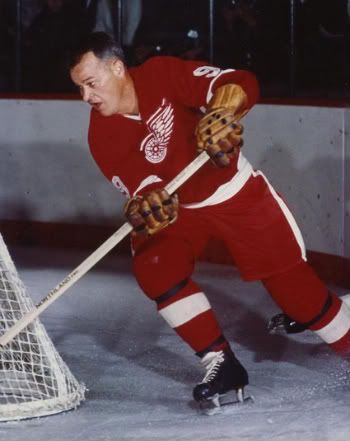
Howe rarely missed a game while with the Red Wings
Howe would play one final season with Detroit in 1970-71, playing in 63 of 78 games, his lowest total since 1948-49 thanks to a chronic wrist problem. Additionally, Howe discovered he was just the third highest paid player on the team after his 103 point season, which led to a conflict with the team, but he did earn a more than 100% salary increase to to $100,000, but even that came at a price for his relationship with the organization when they blamed Howe's wife Collen Howe for the demand. Additionally, the Red Wings missed the playoffs for the fourth time in five seasons as they had entered the era of the Dead Wings and would only make the playoffs just once over the next 12 years. Thanks mainly to his wrist problems, Howe would retire from the NHL following the 1970-71 season at the age of 43 and take a job with the Detroit front office. At the time of his retirement, Howe led the NHL in Games Played, Career Goals, Career Assists and Career Points, having won the Hart Trophy 6 times, the Art Ross Trophy six times and the Stanley Cup four times. The Red Wings wasted little time retiring his #9 on March 12, 1972. Also that same year, Howe became only the sixth player to have the mandatory three year waiting period waived by the Selection Committee and was inducted into the Hockey Hall of Fame on June 7, 1972.
The Red Wings retired Howe's #9 in March 1972
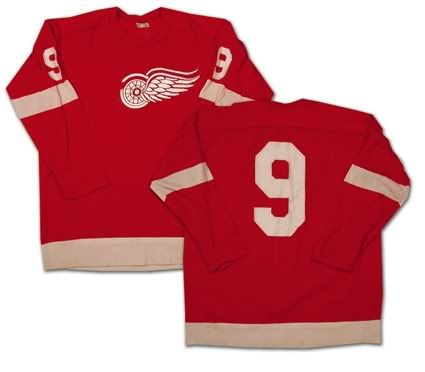
Today's featured jersey is a 1965-66 Detroit Red Wings Gordie Howe jersey from
the season Howe scored his 600th NHL goal. When the NHL expanded from
six teams to 12, Howe enjoyed an offensive renaissance given the chance
to play against the weaker expansion clubs. After four seasons of
scoring less than 30 goals, 1967-68 saw him leap up to 39 goals followed
by 44 more in 1968-69, tied for his third best season of his
professional career, which began in 1946 and lasted all the way to 1980. While
Detroit's red sweater dates back to 1932, the Red Wings did not wear a
white sweater until 1934 to wear in games against the Montreal
Canadiens. The white sweaters were originally simply a reverse of the
red sweaters - all white including white sleeves with red bands around
the arms and waist - and did not get its contrasting red sleeves until
1961, making the Red Wings white jerseys, now unchanged for over 50
years old, the "new" one.
Bonus jersey: Today's bonus jersey is a 1970-71 Detroit Red Wings Gordie Howe jersey. 1970-71 would be Howe's final season with the Red Wings. This classic style has been used by the Red Wings essentially unchanged since 1932 when the Detroit franchise first adopted the name "Red Wings" after previously being known as the Falcons and the Cougars. Only detail changes have occurred over the years as this sweater has endured to become a timeless classic.
With the passing of hockey legend Gordie Howe on Friday, we felt just one post was not enough to pay tribute to one of the greatest players in hockey history, so today we begin Gordie Howe Week here at Third String Goalie.
Howe, born in 1928 as one of nine siblings, began to play organized hockey when he was eight years old and grew to six feet tall by the time he reached his mid teens. He attended the New York Rangers training camp in Winnipeg at the age of 15 and was offered a chance to sign with the Rangers organization, but did not feel their development plans for him were a good fit and returned home for the 1943-44 season.
Late in 1944, he was noticed by a Detroit Red Wings scout and invited to their camp, where he impressed the Red Wings Jack Adams, notably with his ability to play ambidextrously. Sticks in those days all had straight blades and Howe could shoot left handed and then switch his stick to the other side for a forehand shot from the right as well. He would play limited games with the Galt Red Wings of the Ontario Hockey Association in 1944-45 and then spend the 1945-46 season with the Omaha Knights of the United States Hockey League where he raised the Red Wings hopes with 22 goals and 48 points in 51 games.
The 1945-46 Omaha Knights, Howe's first professional team
Howemade his NHL debut in 1946, wearing #17 and, in 58 games, scored the first 7 goals of what would become a record setting career, including scoring a goal in his first game on October 16, 1946.
A 1946-47 Red Wings roster showing Gordon Howe wearing #17
Not at all confident that he'd stay in the big leagues for long, Howe kept a scrapbook of his first year in the league as future proof that he had actually played in the NHL! Despite his limited number of goals, Howe, at 200 pounds, was one of the larger players in the league and threw his weight around as he never backed down from a fight. Howe was tested by none other than Maurice "Rocket" Richard during his first game in Montreal and furthered his reputation by knocking Richard out with one punch.
A young Gordie Howe
Howe changed to his iconic #9 at the start of the following season of 1947-48 for the purpose of a more preferable sleeping berth on the train while the team was traveling, as the accommodations were more spacious in the lower berths and were allocated based on each players sweater number. Howelater recalled "We traveled by train back then, and guys with higher numbers got the top bunk on the sleeper car. Number 9 meant I got a lower berth on the train, which was much nicer than crawling into the top bunk."
An early shot of Howe wearing his famous #9,
chosen simply for better sleeping conditions
The next season gave little indication of what was to follow, as he scored 16 goals and 44 points in 60 games. While limited to just 12 goals in 40 games in 1947-48, Howe was teamed with new linematesSid Abel and Ted Lindsay.
The Production Line of Abel, Howe and Lindsay
celebrating one of their many successes
The trio would be dubbed "The Production Line" and would dominate the NHL and lead Detroit to first place in the regular season standings for each of the four seasons they played together from 1948-49 to 1951-52, a span that would include a pair Stanley Cup Championships in 1950 and 1952.
So dominant was the line that they finished first, second and third in league scoring in 1949-50, led by Lindsay's 78 points in 69 gameswith Abel at 69 points and Howe with 68, 24 more than he had ever had before.
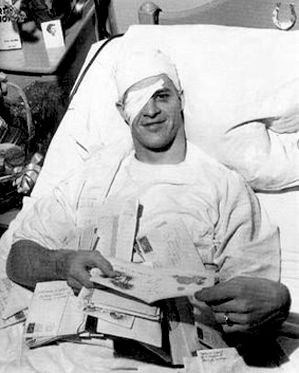
Howe would not be around to lift the Stanley Cup in 1950, having suffered a fractured skull when he crashed into the boards after trying to check the Maple Leafs Teeder Kennedy earlier in the playoffs, which required emergency surgery to relieve the pressure.
A smiling Howe convalescing following his skull fracture in 1950
Howe would return to form the following season of 1950-51, scoring 86 points to win the scoring title by 20 points over his nearest competition, Montreal's Richard, the first of seven times he would win the Art Ross Trophy. Howe's 43 goals and 43 assists led the league in both categories and his 86 points were also a new NHL single season scoring record, surpassing Herb Cain's seven year old mark of 82.
A Gordie Howe rookie card from 1951-52
He would equal his own scoring record of 86 points in 1951-52, this time with a new personal best of 47 goals to again lead the NHL. Detroit would then win the Stanley Cup by sweeping the Toronto Maple Leafs and then Montreal to become the first team to go undefeated in the playoffs since 1935.
The Stanley Cup champion 1951-52 Detroit Red Wings
With league leading totals and new personal bests of 49 goals and 46 assists in 1952-53, Howe not only led the NHL in scoring for the third straight season as he set a new single season scoring record of 95 points, raising his own mark by 9.
Gordie with his brother Sid Howe of the Rangers
Although his point total dropped by 14 points in 1953-54 to 81, Howe won his fourth consecutive Art Ross Trophy as the NHL scoring leader thanks to a league leading and new personal best of 48 assists. The Red Wings would to on to defeat the Maple Leafs in five games before an epic seven game final against the Canadiens. Detroit led the series 3 games to 1 before Montreal came back to force a Game 7, which was won by the Red Wings in overtime for the third championship of Howe's career. Although he missed six games in 1954-55 after playing in ever game of the previous five seasons, Howe still finished in the top five in overall scoring. He was fully healthy for the playoffs though, and Detroit went back-to-back by winning the Stanley Cup as Howe led the team in playoff scoring with 9 goals and 20 points in 11 games.
After leading the team in playoff scoring,
Howe with his fourth Stanley Cup in 1955
He would finish second in scoring to Jean Believau in 1955-56 with 79 points before once again leading the NHL in points with a league best 44 goals on his way to 89 points for his fifth Art Ross Trophy in seven seasons. Howe would close out the decade with finishes of 4th, 4th and 5th with point totals of 77, 78 and 73.
Before the 1958-59 season, Howe was named the captain of the Red Wings, a position he would hold through the 1961-62 season.
Howe was named captain of the Red Wings in 1958
Also during the 1958-59 season, Howe administered one of the worst
beatings during a fight in the history of the NHL to the New York Rangers tough guy Lou Fontinato, who had led the league in penalty minutes in both 1956 and 1958. While Fontinato was an inch taller than Howe at 6' 1", Howe was thick as a brick and 20 pounds heavier at 205.
During the Rangers game against the Red Wings on February 1, 1959, rookie EddieShack
had been riling up the Red Wings as the Rangers built a 4-1 lead over
Detroit. Tiring of his antics, Shack was cut by Howe to the tune of
three stitches, which caused Fontinato to warn Howe to "lay off Shack
and keep your stick to yourself." Howe and Fontinato already had a
history together, as Fontinato had already split Howe's lip and taunted
him in a previous game after which Fontinato nearly had his ear taken
off by Howe in retaliation later on, as Howe had a reputation for never
forgetting and always settling the score no matter how long the wait for
the right opportunity.
When, later in the game Shack was in a scrap with Detroit's RedKelly,
Howe joined the fight to help out his teammate Kelly and put Shack in
his place when Fontinato came looking for Howe. Fontinato wasted no time
in unleashing a fury of punches on Howe. Unfortunately for Fontinato,
Howe remained conscious and was now incensed. He grabbed Fontinato's
sweater with one hand and fired back repeatedly with the other. Howe
connected with his first punch, which stopped Fontinato in his tracks.
Howe's arm was described as "working like a piston" and the sound of his
fist hitting Fontinato face again and again in rapid fire made a
permanent impression on those who heard it - as well as Fontinato's face
- with most descriptions of the blows comparing it to the sound of an
axe chopping wood.
Howe and Fontinato during their infamous fight
Detroit's LeftyWilson was quoted as saying "With every blow you could hear something break - squish, squish. Finally, the Rangers AndyBathgate jumped in and stopped it."
A wounded Fontinato is separated from Howe following their fight
Howe
described the incident in his own understated way, "He was coming like a
madman. It took me a while to get the gloves off and then things were
busy."
Fontinato was left with a
severely broken nose, now located a fair distance from it's original
location. One of the linesmen described it as the worst beating he had
ever seen anyone take, which came as a shock to all, as Fontinato was
reportedly yet to have lost a fight, including having defeatedother noted tough guys Richard and FernFlaman.
Fontinato after his encounter with Howe
Fontinato
actually finished the game, but needed surgery to get his face back in
working order, while Howe had actually dislocated a finger against
Fontinato's skull while suffering a cut over one eye.
The fight was even documented with an article in Life magazine
Howe dominated throughout the 1950's, accumulating championships and individual awards, winning the Stanley Cup four times in 1950, 1952, 1954 and 1955, the Art Ross Trophy as scoring champion five times from 1951-1954 and 1957, and the Hart Memorial Trophy as the league MVP four times in 1952, 1953, 1957and 1958. From the 1949-50 to 1958-59 season, Howe played in 688 of a possible 700 games, missing only 6 games in 1954-55 and 6 more in 1957-58 as he played in every game of the other eight seasons.
Today's featured jersey is a 1954-55 Detroit Red Wings Gordie Howe jersey.
Howe and the Red Wings would win their third Stanley Cup of Howe's
career following the 1954-55 season. This sweater can be traced back to
that era by the lack of sleeve numbers, which did not appear until later
thanks to the advent of television coverage.
Today's video is the "Legends of Hockey" profile of Howe.
Here is an unusual find, Howe on the TV game show, "What's My Line?" being questioned by Hogan's Heroes' Colonel Klink WernerKlemperer and SoupySales. Howe's legendary toughness is apparent, as he is unfazed at being interrogated by a Nazi prison camp commandant.
Gordie tells KeithOlberman how hockey used to be and to respect your elders.
Bill Cowley,
born on this date in 1912, won the scoring title in the Maritime Senior
Hockey League in 1934 with 50 points in 28 games while playing for the
Halifax Wolverines, giving notice as to what was to follow in the years
to come.
Cowley then began his NHL career with the St. Louis Eagles during their one and only season after relocating from Ottawa. Following the demise of the Eagles, Cowley was claimed in a dispersal draft of the former St. Louis players
by the Boston Bruins. Originally used as a left wing, Cowley was moved
to center to take full advantage of his excellent play making abilities.
Beginning
in the 1935-36 season, Cowley's point totals began a steady climb
during the first four seasons of his career, first from 21 points to a
team leading 35 followed by 39 points in a then 48 game season. Although
limited to 34 games by injury, Cowley exceeded a point-per-game
average in 1938-39 with 8 goals and 34 assists for 42 points in just 34
games to finish third overall in league scoring. He continued this pace
in the playoffs with 14 points in 12 games as the Bruins won the 1939
Stanley Cup in five games over the Toronto Maple Leafs.
1939 OPC Bill Cowley hockey card
He again reached the 40 point mark the following year, but his streak of being the Bruins leading scorer ended at three. In 1940-41, Cowley
then led not only the Bruins in scoring, but the entire NHL while
setting a new league record of 62 points. Cowley's 45 assists alone were
enough to win the scoring race, as his final point total was 40% more
than his nearest challengers 44 points. While Cowley would only compete
in two post-season games that season, the Bruins would win their second
Stanley Cup in three seasons. At the conclusion of the season, Cowley
was named the winner of the Hart Trophy.
After
a short 28 game season in 1941-42, a healthy Cowley returned in 1942-43
to again lead the Bruins in scoring and set a new personal best in the
process with 27 goals and 45 assists for 72 points, just one behind
Chicago's Doug Bentley's new league record of 73 points. 8 more points
followed in 9 playoff games as the Bruins again returned to the Stanley
Cup Finals and Cowley was awarded his second Hart Trophy.
In
1943-44 Cowely had what would have been the most remarkable seasons in
NHL history up to that point turn into a virtually forgotten footnote
instantaneously. Cowley, who was on pace to shatter the league scoring

record with 95 points, had reached 71 points and was averaging an
amazing 1.97 points per game when an injury ended his season with 12
games remaining, which at the time was 25% of the schedule. Despite

being limited to 36 games, Cowley's 30 goals that season would prove to
be a career high.
Bill Cowley #10, centering a line for the Bruins
He
returned with 65 points to lead the Bruins in scoring for the sixth
time in 1944-45. He only completed in 26 games in 1945-46, but was
healthy in time for the playoffs as the Bruins made another appearance
in the finals. His final NHL season, his 12th with the Bruins, saw him
score 38 points to finish his career as the NHL's all-time leading scorer with 548 points, scored in 549 games. He was also the last active player from the St. Louis Eagles roster.
Cowley was inducted into the Hockey Hall of Fame in 1968, the only Hall of Famer to begin his career with the St. Louis Eagles.
Today's featured jersey is a 1940-41 Boston Bruins Bill Cowley jersey
from the season Cowley set a new league record with 62 points while
winning the scoring title. The Bruins introduced this gold alternate
jersey, as opposed to a full time road jersey, in 1940-41 and went on to
win the Stanley Cup with a four game sweep of the Detroit Red Wings
that year.
This
gold jersey was worn for four seasons until being retired after the
1943-44 season. Prior to the introduction of today's jersey, the Bruins
wore a single jersey style for both home and road games all season long,
dating back to their first season of 1924-25.
Bonus jersey: Today's bonus jersey is a 1942-43 Boston Bruins Bill Cowley jersey from the season Cowley set a career best with 72 points from 27 goals and 45 points. Despite scoring ten more points than he did when he lead the league in scoring two seasons earlier, Cowley finished second to the Chicago Black Hawks Doug Bentley by a single point, which equaled the NHL's single season scoring record of 73.
The Bruins changed their jersey design for the 1939-40 season and debuted it with black numbers and the B sleeve logos outlined in gold. For the 1940-41 season, the changed the logos on the sleeves and the numbers, worn both front and back, to gold outlined in black. This style remained unchanged through the 1947-48 season until it was redone for the team's 25th anniversary season, which introduced the now famous spoked B logo for the first time.
Third String Goalie - The Hockey Jersey of the Day Blog
"Sweater" for all my Canadian friends!
Welcome!
Welcome to our end of the rink.
Bienvenue sur notre bout de la patinoire.
So why "Third String Goalie"?
It's defined as "A fan who sits in the stands wearing a jersey."
If that's not us, we don't know what is...
Our aim is to feature a different jersey each day from a historical perspective. Stay tuned and hopefully you'll see some jerseys of interest or perhaps some that you haven't seen before and learn a bit of hockey history along the way.
In addition to our articles, be sure to scroll down this column and explore the other fun and informative features of this blog.
If you have any suggestions or comments, feel free to contact us at:
Looking to reach our loyal readers with your hockey related product or service? Of our hundreds of readers each day, 60% are located in the United States and 30% come from Canada. Our audience is your audience and you can target them now with our reasonable ad rates.
We've been linked to by SI.com, ESPN.com, Uni-Watch.com, NBCSports.com and the Yahoo! Sports Puck Daddy blog among others.
There is no limitation to what kind of hockey jersey it can be - replica, authentic or game worn jersey from the NHL, a national team, the minors, juniors, college, high school or even your pond hockey jersey.
Feel free to write a paragraph or two about the jersey telling us why you like the jersey, how you got it, what makes it special to you or even a full-blownThird String Goalie-style history lesson - whatever you feel like sharing.
Visting from outside North America? Just select your preferred language and Third String Goalie will be instantly converted to your language of choice!