History of Jersey 83-93 Banner sm photo History of Jersey 83-93 Banner sm.jpg

Thursday, December 11, 2014

1985-86 Philadelphia Flyers Brad McCrimmon Jersey

After beginning his career in 1974 at the age of 15 with the Prince Albert Raiders of the Saskatchewan Junior Hockey League, Brad McCrimmon, was named the SJHL Defenseman of the Year for the 1975-76 season.

Mccrimmon Raiders photo McCrimmonRaiders-1.jpg
McCrimmon with the Prince Albert Raiders

He then joined the Brandon Wheat Kings of the Western Canadian Hockey League for the 1976-77 campaign and immediately became the team's highest scoring defenseman for the next three seasons, debuting with 18 goals and 84 points in 72 games in 1976-77. His offensive numbers increased to 19 goals and 97 points in 1977-78, but with the addition of 245 penalty minutes, earning WCHL Defenseman of the Year honors and showing NHL scouts he had toughness to go with his offensive skills.

The following season he was named team captain and set a career highs with 24 goals and 98 points as well as an additional 33 points in 27 games as Brandon made it all the way to the Memorial Cup Final, only to lose 2-1 in overtime in a game where McCrimmon logged an absurd 60 minutes and 38 seconds of ice time, only coming off for 2 minutes to serve a penalty! Following the tournament he was named to the event's All-Star Team.

His success with the Wheat Kings was recognized when he was named to Canada's World Junior teams in both 1978 and 1979, earning a bronze medal in 1978. Further recognition came when he was selected 15th overall in the first round of the 1979 NHL Entry Draft by the Boston Bruins.

He made his NHL debut on October 11 later that same year, bypassing the minors entirely. He would finish the season with 5 goals and 16 points along with 94 penalty minutes as a rookie as well as seeing his first NHL playoff action, starting a streak of 13 consecutive seasons of post season play.

Mccrimmon Bruins photo MccrimmonBruins-1.jpg
McCrimmon made his NHL debut with Boston

McCrimmon would show more of his offensive game in 1980-81, with 11 goals and 29 points, but would also firmly establish his reputation for defense and toughness with an NHL career high 148 penalty minutes and a +27 rating. After one more season in Boston, where he totaled a mere 9 points and was a +4, McCrimmon was dealt to the Philadelphia Flyers in exchange for goaltender Pete Peeters.

The move benefitted McCrimmon, as he was freed from playing with and being compared to Ray Bourque. His offensive numbers immediately returned to the mid-20's and a +24 rating. Two seasons later, his offensive game went to another level with 8 goals and 43 points and he posted an NHL top five +52 rating. While the Flyers reached the Stanley Cup Finals, it was without McCrimmon, as he was knocked out by a separated shoulder earlier in the playoffs that required surgery to repair.

There were no long lasting effects from the injury though, as McCrimmon, nicknamed "Beast", returned for 1985-86 with NHL career highs in goals (13), assists (43) and points, with 56, as well as an outstanding +83 rating, second in the league only to teammate Mark Howe.

Mccrimmon Flyers photo McCrimmonFlyers-1.jpg
McCrimmon set many career highs with the Flyers,
note the #31 on the left shoulder of this jersey

After missing the start of the 1986-87 season due to a contract dispute, McCrimmon returned to hit double digits in goals with 10 on his way to 39 points and another strong +45 rating. The Flyers again made it to the Stanley Cup Finals, only this time with McCrimmon along the entire way, as he contributed 3 goals and 8 points in 26 games, which would be his last for Philadelphia.

Prior to the start of the 1987-88 season, McCrimmon was traded to the Calgary Flames, who already boasted a strong defensive corps with Al MacInnis, Paul Reinhart, Gary Suter and Ric Natress. His debut season in Calgary saw McCrimmon score 42 points as well as leading the NHL with a +48 rating. That season he also played in the NHL All-Star Game in St, Louis.

His offensive numbers would not reach those levels again, but for 1988-89, McCrimmon led all NHL defensemen with a +43 during the regular season. In the playoffs, he would appear in 22 games as the Flames would reach the Finals where they would defeat the Montreal Canadiens in seven games to capture the Stanley Cup.

 photo 1988-89CalgaryFlamesteam.jpg
The 1989 Stanley Cup champion Calgary Flames

With Lanny McDonald retiring following after their championship, McCrimmon was named the Flames captain for the 1989-90 season.

Mccrimmon Flames photo McCrimmonFlamesC-1.jpg
McCrimmon captained the Flames in 1989-90

He was traded to the Detroit Red Wings for the 1990-91 season following three seasons in Calgary. For his second year in Detroit, he was paired with a young Nicklas Lidstrom. McCrimmon's focus was on the defensive end, allowing Lidstrom more offensive freedom, but he still had enough offensive opportunities to score 29 points in 1991-92, his highest since 1988. He also had a +39 rating and 118 penalty minutes, his highest total since back in 1981 with Boston, for easily his best of his three seasons with the Red Wings.

He would return to Detroit for the 1992-93, which included McCrimmon playimg in his 1,000th NHL game on this date in 1992, a 4-2 win over his former club the Flyers at home in Detroit.

Mccrimmon Red Wings photo McCrimmonRedWings-1.jpg
McCrimmon during the 1992-93 season, during which
he would play his 1,000th NHL game

After the season concluded, the 34 year old veteran McCrimmon was once again traded, this time to the Hartford Whalers where he became a mentor for an 18 year old Chris Pronger. While his offensive numbers were not what they had been over the last five seasons, they virtually bottomed out with his new role in Hartford, combined with a decrease in the number of games played with the Whalers, a combination of age and injuries catching up to him, as he averaged just 52 games and 5 points per season for the three years he spent with the Whalers. His defense was still stout however, as, despite the Whalers never making the playoffs due to their poor records, McCrimmon was a combined +15 during his time with the club.

Mccrimmon Whalers photo McCrimmonWhalers-1.jpg
McCrimmon while with Hartford

With his contract up in Hartford, he would sign with the Phoenix Coyotes for the final season of his career, during which he played 37 games before retiring as a player following the season.

Mccrimmon Coyotes photo McCrimmonCoyotes-1.jpg
McCrimmon would play his final NHL season with Phoenix

In all, McCrimmon would play 1,222 games, score 81 goals and 322 assists for 403 points and finish with a career rating of +444, a mark that still ranks as 11th best in NHL history and one of only 12 men to ever finish higher than +400. Once his student Lidstrom enters the Hockey Hall of Fame when he is first eligible in 2015, McCrimmon will be the highest ranking player in career plus/minus not in the Hall.

Not done with hockey, McCrimmon became an assistant coach with the New York Islanders in 1997 before becoming head coach for the Saskatoon Blades of the WHL in 1999. He returned to the NHL in 2000 with the Flames, again as an assistant for three seasons, From there, he joined the Atlanta Thrashers staff for another four seasons before he returned to the Red Wings from 2008-09 to 2010-11.

McCrimmon, after a dozen seasons of NHL experience as an assistant, took on a new position as head coach of Yaroslavl Lokomotiv of Russia's Kontinential Hockey League in hopes of building his resume to some day becoming a head coach in the NHL. Tragically, as the team was leaving for it's first game of the 2011-12 season, the team's plane crashed on takeoff, killing 44 of the 45 on board, including McCrimmon and the entire roster and staff of Lokomotiv.

Mccrimmon Lokomotiv photo McCrimmonLokomotiv-1.jpg
Head coach of Lokomotiv Yaroslavl, Brad McCrimmon

McCriommon Stanley Cup photo McCrimmonStanleyCup.png
Brad McCrimmon's name engraved on the Stanley Cup

Today's featured jersey is a 1985-86 Philadelphia Flyers Brad McCrimmon jersey as worn by McCrimmon during the season he set career best numbers in goals (13), assists (43), points (56) as well as plus/minus with a +83 rating.

This style jersey can be traced back to the first Flyers game in 1967, but a series of tweaks and modifications over time saw it evolve to this exact version beginning with the 1983-84 season when the stripe above the name changed from arched to horizontal. From there, it would remain unchanged until the conclusion of the 2000-01 season when the orange jerseys were dropped in favor of their black alternate version, ending a 34 year run for the Flyers wearing an orange jersey.

This particular year the jerseys carried the #31 on the left shoulder in memory of goaltender Pelle Lindbergh, who died in a automobile accident.

Philadelphia Flyers 1985-86 jersey photo PhiladelphiaFlyers1985-86Fjersey.jpg
Philadelphia Flyers 1985-86 jersey photo PhiladelphiaFlyers1985-86Bjersey.jpg

Bonus jersey: Today's bonus jersey is a 1987-88 Calgary Flames Brad McCrimmon jersey as worn his first season with the Flames, the team he would win the Stanley Cup with and later captain. This jersey features the 1988 Calgary Winter Olympics patch worn in anticipation of the upcoming Olympic Games, for which the Olympic Saddledome was built.

 The original Flames jerseys came with the franchise from Altlanta in 1980-81 and remained in use until a modernization, which added black trim, came onto the scene in 1995-96.

Calgary Flames 1987-88 road jersey photo CalgaryFlames1987-88roadjersey.jpg
Photo courtesy of Classic Auctions

Extra Bonus Jersey: Today's extra bonus jersey is a 2011-12 Calgary Flames Brad McCrimmon tribute jersey as worn by the Flames on January 31, 2012 when Calgary honored the former Flames captain, assistant coach and Stanley Cup winner with a tribute ceremony following which, everyone was asked to observe a "moment of applause" to recognize his contributions to the sport of hockey.

During the pre-game warmups, each Flames player wore a special jersey with their own number on the sleeve, but McCrimmon's name and Flames number 4 on the back, which were then auctioned off for charity.

McCrimmon tribute jersey photo McCrimmontributejersey2.jpg
McCrimmon tribute jersey photo McCrimmontributejersey1.jpg

McCrimmon tribute jersey photo IginlaMcCrimmontributejersey.jpg
Flames captain Jarome Iginla
wearing the McCrimmon #4 tribute jersey

Following the Lokomotiv Air Disaster, the Detroit Red Wings paid tribute to McCrimmon, defenseman Ruslan Salei and goaltender Stefan Liv with a tribute patch to the three former Red Wings for the 2011-12 season.

BM/RS/SL patch photo McCrimmonSaleiLivpatch.jpg
Lidstrom BM/RS/SL patch photo LidstromWingsBMRSLVpatch2011-12.png
Red Wings captain and McCrimmon's former defensive parter Lidstrom
wearing the memorial patch just above the left sleeve nubmer

Today's video section, the Flames pay tribute to McCrimmon on January 31, 2012 with this video of his career, including comments from several of his former teammates.


Next, the Red Wings pay tribute to McCrimmon.


The tributes continue to roll in with Ron MacLean and Don Cherry, who focus on the incredible list of Hall of Fame defensemen who partnered with McCrimmon.


In some rare footage, McCrimmon in the very first fight of his NHL career against Michel Goulet of the Quebec Nordiques on November 22, 1979.


Here, McCrimmon electrifies the home crowed when he scores a goal during Game 3 of the 1987 Stanley Cup Finals.


In this next video, McCrimmon scores his first goal as a member of the Red Wings, which came in the playoffs after not scoring any during the entire regular season.


Finally, we hear from the man himself, who was the subject of an episode of "Coaches", shown here in four parts.


For an excellent article on McCrimmon's family one year after the disaster, click here.

Wednesday, December 10, 2014

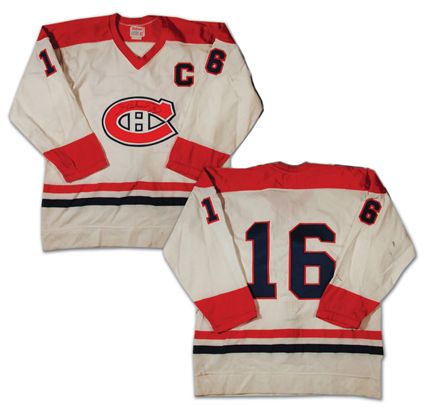
1967-68 Montreal Canadiens Henri Richard Jersey

Henri Richard knew at a young age what he wanted to do in life, but it's easy to be influenced by your older brother when he plays for the Montreal Canadiens.

"I was positive that I, too, was going to play for the team, although I never imagined playing with
Maurice. Our age difference was 15 years. I hardly knew him; he married when I was a boy, and then he was so busy with hockey. He was more like and uncle than a brother. It's funny, but Maurice never talked to me about hockey, even when we were teammates. We did our talking on the ice," Richard recalls.


Richard arrived on the scene with the Montreal Canadiens at the ideal time, as the club was loaded with talent and had won the Stanley Cup as recently as 1953. Richard kicked off his career with five consecutive Stanley Cup Championships from 1956 to 1960. He was an immediate producer, scoring 40 points as a rookie in 1955-56 and just two seasons later set his career high with 80 points from 28 goals and 52 assists in 1957-58.

"We had quite the team and won the Stanley Cup in my first five years. We almost got bored winning. It was better to win after a loss, much more enjoyable."

After taking a backseat to the Toronto Maple Leafs run of cups in the early 1960's, the Canadiens were back on top again in with back-to-back championships in 1965 and 1966, and again in 1968 and 1969.

Richard was a model of consistency and durability during his 20 year career. From 1957 to 1970 he scored between 50 and 80 points in 13 out of the 14 years, playing no less than 53 games every season. His highest goal total was 30 in 1960 and his career-best 52 assists in 1958 and another 50 assists in 1963 lead the NHL both times.

Richard would win the Stanley Cup again in 1971, one he considers the sweetest. "I had had a few arguments with coach
Al McNeil but went on to score the tying and winning goals in the seventh game," said Richard. This after being benched in Game 6 of the finals by McNeil.

He would win the cup one final time in 1973, giving him a total of 11, more than any other player in NHL history. "I won 11 Cups in total, a record that may never be broken. The structure of the league, with the draft and free agency, prevents the creation of dynasties like the one we had in Montreal," Richard speculated.


Richard was named captain of the Canadiens in 1971 after the retirement of Jean Beliveau. "The oldest player usually got the "C," and at the time, it seemed a normal transition to be voted captain. I never said much to the players, but I had always tried to lead by example. Now that my playing days are over, I see the tradition, the honor, more clearly."

Richard laments, "In all my years with the Canadiens, I never played a shift on the power play. With the great teams we had, I couldn't get on that line." He continues, "I might have had that chance on another team, and though I was tempted by a large contract offer from Houston of the WHA, I'm thankful to have finished as a Montreal Canadien."

Richard retired in 1975 after 1256 games, 358 goals and 688 assists for 1046 points. He participated in the playoffs an astounding 20 times in 22 seasons, totalling 180 games, 49 goals and 80 assists for 129 career playoff points along with his 11 Stanley Cups. That's championships in half of the seasons he played in! Richard was also named the winner of the
Masterton Trophy in 1974.

"I saw the younger guys coming on and retired when I knew I wouldn't play regularly anymore. After my retirement, the team went on to win four more cups in a row. I had declined a contract offer from Montreal for those years. I opened a tavern, and the guys would come for a beer and tease me with, "We really missed you out there, Henri." But I've no regrets."

The Canadiens retired Richard's #16 on this date in 1975 and he was elected into the Hockey Hall of Fame in 1979. His record of 11 Stanley Cups as a player still stands to this day.

Today's featured jersey is a 1967-68 Montreal Canadiens Henri Richard jersey as worn when Richard won his eighth Stanley Cup, tying his brother Maurice for the league record.

The Canadiens were founded in 1909 but did not wear their now iconic red sweaters with the blue chest stripe until the 1912-13 season when it was introduced as an alternate jersey due to their red, white and blue striped "barberpole" jerseys drawing complaints that they were too similar to the Ottawa Senators similarly striped red, white and black jerseys.

White trim was added to the blue central stripe the following season, essentially creating the same basic jersey that remains in use today.

Montreal Canadiens 1967-68 jersey photo MontrealCanadiens1967-68jersey.jpg
Photo courtesy of Classic Auctions

Bonus jersey: Today's bonus jersey is a 1974-75 Montreal Canadiens Henri Richard jersey worn in his final game and features the captain's "C" on the left chest.

The Canadiens came into existence in 1909, but did not add a white jersey until the 1935-36 season and it would take until 1941 for it to evolve into the style still worn today.

Photo courtesy of Classic Auctions

Today's first video selection is the "Legends of Hockey" profile of Henri Richard with commentary by both Henri and Maurice Richard, along with Beliveau, a real treat to see.


Next up are highlights of the 1971 Stanley Cup Finals Game 7, where Richard scores both the tying and winning goals as the Canadiens come from behind to win the championship.

Tuesday, December 9, 2014

1993-94 Canadian National Team Petr Nedvěd Jersey

Born on this date in 1971 in Liberec, Czechoslovakia, Petr Nedvěd came to Calgary, Alberta for an international midget tournament at the age of 17. After scoring 17 goals and 9 assists in 9 games to star in the tournament, Nedvěd made the bold, life-changing decision to defect without even informing his parents of his plan. With just $20 and the help of another Czech, whom he refuses to identify all these years later, he walked into a police station and out from under the rule of the Communist Party.

To begin his path to the NHL, Nedvěd joined the Seattle Thunderbirds of the WHL and caught the attention of NHL scouts by scoring 65 goals and 145 points in 71 games to place sixth in the WHL scoring race. The following spring he was drafted with the second overall pick in the 1990 NHL Entry Draft by the Vancouver Canucks.

He jumped straight to the NHL the following season, seeing action in 61 games and scoring 16 points. His point total more than doubled during the 1991-92 season to 37 points and quite nearly doubled that in 1992-93 when he arrived offensively with a 38 goal 71 point season. After the Canucks were eliminated by the Los Angeles Kings in the playoffs, Nedvěd asked King's superstar Wayne Gretzky for a game stick, which drew the ire of Canucks fans, especially after three seasons of playoff struggles by Nedvěd, who had scored just 3 goals in 28 postseason games.

Nedved Canucks, Nedved Canucks
A young Nedvěd began his NHL career in Vancouver

The relationship with Vancouver was fractured beyond repair at the beginning of the 1993-94 season when Nedvěd held out in a bitter contract dispute. During his holdout, he became a Canadian citizen which allowed him to join the Canadian National Team and compete in the 1994 Olympics for Canada where he earned a silver medal after scoring 5 goals in 8 games.

Nedved Canada, Nedved Canada
One of his contract disputes saw him playing with
the Canadian National Team

He eventually signed with the St. Louis Blues near the trading deadline, with another player being awarded to the Canucks as compensation.

After playing less than 20 games for the Blues to finish the season, Nedvěd was traded to the New York Rangers for the 1994-95 season, which was limited to 48 games due to a labor dispute. Nedvěd was then involved in a headline making trade, as he and Sergei Zubov were sent to the Pittsburgh Penguins for Luc Robitaille and Ulf Samuelsson.

Now a member of the offensive juggernaut led by Mario Lemieux, Jaromir Jagr and Ron Francis, Nedvěd enjoyed the best offensive season of his career with 45 goals and 99 points. He would score a further 10 goals and 20 points in 18 playoff games, which included a goal in the fourth overtime in a game against the Washington Capitals when he patiently walked around a prone Capitals defenseman and shot the puck through traffic for the game winner. The 79:15 minutes of overtime made it the longest game in the NHL in 60 years.

Nedved Penguins, Nedved Penguins
Nedvěd as a member of the high powered Penguins

Before the next NHL season began, Nedvěd played for the Czech Republic in the 1996 World Cup of Hockey, as the now Canadian citizen was not restricted by the rules of the IIHF, as the tournament was under the rules of the NHL.

His second season with the Penguins had Nedvěd scoring 33 goals and 71 points, but once gain a contract dispute was on the horizon. He began the 1997-98 season with HC Sparta Praha of the Czech Extraliga, but after just 5 games, the NHL season began and rules did not allow him to continue. The only other games he played that season amounted to 9 with second and third division Czech clubs and 3 with the Las Vegas Thunder of the IHL in a lost season for Nedvěd.

Sticking to his guns, Nedvěd returned to Las Vegas for the start of the 1998-99 season before Pittsburgh finally sent Nedvěd on his way once more, back to the Rangers in late November. Finally, Nedvěd would find some stability in his career, playing for the Rangers for six seasons, which included highs of 32 goals and 78 points in 2000-01 and leading the club in scoring in 2000 and 2003.

Nedved Rangers, Nedved Rangers
Nedvěd found a level of stability with the Rangers

The Rangers then traded Nedvěd to the Edmonton Oilers at the trade deadline in 2004. His stay in Edmonton was brief, just 16 games.

Nedved Oilers, Nedved Oilers
Nedvěd's first stay in Edmonton was quite brief,
but so was his second

He spent the lockout season of 2004-05 with Sparta Praha in the Czech Republic before signing as a free agent with the Phoenix Coyotes for the 2005-06 season. Or so he thought. 25 games into his Coyotes career, Nedvěd was dealt to the Philadelphia Flyers for the second half of the season.

After starting 2006-07 with 21 games for the Flyers and 14 more for the Philadelphia Phantoms in the AHL, he was claimed off of waivers by the Oilers where his NHL career would conclude with 1 goal and 5 points in 19 games, leaving many to believe his playing days were over.

Nedvěd returned to Europe and signed with Sparta for the 2007-08 season, scoring 20 goals in 45 games. He took one final shot at the NHL, but was released by the Rangers during training camp in advance of the 2008-09 season. Still not ready to hang up his skates, Nedvēd signed with HC Bílí Tygri in his hometown of Liberec.

Nedved Liberec, Nedved Liberec
HC Bílí Tygri Liberec was happy to welcome Nedvēd home

He would compete for Liberec for six seasons, including leading the team in scoring from 2011 to 2014, highlighted by 61 points in 49 games in 2011-12.

Nedved Liberec, Nedved Liberec
The ageless Nedvēd led Liberec in scoring for the
final four seasons of his career

During that time period, Nedvěd would make two additional international appearances, his first at the 2012 World Championships, where he became the oldest Czech Republic player to score a goal at the World Championships as the Czechs won the bronze medal, his only medal as a member of the Czech National Team. 

Nedved 2012 Worlds Bronze photo Nedved2012WorldsBronze.jpg
His bronze medal was greeted with child-like joy
and was his first and only for the Czech Republic

Two years later he would be named to the squad that would compete at the 2014 Olympics in Sochi, Russia. "My whole life has been a strange journey," Nedved said at Bolshoy Ice Dome. "It was a great honor to play for Canada. I really, really enjoyed it. Now playing for my own country, it's a special meaning to me, especially at my age and the last season of my career. I couldn't ask better for anything than that.

Nedved keeps lacing up the skates for a simple reason.

"I still love the game he said. "I love the competition. I still have the drive. (But) this is my last season. I kind of feel that I could probably play maybe for a couple more years, (but) it's time.

"I never thought at the end of my career, after 20 years, I would go to the Olympic Games. This is kind of a nice way to end my career."

At the conclusion of Liberec's 2014-15 season, Nedvěd would finally retire at the age of 43 on March 13, 2014.

Due to Nedvěd's holdouts, which contributed to his frequent trades, his Sillinger Number (the number of different jerseys worn in one's NHL career) is 24, thanks in part to his time with the Rangers, as they wore not only home and road sweaters, but two colors of alternate jerseys as well as a pair of vintage throwbacks and a special one-off jersey during his time in New York.

Today's featured jersey is a 1993-94 Team Canada Petr Nedvěd jersey, as worn in the 1994 Olympics in Lillehammer, Norway, which concluded with the famous shootout in the gold medal final, won by Sweden's Peter Forsberg's dramatic move.

This Team Canada Nedvěd jersey is emblematic of not only his defection from Czechoslovakia to his adopted country of Canada, but unfortunately also his multiple contract holdouts, as he would normally have been in the midst of an NHL season at the time of the 1994 Olympics.

The Canadian National Team Programme of Excellence, founded by Father David Bauer, began in 1983 with the purpose of forming a club which would play together for an extended schedule in preparation for the Olympics as well as other international tournaments. The program lasted until 1998, when NHL professionals began competing in the Olympics, and met with limited, but increasing success, winning two silver medals in it's final two tries.

Canada 1994 jersey, Canada 1994 jersey
Photo courtesy of Classic Auctions

Bonus Jersey: Today's bonus jersey is a 1996 Czech Republic National Team Petr Nedved jersey as used in the 1996 World Cup of Hockey where Nedved played his first games for the Czech National Team following his defection from Czechoslovakia as a 17 year old.

In 1995, Nike purchased Canstar, a part of which was the Bauer brand. Beginning in 1996, Nike took over as the supplier of jerseys to the IIHF and hit the ground running with their beautiful "waving flag" jerseys, which most teams wore at the 1996 World Championships. The Czechs, however, did wear a more traditional jersey style, branded as Bauer, with classic straight waist and shoulder striping when they won the 1996 World Championship.

They debuted their new waving flag style at the 1996 World Cup of Hockey later that fall, again branded as Bauer, along with Sweden and Canada. These three teams wore the larger 4" diameter tournament patch, while the other five teams in the tournament, Finland, Slovakia, Russia, Germany and the United States, all wore Nike branded jerseys and used the 3" diameter tournament logo patch.

These beautiful jerseys would have an all to short life span. They would be used again during the 1997 World Championships, but replaced for the first Olympics with NHL participation in February of 1998.

Czech Republic 1996 jersey photo CzechRepublic1996jersey.jpg
Photo courtesy of Classic Auctions

Extra bonus jersey: Today's extra bonus jersey is a 2002-03 New York Rangers Petr Nedvēd jersey from the team the well-traveled Nedved is most closely associated with due to his five year run with the club during his second stint with the club.

New York Rangers 02-03 jersey, New York Rangers 02-03 jersey
Photo courtesy of Classic Auctions

Today's video segment begins with Nedved's famous goal in the fourth overtime of the Penguins playoff game against Washington.


Here is a story on Nedvēd and his defection from Czechoslovakia.

Monday, December 8, 2014

1980-81 Vancouver Canucks Harold Snepsts Jersey

A rugged, stay at home defenseman, Harold Snepsts played junior hockey for the Edmonton Oil Kings in the Western Canadian Junior Hockey League in 1972-73 and 1973-74 before being drafted by the Vancouver Canucks 59th overall in the 1974 NHL Amateur draft. He was also selected by the Indianapolis Racers of the WHA, but elected to sign with the Canucks of the more established NHL.

He split his games in 1974-75 between the Seattle Totems of the Central Hockey League and the Canucks, with whom he appeared in 27 games and scored his first NHL goal. Snepsts story is not one of goals and points though, as he never had more than seven goals and only scored 30 points once during his long career.

Snepsts Canucks

He became entrenched in the Canucks lineup the following season and quickly became popular with the Canucks faithful through is hard work, rugged style, outgoing personality and legendary mustache, which still ranks highly on lists of the best mustaches in league history. Such was Snepsts popularity with the fans in Vancouver, that they would regularly chant "Har-old, Har-old".

In just his third season of 1976-77, his popularity grew as Snepsts made his first NHL All-Star Game appearance as the Canucks lone representative in the first All-Star Game hosted by Vancouver.

In 1978-79 , Snepsts had his best offensive season with career highs in goals with seven, assists with 24 and points, totaling 31. The next season Snepsts experienced the thrill of becoming the first defenseman in Canucks history to score on a penalty shot.

Between 1977 and 1982, Snepsts was named the Canucks top defender four times in five years and increased the rugged nature of his game in 1979-80 when he raised his average penalty minutes from 130 the previous four seasons to 206 the next two years.

Snepsts Canucks

In 1982, Snepsts would appear in his second All-Star Game. Later that season the Canucks would go on a run to the Stanley Cup Finals, the only finals appearance of Snepsts career as he was credited for his sound defensive play as the Canucks continued to advance.

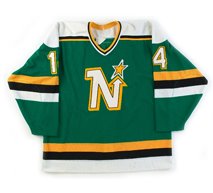
After two more seasons in Vancouver, in a highly unpopular move, Snepsts was dealt to the Minnesota North Stars as part of a Canucks youth movement. He set a career high in penalty minutes while with Minnesota in 1984-85 before signing with the Detroit Red Wings for the next three seasons as a free agent.

Snepsts Red Wings

After rarely missing a game in ten seasons with the Canucks, with seven seasons of over 75 games played and only full season under 68, injuries began to catch up Snepsts during the latter part of his carer, as he never again reached 60 games in his final six seasons of play.

Knee and shoulder injuries would derail his time in Detroit and Snepsts would return to the Canucks as a free agent in 1988 to provide depth and veteran leadership, which helped the Canucks set a club record at the time for fewest goals against in a season.

Looking for that same depth and experience, the St. Louis Blues acquired Snepsts late in the 1989-90 season. He returned to the Blues for the 1990-91 season, which included his 1,000th game on this date in 1990, a 2-1 Blues win over the Red Wings.

Snepsts Blues

Snepsts would retire at the conclusion of the season, having appeared in 1,033 games, scoring 38 goals and 195 assists for 233 points while spending 2,009 minutes in the penalty box.

Today's featured jersey is a 1980-81 Vancouver Canucks Harold Snepsts jersey. From the Canucks inception in 1970-71 to 1977-78 the Canucks wore blue and green jerseys, but in 1978, all that came to an abrupt end.

Before the 1978-79 season the Canucks hired a professional psychologist to redesign their uniforms. The old colors were said to be "too bland, too tranquil and did not inspire emotion." The result was the "V" design, suggesting "victory" according to the designer, one of the strangest, yet most unforgettable jerseys to ever see the ice in an NHL contest.

The bright orange was said to "evoke passion and aggression" while the black road jersey was supposed to instill fear in the opposition.

The Canucks introduced the jerseys, which none of the players had seen prior to the game, at the season opener in Minnesota. As Stan Smyl said, "I've never been ashamed to wear the Canuck's uniform, but that night none of us wanted to leave the dressing room."

They were met with much derision around the NHL and were often referred to as "those Halloween suits". Time has settled on the nickname of "The Flying V" for these jerseys.

The basic jersey produced in 1978 remained in use until the 1984-85 season, but with a few adjustments along the way, such as a change in color for the names on the back, relocating the very unconventional sleeve numbers from the wrists to the shoulders and eventually evolving from one color names and numbers to two colors for both.

Despite others often ranking this as one of the top three, if not the worst, jersey of all time, we are actually fans of the whole concept of trying to design a jersey in an effort to aid your team in victory. It took some bold thinking and a lot of guts for the designer to create this jersey and then even more for the club to support the concept and stick with it for seven seasons.

The "Flying V" jerseys are a curiosity, as no other team followed them down the same path, leaving the "Flying V" as a truly unique chapter in NHL history.

Vancouver Canucks 80-81 jersey

Today's video feature is a profile of Snepsts, which includes him as one of the seven greatest Canucks of all time and the only defenseman on the list.

Sunday, December 7, 2014

1979-80 Boston Bruins Gerry Cheevers Jersey

Gerry Cheevers was a colorful character in an era filled with colorful characters and he ushered in an even more colorful era in hockey history - and did so in black and white.

Cheevers, who was born on this date in 1940 first broke into the NHL with the Toronto Maple Leafs for two games as an injury replacement in the 1961-62 season.

Gerry Cheevers debut
Gerry Cheevers after his NHL debut with Billy Harris,
who had a hat trick in the Maple Leafs 6-4 victory

Unable to crack the Toronto lineup, mainly due to the presence of future Hall of Famer Johnny Bower, he spent the majority of the next four seasons with the Rochester Americans of the American Hockey League, where he set a single season record with 48 wins in 1964-65 which still stands today. In the playoffs that season, Cheevers led the Amerks to the Calder Cup championship.

He moved to the Oklahoma City Blazers in 1965-66 and also made his Boston Bruins debut with seven games, but failed to impress with an 0-4-1 record.

Cheevers Bruins, Cheevers Bruins

The following season Cheevers split time between the Blazers and Bruins and saw action in 22 games before taking over as the Bruins number one goaltender in 1967-68 just as the lowly Bruins were gearing up to dominate the league with both Bobby Orr and Phil Esposito now in the fold as well.

After playing an NHL career high 52 games and posting a record of 24-8-8 in 1969-70, Cheevers backstopped the Bruins to the 1970 Stanley Cup by going 12-1 in 13 playoff games.

1969-70 Boston Bruins team, 1969-70 Boston Bruins team
The 1969-70 Stanley Cup champion Boston Bruins

In 1971-72 Cheevers set another record when he went undefeated in 32 consecutive starts (24-0-8), a record which has never been equalled. His final record for the season stood at 27-5-8 and in eight playoff games he won six and lost two as the Bruins again captured the Stanley Cup.

Despite the success the high flying Bruins were enjoying at the time, Cheevers accepted a lucrative $1.4 million offer to join the Cleveland Crusaders of the fledgling World Hockey Association for the 1972-73 season. His workload dramatically increased in Cleveland, rising from an average of 40 games with Boston the three previous seasons to 54 for the next three years in Cleveland.

Cheevers Crusaders, Cheevers Crusaders

Following his second season in the WHA, Cheevers was selected to play for Team Canada in the 1974 Summit Series against the Soviet Union for his first taste of international hockey. In a series dominated by the Soviets, Cheevers went 1-3-3 and was in goal for the only Canadian victory of the series.

After another season an a half in Cleveland, Cheevers asked to be bought out of his contract midway through the 1975-76 campaign and immediately returned to the Bruins.

Still in top form, Cheevers played another four seasons with a high of 30 wins in 1976-77 and was named to the Team Canada roster for the 1976 Canada Cup and the NHL All-Star team which faced the Soviet Union in the 1979 Challenge Cup before wrapping up his playing career following the 1979-80 season.

Cheevers Bruins, Cheevers Bruins

In all, Cheevers won 230 games in the NHL and 79 while in the WHA for 309 career victories.

Never one to embrace practice, Cheevers was hit by a puck one day and used it as an excuse to beat a hasty retreat to the dressing room. He relates, "I was trying to get out of practice one day when this shot that couldn't have broken an egg hit me in the mask. I faked a serious injury and went into the dressing room. I was sitting there having a Coke when [Bruins head coach] Harry Sinden came in and told me to get back out onto the ice. All the guys were laughing, so I knew I had to do something. I told the trainer to paint a 30-stitch gash on the mask. Then I went out and told Harry, See how bad it is!"

From then on, whenever Cheevers took a puck to the head, Frosty Forristall, the Bruins trainer, would calculate where the impact took place and how many stitches it would have resulted in, giving rise to the colorful era of the decorated goalie mask with his iconic black and white design.

Gerry Cheevers mask

Cheevers was elected to the Hockey Hall of Fame in 1985, where his ground breaking mask also resides.

Today's featured jersey is a 1979-80 Boston Bruins Gerry Cheevers jersey. The origins of this design can be traced back to 1967, a design which was simplified in 1974 when the yellow shoulders and lace-up collar disappeared. The secondary logos were added to the shoulders in 1976 and the names on the back arrived one year later. The jersey would remain unchanged through the 1994-95 season.

 photo BostonBruins79-80F.jpg
Boston Bruins 79-80 jersey photo BostonBruins79-80B.jpg

Today's video segment begins with his profile from the excellent Legends of Hockey series.


Next, a profile of Cheevers from his days in the World Hockey Association with the Cleveland Crusaders.


Finally, a tribute song to Gerry Cheevers from the band Chixdiggit.

Friday, December 5, 2014

1911-12 Montreal Wanderers Riley Hern Jersey

Born on this date in 1880, Riley Hern played both goaltender and forward as a youth but settled on goaltending by the time he progressed to senior hockey with the Stratford Legionnaires of the Ontario Hockey Association from 1898 to 1901.

He turned professional in 1901 with the Pittsburgh Keystones of the Western Pennsylvania Hockey League, which he led in victories with 9 in his first season. After going five-for-five in wins the next season, he suffered a dismal 1-10 slog through the 1902-03 season.

Looking for greener pastures, he found one in Houghton, Michigan with the Portage Lake Hockey Club. Not a member of any established league at the time, Portage Lake played a schedule of exhibition games to great success, as Hern finished the season with an outstanding record of 15-1.

1903-04 Portage Lake Hockey Club
The 1903-04 Portage Lake Hockey Club

With the stellar lineup of talent Portage Lake had assembled, which included future Hall of Famers "Bad" Joe Hall, Bruce Stuart, his brother Hod Stuart and the legendary Cyclone Taylor, thanks in no small part due to the salaries the club was paying in what was still primarily an amateur sport, Portage Lake became members of the International Professional Hockey League for it's inaugural 1904-05 season. After a second place finish in year one, Portage Lake won the league title in 1905-06 as Hern posted a 15-5 record.

He moved east for the 1906-07 season to join the current Stanley Cup holders, the Montreal Wanderers, who were members of the Eastern Canada Amateur Hockey Association at the time. Before the season began the Wanderers faced a Stanley Cup challenge from the New Glasgow Cubs, who they turned back in a two-game, total-goal series with scores of 10-3 and 7-2 to retain the cup by a total of 17-5.

Hern and the Wanderers then lost control of the cup on January 21st when the Kenora Thistles wrested the cup away with 4-2 and 8-6 wins.

After their surprising defeat, the Wanderers marched unchallenged through the ECAHA schedule, finishing with a flawless 10-0 record on the back of 105 goals scored while giving up just 39, which calculates to an average of a 10-4 win every game. As champions, and also on a roll having posted goal totals of 16, 13, 18, 10 and 16 in their last five games, the Wanderers attempted to reclaim the cup by traveling west to challenge Kenora for the rights to the Stanley Cup.

With the first game delayed a day due to bad ice conditions which forced a change in venue from Kenora to Winnipeg, Hern and the Wanderers all but reclaimed the cup during Game 1 with a 7-2 win. Kenora hung tough and won the second game 6-5, but failed to overcome the five goal deficit they faced after Game 1. With the Wanderers taking the series 12 goals to 8, they returned to Montreal with the cup in hand, only to have it stolen and held for ransom!

1907 Montreal Wanderers
The 1907 Montreal Wanderers

Following a team photo, the cup was taken from photographer Jimmy Rice's homeand when no one would pay for it's return, the Stanley Cup was left on Rice's doorstep and his wife used it as a geranium planter until the fall when it was put back into service!

At some point during the time between winning the cup, having it stolen, it being used as a planter and the next cup challenge, the Wanderers had the audacity to not only engrave the name of their team into the cup, but the entire roster of the club, beginning a tradition which many feel makes the Stanley Cup the greatest trophy in sports.

1907 Wanderers engraving
The 1907 Wanderers celebratory engraving in the bottom of the bowl of the Stanley Cup

For the 1907-08 season, the Wanderers had to defend the cup against the Ottawa Victorias, whom they easily turned back 9-3 and 13-1. Following the regular season, where the Wanderers again emerged as league champions, they were challenged for the cup twice more, first by the Winnipeg Maple Leafs, who they beat 11-5 and 9-3, and then by the Toronto Professionals in a one game playoff the Wanderers won by a score of 6-4, which gave Hern a 13-2 record for the season.

1908 Montreal Wanderers Pictures, Images and Photos
The 1908 Montreal Wanderers

Once again, prior to the 1908-09 season, the Wanderers face yet another challenge for the Stanley Cup, this one from the Edmonton Hockey Club, a team stocked with ringers for the challenge. It was to no avail however, as the Wanderers won Game 1 handily, building a four goal advantage heading into the final game after a 7-3 win. Edmonton did take Game 2 7-6, but the cup remained firmly in the hands of the Wanderers.

With the 1909 schedule consisting of only 12 games, each contest was critical as the Wanderers and the Ottawa Senators engaged in a neck and neck struggle for the league championship which entitled the winner to the rights to the cup. The Wanderers gained the upper hand with a 7-6 overtime win during the opening game of the season for each club. The two clubs dominated their games against the Quebec Bullogs and Montreal Shamrocks for the remainder of January until their next meeting on January 30th when Ottawa prevailed 5-4. On February 6th, the clubs were involved in their third consecutive one goal game, won by Ottawa 9-8 and they sealed the Wanderers fate with a dominant 8-3 win in their final meeting to end the Wanderers two year hold of the cup, which included four successful defenses.

With that, the ECHA dissolved and the Wanderers formed a new league, the National Hockey Association, while the other three clubs entered the Canadian Hockey Association, which failed after less than two weeks, sending its clubs looking to join the NHA. Hern and the Wanderers tore through the now seven team league with an 11-1 record, outscoring their opposition 91-41, with Hern getting all the starts for Montreal. With Ottawa in the NHA, Montreal assumed control of the Stanley Cup once more by virtue of winning the league title. They faced one challenge for the cup from Berlin of the Ontario Professional Hockey League, whom they dispatched 7-3.

Montreal Wanderers 1909-10 Pictures, Images and Photos
The 1910 Montreal Wanderers

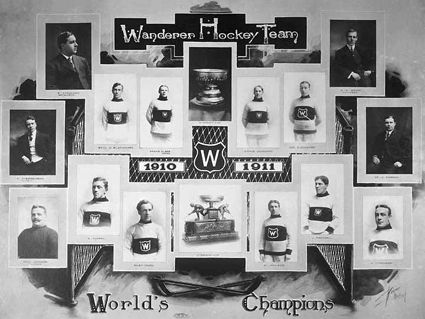
Hern would play one final season of 1910-11 and with the Wanderers finishing fourth with a 7-9 mark, the Wanderers would relinquish the cup as Hern's hockey career came to a close at the age of 30.

Hern would conclude his career with a 106-43 regular season record and a 10-4 won-loss record in Stanley Cup challenge games and was elected to the Hockey Hall of Fame in 1962.

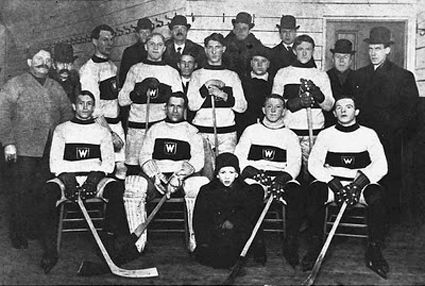
Today's featured jersey is a 1911-12 Montreal Wanderers Riley Hern jersey. The Wanderers adopted the "redband" style jersey and no doubt influenced the Montreal Canadiens who later adopted their iconic red sweaters with a blue band across the chest in 1913. This Wanderers jersey remained unchanged and in use until January 2, 1918 when their home arena burned down, forcing the club, already in debt, to cease operations after 14 1/2 seasons of competition.

Riley Hearn Wanderers

1999-00 New Jersey Devils Brian Rafalski Jersey

Last night, Brian Rafalski was inducted into the United States Hockey Hall of Fame in a ceremony in Minneapolis, Minnesota along with Karen Bye Dietz, Jeff Sauer and Lou Vairo.

Rafalski's career began like many other future NHLers when he enrolled at the University of Wisconsin for the 1991-92 season, after which he was named to the WCHA All-Rookie Team. That same season he also earned a bronze medal at the World Junior Tournament, the first of seven international tournaments the Michigan native would play for the United States.

Rafalski Wisconsin
Rafalski during his days as a Badger

The 1992-93 season saw him continue at Wisconsin as well as making a return to the World Juniors. As he gained experience and confidence, his point totals began to increase, up from 13 to 23 for 1993-94 and nearly doubling to 45 for 1994-95, a season during which Rafalski was named WCHA Defensive Player of the Year and to the WCHA First All-Star Team and helped Wisconsin win the WCHA playoff title. Following the completion of his college career, Rafalski once more skated for the United States, this time at the 1995 World Championships, his first at the senior level.

Despite his noteworthy resume, Rafalski, at 5' 10", was considered too small and went undrafted by the NHL. Still eager to continue his hockey career, he joined Brynas IF in Sweden for the 1995-96 season.

After one season in Sweden, he moved to HPK in Finland. There, he had a solid offensive season for a defenseman with 35 points in 49 games and was given the Pekka Rautakallio Trophy as Best Defenseman in the SM-Liiga.

Establishing a knack for choosing the right situation throughout his career, Rafalski joined HIFK of Helsinki and promptly won the SM-Liiga championship in 1998. He was once again named Best Defenseman in the league in 1998-99, as he scored 53 points, an average of a point per game for HIFK. In a vote of the players, he was also awarded the Golden Helmet as the best player overall.

Rafalski HIFK photo RafalskiHIFK.jpg
Rafalski while with HIFK in Finland

Having proven himself as a capable player, including being named by The Sporting News as "the best hockey player in the world not playing in the NHL", Rafalski realized his dream to play in the NHL when he signed a free agent contract with the New Jersey Devils and finally began the delayed start to his NHL career as a now 26-year-old rookie for the 1999-00 season.

With the Devils, Rafalski was paired with team captain Scott Stevens, whose strong defensive skills allowed Rafalski the opportunity to take more risks offensively, resulting in 32 points by season's end.

Once more, his change in clubs paid immediate dividends, as the Devils captured the Stanley Cup at the end of Rafalski's first season in the NHL, which included being named to the NHL All-Rookie Team and was at least four and as many as seven years older than any of the other five members of the rookie team!

Rafalski 2000 Devils
A fine end to Rafalski's delayed rookie season

Rafalski would go on to play seven seasons with the Devils, which included another Stanley Cup championship in 2003 and an appearance in the NHL All-Star Game in in 2004 and a second one in 2007. His best offensive season with the Devils was his last, 2006-07, when he totaled 55 points.

During his time with New Jersey, the Devils annual playoff appearances left little opportunity for him to play in the World Championships, but he was chosen to participate for the United States at the 2002 Olympics in Salt Lake City, where he won a silver medal. Two years later, he was again chosen to play for the US, this time at the 2004 World Cup of Hockey. His second Olympics came in 2006 in Torino, Italy.

Rafalski 2006 Olympics photo RafalskiUSA2006.jpg
Rafalski during the 2006 Olympics

For the 2007-08, Rafalski signed with his hometown Detroit Red Wings in another change to a club that would, for the third time in Rafalski's career, conclude with a championship in his very first season with a new team. With the high powered Red Wings, Rafalski set a career high with 59 points in 2008-09 after back to back 55 point seasons, which included an NHL career high 13 goals in 2007-08.

Rafalski Red Wings
Rafalski's third cup came with Detroit in 2008

His career would finish with two more seasons with the Red Wings. which would bring his final career totals to 833 NHL games played, 79 goals and 436 assists for 515 points. In all, Rafalski would play 11 NHL seasons despite the late start as a result of his going undrafted. He has more than proven the scouts wrong who thought him too small, as in addition to his three Stanley Cups and over 500 points, Rafalski qualified for the playoffs in each of his 11 seasons and registered an additional 100 points over the course of his career.

Rafalski was again named to Team USA for the 2010 Olympics, earning his second silver medal as well as being named Best Defenseman of the competition.

Rafalski USA
Rafalski was recognized for his outstanding play
in the 2010 Olympics as Best Defenseman

Today's featured jersey is a 1999-00 New Jersey Devils Brian Rafalski jersey as worn when the Devils captured the Stanley Cup Rafalski's rookie season in the NHL.

Of note, this jersey has the NHL 2000 patch, which all the players wore that season, plus the addition of the 2000 Stanley Cup Finals patch. Also worth noting is that this jersey is made by ProPlayer, who supplied jerseys to NHL clubs for only the 1999-00 season.

New Jersey Devils 1999-00 SCF jersey photo NewJerseyDevils1999-00FSCFjersey.jpg
New Jersey Devils 1999-00 SCF jersey photo NewJerseyDevils1999-00BSCFjersey.jpg

Bonus jersey: Today's bonus jersey is a 2002-03 New Jersey Devils Brian Rafalski jersey as worn when the Devils captured their second Stanley Cup in three seasons. Sharp eyed readers will note that the Devils jersey hasn't changed much since 2000, and that's because it hasn't changed since being introduced in 1992, and if Devils president Lou Lamoriello  has it's way, it will still be the same in 2092, as New Jersey has resisted all pressure to add a third jersey or redesign their current home and road set, even during the transition to the new Reebok Edge jerseys in 2007, when vertical stripes were in and horizontal stripes were out.

New Jersey Devils 2002-03 SCF jersey photo NewJerseyDevils2002-03SCFjersey.jpg
Photo courtesy of Classic Auctions

Extra bonus jersey: Today's extra bonus jersey is a 2008-09 Detroit Red Wings Brian Rafalski jersey as worn by the defending Stanley Cup champions Red Wings following the third NHL championship of Rafalski's career.

 photo DetroitRedWings2007-08Fjersey.jpg
Detroit Red Wings 2007-08 jersey photo DetroitRedWings2007-08Bjersey.jpg

Today's video segment begins with an interview with Rafalski while still a member of HIFK just prior to the 1999 SM-Liiga Finals while knowing he had already signed with New Jersey. There is also some very artistic footage of him eating a McDonald's hamburger.


Nest is a compilation of goals scored by Rafalski while playing in Finland.


Finally an interview with Rafalski as he talks about his career, starting with Wisconsin and how he ended up playing in Europe. It then continues with the time he has spent with soldiers and veterans of the armed forces.


hit counter for blogger