History of Jersey 83-93 Banner sm photo History of Jersey 83-93 Banner sm.jpg

Tuesday, January 29, 2013

1976-77 Buffalo Sabres Gerry Desjardins Jersey

The snow started to fall early in the morning of Friday, January 28th and the winds began to blow at 29 miles and hour with gusts up to 49 mph as the Buffalo Sabres practiced before a scheduled flight to Montreal later that afternoon.

As the cold front reached Buffalo at 11:35 AM, the temperature fell 26 degrees, reaching zero within four hours and the winds now averaged 46 mph with gusts up to 69 mph, creating wind chills of -60º to -70º.

Thousands were stranded in offices, schools and factories as roads became impassable when as much as eight inches of snow fell or was blown off the frozen Lake Erie, on top of the 33 inches that had already choked Buffalo that winter. An estimated 13,000 people were stranded in downtown Buffalo alone, along with an estimated 8,000 cars clogging the roads of the city, many of which ended up completely buried. Some Sabres employees were forced to sleep overnight in the Sabres home rink "The Aud", among the 300 people who took shelter there.

Abandoned cars, Abandoned cars

Six homes were completely destroyed on one block as fire trucks were unable to get through the drifts to reach the fire. A state of emergency was declared in Erie County were Buffalo is located, as well as Niagara, Orleans and Genesee counties as drifts reached 15 feet high by nightfall as the high winds combined with the unusual weather conditions earlier that winter left Lake Erie covered with ice and a layer of snow that was easily picked up by the winds and deposited on shore in Buffalo. In a typical winter, the snow on the lake went through a thaw and freeze cycle that would leave it with a hard crust on top, preventing the wind from carrying the snow into the city in such massive amounts.


Driving home from practice, Sabres winger Jim Lorentz had to abandon his car and walk the last mile as the snow was now "bumper-high". He did not find his car until three days later.

Gary McAdam had five separate accidents in his new Thunderbird in his attempt to return home. At the scene of the fifth accident, while examining his battered car, another vehicle came sliding toward his, causing McAdam to jump onto the trunk of his car as the sliding vehicle came to a halt against his bumper.

It took Lee Fogolin and Brian Spencer an incredible four hours to make the five-minute drive to their condominium. They were not seen again for three days.

Sabres coach Floyd Smith postponed the team's planned departure from Friday to Saturday, but the blizzard conditions remained as the wind continued to howl, clocked at speeds up to 51 mph, blowing even more snow into Buffalo from Lake Erie.

Buried School Bus, Buried School Bus

Saturday, for the first time in 143 years the Buffalo Courier Express could not publish it's morning newspaper.

Coach Smith was able to make it to the airport by following snow plows, but it stretched his usual 20 minute drive to two hours. Defenseman Jerry Korab couldn't even open the door of his house, so he called winger Rene Robert and told him, "If you want me to protect you tonight, come dig me out." Robert arrived with his four-wheel-drive truck, dug Korab out and headed off for the airport with three additional teammates along for the ride.


By 3 PM, only 10 players had arrived. As Smith as about to phone Montreal to cancel the game, Jocelyn Guevremont, who had gotten to his four-wheel-drive vehicle by jumping out of a window and shoveling his way to his garage, arrived with four other players, giving Buffalo enough bodies to make the trip.

"On the plane, the stewardesses were hollering at the pilots that we couldn't take off," recalled Don Luce. "I think they tried to turn it around, but all the plane did was blow sideways. Somehow they got it in the air."

Sabres Hall of Fame announcer Ted Darling was unable to make the flight to Montreal and was forced to call the game over the phone from his apartment while watching the game on television.

Once the game got underway, not surprisingly, the Canadiens broke out on top with a goal from Serge Savard at 17:23 to take a 1-0 lead into the first intermission. It would take Montreal just 35 seconds to extend their lead to 2-0 thanks to a goal by Steve Shutt.

Buffalo would dig in and convert a power play opportunity for their first goal, which came at 6:47 from  Andre Savard from team captain Gilbert Perreault and Robert.

Montreal reasserted their expected dominance over the undermanned Sabres with Yvon Lambert's goal at 14:47. Still, Buffalo fought back and Luce kept the Sabres in touch with his 14th goal of the season at 15:55 from McAdam and Craig Ramsay. The period would finish that way, with Montreal leading 3-2 despite being outshot by Buffalo 20-14.

For the remainder of the contest, the Sabres and goaltender Gerry Desjardins would keep Montreal's high powered offense at bay. Eventually, defenseman Jim Schoenfeld would solve Michel Larocque at 8:25 to even the score at 3-3.

Gerry Desjardins, Gerry Desjardins
Gerry Desjardins

Schoenfeld's goal would hold up, as the Sabres rallied to limit the Canadiens to just five shots for the third period, to earn the plucky and shorthanded Sabres an unexpected, if not unbelievable, 3-3 tie on this date in 1977 against the defending (and eventual) Stanley Cup champions, outshooting them by a final margin of 27-19.

The blizzard forced the Sabres to cancel the following night's game in Buffalo against the Los Angeles Kings, a day when the winds continued to howl with gusts up to 52 mph.

White Buffalo, White Buffalo
Snow covered Buffalo, with it's highways abandoned and covered in white

Monday, the Sabres boarded a bus for what turned out to be a 10-hour trip across New York State for a game against the Islanders to start a three game road trip as the storm raged in Buffalo until Tuesday. While only 12 inches of new snow fell, the wind created drifts that finally topped out at 30 feet. Some areas even banned snowmobiles, as one rider was injured in a collision with a chimney on top of a house and the high drifts caused low clearance issues with power lines! Some towns even resorted to using metal detectors to locate buried cars before plowing the roads.


The Sabres next scheduled home game against the Toronto Maple Leafs was also postponed while the city was still recovering from the paralyzing drifts, meaning the Sabres went two weeks without a home game. Additionally, the Buffalo Braves of the NBA postponed four of their scheduled home games.

In all, there were 29 storm related deaths in Western New York, 11 of those in the City of Buffalo. Nine of those unfortunate people were found buried in their cars.

Several books have been written about the Blizzard of '77, which are available here.


There was even a Blizzard of '77 board game created in the aftermath, in which, once the blizzard hits, you flip the board over and now all the spaces become hazards of one sort or another, making any movement difficult at best!

Blizzard Game, Blizzard Game

Today's featured jersey is a 1976-77 Buffalo Sabres Buffalo Sabres Gerry Desjardins jersey, the style worn in Montreal the night 15 intrepid Buffalo Sabres managed to escape storm ravaged Buffalo to take on the defending Stanley Cup champion Montreal Canadiens and hold them to a 3-3 tie.

At the time the Sabres were only in their sixth season and this was still their original jersey style with the tie-neck collar, no logos on the shoulders and without names on the back, which were added the following season. The Sabres jerseys retained their lace up collars until 1978-79 when they were replaced by v-neck sweaters.

Desjardins began his NHL career with the Los Angeles Kings in 1968-69 and was later involved in a trade which sent him to the Chicago Black Hawks in 1969-70. Chicago actually traded him to the California Seals on September 9th, 1971, only to be sent back to Chicago in another trade five weeks later before ever playing a game for California!

The New York Islanders claimed him in the 1972 expansion draft from Chicago. He suffered through two losing seasons as the Islanders found their feet in the NHL. Desjardins sought greener pastures in the WHA, but signed for the 1974-75 season with the unstable Michigan Stags franchise, which became the Baltimore Blades mid-season, a move which triggered an escape clause in his contract, allowing him to sign with the Buffalo Sabres in time to appear in nine regular season games as well as the teams playoff run all the way to the Stanley Cup Finals.

With Buffalo, he found not only stability, but success as well, easily setting career highs with 29 and then 31 wins as the Sabres number one goaltender before being forced to retire after being struck in the eye by a puck after playing just three games of the 1977-78 season.

Buffalo Sabres 76-77 jersey

Today's first video is an amazing look at the Blizzard of 1977 and it's effects on Buffalo.


Here is a pair of videos showing how a wall of snow coming off of Lake Erie can turn an ordinary day into a white out in a matter of minutes.


Monday, January 28, 2013

1943-44 United States Coast Guard Cutters Ken Lundberg Jersey

While it can be traced back to 1790 as a part of the United States Treasury, the Revenue Cutter Service was merged with the United States Life-Saving Service on this date in 1915, which formally established the United States Coast Guard.

US Coast Guard 43-44 crest, US Coast Guard 43-44 crest

Shortly after Japan attacked Pearl Harbor in December of 1941, the United States Coast Guard Cutters hockey team was formed by Personnel Officer C. R. MacLean, a former player and hockey fan. The team was based in Curtis Bay, Maryland and played out of the Carlin's Iceland rink in Baltimore.


Cutters Program, Cutters Program

MacLean encouraged enlisting hockey players to choose the Coast Guard, and the team was became comprised of both amateur and professional players, including a one-time captain of the NHL's New York Rangers.


The Cutters played in the Eastern Amateur Hockey League, considered one of the most competitive leagues of it's time, during the 1942-43 season. They dominated the league with a 32-13-1 record, winning the league regular season title by 15 points and led the league in goals with 223, 26 more than the New York Rovers.

Joe Kucler led the league in not only goals, with 40, but also assists with 41 to easily win the scoring title with 81 points in only 44 games played.

1942-43 Coast Guard Cutters team, 1942-43 Coast Guard Cutters team
The 1942-43 Coast Guard Cutters

In their star-spangled sweaters, the Cutters were a unique draw, as wherever they played, they were accompanied by a 30-piece marching band, which created a buzz in the arena every time.

"Whenever we scored," said Mike Nardell, "they'd strike up Semper Paratus ("Always Ready"), the Coast Guard marching song.  I loved that team so much I never wanted to take off my equipment.  Years later, when I played pro for the Clinton (N.Y.) Comets, I'd always wear my Coast Guard jersey under my Comets uniform."

The most notable player on the Cutters was eventual Hockey Hall of Famer Frank Brimsek, who had recently backstopped the Boston Bruins to a Stanley Cup championships in 1939 and 1941.

Brimsek Coast Guard Pictures, Images and Photos
Frank Brimsek

Other notable members of the Cutters were Art Coulter, an 11 year NHL veteran and former captain of the New York Rangers,  former Detroit Red Wings defenseman Alex Motter and the notoriously rugged John Mariucci from the Chicago Black Hawks.

Mariucci Cutters, Mariucci Cutters
John Mariucci

The Cutters were so strong that they were able to win the National Senior Open Championship of the Amateur Hockey Association in their first season of 1942-43 behind the coaching of former NHL referee Mel Harwood.

"Harwood was an excellent coach," said team member Manny Cotlow. "He certainly had the respect of the players. He was good to us and the players paid him back. Harwood got the most out of us."

Exhibition games were also a part of the Cutters schedule, particularly during their second season after they withdrew from the EHL in late November. Some of their most memorable game came against similar teams from the Canadian armed services, which included a 5-2 win over the Ottawa Commandos, which featured three ex-NHLers of their own.

Another memorable game took place on January 6, 1944 when the Cutters hosted the defending Stanley Cup champion Red Wings at Carlin's Iceland. The Cutters trailed just 4-3 in the third period before Detroit pulled away for an 8-3 win.

Cutters program, Cutters program

The Coast Guard club was quite popular in Boston and New York, where they regularly drew crowds of over 12,000 fans before questions about why they were still playing hockey while others were begin sent overseas to fight led to enough pressure to force the team to disband, but not before winning their second consecutive National Senior Open Championship in 1944.

1943-44 Coast Guard Cutters team, 1943-44 Coast Guard Cutters team
The 1943-44 Coast Guard Cutters

Today's featured jersey is a 1943-44 United States Coast Guard Cutters Ken Lundberg jersey.

This highly attractive star-spangled jersey features a large, detailed chenille crest and numerous stars, all individually sewn on, making for one very striking sweater which had an all-too-short life span.

US Coast Guard 43-44 jersey, US Coast Guard 43-44 jersey

Lundberg Cutters, Lundberg Cutters
Ken Lundberg

Today's video section is Semper Paratus, the Coast Guard marching song played by the band which accompanied the Cutters hockey team to their games. Think of it like the Hartford Whalers "Brass Bonanza", only decades ahead of its time!

Sunday, January 27, 2013

NCAA College Hockey Update - The University of Alabama-Huntsvile Chargers

In a followup to our recent post about NCAA college hockey and the formation of the Big Ten Hockey Conference and subsequent major reshuffling of conferences, there has been a new development, that being the far-flung, independent program the University of Alabama-Huntsville Chargers, a program already back from the dead when it was announced it was being downgraded from Division I status in October of 2011 by the school's interim president, has not only survived that attempt to kill it off only to survive for the 2012-13 season, but will now live on indefinitely.

UAH Chargers, UAH Chargers

The Chargers, by far the southern-most school in NCAA Division I hockey, saw their previous conference College Hockey America fold at the end of the 2009-10 season after being a member of the tiny conference for 11 seasons, which never numbered more than six schools and saw two of them leave for other conferences and two more schools discontinue their programs.
During it's final season the CHA was down to just four schools. With Bemidji State leaving after finally gaining acceptance into the WCHA to join it's Minnesota neighbors, and Niagara and Robert Morris joining Atlantic Hockey conference, UAH was left standing without a conference when the music stopped.

UAH CHarggers 2010, UAH CHarggers 2010
The 2010 CHA playoff champion Chargers

The Chargers were denied entry into the CCHA, which looked to be a death blow for the program, which dates back as a varsity program to 1985. Still, they pressed on as an independent following the saving of the program by the new school president Dr. Robert Altenkrich in December of 2011.

This season has not been as easy one for the team, required by the difficulties of scheduling to play the majority of it's games on the road, including 12 consecutive from October 19th through November 24th and going 1-11 in those games. In addition, to fill out their schedule, they also have played games against non-Divison I programs such as the club teams from the Universities of Alabama, Vanderbilt and Oklahoma and Division III opponents Finlandia and Adrian, winning all seven of those non-Divsion I contests.

But the Chargers had one more victory to add to their difficult season, their program was spared an all but certain death when they were unanimously accepted as the tenth member of the revamped WCHA for the 2013-14 season, joining Alaska-Anchorage, Alaska-Fairbanks, Bemidji State, Bowling Green, Ferris State, Lake Superior State, Michigan Tech, Minnesota State-Mankato and Northern Michigan.

There will be challenges for UAH to be competitive with the long established programs they will be competing against, as well as the always present issues with travel due to their out of the way location, but the other members of the WCHA, who themselves had to have felt shunned when the bigger schools all left them behind when they joined either the Big Ten Hockey Conference or the National Collegiate Hockey Conference, did the right thing and accepted the Chargers into the WCHA.

For more on this story, we recommend the excellent article at the UnitedStatesOfHockey.com.

Friday, January 25, 2013

1990-91 St. Louis Blues Brett Hull Jersey

Brett Hull joined an exclusive club on this date in 1991 by scoring his 50th goal in 50 games or less.

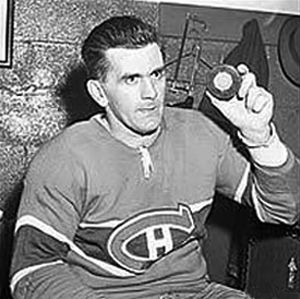
The feat was famously first accomplished back in 1944-45 by Maurice "Rocket" Richard on the final day of the season when the schedule was only 50 games long. Even with the season extended to 60 games in 1946 and 70 games in 1949, it would still take another 16 years for anyone to score 50 again when Bernie Geoffrion scored his 50th but not until his 62nd game.

Maurice Richard 50 Pictures, Images and Photos
Maurice Richard celebrates becoming the first to score 50 goals in a season

It would take 35 years before anyone would equal Richard's 50 in 50, when in 1980-81 Mike Bossy famously scored twice in the last five minutes of his 50th game to match Richard, who was in attendance at the game to congratulate Bossy.

Bossy Richard 50 goals, Bossy Richard 50 goals
Mike Bossy poses with Maurice Richard to celebrate
Bossy's 50th goal in 50 games

Wayne Gretzky would shatter the 50 in 50 mark the following season when he simply assaulted the record by scoring four goals in his 38th game to put him at 45 goals and then blasted in five goals in the very next game to hit the 50 goal mark in only 39 games.

Think about that for a moment. At the conclusion of game 37 Gretzky stood at 41 goals and then scored nine goals in just two games! That's a good week for some teams these days.

Gretzky 50 goals, Gretzky 50 goals
Gretzky poses with the pucks from his five goals,
including the one from milestone 50th goal

Gretzky would again beat the 50 game barrier twice more when he scored 50 in 42 games in 1983-84 and 40 in a leisurely 49 games in 1984-85.

Mario Lemieux was the next one to join the ranks of 50 in 50, when in 1988-89 he managed to score his 50th in the Pittsburgh Penguins 46th game, which was the 44th game that Lemieux had played in that season.

Lemieux 88-89, Lemieux 88-89
Mario Lemieux

The most recent member of the 50 in 50 club would be Brett Hull, when he scored twice in his 49th game to reach the magical 50 mark on this date in 1991. Hull would again achieve 50 in 50 the following season of 1991-92 when he scored goal #50 against Kelly Hrudey of the Los Angeles Kings in a 3-3 tie.

Brett Hull Blues, Brett Hull Blues
Brett Hull

To qualify for the 50 goals in 50 games mark, a player must score 50 on or before his team's 50th game, which has resulted in some close calls, due to players missing a few games in the early part of the year. Jari Kurri scored 50 in 50 in 1984-85, but it was the Edmonton Oilers 53rd game of the season. Alexander Mogilny also scored his 50 goal in the Buffalo Sabres 53rd game of 1992-93 in what was only Mogilny's 46th game.

Lemieux's injury problems affected him twice, as he scored his 50th in 1992-93 during the Penguins 72nd game, but only Lemieux's 48th of the season. 1995-96 would see Lemieux score 50 in 50 of his games, but the 59th game for Pittsburgh.

The final unofficial 50 in 50 member is Cam Neely of the Boston Bruins, who in 1993-94 scored his 50th goal in the 44th game of his season, which was the Bruins 66th contest that year.

Additionally, Charlie Simmer (1980-81) and Bernie Nicholls (1988-89), both of the Kings, and Lemieux (1987-88) came close with 50 goals in 51 games and Brett's father Bobby Hull got his 50th in his 52nd game in 1965-66.

To give credit where credit's due, Anders Hedberg and Bobby Hull both scored 50 goals in less than 50 games while playing in the World Hockey Association, whose records are not recognized by the NHL.

Today's featured jersey is a 1990-91 St. Louis Blues Brett Hull jersey from the game during which he scored his 50th goal of the season.

This style Blues jersey, with it's new, darker shade of blue than before, can be traced back to the 1984-85 season, although with a "Blues" wordmark over the top of a smaller blue note crest. The word mark disappeared in 1987 and the crest had it's sharp corners rounded in 1989-90, giving us today's featured jersey.

The names would change from one color to three in 1992-93 for the final two seasons of use before a radical redesign sent this classic style into retirement.

St Louis Blues 90-91 jersey, St Louis Blues 90-91 jersey

Today's video highlight is Brett Hull scoring his 50th goal in his 49th games.


Thursday, January 24, 2013

2001-02 Columbus Blue Jackets Espen Knutsen Jersey

Espen Knutsen was only the third, and the highest scoring ever, player born and trained in Norway. He began his rise to the NHL back in 1988-89 while playing junior hockey in his native Norway. It was during that season that he made his international debut for Norway with appearances in both the European Junior Championships (scoring 8 goals and 12 points in only 5 games) and the World Junior Championships.

The following season of 1989-90 Knutsen moved up to the Oslo based Vålerenga IF senior team of the Norwegian Eliteserien. His debut season was a spectacular one, scoring 53 points in 40 games from 25 goals and 28 assists. During that season another pair of international appearances were added to his growing resume, scoring 17 points in 6 games at the European Juniors and 9 points in 7 games at the World Junior Championships.

1990-91 saw Knutsen top himself with 54 regular season points, coming in just 31 games, during which he scored 30 goals. He also made his third appearance at the World Juniors that season. During the postseason, he added 7 more points in 5 games as Vålerenga captured the championship.

The 1991-92 season was Knutsen equal his 54 points from the previous campaign, only this time in one less game at 30. He followed that with an outstanding playoff, with 7 goals and 15 points in 8 games as Vålerenga captured back-to-back titles.

Injuries limited him to just 13 games in 1992-93, but he rebounded in 1993-94 with a vengeance, setting a career highs with 32 goals and 58 points, this coming in 38 contests. His international career continued to reach new levels as he was chosen to represent Norway at the 1994 Olympics on home soil in Lillehammer. Later that spring, he made his debut at the World Championships and was eventually named 1994 Norwegian Player of the Year.

Seeking a higher level of competition, Knutsen moved to Djurgardens IF in Sweden's Elitserien for the next three seasons, increasing his point totals from 20 to 33 and then 49. He would also compete for Norway at the World Championships in each of those three years as well.

Knutsen Djurgardens

Despite having been drafted by the Hartford Whalers as far back as 1990, he had remained in Europe the entire time, but with his rights now being held by the Mighty Ducks, he made the jump to North America, where he made his NHL debut at the season opener in Japan. He played 19 games with the Mighty Ducks, scoring 3 goals, but spent the majority of his season with the Cincinnati Mighty Ducks of the American Hockey League after the physical play of the NHL took it's toll on the 168 pound European.

Knutsen Mighty Ducks

He returned to Djurgardens for the next two seasons, including 1999-00 when he led the club in scoring, finished second in the league scoring race and was the highest paid player in the country.

He was recruited by the expansion Columbus Blue Jackets of the NHL and returned to North America for a second go. This time things went much better for Knutsen, as he scored 53 points in 66 games, finishing just 3 back of team leader Geoff Sanderson.

Knutsen Blue Jackets

While his point totals dropped to 42 in 2001-02, he became the first Norwegian to appear in the NHL All-Star Game when he was added to the World Team as an injury replacement and he scored his first career hat trick, as well as adding an assist for a four point night, in the Blue Jackets 6-2 win over the San Jose Sharks on this date in 2002.

Knutsen All Star

After the 2002-03 season, during which he was limited to just 31 games by injuries, he scored 9 points for Norway at the World Championships Division I level in what would be his final international appearance.

Knutsen Blue Jackets

Injuries again derailed his 2003-04 season, which was one of turmoil for Knutsen. Early in the season, after just 14 games with Columbus, he was assigned to their top minor league affiliate, the Syracuse Crunch. After just two games he left North America and returned to Vålerenga in Norway for one game followed by six games back with Djurgardens in Stockholm.

His final NHL totals were 207 games played, 30 goals and 81 assists for 111 points.

He wrapped up his career in 2004-05 with 15 games in Djurgardens before calling it a career as a player before beginning anew in the world of coaching, where he is now the head coach for his original club, Vålerenga.

Today's featured jersey is a 2001-02 Columbus Blue Jackets Espen Knutsen jersey from the season in which he scored his first NHL hat trick.

The Blue Jackets original jerseys were a generally classy style, aside from the head of their cartoon mascot "Stinger" as a secondary shoulder patch, which remained on the shoulders until the Blue Jackets debuted a new alternate jersey in 2003 which saw a brand new logo design for the main crest. In a move to make their brand consistent across all three of their jerseys, the new alternate jersey logo was then used on one shoulder of the home and road jerseys, with a new secondary logo of a Civil War solider's cap on the opposite side, completing the retirement of "Stinger" and upgrading the jerseys look considerably.

Columbus Blue Jackets 01-02 jersey, Columbus Blue Jackets 01-02 jersey

Today's video segment is Knutsen royally embarrassing himself by participating in the making of a music video, which is coming back to haunt him years later.


Finally, here is footage of Knutsen scoring his hat trick on this date in 2002.


Wednesday, January 23, 2013

1975-76 Washington Capitals Hartland Monahan Jersey

Following their first expansion season in 1974-75, when the Washington Capitals set league records for futility with the fewest wins (8), fewest points (21), most goals against (446), worst goal differential (-265) and longest winless streak (17, twice: 0-16-1 and 0-17-0), the club certainly hoped for better during year two.

To that end, they acquired several new players, including Hartland Monahan, who would go on to place second in team scoring in 1975-76 with 46 points, trailing only first year holdover Nelson Pyatt. While Pyatt led the club with 49 points, for comparison, Guy Lafleur led the league with 125 points, one of nine NHL players to score 100 points or more.

Pyatt Capitals, Pyatt Capitals
Leading scorer Nelson Pyatt

Gary Meehan was also a welcome addition following his arrival from the Atlanta Flames via a trade, scoring nearly a point per game with 31 points in 32 games.

Bernie Wolfe was brought in to help stem the tide of goals against allowed by the Capitals, as their record 446 goals against the previous season left the team with a 5.58 goals against average, with no goaltender with an average below Michel Belhumer's 5.36 in 35 games. Wolfe saw action in 40 games for Washington and would lead the team with a goals against average of 4.16. While still far from the league lead, it was over a goal per game lower than Belhumer's previous team best.

While the Capitals season began pretty much where they left off the previous season when Washington went 0-8-1, two wins out of their next three showed signs of life thanks to a 7-5 win over the Chicago Black Hawks and a 6-2 victory against the equally downtrodden Kansas City Scouts, with both wins coming notably on the road.

A second 0-8-1 skid followed, but was halted by another offensive outburst when the Capitals netted seven in a dominating 7-2 over the Los Angeles Kings on November 26, 1975.

A loss followed on the road to the Minnesota North Stars 5-3 before a home tie against the Buffalo Sabres 4-4 on December 3rd. The schedule makers then sent the Capitals on the road for four games, the first three of which were a murder's row of Original 6 clubs, Boston, Montreal and New York. The final game of the trip was a loss to the Flames before a welcome return home, where they would play five consecutive games and seven of their next eight.

1975-76 Washington Capitals team, 1975-76 Washington Capitals team
The 1975-76 Washington Capitals

Unfortunately the Black Hawks got their revenge for their earlier loss with a 7-2 win over Washington, which would go on to lose 5-3 to Detroit, tie Minnesota 4-4, drop a close one to Boston 3-2 and close out their home stand with a 7-5 loss to the defending Stanley Cup champions Philadelphia.

Their streak of home games was interrupted by their most embarrassing defeat of the season, a 14-2 demolition by the Sabres in Buffalo on December 21st. The club recharged their spirits over the Christmas break and came back to tie Minnesota in Washington 1-1 on December 26th, which left them with an 0-10-3 mark since their last win one month earlier.

Still, the Captials could not break through, and they were shutout by Montreal (6-0) and at Detroit (4-0) before scoring five against the California Golden Seals. Unfortunately they gave up eight in an 8-5 loss. The Canadiens then blanked the Capitals for the second time in six days with a 7-0 win at The Forum in Montreal, which equalled the record of 17 games without a win.

Washington then broke the record with a 5-3 loss at home to the Vancouver Canucks on January 6, 1976, their 18th game without a win.

The losses mounted with a loss at St. Louis, a shutout at the hands of the lowly Golden Seals 5-0, defeats at home to Boston and Montreal and on the road to Buffalo and Minnesota.

On January 21st, the Capitals once again fell, this time at the hands of the New York Islanders by a score of 5-2. This latest loss was Washington's 12th loss in a row and 25th consecutive without a victory, leaving them with a record of 3-39-5.

Finally, on this date in 1976, the Captials took to the ice at home against the New York Rangers. Jean Lemieux scored for Washington on a power play at 3:22 from Garnet "Ace" Bailey and Pyatt to open the scoring. Ron Lalonde made it 2-0 for the Capitals after one period with his goal at 15:16 from Monahan.

Monahan Captials, Monahan Captials
Hartland Monahan

Things were looking good for the Capitals when Pyatt struck for a goal just after the game's halfway point at 10:46 from defenseman Gord Smith, but in short order, the Rangers fought back with goals from Steve Vickers, Rick Middleton and Wayne Dillon in the span of 5:08 to send the game into the third period tied at 3-3.

Phil Esposito then gave the Rangers their first lead of the night with a goal at 4:05 of the third period, which certainly must have had the home fans thinking "here we go again".

But Washington, against the flow of play, dug deep and not only tied the game at 11:06 with Bob Sirois goal from Lalonde and Lemieux, but then retook the lead when Tony White scored from Monahan and Bob Paradise just under two minutes later at 12:59.

Sirois Capitals, Sirois Capitals
Bob Sirois

Bailey then beat Rangers goalie Dunc Wilson at 14:58 from Sirois to extend the Capitals lead to 6-4 to give the club hope that a victory  was in the cards, only to have a reality check arrive in the form of a second goal by Middleton for New York at 18:06 to cut the Washington lead down to one.

Bailey Capitals, Bailey Capitals
Garnet "Ace" Bailey

The Rangers then pulled Wilson for an extra attacker, but Bailey scored his second goal of the game with an assist from Sirios with 36 seconds remaining to not only seal the victory for Washington and goaltender Ron Low, but end their 25 game winless streak, which dated back just three days short of two full months since their last outright win back on November 26, 1975.

Low Capitals, Low Capitals
Ron Low

The Capitals would go on to win seven more games that season, as their longest losing streak from that point on would be limited to four games and their longest winless streak would not top six games. Their season would conclude with an 11-59-10 record and they actually went undefeated for three straight games for the first time in franchise history thanks to ties against Philadelphia and Boston followed by a win over Chicago from February 24th to 29th.

Today's featured jersey is a 1975-76 Washington Capitals Hartland Monahan jersey. The Capitals wore their star-spangled jerseys from the time of their NHL debut in 1974 through the 1994-95 season when they stopped wearing their classic red, white and blue jerseys and changed to a new blue and black color scheme. Names would not arrive on the back of the Capitals red jerseys until 1977-78.

What really sets the authentic version of the Capitals jersey apart from the replica jerseys is that each letter of the Capitals logo on the front is a separate piece of material, rather than the entire crest being embroidered in a smaller size onto a patch, which would then be sewn onto the jersey. Each of the 16 stars on the chest and sleeves are also separate pieces of material which are sewn on. If you can get an old game worn or authentic Capitals jersey, do so, as it is one of the largest differences in quality between the authentic and the replica of any jersey.

Washington Capitals 75-76 jersey, Washington Capitals 75-76 jersey

Tuesday, January 22, 2013

1997-98 New York Rangers Pat LaFontaine Jersey

Drafted by third overall by the New York Islanders, Pat LaFontaine delayed his entry into the NHL by first playing for the United States National Team in preparation for the 1984 Olympics.

Lafontaine USA 1984, Lafontaine USA 1984

At the conclusion of the Olympics, LaFontaine then joined the Islanders for the remainder of the 1983-84 season, scoring 13 goals in 15 games. He would play seven seasons on Long Island, unfortunately arriving at the conclusion of the Islanders dynasty which occurred with the loss in the 1984 Stanley Cup Finals to the Edmonton Oilers. It would be the last time LaFontaine would play in the finals, as his teams would never advance past the second round of the playoffs for the remainder of his career.

He proved to be a prolific goal scorer with the Islanders, scoring 38 goals in this third full season and then posting four consecutive seasons of 40 goals or more, highlighted by his career high of 54 in 1989-90 and his 105 points that year was his best as an Islander.

Lafontaine Islanders, Lafontaine Islanders

The highlight of LaFontaine's time with the Islanders was scoring the series winning goal in the fourth overtime of Game 7 between the Islanders and the Washington Capitals during the 1987 playoffs. "It was the most memorable moment in my hockey life. Even today, wherever I go, people come up to me and start telling me where they were during the Easter Epic," LaFontaine said.


LaFontaine would suffer a concussion during the playoffs in 1990, the first of several that would affect his career.

With the situation in New York looking dismal for the foreseeable future, LaFontaine turned down a contract offer from the Islanders and sat out the first three weeks of the season before being traded to the Buffalo Sabres.

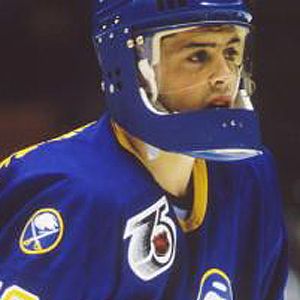
The Sabres were a good fit for LaFontaine and he immediately scored 93 points in 57 games that season, although he was limited by a broken jaw which led to some interesting headgear upon his return.


He followed up his first season in Buffalo with the best offensive season of his career in 1992-93, after being named team captain, with 53 goals and 95 assists, helping set up many of Alexander Mogilny's 76 goals in the process, for a career best 148 points and second place in the NHL scoring race.

Laftontaine Mogilny 92-93, Laftontaine Mogilny 92-93
LaFontaine and Mogilny were rewarded with spots in the
1993 NHL All-Star Game

The next two seasons were a struggle for LaFontaine, as he only managed to play in 38 total games due to knee surgery for a torn ligament. Still, he was awarded the Masterton Trophy in 1995.

Proving he still could compete, he had his seventh 40 goal season in 1995-96, finishing with 91 points. Early in the next season, he would suffer another concussion, costing him several months of playing time which would limit him to just 13 games. Sabres management and team doctors refused to clear him to play, but LaFontaine demanded a trade, believing he could still play.

The Sabres subsequently traded him to the New York Rangers for the final season of his career. He managed to play in 67 games, which included reaching the 1,000 point milestone on this date in 1998, as well as representing the United States a month later at the Olympics in Nagano, Japan.

Lafontaine USA 1998, Lafontaine USA 1998
LaFontaine at the 1998 Olympics

After suffering another serious concussion in a collision with a teammate in mid March, LaFontaine would miss the remainder of the year and retire at the end of the season, having totaled 468 goals, 545 assists and 1013 points in his abbreviated 15 year career.

In addition to the 1984 and 1998 Olympics which bookended his international career, LaFontaine would also compete for the United States in the 1987 Canada Cup, the 1989 World Championships, the 1991 Canada Cup and the gold medal winning 1996 World Cup of Hockey team, where LaFontaine had four points in five games.

Lafontaine USA 1996, Lafontaine USA 1996
LaFontaine hoists the 1996 World Cup

In 2003 he was inducted into the Hockey Hall of Fame as well as the United States Hockey Hall of Fame. In 2006, the Buffalo Sabres would retire LaFontaine's #16 on March 3rd.

An interesting note of trivia, LaFontaine is one of only three players to play for all three teams from the state of New York, and the only one to have played his entire career in New York state. LaFontaine once joked, "I got to play for three great organizations in my career and never once had to buy new license plates."

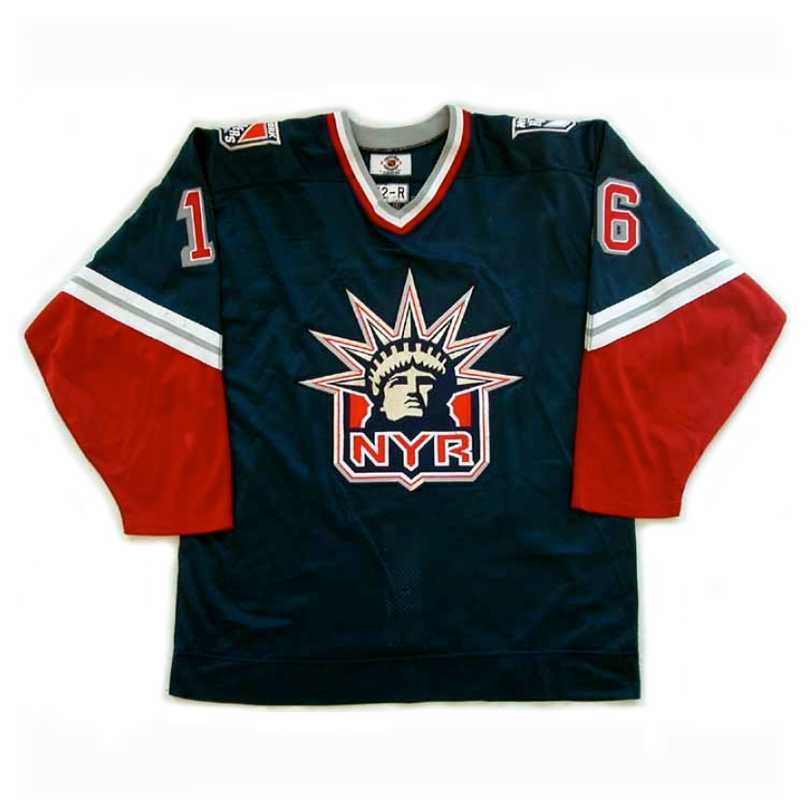
Today's featured jersey is a 1997-98 New York Rangers Pat LaFontaine jersey. This highly attractive jersey was worn during the season LaFontaine scored his 1,000th career point.

The beautiful "Liberty" jersey was first introduced in 1996 and featured a bold new crest featuring the Statue of Liberty and a very classy darker shade of blue than the traditional road jerseys. This style is perhaps the finest third jersey in NHL history and would remain in use through the 2006-07 season until being discontinued when all clubs were limited to just two jerseys with the arrival of the new Reebok Edge jerseys.

During LaFontaine's career, there was inconsistency in the way his name was displayed on the back of his jerseys. The Islanders had it as both "LAFONTAINE" in all captial letters of the same size and also "LAFONTAINE" with the "A" capitalized, but in a smaller size. The Sabres seem to have used all capitals the same size while the Rangers used the small "A" style. His 1987 USA Canada Cup and jerseys used the smaller "A", while we have seen his 1996 USA World Cup jerseys both ways!

If you are going to add a LaFontaine jersey to your collection, we strongly recommend searching for photos and videos of the style of jersey you wish to replicate and supply your findings to your customizers in order to get the most accurate jersey possible.


We begin today's video selections with the Top 10 goals by Pat LaFontaine.


Next, a tribute to LaFontaine on the occasion of his jersey retirement by the Sabres.


hit counter for blogger