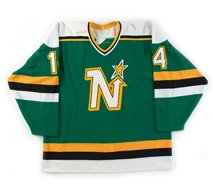
History of Jersey 83-93 Banner sm photo History of Jersey 83-93 Banner sm.jpg

Wednesday, December 28, 2011

1975-76 Soviet Central Red Army Vladimir Petrov Jersey

A new era in NHL history began on this day in 1975, when the New York Rangers hosted the HC CSKA Moscow, more popularly known as Central Red Army, the most dominant club in the history of the Soviet Championship League.

Prior to this point, the Soviet National Team had competed against the Team Canada in the Summit Series in 1972 and again in 1974 versus a team made of WHA All-Stars.

Wanting to further capitalize on the success of the Summit Series, and the capital to be gained from the mystery and curiosity surrounding the still exotic Soviets from behind the Iron Curtain, the Super Series '76 was scheduled. What set the Super Series '76 apart from the previous competitions was this was the first time that club teams from the Soviet Union would be facing teams from the NHL.

Sabres Wings Program cover, Sabres Wings Program cover
Goal magazine program cover for the 1976 Super Series

While some motivation for the series was certainly profit oriented, neither side wanted to be humbled or worse, humiliated, with the eyes of the hockey world upon them. Already armed with the Red Army club, the other team making the trip over to North America was the defending Soviet champions, Krylya Sovetov Moscow, better known to North Americans as the Soviet Wings, due to their position as the sporting club of the Soviet Air Force. To ensure the strongest clubs possible, the Red Army team was augmented with a pair of players from Dynamo Moscow and the Wings added four members of Spartak Moscow to enhance their roster.

Soviet Wings
Krylya Sovetov Moscow

Representing the NHL were the New York Rangers, Montreal Canadiens, Boston Bruins, Philadelphia Flyers, Pittsburgh Penguins, Buffalo Sabres, Chicago Black Hawks and New York Islanders. While the NHL participants were all located in the east, they also represented some of the strongest clubs in the NHL at the time, with the Flyers having won the Stanley Cup the previous season over the Sabres, while the Islanders and the Canadiens were semifinalists and all of the clubs had qualified for the playoffs in 1974-75.

Despite all the games taking place in the east, don't overlook the absence of both the Detroit Red Wings (58 points the previous season compared to the 113 totaled by the Flyers, Sabres and Canadiens) and the dreadful expansion Washington Capitals, who finished the previous season at 8-67-5 for 21 points, and whom the NHL was not going to let anywhere near the best of the Soviet Union. The Toronto Maple Leafs, on the other hand, were absent due to cantankerous owner Harold Ballard's refusal to allow Soviet teams to play in Maple Leaf Gardens!

The Super Series '76 first game was held on this date in 1975 when the Red Army club invaded Madison Square Garden to take on the Rangers, who were led by Rod Gilbert, Steve Vickers, Rick Middleton, Carol Vadnais and known patriot Phil Esposito, who would skate through a brick wall to uphold the honor of the NHL against the Soviets.

The Red Army club, meanwhile, was the de facto Soviet National Team, and was led by Vladimir Petrov, Boris Mikhailov, Valeri Kharlamov and goaltender Vladislav Tretiak.

Tretiak 1975, Tretiak 1975
Tretiak tending goal for Central Red Army

The Red Army prevailed on that night with a dominant 7-3 victory in front of 17,500 Rangers fans. Similar to the start of the 1972 Summit Series, the North Americans scored quickly, this time just 21 seconds into the game on a goal by Vickers. Unfazed, the goal did nothing more than wake the sleeping bear, and Red Army had the lead four minutes later and led 3-1 after the first. The Soviets kept piling it on until their lead had stretched to 7-1 at one point before the Rangers were able to put two meaningless goals by Tretiak to make the final 7-3, the exact same score of Game 1 of the first Summit Series. Petrov scored four points on 2 goals and 2 assists while Kharmalov had a goal and 3 assists to lead Red Army, who were outshot 41-29.

Carol Vadnais defends Valeri Kharlamov, Carol Vadnais defends Valeri Kharlamov
Carol Vadnais of the Rangers defends Valeri Kharlamov

A near equal result followed the next day when the Soviet Wings easily handled Pittsburgh 7-4.

The next game for the Red Army came in Montreal on New Year's Eve, the now legendary game between two of the finest clubs ever, both in mid-season form, as the eventual 1975 champion Canadiens, who were on the verge of a dynasty, skated to a 3-3 tie with the Soviets in what many call the greatest game ever played, as Tretiak held off the NHLers despite being outshot 38-13.

3 stars Canadiens vs CSKA, 3 stars Canadiens vs CSKA
The three stars of the fabled New Year's Eve game, Peter Mahovlich, Tretiak and Yvan Cournoyer

Next up for the Wings was a trip to Buffalo on January 4, 1976, a night those in attendance will never forget, as the Sabres pounded the Wings 12-6, earning the distinction of becoming the first NHL club to ever defeat a Soviet club.

Sabres Wings final scoreboard
The scoreboard shows the final score of the Sabres historic victory

It would be the worst loss ever by a Soviet team in international competition. So popular was the Sabres win with NHL fans that they received a standing ovation before their next game - in Montreal!

Sabres general manager Punch Imlauch called the game "was the all-time high point for the Sabres"as well as the highlight of his lengthy career.

Sabres Wings pennant
Such was the significance of the Sabres victory that a souvenir of a game is created following the contest

"I had never been so fired up for a game," said Rick Martin. "I had played in a lot of big games, but that truly was the game I'll never forget."

The Wings rebounded from their crushing defeat by Buffalo to down the Chicago Black Hawks three days later 4-2, while the Red Army stayed unbeaten with a 5-2 win in Boston on January 8th.

The Wings then concluded their North American foray with a 3-1 record after their 2-1 defeat of the New York Islanders, but the Red Army still had one battle awaiting them in the form of the Broad Street Bullies in Philadelphia.

Played on January 11th, the two-time defending champions were also eager to defend the honor of North American hockey - by any means necessary. Fired up by club owner Ed Snider, the Flyers were out to prove they were the best club hockey team on the planet.

The Flyers reputation preceded them, and the Soviets were already aware of the Bullies style, especially in the form of captain Bobby Clarke, whose previous encounter in the 1972 Summit Series with Kharlamov had resulted in a broken ankle for the Soviet legend at the hands of Clarke.

Russian Flyers cartoon, Russian Flyers cartoon
A cartoon in a Soviet newspaper depicting
the Flyers with clubs instead of sticks

The Flyers held the Soviets scoreless after one period, taking the body whenever possible to attempt to contain the Red Army's uptempo style. The game proved to be a contentious one, with many scrums and hard hits.

Flyers vs Red Army, Flyers vs Red Army
Dave Schultz welcomes the Soviets to the City of Brotherly Love

The most notable event of the night was when the Flyers Ed Van Impe returned to the ice following a penalty, demolished Kharlamov, who stayed on the ice for a minute. When no penalty was called, the coach of Red Army, Konstantin Loktev, pulled his club off the ice in protest. A shouting match ensued between Snider and the president of the Soviet Hockey Federation, with Snider threatening to withhold payment to the Soviets.

Eventually Red Army relented, and returned to the ice, with the Flyers now even more intent on winning, and doing it their way, more than ever. It would take Philadelphia 17 seconds to score on the ensuing power play which resulted from the delay of game penalty imposed on the Soviets for their 16 minutes off the ice. A second Flyers goal ended the first period 2-0.

With the Flyers shorthanded once again, they opted to press forward, with Joe Watson eventually scoring a shorthanded goal at 2:44 of the second. Flyers coach Fred Shero joked that Watson had set back Soviet hockey twenty years with his goal against Tretiak.

The Red Army scored at the halfway point of the game to make it 3-1 after two periods, but Philadelphia controlled the third period, including scoring a fourth goal at 4:01, eventually outshooting the Soviets 49-13 to the delight of the home fans.

The Red Army thus returned home with a 2-1-1 record, when combined with the Wings, had the Soviets taking the series 5-2-1.

Today's featured jersey is a 1975-76 Soviet Central Red Army Vladimir Petrov jersey as worn during the Super Series '76, the first meeting between club teams from the Soviet Union and the NHL.

This jersey, in it's brilliant red of communism and emblazoned with the red star and hammer and sickle, was a guaranteed attraction at the gate, as hockey fans came to see the mysterious, emotionless robots on ice who played the game in a manner unfamiliar to the NHL, weaving out of their lanes and circling back to maintain possession of the puck, rather than dump it deep in the zone and bang and fight hard to get it back.

While we found no official confirmation, we strongly believe that the blue nameplates with the player names on the back in English were added for the Super Series' North American fans due to the white shoulder yoke stripe being covered up and the differing shades of blue between the sweater and the nameplate material, and were likely removed once the Red Army returned home to resume it's Soviet league schedule.

While North Americans commonly read the crest as UCKA, the translation of the Cyrillic characters is CSKA (sounding like "Chess-KA" when pronounced by someone speaking Russian, as the first "U" character translates to the sound "TS"), which stands for Central Sports Club of the Army, as the team was part of the sporting arm of the Soviet Army in the same way the Soviet Wings were sponsored by the Soviet Air Force and Dynamo Moscow was sponsored by the KGB, the national security agency of the Soviet Union, similar to the CIA in the United States.

Petrov would play from 1965 to 1983 in the Soviet Championship League, scoring 435 goals and 839 points in 677 games. He would win six World Championship gold medals, be the leading scorer at four World Championships, a two time Soviet league Player of the Year and the league's leading scorer five times. Additionally, he would win two Olympic gold medals and one silver.

Red Army 75-76 jersey, Red Army 75-76 jersey

Bonus Jersey: Today's bonus jersey is a 1975-76 New York Rangers Brad Park jersey as worn in their 1975 game against HC CSKA Moscow to open Super Series '76 in what was the first ever game between Soviet and NHL club teams.

The Rangers wore a special patch to commemorate their 50th anniversary, only the second patch the Rangers had ever worn, and their first in 25 years. It would be another 16 seasons before the Rangers would wear another, that in honor of the NHL's 75th anniversary in 1991-92.

New York Rangers 75-76 jersey, New York Rangers 75-76 jersey

Extra Bonus Jersey: Today's extra bonus jersey is a 1975-76 Soviet Wings Alexander Yakushev jersey as worn by the Wings during the Super Series '76 when Yakushev was loaned by Spartak Moscow to the Wings for their series of games against the NHL.

The "KC" initials on the front translate to "KS", standing for Krilya Sovetov, which in turn translates to "Wings of the Soviet". The cresting is done in felt on the wool sweater, while the nameplate has twill letters in English on nylon, which was added for the North American TV audiences.

Soviet Wings 75-76 jersey, Soviet Wings 75-76 jersey

Today's video section begins with footage of the Rangers game against Red Army to kick off the Super Series '76 as Esposito gets the Rangers off to a deceptively quick start, as Central Red Army would score the next seven goals of the game!


Here is the complete game in four parts.

Part 1 aaaa Part 2 aaaa Part 3 aaaa Part 4

The legendary New Year's Eve game between the Canadiens and Red Army is out next featured clip.


This next clip is from the Red Army's game versus the Boston Bruins, their third game of their brief tour of North America.


Finally, the contentious game between the Flyers and Red Army, which shows this was no exhibition game, as the intensity and tension were so thick you could cut them with a knife. Just listen to the announcers as the Soviets are leaving the ice in protest to know that this was more than a hockey game, it was our way of hockey, perhaps even life, against theirs.


Tuesday, December 27, 2011

2000-01 Pittsburgh Penguins Mario Lemieux Jersey

Following a standout career, during which he had already scored over 600 goals and nearly 1,500 points, appeared in eight NHL All-Star Games, had been named the winner of the Hart Trophy as league MVP three times, the Art Ross Trophy six times as league scoring champion, the Conn Smythe Trophy twice as playoff MVP, the Pearson Award four times, won the Calder Trophy as rookie of the year, the Bill Masterton Trophy, won two Stanley Cups, had his number retired, been inducted into the Hockey Hall of Fame and defeated cancer, which included scoring a goal and an assist on the day of his last radiation treatment, and then going on to win the scoring title despite missing two months of the season, Mario Lemieux returned to the ice following a 3 1/2 year retirement on this date in 2000.

Lemieux banner, Lemieux banner
Lemieux's first retirement banner

Having first undergone back surgery for a herniated and later infected disc back in 1990, Lemieux underwent a second surgery in the summer of 1993 that caused him to miss the first ten games of the 1993-94 season followed by missing another 48 games later that same season due to further issues with his back.

Following his severely curtailed 1993-94 season, he took a leave of absence from the game citing fatigue from the radiation treatments. He returned after a year off and played two more seasons, which included both his 500th and 600th goals, before announcing his retirement from play following the 1996-97 season.


The Penguins played well in Lemieux's first season away from the team, winning the Northeast Division in 1997-98 after being led in scoring my Jaromir Jagr's 102 points, but they would be dumped in the first round in six games by the Montreal Canadiens. The next two seasons saw the club slip in the standings and be ousted from the playoffs in the second round both years.
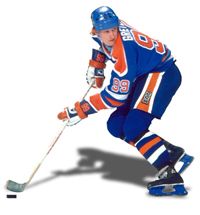
In November of 1998, the Pittsburgh Penguins were forced to declare bankruptcy, and with Lemieux's deferred salary amounting to over $32 million, he was the club's largest creditor. He then made the unusual proposal to convert the debt the club owed him into equity in the franchise, a proposal approved by the NHL Board of Governors on September 1, 1999. Two days later a U. S. Bankruptcy Court approved the plan, making Lemieux the Chairman of the Board, President and Chief Executive Officer of the Penguins and the first former NHL player to become majority owner of his former team.


 photo Lemieux new owner.jpg
Lemieux is introduced as the Penguins new owner

When the 2000-01 season began, the Penguins were playing average hockey over the course of the first two months of the season, but on December 9th, Lemieux announced his intention to come out of retirement and return to active play. 18 days later, Pittsburgh's record was 15-14-6-1 as Lemieux took to the ice for the first time since April 26, 1997, three years and eight months prior.

Stating he wanted to return so his son Austin could see him play in person, Lemieux wasted no time in registering his first point of the night with the second assist on a goal by Jagr just 33 seconds into the game.


The Penguins would add a power play goal halfway through the first period to take a 2-0 lead into the second period. Now halfway through the third period, Jagr carried the puck into the Toronto Maple Leafs zone, curled back and fed Lemieux coming up the slot and put the puck right onto Lemieux's cocked and ready stick for his first goal of his comeback, thrilling the home fans in Pittsburgh.


Following a close call, Jagr back checks the puck off of a Maple Leaf player, which went to Lemieux who instinctively threw the puck toward the crease where Jan Hrdina corralled the puck, moved it to his backhand and lifted it over Curtis Joseph for a 4-0 Penguins lead and Lemieux's third point of the night to go along with five shots in 20:46 of ice time. Jagr would add a shorthanded breakaway goal just before time expired to make it a 5-0 final, capping a memorable night for the fans in Pittsburgh, as their star and franchise savior had returned.

Lemieux returns, Lemieux returns
Lemieux acknowledges the fans after his dramatic return

Today's featured jersey is a 2000-01 Pittsburgh Penguins Mario Lemeiux jersey. This was one of the rare times a Lemieux jersey did not feature the captain's "C" or at least the assistant captain's "A" once Lemieux was named team captain back in 1987. Lemieux would return to the captaincy for the 2001-02 season through the remainder of his career.

This style of Penguins jersey was first introduced for the 1992-93 season following back-to-back Stanley Cup titles for Pittsburgh. Its modernized logo, which replaced the Penguins original and beloved skating penguin logo, was never truly embraced by the fans in Pittsburgh, who viewed it as cold design that lacked the charm of the previous cartoon bird and dubbed it "the robo-penguin".

Add in the fact the team failed to return to the Stanley Cup Finals while wearing it, and one can see how the design was a victim of the times during which it was worn, not unlike the Islanders fisherman logo. Despite the fact it was not viewed as fondly as it's championship winning predecessor, this style would be used for ten seasons through the 2001-02 season when replaced by a new white version of the team's black third jersey which saw the return of the original skating penguin logo. For 2002-03, the black alternate and new white jerseys would become the Penguins primary home and road jerseys.

Pittsburgh Penguins 00-01 jersey, Pittsburgh Penguins 00-01 jersey
photo courtesy of Classic Auctions

Today's final video is the special pre-game ceremony prior to the game, which included the ceremonial lowering of the banner retiring his #66.


Monday, December 26, 2011

1983 Team Canada Mario Lemieux Jersey

Boxing Day sees the start of the 2012 World Junior Championships, with four games today, with two in Calgary between first Latvia vs. Sweden at 3:30 PM and then Switzerland taking on Russia at 8:00 PM, both games in Group A. Meanwhile in Edmonton, Group B action sees Denmark going up against the United States at 6:00 PM, but first it all kicks off with Finland drawing hosts Canada at 1:30 PM.

Canada has chosen a retro third jersey for this year's tournament, inspired by the logo worn by National Junior Teams from 1982 to 1994, which included seven gold medal winning teams.

1982 Canadian Junior Team, 1982 Canadian Junior Team
The gold medal winning 1982 Canadian Junior National Team

The red jersey features the old version of the Hockey Canada logo, featuring three maple leaves, now said to represent the three steps of the Program of Excellence, the under-17, under-18 and under-20 programs.

Giant Canada 2012 alt jersey announcement, Giant Canada 2012 alt jersey announcement
The announcement of the 30th anniversary Canada third jersey

The new jersey has been updated with s sublimated design around the white waist stripe featuring imagery representing each of the past 15 Canadian gold medal winning championship teams in the now 30 year history of the Canadian junior program.

Jeff Shantz, Martin Gélinas and Gord Sherven 2012 jersey, Jeff Shantz, Martin Gélinas and Gord Sherven 2012 jersey
The white waist stripe now has a sublimated design honoring the 15 previous gold medal teams

In addition to the choice of the retro jersey, Hockey Canada is inviting 30 years worth of junior team alumni to this year's tournament as part of the anniversary celebrations for the hosts.

Jeff Shantz, Martin Gélinas and Gord Sherven 2012 jersey, Jeff Shantz, Martin Gélinas and Gord Sherven 2012 jersey
Canada junior hockey veterans Jeff Shantz, Martin Gélinas and Gord Sherven model the new 2012 third jersey

Group A in this year's tournament sees defending champions Russia grouped with Sweden's resurgent junior program, Switzerland, Slovakia and Latvia. Meanwhile, a difficult looking Group B comprises hosts Canada, the United States, Finland, the Czech Republic and Denmark.

The tournament format calls for a each team in a group to play the remaining four teams once each, with the top three advancing to the Playoff Round, while the bottom pair is placed in the Relegation Round. The Relegation Round will determine which single club is demoted down to the 2013 Division 1 Group A tournament, where in the past two teams were relegated.

The top seeded team from each group will bypass the quarterfinals, while the second place teams in each group will cross over to play the third seeded teams from the other group. The quarterfinal winners will advance to face the group winners in the semifinals on January 3rd, with the losers playing for bronze followed by the gold medal game, both on January 5th.

Group A will see the Russians as favorites, along with Sweden. While the Russians only return one player from last year's championship team, Washington Capitals prospect Evgeny Kuznetsov, but have other NHL draft choices, Ivan Telegin (Winnipeg) and Nikita Kucherov (Tampa Bay) on their roster along with top 2012 prospects Nail Yakupov and Mikhail Grigorenko, who could be selected 1-2 in this spring's 2012 NHL Entry Draft.

Sweden looks more than ready for the tournament following their 5-3 defeat of Canada in their final tune-up game on Friday. Sweden's roster boasts 11 players from last year, including NHL draft choices Jonas Brodin (Minnesota), Oscar Lefbom (Edmonton), Rickard Rakell (Anaheim) and Mika Zibanejad (Ottawa) are the first round selections among the 15 players on their roster already property of NHL clubs. While Sweden has not won gold in 13 years, their experience and quality, with four first round NHL draft choices, should make them favorites to win the group.

As of late, Switzerland has made it's presence known at the World Juniors, earning a fifth place last year. They lack the depth and quality of talent of the gold medal contenders, but stand a good chance to advance to the playoffs as they contend with Slovakia for the third place spot in the group. They return four players from last year, led by Sven Bartschi, a 2011 first round draft choice of the Calgary Flames.

Slovakia returns eight players from last year, including Tomas Jurco and Marek Tvrdon (Detroit) at forward and Martin Marincin (Edmonton), Adam Janosik (Tampa Bay), Martin Gemat (Edmonton) and Peter Ceresnak (New York Rangers) on defense. The Slovaks will be looking to keep games close based on their experienced defense and hoping to gain points whenever possible as they contend with Switzerland for the final playoff position in the group.

The final team in Group A is Lativa. Kristians Pelss (Edmonton) leads the squad who must hope to find the magic to pull off an upset, particularly against either Switzerland or Slovakia, whichever club will join them in the Relegation Round, in order to carry over some points in their struggle to avoid relegation. If all goes according to form, their expected game against Denmark, who they defeated 5-1 in exhibition play, will be key to their survival.

Group B is led by Canada, who will be expecting to compete in their 11th straight gold medal final. Canada is loaded with a roster comprised entirely of NHL draft choices, save two players, including some with NHL experience already. Their embarrassment of riches include five of seven first round draft choices on defense, six on forward among the 12 and one of their two goaltenders. Only three of the roster was drafted later than the third round. Jonathan Huberdeau (#3 Florida), Ryan Strome (#5 New York Islanders), Brett Connolly (#6 Tampa Bay) and Mark Scheifele (#7 Winnipeg) are all first round selections at forward, while Dougie Hamilton (#9 Boston) closes out the Canadian first round draft choices on defense.

Right there with Canada is the United States, led by Jack Campbell (Dallas) in goal, returning for this third World Juniors. Charlie Coyle (Minnesota), Nick Bjugstad (Florida), Emerson Etem (Anaheim) and Jason Zucker (Minnesota) all return at forward, while Derek Forbort (Los Angeles) and Jon Merrill (New Jersey) return on defense. The Americans will be looking to take first place in the group and hope to spoil the party on Canadian ice by taking home the gold.

The key for Finland is forward Mikael Granlund (Minnesota), who currently leads Finland's top professional league in scoring, will be looking to propel the Finns to their first gold medal game since 2001. Finland boasts seven NHL draft choices at forward alone, two of which are first rounders. Their defense is younger, with only one current selection and three who are draft eligible for the first time this season. Still, there goaltenders, Sami Aittokallio and Christopher Gibson are both already property of NHL clubs and will be looking to hold steady behind their young defense and continue the line of successful Finnish goaltenders. Finland should advance to the Playoff Round, but must do their best to take points out of their games with Canada and the US. Their key game will be against the Czech Republic and will want to be certain to secure maximum points against Denmark.

The Czech Republic will be looking to return to the top half of the World Junior contenders following back-to-back seventh place finishes. To do so, they must rely on their six drafted forwards, none of which are first round choices. The remainder of the Czech roster sees only two drafted players, one on defense and the other in goal, with the remainder having gone undrafted. The Czechs face an uphill battle on paper to overcome Finland for the final playoff position, but it would take an utter collapse for them to be worried about relegation.

Denmark, on the other hand, stands no chance to make the playoffs and their ultimate goal will be to survive relegation. Their roster contains but one NHL draft pick, Nicklas Jensen (Vancouver) at right wing. Denmark's hopes must rely on keeping games close, accomplished only by keeping them low scoring. Once down by two or three goals, they do not have the players to try to play risky, catch-up hockey. Their tournament will really begin with the relegation round, and their hope is to have either won, or at least taken a point out of their game with whichever Group B team joins them in relegation play. With only one team facing the drop this time out, it's likely that the success of their tournament will be based on their expected Relegation Round game against Latvia.

Key games of the tournament will be the opening game of Canada vs. Finland later today, as Canada looks to get off to a fast start and set the tone as immediate contenders for the championship. December 27th sees Latvia and Slovakia looking to collect vital points in their efforts to make the playoffs, and if not, carry an advantage into the relegation round.

Devante Smith-Pelly 2012 Canada Alt jersey, Devante Smith-Pelly 2012 Canada Alt jersey
Devante Smith-Pelly wearing the new 2012 Canada third jersey during exhibition play

The key game on the 28th is the United States vs. Finland, but the real highlights of the Preliminary Round come on December 31st, when Canada faces off against the United States followed by Russia taking on Sweden for what, on paper, should be two games which will determine the winners of both groups as long as no team stumbles in their previous games, which always does happen and is part of the appeal of the short international tournament format where every game counts.

TSN will be broadcasting the games in Canada, while the NHL Network will have the United States Preliminary Round games, as well as five others, as part of their schedule in the US before showing all the playoff games.

Today's featured jersey is a 1983 Team Canada Mario Lemieux jersey that the 2012 Canadian junior team's third jersey is reprising. While the three leaf logo may have been worn from 1982 until 1994, the style of jersey used by the 2012 team was only worn from 1982 until 1984, as the team switched to full length pants in 1985 and adopted jerseys with striping that ran down the sides of the sweaters.

The 1983 World Junior Tournament was held in Leningrad (since renamed St. Petersburg) in the Soviet Union. The defending champion Canadians had a roster which boasted future NHLers Dave Andreychuk, Mario Lemieux, Sylvain Turgeon, Mike Eagles, Paul Boutilier, Steve Yzerman, Pat Flatley, Pat Verbeek, Paul Cyr, Toni Tanti, Gary Leeman, Brad Shaw, James Patrick, Joe Cirella and goaltender Mike Vernon.

They opened with a 4-0 win over Germany followed by a 4-2 triumph over the United States. Finland fell next 6-3 before they ran into the host Soviets, who prevailed 7-3. An important 7-7 tie with Czechoslovakia followed, as the team then was defeated by Sweden 5-2.

Canada had the upper hand in the contention for a medal however, as their record now stood at 3-2-1 to Sweden's 4-2, only with a highly more favorable schedule for their final games. Canada demolished Norway 13-0 to improve to 4-2-1 for 9 points, while Sweden was easily defeated by the dominant Soviets 5-1 to drop their record to 4-3 and only 8 points, giving Canada the bronze medal behind the Czechs at 11 points and the Soviets with 14 following their undefeated run through the tournament at home.

Andreychuk led the Canadians in scoring with 6 goals and 11 points, while Lemeiux was right behind at 5 goals and 10 points in an uncommon appearance for Canada, as his international resume would only consist of five appearances, the 1983 World Juniors, the 1985 World Championships and the 1987 Canada Cup before a combination of success at the NHL level and injury problems would keep him out of international action for 15 years until the 2002 Olympics followed by the 2004 World Cup of Hockey, the final two ending with gold medals.

Unusually, Lemeiux did not wear his customary #66 for one of the rare, and perhaps only times in his career, as no player on the Canada roster was assigned a number higher than 30, that being goaltender Vernon. Lemeiux wore #24 for the tournament, along with the noteworthy #14 worn by future legend Yzerman rather than his famous #19.

The three leaf logo would first be used in 1982 and survive a number of sweater manufacturer changes, from Cooper to Adidas, Tackla finally Reebok for it's final appearance in 1994.

Canada 1983 F
Canada 1983 B

Today's video section begins with the unveiling of the 2012 Team Canada alternate jersey.


Next up is Paul Brandt's official anthem for the 2012 World Junior Championships.


Finally, highlights from last year's unforgettable final game between Canada and Russia, which saw a furious comeback by the Russians, stunning the Canadian fans who filled the arena in Buffalo, New York. Canada led 3-0 after two periods, chasing the starting Russian goaltender from the net halfway through the game and looking to be well on their way to the title. Suddenly, with two lightning quick goals 11 seconds apart turned the tide in favor of the Russians, who kept their foot on the gas, going on to score five times to shock Canada 5-3.


Sunday, December 25, 2011

1953-54 Chicago Black Hawks Fred Sasakamoose Jersey

Born on this date, Christmas Day, in 1934, one of nine kids in his family, Fred Sasakamoose began playing in the Saskatoon Amateur Hockey Association for the cleverly named Duck Lake Ducks in 1948. He then graduated to the Moose Jaw Canucks of the Western Canadian Junior Hockey League in 1950. Playing center, Sasakamoose acquitted himself quite well in his three seasons with Moose Jaw, averaging more than a point per game. He scored 41 points in 42 games in his first season of junior hockey and maintained his average with 35 points from 36 games in 1953 before cutting loose with 31 goals and 57 points in just 34 games in 1953-54.

His dominance earned him the WCJHL Most Valuable Player award and a contract with the Chicago Black Hawks of the NHL. He made his debut on February 27, 1954 at the age of 20 in a game at Toronto's Maple Leaf Gardens, which made him the first full-blooded native North American player in NHL history. In all, Sasakamoose played 11 games with the Black Hawks through the remainder of the 1953-54 season, registering six penalty minutes but no points.

Fred Saskamoose Blackhawks, Fred Saskamoose Blackhawks

It must have been quite a culture shock for Sasakamoose playing in front of 13,500 people, for when the season concluded, he returned home to Sandy Lake reserve, Saskatchewan, population 200, and his parents 24 by 20 foot cabin.

He was unable to crack the Black Hawks lineup the following season, ending up being the final cut from the roster. He then spent with both the New Westminster Royals (21 games) and the Chicoutimi Sagueneens (22 games).

It was back west in 1955-56 with just a pair of games with the Calgary Stampeders before he quit to return home to be with his wife, taking a taxi 600 miles to do so!

He was back on the ice again for the 1956-57 season, this time finding a home with the Kamloops Chiefs of the Ontario Senior Hockey League, proving a popular attraction as a former NHLer and aboriginal player as well. His second season with the Chiefs would be particularly successful, as he would score 26 goals and 53 points in 51 games.

He sat out the following season only to return to the ice once more for the 1959-60 season, again with Kamloops, scoring 30 points in 20 games to end his professional playing days.

Sasakamoose has overcome his issues with alcohol, which certainly cut short is time in the NHL and has been dry since 1980, the same year he became chief if his band. He has also been involved in sports programs for Indian youth and was invited by the Blackhawks in 2002 to return to Chicago to honor is becoming the first Indian to play in the NHL, fittingly for a team with an Indian logo.

He declined their offer to wear a Blackhawks jersey, choosing his own wardrobe.

"I said I came here 50 years ago as an Indian, and I'm going to leave this building as an Indian. I want to wear my buckskin jacket," Sasakamoose recalls. "They respected that. I walked in that stadium, and what a moment. I wanted it recognized, publicly, that I am an Indian as I walked to the middle of that ice."

Leach, Neilson & Sasakamoose, Leach, Neilson & Sasakamoose
Reggie Leach, Jim Neilson and Fred Sasakamoose pose with the Stanley Cup at the BHP Hilton Family Hockey Fest in conjunction with the 2010 World Junior Tournament

Sasakamoose was later inducted into the Saskatchewan Sports Hall of Fame in 2007.

Today's featured jersey is a 1953-54 Chicago Black Hawks Fred Sasakamoose jersey from his groundbreaking and only NHL season. The Black Hawks adopted the barberpole style in 1937-38 and remained in use through the 1954-55 season, although with some changes to the crest and adjustments to the striping pattern along the way.

The Blackhawks chose this style jersey as their turn back the clock jersey for the NHL's 75th Anniversary season in 1991-92, reviving a truly distinctive style that many fans were not even aware of, as throwback styles were uncommon, if not unheard of in the NHL at the time.

Fortunately for the seamstresses of the day, player names were still a long way off, as "Sasakamoose" certainly would have required a fair amount of sewing!

Chicago Blackhawks 53-54 jersey, Chicago Blackhawks 53-54 jersey

Today's video is a feature on Sasakamoose as part of a film entitled "Chiefs and Champions".


Saturday, December 24, 2011

1973-74 Minnesota Fighting Saints George Morrison Jersey

Born on this date in 1948, George Morrison became a star for the University of Denver Pioneers of the WCHA and later played in the NHL and the WHA.

In his freshman season at DU, Morrison scored 58 points on 40 goals and 18 assists in just 32 games, leading the WCHA in scoring. Denver would reach the NCAA National Championship game against Cornell and their goaltender and future NHL star and Hall of Famer Ken Dryden. Morrison would score the Pioneers second goal of the game enroute to a 4-3 victory and the title.


"It's funny how I wound up at Denver," Morrison said. "I'd played around my home town [Scarborough, Ontario], but I had no particular plans. Then a friend who had gone to Denver asked me if I'd like to play hockey in college. I said sure. Within a few days I was out here taking exams. It all happened only a few weeks before school started, and I couldn't be happier."

The next season was more of the same for Morrison, as he led the WCHA in scoring with 30 goals in 32 games and a 57 point season and being named a WCHA First Team All-Star and NCAA All-American for the second consecutive season.


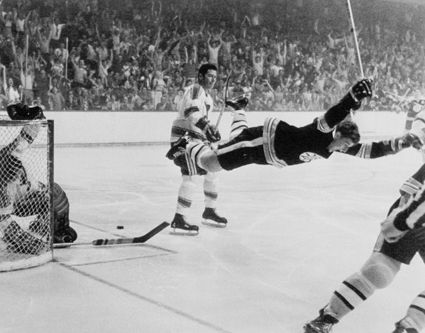
He would sign as a free agent with the St. Louis Blues in September of 1970 and score 15 goals and 10 assists as a rookie in 1970-71. Morrison was on the ice for Bobby Orr's famous cup winning goal in overtime and has joked "I was covering my man."


The following season with the Blues, Morrison would score 13 points in 42 games, but missed a number of games due to a bout of mononucleosis and then sat out the end of the season following a trade to the Buffalo Sabres when he refused to report to their minor league club in Rochester.

His career took a turn when he was selected by the Minnesota Fighting Saints in the 1972 WHA General Draft. With an opportunity for more playing time, Morrison signed with the Fighting Saints for the 1972-73 season. He quickly became our favorite player when growing up as impressionable young Fighting Saints fans with his iconic number 9, his offensive ability (he always seemed to score two goals when we attended games in person) and speed, which was accentuated by his long hair flying behind him, unencumbered by a helmet.

Just look at the following photo. Our favorite player in our favorite jersey in an awesome pose that captures his focus and speed. There's no other picture that screams "hockey" to us more than this one.


Morrison would score 16 goals and 24 assists for 40 points in 70 games in St. Paul, including the first goal against Winnipeg at the brand new St. Paul Civic Center on January 7, 1973. He would add another goal in five playoff games that season. Don't fail to notice the clear dasherboards used at the St. Paul Civic Center in the above photo, the only rink in North America with a set of them.

It was during the next season that George would achieve the finest season of his professional career and cap it off in stunning fashion. Going into the final game of the 1973-74 season against the Vancouver Blazers, Morrison had 36 goals, needing four to join teammates Mike "Shakey" Walton and former Blues teammate Wayne Connelly with 40 or more goals.

Morrison did score a power play goal at 15:42 of the second period and then rapidly got another one - just 14 seconds later after splitting the defense. No one expected what happened next, as Morrison completed a hat trick in a WHA record 43 seconds at 16:25, with all three goals coming on assists from Connelly and Bob MacMillan.

Of course, when you're hot like that your teammates will try to set you up for the rest of the night, especially knowing you need one more to reach 40, which George was later able to get, joining Connelly (42) and Walton (57) as those who hit 40 for the Fighting Saints that year.

Sadly, that remarkable record died with the WHA and is a forgotten achievement today, although Morrison's stick from that game does reside in the archives of the Hockey Hall of Fame in Toronto.


He would add another 5 goals and 10 points in 11 playoff games as the Fighting Saints would defeat the Edmonton Oilers in the first round of the playoffs 4 games to 1 before losing to the eventual champion Houston Aeros in a memorable six game series that featured as much mayhem as hockey.

The 1974-75 season was another successful one for George, with 31 goals and 60 points in 76 games with another 14 points in 12 playoff games as Minnesota defeated the New England Whalers before losing to the Quebec Nordiques in six games.

Morrison was traded by the Fighting Saints to the Calgary Cowboys for John McKenzie just prior to the 1975-76 season and scored 25 goals and 32 assist for 57 points followed by 11 goals and 19 assists for 30 points in his final season as a professional in 1976-77. His final combined NHL and WHA totals are 476 games played with 140 goals and 163 assists for 303 points.

Following his playing career, he was active in sports management and was a volunteer coach for the Union College women's team in Schenectady, New York. “He was everything to our team — a leader, a mentor, a teacher, a father figure and a coach,” said Union head coach Claudia Asano.

Sadly, Morrison passed away on November 12, 2008 at age 59 from a brain tumor.

Today's featured jersey is a 1973-74 Minnesota Fighting Saints George Morrison jersey as worn during the season he scored 40 goals, the highest total of his career. This jersey features our all-time favorite logo in sports history. The Little Saint is a real classic, with his Dennis the Menace look, bent wire halo and untied skates in juxtaposition to his angelic wings. One can only imagine how much money could have been made with that logo combined with today's marketing expertise if it had been introduced in the last 10 years.

It was this jersey that inspired the look of the Charlestown Chiefs jerseys of the movie Slap Shot, as the real Johnstown Jets were a minor league affiliate of the Fighting Saints and used the Fighting Saints jersey colors and template for their jerseys at the time the movie was made.

Our jersey was obtained a number of years ago from a company that is no longer around that specialized in obscure, vintage jerseys when Fighting Saints jerseys were nearly impossible to get. We chose this one because it featured a beautifully sewn and embroidered twill crest, which happens to be in our opinion the single greatest logo for a hockey team ever.

Any other Fighting Saints jerseys available back then had, at best, the logo screen printed onto a piece of twill, which was then sewn onto the jersey, with some of them just being a white circular patch! Others were printed or heat sealed directly to the jersey and would be lucky to survive any washings before cracking or peeling off over time.

The logo on our jersey also accurate to the originals with it's white skates, no halo and without the "Saints" name on the mascot's chest, unlike many other reproductions based on the version of the logo used for the team's letterhead and merchandise, which had the team name in the "S" logo, black skates and the bent wire halo over the mascots head, none of which were found on the actual Fighting Saints jerseys.

While the company who produced our jersey is no longer around, you can purchase your own high quality Fighting Saints jersey from our friends at VintageMinnesotaHockey.com. They even offer the original variation worn by the Fighting Saints during the first half of their inaugural season in 1972.

Minnesota Fighting Saints 1972-76 jersey photo Minnesota Fighting Saints 72-76 F.jpg
Minnesota Fighting Saints 1972-76 jersey photo Minnesota Fighting Saints 72-76 B.jpg

It's impossible to do any story on Morrison without relating "The Hot Dog Incident", as told by George himself.


"I was never coach Scotty Bowman's favourite player," said Morrison, "and I was even less popular with him after a caper I pulled during a game at the Los Angeles Forum." "During the game in L.A. it looked like the same old story — I was told to suit up but not to count on getting much ice time."
"It was late in the game and I'd warmed the bench all evening. Suddenly I realized I was very hungry. Well, next to me at the end of the bench I saw an usher eyeing my hockey stick. So I whispered to him, 'Pal, get me a hot dog, will you, and I'll give you my stick after the game.' The usher was back in a flash with the hot dog, and I was just sneaking my first bite (I waited until Scotty was looking the other way) when Bowman yelled at me, 'Morrison, get out there and kill that penalty!' "

"What to do? As I leaped over the boards, I stuffed the hot dog down the cuff of my hockey glove. I didn't know what else to do with it. And wouldn't you know, seconds later, someone slammed into me in front of our net. Hit me so hard the hot dog popped free of my glove and flew up in the air. Our goalie made a stab at it and tried to knock it to one side while the other players ducked the flying relish and mustard."
 

hit counter for blogger