Friday, July 8, 2011
1982-83 Nova Scotia Voyageurs John Chabot Jersey
July by the Numbers visits Eastern Canada for jersey #8.
The Nova Scotia Voyaguers franchise originated in 1969 as the Montreal Voyageurs, and after two seasons in Montreal, relocated to Halifax, Nova Scotia for the 1971-72 season, becoming the first AHL team ever located in the maritime provinces of Canada.
Once in Halifax, they wasted no time and won the AHL championship in their first season following a 41-21-14 regular season record, led by Germain Gagnon's 81 points, to become the first Canadian team to ever win the Calder Cup by cruising through the playoffs with a 12-3 record and outscoring the Springfield Indians 28-6 in Round 1, the Boston Braves 15-5 in Round 2 and the Baltimore Clippers 21-8 in the finals, 64-17 all told.
The Voyaguers posted an even better record during their second season and were led by the dynamic trio of Yvon Lambert (104 points and a league leading 52 goals), Tony Featherstone (103 points and 49 goals) and Morris Stefaniw (101 points and a league leading 71 assists) who finished 1-2-3 in the AHL scoring race! In the postseason, Nova Scotia made it all the way back to the championship finals for a second year in a row.
The Voyageurs continued their winning ways for the next three seasons before returning to the Calder Cup finals in 1975-76 when they defeated the Hershey Bears in five games to win their second championship. Ron Andruff led the club in scoring with 88 points, second overall in the AHL, while leading the league in goals with 42, while teammate Guy Choiunard's 40 was second overall.
The 1975-76 AHL Calder Cup champion Nova Scotia Voyageurs
They backed their title up with the best regular season record in team history in 1976-77 with a 52-22-6 mark and were led in scoring by future Montreal Canadiens Pierre Mondu's league leading 44 goals on his way to a team leading 89 points. After defeating Hershey once again, the Voyaguers downed the Rochester Americans in six games to go back to back as Calder Cup champions, their third title in six seasons.
The 1976-77 AHL Calder Cup champion Nova Scotia Voyageurs
Four more winning seasons would follow, giving the Voyageurs ten consecutive winning seasons, a streak broken in 1981-82 when the club was an even .500 at 35-35-10.
During that time period, Norm Dube led the AHL in scoring in 1979-80 with 101 points.
After one more winning season in 1982-83, Nova Scotia would suffer their first losing season ever at 32-37-11 in what would prove to be the club's final season in Halifax before relocating to Sherbrooke, Quebec where they were once again known as the Canadiens. Subsequent moves would see the club land in Fredericton, New Brunswick before becoming the Quebec Citadelles and finally the Hamilton Bulldogs, where they still play today.
Many well known players skated for "The Vees" during their time in Halifax, including Keith Acton, Guy Carbonneau, Ken Dryden, Brian Engblom, Yvon Lambert, Pierre Mondou, Bill Nyrop and Larry Robinson.
Larry Robinson
Today's featured jersey is a 1982-83 Nova Scotia Voyageurs John Chabot jersey. This jersey takes the approach of using the main striping template of it's parent club, but adding it's own cresting to make it their own.
It's a common approach, which at times can yield fun and interesting results, but other times jerseys that are predictable and uninspired. It's a fine line between what works and what doesn't, as sometimes having the minor league team create it's own unique identity can be the way to go.
In this particular case the use of the iconic Canadiens jersey makes the unmistakeable connection to the parent club in Montreal, while the Nova Scotia cresting, complete with it's baseball style tail under the name gives it it's own unique twist, although we do have to pause and wonder why the designer did not choose to make the name red for greater contrast against the blue background.
This particular example has had the name on the back removed, a common occurrence of this time period of jersey recycling, so it may have also been worn in 1981-82 by Dan Daoust as well.
Labels:
AHL,
Nova Scotia Voyageurs
Thursday, July 7, 2011
1975-76 Cincinnati Stingers Bryan Campbell Jersey
July by the Numbers checks in at #7 with a striking jersey from the World Hockey Association.
The Cincinnati Stingers were granted their franchise on May 6, 1973 but had to wait until their new home arena, the Riverfront Coliseum, was constructed before they could begin play in the 1975-76 season. The team took part in the WHA drafts while they waited for the arena to be ready, drafting Dean Talafous of Wisconsin with their first pick, and loaning out Dennis Sobchuk and John Hughes to the Phoenix Roadrunners to keep them active.
Once they had a completed home, they reclaimed their players and set out to fill their roster. They were led in scoring their first season by former Buffalo Sabre Rick Dudley, who led the team with 43 goals and 81 points in 74 games. They club finished with a respectable 35-44-1 record and only missed out on the playoffs by 2 points. Their 71 points were 12 more than the Edmonton Oilers, who somehow managed to qualify for the postseason thanks to a quirk in the always off-beat WHA!
The 1975-76 Cincinnati Stingers
Rich Leduc's 107 and Blaine Stoughton's 104 points led the Stinger attack in 1976-77 with Sobchuk right behind with 96 to place 7th, 9th and 10th in the WHA scoring race. Both Leduc and Stoughton netted 52 goals, fourth best in the league. The club finished in second place in the Eastern Conference with a team record 83 points, but were eliminated in the first round of the playoffs. That season also saw the debut of future coach and TV commentator Barry Melrose on defense. Following the season a proposed WHA merger with the NHL that would have included the Stingers was defeated by a single vote.
The 1977-78 season saw one of the more unusual jersey related occurrences in hockey history when Robbie Ftorek joined the club after the demise of the Roadrunners. Current team veteran Claude Larose had worn #8 for the past two seasons and Ftorek had also been wearing #8 as a tribute to former Boston Bruin Fleming Mackell. Neither wanted to relinquish their favorite number, so they had the team petition the league and permission was granted for both players to wear #8 during the season!
Ftorek went on to lead the club in scoring by a wide margin with 109 points, well clear of Dudley's 71. Ftorek's 59 goals were third overall in the WHA. In the standings, the Stingers finished seventh in the one-division now shrinking WHA, two points out of the playoffs.
The 1977-78 Cincinnati Stingers
Ftorek again led the team in points in 1978-79 with 116, while Peter Marsh was tops in goal scoring with 43. New, and notable additions to the Stingers roster included goalie Mike Liut, future 700 goal scorer Mike Gartner and eventual six-time Stanley Cup winner Mark Messier, who failed to impress with one goal in 47 games. Three seasons later he would score 50 for the Edmonton Oilers in the NHL.
Goaltender Mike Liut
The Stingers were eliminated from the playoffs in Round 1, two games to one by the New England Whalers, but not before winning their one and only playoff game in team history 6-3 at home in Game 2.
Following the season, the WHA agreed to a one-sided merger plan with the NHL, which allowed Winnipeg, New England, Quebec and Edmonton to join the NHL as expansion franchises, while the owners of both Cincinnati and the Birmingham Bulls were given a cash payment of $3.15 million as a buy-out, putting an end to the Stingers franchise after just four years on the ice.
Today's featured jersey is a 1975-76 Cincinnati Stingers Bryan Campbell jersey. With the Stingers name lending itself to a multi-stripe theme, it's a wonder the Stingers jerseys were as reserved as they were.
The Stingers logo is a wonderful piece of graphic design and looks as modern today as it did when it was first conceived and has always been one of our favorites.
Our first video is a profile of former Stinger Blaine Stoughton.
Here is amateur footage of the minor league Cincinnati Clyclones playing while wearing Stingers throwback jerseys.
Labels:
Cincinnati Stingers,
WHA
Wednesday, July 6, 2011
1970-71 Providence Reds Garry MacMillan Jersey
July by the Numbers returns once again to Rhode Island for jersey #6.
The Providence Reds were formed in 1926 and were member of the Canadian-American Hockey League. The Can-Am League lasted ten seasons with the Reds winning championships in 1930, 1932 and 1934.
The 1929-30 Providence Reds, the Reds first championship season
When the league shrank to just four teams, it merged with the International Hockey League to form the International-American Hockey League in 1936 and shortened it's name to the American Hockey League in 1940.
The Reds won it's first Calder Cup as champions of the AHL in 1938 and repeated the feat two seasons later in 1940. A third title arrived in 1949 following a stellar 44-18-6 regular season before the Reds won their fourth and final championship in 1956 in a terrific turn of fortune, coming after three losing seasons during which they failed to even qualify for the playoffs.
The 1948-49 Calder Cup champion Providence Reds
After winning four Calder Cups in the space of 19 seasons, the Reds next 11 seasons saw them either eliminated in the first round of the playoffs six time or completely out of the postseason five times.
Despite a losing record in 1970-71, when they posted a 28-31-13 record, the Reds made their first return to the finals since 1956. The Reds Best season since their 1956 title winning season came in 1973-74 when they went 38-26-12 and made another trip to the finals. They not only improved on their record again the very next season, but established a club record with 98 points following a 43-21-12 march through their schedule, only to go down to defeat in Round 1 of the playoffs in six games to the Springfield Indians.
The 1970-71 Providence Reds
Following the 1977-78 season, the franchise would relocate to Binghamton, New York, where it would play under a series of names for 20 years until relocating once again to Hartford, Connecticut where it was known as the Hartford Wolf Pack for 13 seasons before a change in ownership resulted in yet another name change, this time to it's current name, the Connecticut Whale. It would not be until 1992 that hockey would return to Providence in the form of the Providence Bruins.
Zellio Toppazzini
Notable players over the long history of the Reds include Johnny Bower, Ed Giacomin, Ed Johnstone, Rick Middleton, Bill Mosienko, Ron Stackhouse and franchise all-time leading scorer Zellio Toppazzini who played for the Reds from 1951 to 1964.
Today's featured jersey is a 1970-71 Providence Reds Garry MacMillan jersey which features vertical striping where the arms meet the body, which is a style more closely associated with football jerseys.
The crest of the jersey is a cartoon of a rooster (since a "Rhode Island Red" is a breed of chicken) in full windup for a slapshot.
Today's video highlight is Zellio Tooazzini receiving an award from the owner of the Reds back in the early 1960's, followed by some action highlights.
Labels:
AHL,
Providence Reds
Tuesday, July 5, 2011
1990-91 Sault Ste. Marie Greyhounds Adam Foote Jersey
July by the Numbers crosses back into Canada for jersey #5.
The Sault Ste. Marie Greyhounds of the Ontario Hockey League are a junior team which began play in 1962 in the Northern Ontario Hockey Association (NOJHA), but the name Greyhounds has been used by teams in "The Soo" as far back as 1919, as is often the case with traditional team names in Canadian Juniors.
The 1924 Sault Ste. Marie Greyhounds
The name Greyhounds was originally suggested back in 1919 as a jab at the rival Sudbury Wolves, with the thinking that a greyhound is much faster than a wolf.
The current team was formed in 1962 as a Junior A team and did not have a losing season while in the NOJHA, which included winning the championship in 1967, 1970 and 1972. While the league was originally six clubs, two eventually folded, which caused the league itself to disband, sending the Sault Ste. Marie and Sudbury to seek entrance into the Ontario Hockey League for the 1972-73 season.
Their first season in the OHA was a rough one, going just 11-42-10. They managed, barely, their first winning season in 1975-76 with a 27-26-13 mark. It was in 1977 that the Greyhounds put themselves on the map when they drafted a 16 year old, 5' 8", 155 pound Wayne Gretzky in the Ontario Midget Draft.
Gretzky originally requested to wear sweater #9, but Brian Gualazzi was already wearing it. After wearing #19 for a few games, Greyhounds coach Muzz MacPherson suggested two nines would be better than one, and thus Gretzky's iconic #99 came into being.
Gretzky only played for the Greyhounds for one season before turing pro as an underage player with the Indianapolis Racers of the WHA, but while with the Soo, he led the club in scoring with 70 goals and 112 assists for 182 points in just 64 games, a 2.84 points per game average! Amazingly, he did not lead the league in goals, assists or points, finishing second in goals to Dino Ciccarelli's 72 and second in assists and points to Bobby Smith's 123 and 192, respectively.
The Greyhounds would win the league, by now renamed the Ontario Hockey League, playoff title in 1985 following a stellar 54-11-1 regular season record to advance to the Memorial Cup tournament for the first time. They returned to the Memorial Cup by winning the OHL playoffs again in 1991, 1992, this time making it to the championship final, and again in 1993, this time as the host team, while becoming one of only three teams to make three consecutive Memorial Cup appearances.
The finished the round robin portion of the competition with a 2-1 record to advance to the finals, where they delighted the home fans by capturing their first national championship with a 4-2 win over the Peterborough Petes.
The 1993 Memorial Cup champion Sault Ste. Marie Greyhounds
In 1997, the first Greyhound ever was selected first overall in the NHL Entry Draft when the Boston Bruins chose Joe Thornton with the first pick.
Joe Thornton
To date, the Greyhounds have won nine division titles, three league championships and one Memorial Cup. Additionally, they have retired four numbers, #1 for goaltender JohnVanbiesbrouck, #4 for defenseman Craig Hartsburg (both of whom later returned to coach the Greyhounds), #10 for Ron Francis and #99 for Wayne Gretzky.
Since 1962 a long and impressive list of notable players to have played for the Greyhounds, including Tony Esposito, Ivan Boldirev, Jerry Korab, Jeff Bukeboom, Jeff Carter, Paul Coffey, Adam Foote, Derek King, Bob Probert, Charlie Simmer, Steve Sullivanand Rick Tocchet in addition to those who have had their numbers retired.
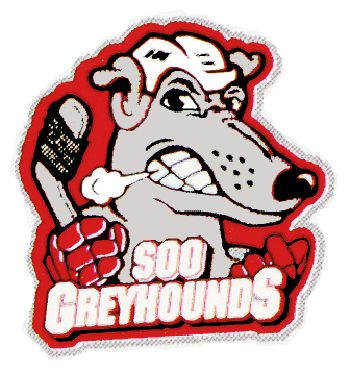
Today's featured jersey is a 1990-91 Sault Ste. Marie Greyhounds Adam Foote jersey. The Greyhounds have used their classic profile of a running greyhound for every one of their years of existence but four, when a new cartoonish logo was introduced for a brief period before fan backlash sent the club back to their original logo.
Today's video segment begins with the 1993 playoff game between the Greyhounds and Petes which determined that Sault Ste. Marie would host the 1993 Memorial Cup, which they would go on to win in front of their home fans.
This next video is a reunion of that same 1993 club with interviews with several of the players.
Labels:
Sault Ste. Marie Greyhounds
Monday, July 4, 2011
2002-03 Rochester Americans Rory Fitzpatrick Jersey
July by the Numbers reaches #4 with the most appropriate jersey possible on America's birthday.
The patriotically named Rochester Americans were founded in 1956, making them the second oldest franchise in the American Hockey League by far, with the third oldest still active team having been founded in 1992.
The Americans have made it to the Calder Cup Finals 16 times, having won the championship six times, first in a run of success that encompassed 1965, 1966 and 1968 as well as an appearance in the finals in 1967, the only team to reach the finals in four consecutive seasons. Other championship titles came in 1983, 1987 and most recently in 1996.
The Calder Cup champion 1995-96 Rochester Americans
Well known players from the early days of the Rochester franchise include goalie Gerry Cheevers, future Islanders coach Al Arbour, future Bruins coach and TV commentator Don Cherry, Jim Pappin and Mike Walton.
Rochester American Don Cherry
After a down period in the late 1960's under the ownership of the Vancouver Canucks, when the team finished last for four straight seasons, local owners purchased the club and installed the dynamic Cherry as coach and general manager which paid dividends as the Americans finished with the best regular season record in 1973-74.
The Americans were later purchased by the owners of the Buffalo Sabres, which naturally led to their becoming the Sabres AHL affiliate, a partnership which lasted from 1979 to 2008, the longest such partnership in AHL history at 29 years which included three championships. Following three seasons apart, circumstances changed which brought the two clubs back together again when new Sabres owner Terry Pegula purchased the Americans in time for the 2011-12 season.
Two numbers have been retired by the team in honor of three players, the #6 for Red Armstrong and #9 for both Dick Gamble and Jody Gage, who broke Gamble's team scoring records.
Jody Gage
Recognizable names to have played for the Americans include Maxim Afingenov, Donald Audette, Martin Biron, Brian Campell, Randy Cunneyworth, Benoit Houge, Ales Kotalik, Uwe Krupp, Mike Milbury, Ryan Miller, Jason Pominville, Darren Puppa, Thomas Vanek and even Grant Fuhr.
Thomas Vanek in the Americans flashy alternate stars and stripes sweater
Today's featured jersey is a 2002-03 Rochester Americans Rory Fitzpatrick jersey. With it's red, white and blue color scheme, patriotic sheild logo and #4, we couldn't think of a more appropriate jersey for the Fourth of July, as it even features sponsorship from a local Chevrolet dealer. All you need while wearing this one would be for your mom to serve you some apple pie!
With it's shield crest, classic Northwestern striping pattern and shoulders decorated with basic stars, this jersey's understated elegance creates a timeless look often left behind in this modern age of excessive piping and gimmicky fonts. A true classic jersey in every sense.
Today's video section begins with Gage scoring his 14th goal of the playoffs in Game 7 of the 1987 Calder Cup Finals, leading to the Americans to their fifth Calder Cup championship.
Here is a further look at Jody Gage, an AHL MVP and member of the AHL Hall of Fame.
Labels:
AHL,
Rochester Americans
Sunday, July 3, 2011
1955 Team Canada George McAvoy Jersey
July by the Numbers continues with jersey #3, a vintage Canadian National Team jersey.
From 1920 until 1952 Canada was used to having it's way at the World Championships, having won 15 titles in 18 tries, with the other three being silver medals, split between the World Championships and the Olympics, which counted as that year's World Championships during the years it was played.
Canada skipped the 1953 tournament but was back for the 1954 edition in the form of the East York Lyndhursts of Toronto. Waiting for them was a newcomer to the World Championships in the form of the Soviet Union, who had only been competing in international hockey since 1951. Both Canada and the Soviet Union had strong tournaments and entered the final game undefeated, with Canada sitting at 6-0 and the Soviets at 6-0-1, the only blemish being a 1-1 tie against Sweden.
The Soviets shocked the Canadians with a 7-2 pounding to take the World Championship in their first try.
Back in Canada, the Penticton Vees had captured the Allan Cup as the National Senior Champions of Canada, earning the right to represent Canada at the 1955 World Championships in Krefeld, West Germany, as the Canadians did not assemble a national team made up of players from all across the country, but sent the national senior championship club to represent the nation internationally at the time.
The 1955 Canadian World Championship Team
The tournament began on February 25th, and both the Canadians and Soviets won easily to open their schedules, with Canada winning 12-1 over the United States while the Soviet Union won 10-2 over Finland.
Tougher competition awaited both teams the next day, but they both prevailed as the Soviets won 2-1 over Sweden while Canada defeated Czechoslovakia 5-3.
Both teams posted shutouts the next day, Canada 8-0 over Poland and the Czechs fell to their rival Soviets 4-0.
Unbelievable by today's standards, both teams played their fourth game in four days on the 28th, as the Soviet Union cruised to an 8-2 win over Poland and Canada demolished Finland 12-0 to maintain both team's perfect marks.
Following a well earned day off, both clubs hit the ice on March 2nd, Canada again winning by double digits, 11-1 over Switzerland while the Soviets shut out the Americans 3-0. March 3rd saw Canada get by the Swedes 3-0 and the Soviet Union kept pace with their 5-1 win over the host West Germans.
They swapped opponents the next day, with Canada dominating West Germany 10-1 and the Swiss falling 7-2 to the Soviets, setting up their final match for the title on March 6th with both clubs sporting perfect 7-0 records.
Canada led 1-0 after one period on a goal by Mike Shabaga before adding a pair of goals in the second by Bill Warwick on a deflection off of a stick and another goal from Shabaga.
Still leery of a Soviet comeback, Canada added two more goals in the third when Warwick got his second before team captain and defenseman George McAvoy blasted one from the point to finish off the scoring to wrap up a 5-0 shutout victory by goaltender Ivan McLelland to reclaim hockey supremacy for the nation of Canada.
Bunny Ahearne, IIHF president, congratulates the captains of both clubs, Vsevolod Bobrov of the Soviet Union and George McAvoy of the victorious Canadians following the game
Today's featured jersey is a 1955 Team Canada George McAvoy jersey as worn in the 1955 World Championships when Canada, in the form of the Penticton Vees, reclaimed Canada's status as champions of the world.
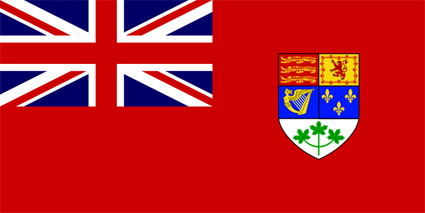
This jersey features an unusual amount of blue when compared to a modern Canadian jersey, but Canada's flag prior to 1965 did contain a Union Jack and coat of arms which did contain a fair amount of blue.
Here is brief footage of a monument to the Penticton Vees featuring a quote from goaltender McLelland.
Here is action from the final game of the 1955 World Championships when Canada defeated the Soviet Union 5-0 to avenge Canada's surprising loss to the Soviets the previous year.
Labels:
Canada
Saturday, July 2, 2011
1989 Soviet Union Izvestia Trophy Alexander Gusev Jersey
July by the Numbers continues with jersey #2, a 1989 Soviet Union jersey worn during the annual Izvestia Trophy tournament, which was originally sponsored by the Izvestia daily newspaper.
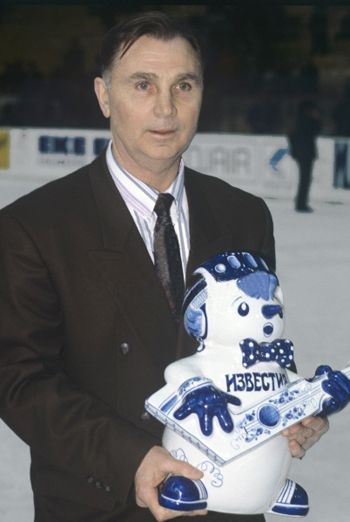
The Izvestia Snowman, the traditional tournament mascot
The tournament began in 1967 in Moscow and has traditionally been played in December each year with few exceptions between the top national teams of Europe. In the 1970's and 80's it was referred to as "The Little World Championship" or a winter rehearsal for the World Championships held each spring.
The first tournament held in 1967 carried the heavy-handed title of "Tournament for the Celebration of the 50th Anniversary of the Great October Socialist Revolution", which probably hampered merchandise sales to no end!
The pendulum swung back way too far in the other direction for 1968 when the competition was entitled the overly generic "International Tournament". The Izvestia sponsorship arrived on the scene in 1969 and lasted through 1996, giving the tournament both increased exposure and it's identity.
Since the end of the Izvestia sponsorship, the tournament has been through a series of name changes, first being known as the Baltica Brewery Cup from 1997 to 2002, the Moscow International Tournament in 2003, the Rosno Cup in 2004 and 2005 and is currently known as the Channel One Cup since 2006.
The tournament has consisted mainly of national teams from Finland, Czechoslovakia/Czech Republic, the Soviet Union/Russia and Sweden with other countires fielding a teams on occasion.
Over it's history, the Soviet Union/Russia has won the tournament 31 times, Czechoslovakia/Czech Republic seven, Sweden and Finland two each and Canada once.
The Soviet team captain hoists the Snowman trophy
Other countries to have participated include Poland in 1967, East Germany in 1969, the Winnipeg Jets in 1976, and the Quebec Nordiques in 1977, both of the WHA representing Canada, and West Germany on a few occasions prior to reunification. There were later Canadian teams on occasion as well as two teams from the Soviet Union and Czechoslovakia in the early days as well.
Currently, the tournament is a part of a larger competition known as the Euro Hockey Tour, which consists of the Channel One Cup in Russia, the Czech Hockey Games, the Karjala Tournament in Finland and the LG Hockey Games in Sweden. Once all four of these competitions are completed, the teams are seeded based on combined points for all four tournaments to determine the overall winner, with additional playoff games having been added from 2004 to 2007 to determine the medal placings.
Most teams currently use the tournament as an opportunity to give younger players a chance to gain international experience in advance of World Championships or Olympics.
Today's featured jersey is a 1989 Soviet Union Izvestia Trophy Alexander Gusev jersey, which has the unusual color combination of red and yellow, opposed to the Soviet National Team's traditional red and white.
It has the unusual crest of a hockey playing snowman, which depicts the "Wooden Snowman" trophy awarded to the winner of the tournament during this era.
With the word on the chest of the snowman reading "veteran", we suspect this jersey may have been part of an old-timers game in conjunction with the main tournament rather than an actual Soviet National Team jersey.
We are also unsure of the exact year, but conclude that the mesh material and heavy screen printing of the yellow colors is consistent with that of a very late 1980's or early to mid 1990's Russian jersey, but the use of "CCCP" on the crest suggests it's prior to the breakup of the Soviet Union in 1991. It could possibly be from later with the "CCCP" indicating Gusev was a veteran of the Soviet era, but we currently have no way of knowing for certain.
Here is action from the 1986 tournament, only the second time Finland had ever defeated the Soviet Union in international competition.
Labels:
Izvestia Trophy,
Soviet Union
Subscribe to:
Comments (Atom)