History of Jersey 83-93 Banner sm photo History of Jersey 83-93 Banner sm.jpg

Wednesday, July 22, 2009

2004-05 Colorado College Tigers Marty Sertich Jersey

July by the Numbers stays out west once again for today's jersey #22.

In 2005, Colorado College's Marty Sertich was named the winner of the annual Hobey Baker Award, a season in which he had a collegiate career highs in goals (27), assists (37) and points (64) and was the leading scorer in all of NCAA hockey, edging out teammate Brett Sterling by a single point while leading the Tigers to the NCAA Frozen Four for the first time in eight seasons. He was also named a First-team All-American, WCHA Player of the Year and USA Hockey's College Player of the Year.

Sertich Hobey Baker photo Sertich Hobey Baker.jpg
Marty Sertich poses with his Hobey Baker Award

He joined 2003 winner and former St. Louis Blues player Peter Senja as the only other Hobey Baker winner from Colorado College.

The following season Sertich was once more named a finalist for the Hobey Baker Award while serving as team captain.

Mike and Marty Sertich photo Sertich Brothers.jpg
Brothers Mike and Marty Sertich played together for the Tigers

Following the conclusion of his college career, in which he never missed a game, Sertich signed a contract with the Dallas Stars and spent two years in Des Moines playing for the Iowa Stars of the AHL, scoring 27 goals and 25 assists for 52 points in 2007-08 and leading the Stars in goals and power play goals. During the offseason in 2008, he was traded to the Colorado Avalanche and spent the season in Cleveland with the Lake Erie Monsters, also of the AHL as he continues to work toward making his NHL debut.

Beginning in 1938, the Colorado College Tigers hockey program has made the NCAA Tournament 18 times, taking the national championship in 1950 and 1957 and finishing as runner up in 1952, 1955 and 1996. Former Pittsburgh Penguins head coach Bob Johnson coached the Tigers from 1963 to 1966. They have won the WCHA league title nine times since the formation of the conference in 1959. Arguably, the best known Colorado College player in the NHL is former Vancouver Canuck and New York Ranger Doug Lidster, who played 897 NHL games over 16 seasons.

Today's featured jersey is a 2004-05 Colorado College Tigers Marty Sertich jersey as worn during his Hobey Baker winning season. This jersey has it all going for it. The sharp logo, classic center stripe, three color numbers, vertically arched name, classic interlocking letters of the shoulder logos and a tie-neck collar. 

The modern, graphic Tiger head logo has always been a favorite with us, and, in combination with the retro feeling of the center "Canadiens" stripe around the body of the jersey really makes for an attractive combination. We're surprised more teams don't use the central stripe as a design element.

 photo Colorado College Tigers 2004-05 F.jpg
 photo Colorado College Tigers 2004-05 B.jpg

Here is a small collection of Sertich and Colorado College videos that highlight the history of the program.


Tuesday, July 21, 2009

1998-99 Utah Grizzlies John Byce Jersey

July by the Numbers travels out west to Utah for jersey #21.

When the Quebec Nordiques relocated to Denver to become the Avalanche, the resident International Hockey League (IHL) Denver Grizzlies were forced to vacate the Mile High City after only one memorable season in Denver, where they would not only finish with the best regular season record, but capture the Turner Cup, awarded to the champions of the IHL.

During their first season in Salt Lake City, the newly renamed Utah Grizzlies would replicate the playoff success of the Turner Cup Championship won the year prior in Denver. By defeating the Kansas City Blades 3 games to 2 in the first round, outlasting the Peoria Rivermen 4-3, beating the Las Vegas Thunder 4-2 and sweeping the Orlando Solar Bears 4-0 in the finals, capturing the title in front of 17,381 fans in Game 4 in Utah.

This would unfortunately prove to be the high point of the Utah Grizzlies, as they would never win a division title or achieve any sort of playoff success again. In the following season of 1996-97, the Grizzlies would defeat Kansas City 3-0 in the first round only to be swept themselves in the second. It would be the last time they would ever reach the second round, as their remaining eight years in the IHL, and later the American Hockey League (AHL) would see them bounced in the preliminary round once, the first round three times and miss out on the playoffs entirely four times.

When the IHL folded, the club was granted membership in the AHL where they played for four seasons prior to suspending operations for 2005-06. The franchise was then sold to a new owner who relocated the team to Cleveland, Ohio where it was renamed the Lake Erie Monsters.

A new franchise called the Utah Grizzlies took it's place in the lower ranked East Coast Hockey League (ECHL) and continues to play this day, but is not a continuation of the same AHL franchise.

The jersey I am featuring today is a game worn Bauer 1998-99 Utah Grizzlies John Byce jersey. By far and away the most unique aspect of this jersey is the sublimated bear claw slash marks not only across the back and continuing onto the front of the body, but embroidered into the back numbers as well. The copper trim around the numbers is also executed with a metallic twill that adds a nice detail to the numbers and a needed dash of color to the back of the jersey.

1998-99 Game Worn IHL Utah Grizzlies jersey

Byce was a member of the Wisconsin Badgers for four seasons and played for a variety of clubs over the course of his career, including 21 NHL regular season games for the Boston Bruins, scoring 2 goals and 3 assists, while adding 2 playoff goals in eight games.

He would also see action for the Maine Mariners, Baltimore Skipjacks and Portland Pirates of the AHL and the Milwaukee Admirals, San Diego Gulls, Long Beach Ice Dogs and Utah Grizzlies of the IHL, as well as stops in Sweden with HV71 and England with the London Knights in a career that would span 11 seasons.

Monday, July 20, 2009

1985 Czechoslovakia National Team Jersey

July be the Numbers comes to #20 today with a jersey from behind the Iron Curtain.

Czechoslovakia was founded at the conclusion of World War I and was divided up during World War II essentially between Germany and Hungary. The country was re-established at the conclusion of World War II and in February of 1948, power was seized by the Communists. During a brief period of liberalization in 1968, five countries, led by the Soviet Union, invaded Czechoslovakia to restore and maintain the Communist system and ideals. It is because of this invasion in 1968, also the year in which his grandfather died in prison, that Jaromir Jagr wears #68.

Czechoslovakia first played their first game in international hockey in 1920 at the Winter Olympics in Antwerp, Belguim, a 15-0 loss to Canada. Things would come around for the program soon enough, and they would record their largest margin of victory in 1939 in a 24-0 defeat of Yugoslavia, later matched several times in a 24-0 win over Belguim in 1947, a 27-3 drubbing of East Germany in 1951 and a 25-1 win over Japan in 1957.

They would win the Olympic silver medal four times, in 1948, with gold going to Canada, and then again in 1968, 1976 and 1984, each time as runner up to the powerful Soviet Union. When they weren't winning silver, they were generally in contention, with bronze medals in 1920, 1964, 1972 and 1992.

Czechoslovakia would also participate in five Canada Cups, with their best showing being second in the inaugural 1976 tournament.

They also had a long and successful history of competing at the World Championships, dating back to 1930, with six gold medals to their credit, which they won in 1947, 1949, 1972, 1976, 1977 and 1985 with 10 silver and 14 bronze to go along with their championships.

The jersey I am featuring today is a game worn 1985, or perhaps 1986, Adidas Czechoslovakian National Team jersey I obtained from a couple of team trainers following an exhibition game on December 27th, 1992 in Minneapolis versus the University of Minnesota, just five days before the country ceased to exist and was permanently divided into the Czech Republic and Slovakia on January 1st, 1993.

This jersey is unique in that it has a satiny mesh fabric for the body and the numbers are a fuzzy, flocked material. The waist stripe is an elongated Czechoslovakian flag, with each color being a separate piece of fabric sewn together. It might be a bit difficult to see the blue triangle at the bottom left of each photo due to the arm covering it.

The main crest with the heraldic lion under the red star of communism is screen printed onto a piece of twill, which was then sewn to the jersey.

I am unsure of when this jersey may have been worn, as the Adidas jerseys I have seen from the World Championships have had sponsorship patches during this era, so perhaps this might have been a jersey used in the World Junior Tournament at the time.

1985 or 1986 Game Worn Czechoslovakia National Team jersey

Here are the Czechoslovaks facing Canada in the 1987 Canada Cup wearing an Adidas jersey quite similar to my jersey, only with slightly a bolder style on the front of the jersey that looks to be one generation new than mine.


Dasherboard: Recently I commented on the current NHL divisional alignment and how both Dallas and Minnesota are grouped with teams that aren't even located in their own time zones. Now, thanks to this article and spreadsheet, with all the teams travel mileage totals for last season and next, you now have a visual comparison of how much better the teams in the East have it when compared to the teams in the West.

Photobucket

Right off the bat you can see that the green shaded teams, with the least travel miles next season are eastern clubs New Jersey, Philadelphia and Buffalo while the teams with the most miles, shaded in red, are western teams Phoenix, Dallas and Calgary. The Sabres scheduled mileage next season of 25,911 is less than half of the Flames 55,331.

Calgary does surprise me somewhat in that they do have one division rival in Edmonton located just 172 miles away that they visit three times, which you think would cut down on their mileage somewhat when compared to a team like Denver whose closest opponent is Dallas, 660 miles away. Another glaring thing to note is Calgary's increase in from last year of 2390 more miles even though they were already the #2 ranked team last season.

Remarkably, San Jose's mileage is down nearly 10,000 miles from last year, a 17% decrease and no European travel to skew the results. How is that even possible? Are they only playing a 68 game schedule this season?

Other teams with large increases are Boston (+4104), Montreal (+5901), Ottawa (+5695) and Washington (+5240). One could guess that these teams did not visit California or Vancouver often, if at all, last season and will be doing so this year.

Chicago, Florida, St. Louis and Detroit all show marked increases, but those are due to starting the season in Europe, a one time trip that will be over and done with right at the beginning of the season.

Figuring the total miles each team in each conference has to travel, (using the numbers for each team for a year without a European trip) the total miles for the Western Conference teams is 681,405 for an average of 45,427 for each club, while the Eastern Conference teams will total 526,946 miles for an average of 35,129 each, a difference of 10,298. That works out to an equivalent of four extra flights between San Jose and New York for each team in the West.

I'd be curious to know how these numbers would be affected if the NHL adopted an NBA-type of schedule where each team visited every other team each season like I would prefer.

I would also like to know how the mileage might be affected if they were to realign the NHL in a truer West to East alignment with Vancouver in a division with Edmonton, Calgary, San Jose Anaheim, Los Angeles and Phoenix while Dallas would be grouped with Colorado, Minnesota, St. Louis, Chicago, Nashville, Detroit and Columbus using the current unbalanced schedule.

Sunday, July 19, 2009

2000-01 San Jose Sharks Marco Sturm Jersey

July by the Numbers checks in at #19 from a regular member of the German National Team.

Marco Sturm was born in West Germany and played two seasons in the top German hockey league, the Deutsche Eishockey Liga (DEL) for the Landshut Cannibals, owners of the single most bizarre logo in all of sports, before coming to North America to begin his NHL career with the San Jose Sharks who drafted him 21st overall in 1996.

Sturm would play parts of eight seasons for the Sharks before being traded to the Boston Bruins in the 2005-06 season in the deal that sent Joe Thornton to the Sharks. Sturm has played four seasons in Boston but had his 2008-09 season ended after only 19 games due to a knee injury. His best season to date was the year he was traded, 2005-06, when he would score a career-high 29 goals and 59 points.

Sturm has appeared for the German National Team on ten occasions, twice in the World Juniors, twice in the European Juniors, four World Championships, one World Cup and two Olympics in Nagano, Japan in 1998 and Salt Lake City in 2002, although he was scheduled to be team captain for the Germans in the 2006 Torino Olympics but had to pull out just days before, as did Jochen Hecht, due to injury.

Today's featured jersey is a CCM 2000-01 San Jose Sharks Marco Sturm jersey which features the home version of the Sharks 10th Anniversary patch with the teal background. The road version was on a grey background to match the shoulder color of the road jersey.

This jersey was first introduced in 1998-99 after the teal version, first worn as an alternate, was adopted as the primary road jersey and a white home version was needed.

Patches worn on this jersey include the black version of the NHL 2000 patch, the 10th Anniversary patch shown here, and the Warren Strelow memorial "WAS" patch worn in the 2007 playoffs for the last 9 games the Sharks participated in starting on April 16th after Strelow, goaltending coach for the Sharks and previously Jim Craig and the 1980 USA Olympic hockey team from "The Miracle on Ice" fame, passed away on April 11th, the date the Sharks opened their playoffs.

2000-01 NHL San Jose Sharks Marco Sturm jersey


Saturday, July 18, 2009

2005-06 Colorado Avalanche Alternate Alex Tanguay Jersey

July by the Numbers makes it to #18 and a trip to the Rocky Mountains today.

Alex Tanguay was drafted 12th overall in 1998 by the Colorado Avalanche and played six seasons in Colorado, winning a Stanley Cup in 2001.

He scored 51 points in his rookie season and followed up with a 26 point improvement to 77 points in his sophomore season of 2000-01. He would tally an additional 21 points in the playoffs, as Colorado would capture the Stanley Cup in a classic seven games against the New Jersey Devils.

In the final Game 7, Tanguay would score the first two goals and assist on the Avalanche's third in a 3-1 victory, giving him the game winning goal and allowing Ray Bourque his one and only chance to lift the cup following a long career before riding off into the sunset. Tanguay's 21 playoff points would place him third on the Avalanche, behind Joe Sakic and Milan Hejduk, and fifth overall among all players.

Tanguay would later be traded to the Calgary Flames for Jordan Leopold and a pair of second round draft picks and would set a personal best with 81 points in his first season in Calgary. He would be traded to the Montreal Canadiens at the 2008 draft, giving him the opportunity to play in his home province of Quebec.

Today's featured jersey is a CCM 2005-06 Colorado Avalanche alternate Alex Tanguay jersey. This alternate style was first introduced for the 2001-01 season and added a semi-retro look to the otherwise modern Avalanche jersey set. The classic treatment of the word "Colorado" diagonally across the chest, along with the tie-neck give the jersey a throwback feel, but the modern font for the name and numbers tie it to the current jerseys, maintaining a cohesiveness across the full set.

This jersey features the Colorado Avalanche 10th Anniversary patch, the only patch ever worn on this alternate jersey during it's five season lifespan. The patch was worn on the more traditional upper right chest on the home and road jerseys, and on the left due as seen below on the alternate.

2005-06 NHL Colorado Avalanche alternate Alex Tanguay jersey

Here are some selected video highlights of Alex Tanguay.


Friday, July 17, 2009

1991-92 Toronto Maple Leafs TBTC Wendel Clark Jersey

July by the Numbers checks in at #17 with a Turn Back the Clock jersey from north of the border today.

As part of the celebrations of the NHL's 75th anniversary in the 1991-92 season, the Original Six teams, Boston, Chicago, Detroit, New York, Montreal and Toronto, all wore a Turn Back the Clock jersey from their past at various times throughout the season.

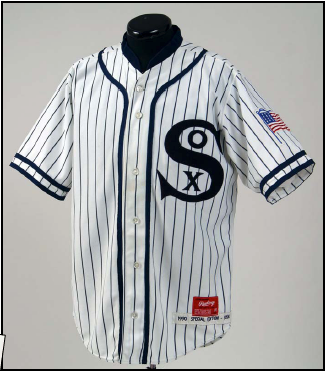
The success of the Turn Back the Clock jerseys would inspire both the NFL and NBA, with teams in those leagues also wearing throwbacks to celebrate their 75th and 50th anniversary seasons, but credit must be given to the Chicago White Sox, who wore the first throwback jerseys during the 1990 MLB season.

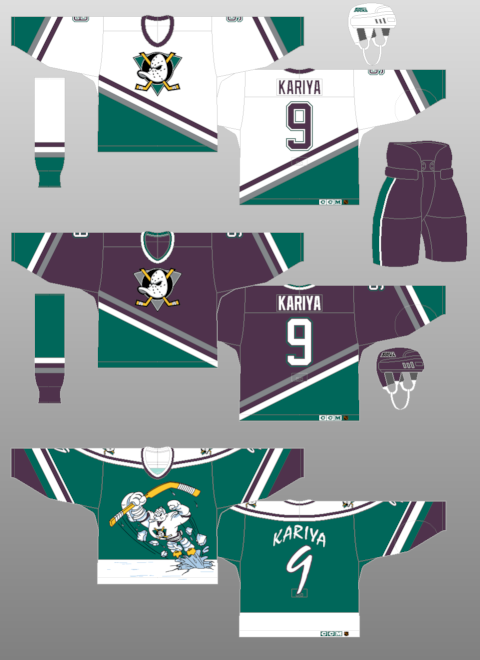
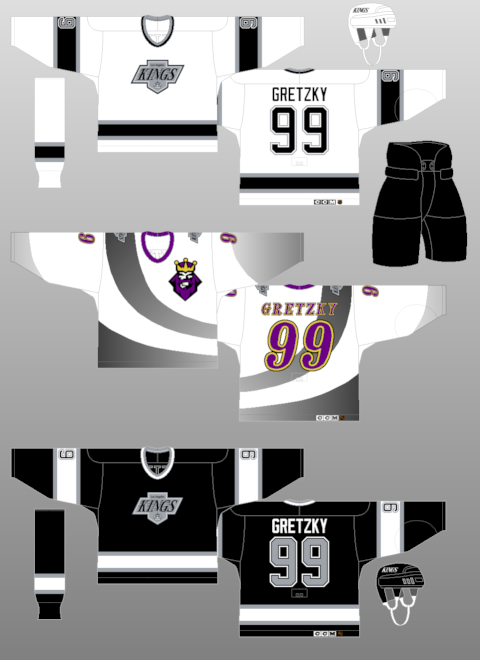
The influence of the throwback jerseys is still being felt today, as the popularity of retro jerseys is still strong, while the edgy, futuristic alternates that followed in the 1995-96 season were nearly universal failures with the public, as short-lived designs from Anahem and Los Angeles were immediately panned and discarded. St. Louis' proposed alternate was so bad that it was famously rejected by coach Mike Keenan before it ever hit the ice!

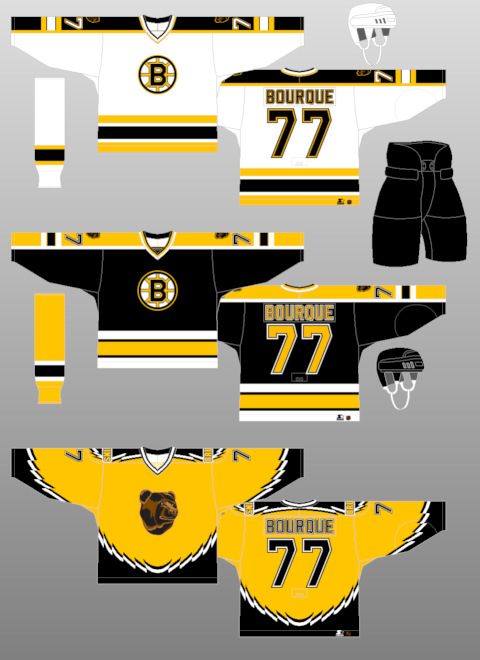
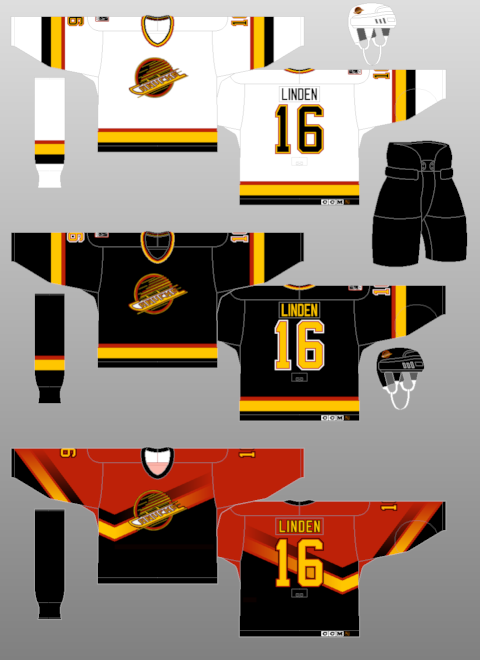
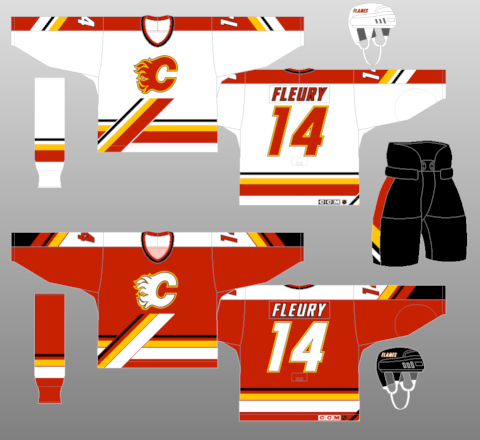
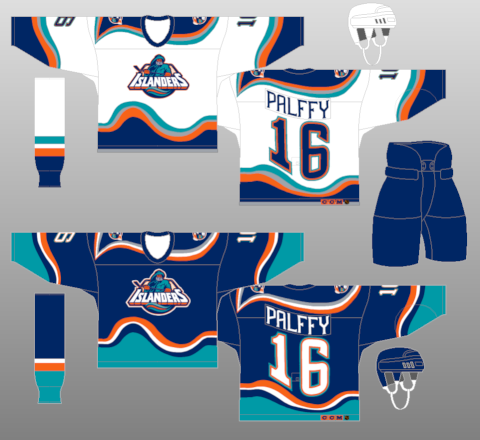
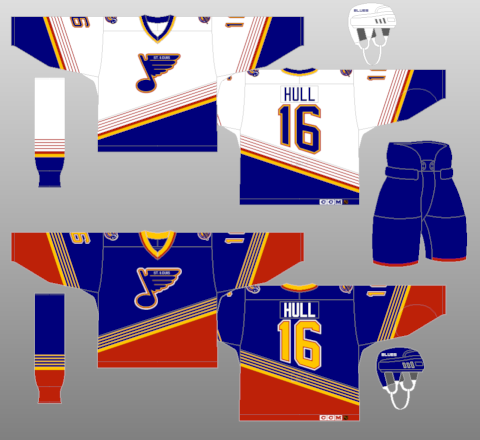
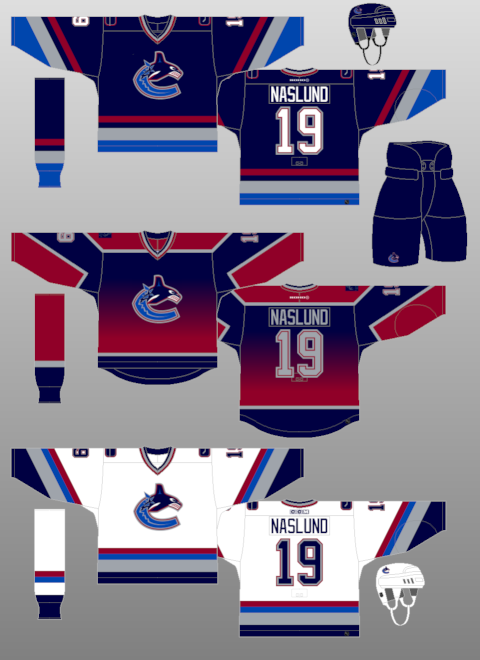
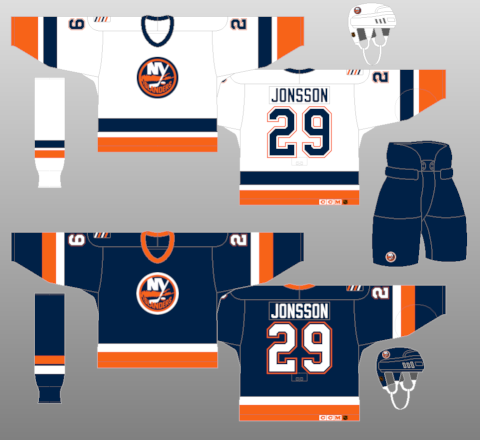
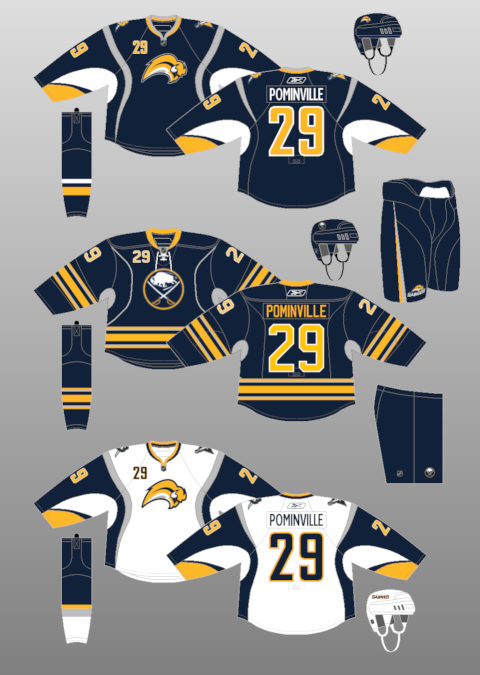
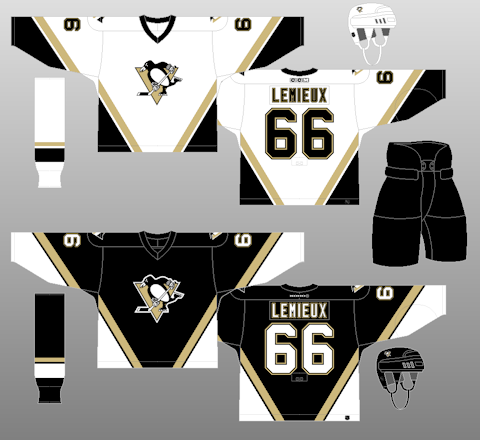
Other alternate designs from Boston and Vancouver were polarizing at best. Then you add in the entirely new jersey designs from Calgary, the Islanders, St. Louis, Buffalo, Phoenix, Washington, Pittsburgh and Vancouver that were all replaced by more traditional, if not outright throwback, designs as original logos continue to make return appearances, such as on Long Island, Buffalo, Pittsburgh and Vancouver you can see that the public prefers the classic old-school look. Minnesota even invents a throwback jersey that never existed to begin with, which immediately becomes the club's best selling sweater. And no matter how hard the Islanders try to come up with something new, they always seem to quickly gravitate back toward their classic jersey from their Stanley Cup dynasty in some form.

The latest trend in the throwback jerseys comes from the successful concept of the outdoor games, originated in Edmonton with the Heritage Classic, as the Oilers and Canadiens wore throwbacks to play outside, followed by the Sabres and Penguins then the Blackhawks and Red Wings going back in time for retro looks, which have proven so popular that five of the six teams have either incorporated their throwbacks from their respective outdoor games into their jersey set as an alternate or based a subsequent alternate on their designs, with only the ultra-traditional Red Wings standing pat, most likely because their basic home and road jersey already remains unchanged since 1932 and can be considered a throwback in and of itself.

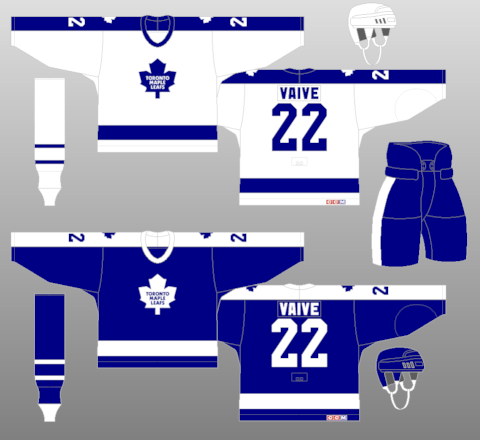
Today's featured jersey is a 1991-92 Toronto Maple Leafs Turn Back the Clock Wendel Clark jersey.

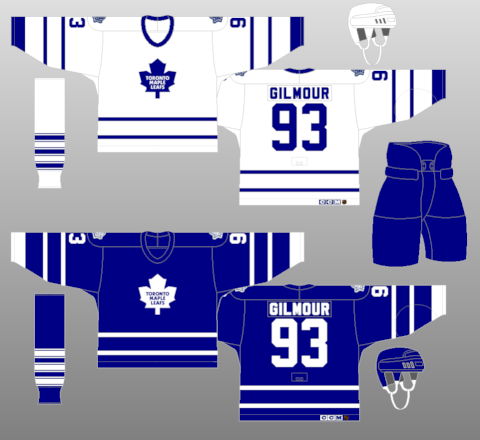
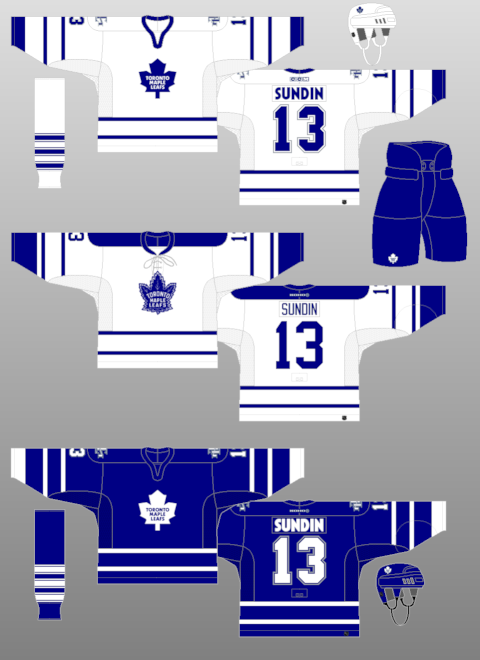
Toronto's choice was the style originally used in 1940 and featured a vintage style Maple Leaf logo. It proved to be so popular that the basic home and road jerseys from 1991-92 were changed for the following season to incorporate the vintage Maple Leaf logo as a secondary shoulder patch, replacing the silhouette of the modern logo, as well as adopting the throwback jerseys more simplified striping pattern. In 2000 the retro Maple Leaf logo also adorned the Maple Leafs new vintage-themed alternate jersey. It was easily the most influential of the 1991-92 Turn Back the Clock jerseys as far as future team designs were concerned.

Toronto Maple Leafs TBTC F
Toronto Maple Leafs TBTC B
1991-92 NHL Toronto Maple Leafs Throwback Wendel Clark jersey

Since we came up empty trying to find any live game action of the Maple Leafs throwbacks in action, here's a throwback interview of Maple Leafs fan Mike Meyers and Dennis Miller sporting a pair of wicked mullets in Clark's honor.


Thursday, July 16, 2009

2003-04 Hartford Wolf Pack Paul Healey Jersey

July by the Numbers visits the AHL for jersey #16 today.

The Hartford Wolf Pack, previously known as the Binghamton Rangers (from 1990-1997) and Binghamton Whalers (1980-1990), the were originally founded as the Providence Reds way back in 1926, where they played until 1977, were founded in 1997 after the NHL Hartford Whalers relocated to Carolina.

The always competitive Wolf Pack, the top minor league affiliate of the New York Rangers, have made the playoffs every season since moving to Hartford, never finishing lower than second place in their division, save for but one season in third.

The Wolf Pack have won one regular season title in the AHL, three division championships and one conference championship, which led to their AHL Championship in 1999-00, earning them the Calder Cup, the world's second oldest continuously awarded hockey trophy.

It's hard to think of the Wolf Pack and not think of Ken Gernander. Gernander played 11 seasons with the franchise, beginning in Binghamton, and was team captain for 10 years, including the Calder Cup winning team in 2000. He is the all-time franchise record holder in games played with 599 and the AHL's all-time leading American-born scorer with 624 points. He is now the head coach of the club and the only player to have his number retired by the Wolf Pack.

Today's featured jersey is a 2003-04 Hartford Wolf Pack alternate Paul Healey jersey.

We really like this jersey, as it is one of those minor league jerseys done so close in style to the parent club, in this case the New York Rangers, that at first glance you may not realize it is not actually a Rangers jersey. Careful examination of this jersey will be rewarded with various details, such as the name "Wolf Pack" on the front, the Wolf Pack secondary shoulder logo on one side and the stylish Rangers alternate logo on the other.

Paul Healey, a winger originally from Edmonton has had a well travelled career, having played for 18 teams in 7 leagues in 5 countries! He does have 77 NHL games to his credit, divided between the Philadelphia Flyers (6), the Toronto Maple Leafs (65), the New York Rangers (4) and the Colorado Avalanche (2), with 6 goals and 14 assists for 20 points.

He has also played in the Western Hockey League in Canadian Juniors, the American Hockey League, the International Hockey League and the Swedish, Finnish and Austrian leagues.

During his one season in Hartford wearing today's featured jersey, Healey played 50 games with 11 goals and 10 assists, while his best pro season was in 2001-02 for the Hamilton Bulldogs, when he had 39 goals and 71 points.

Hartford Wolf Pack 03-04 F
Hartford Wolf Pack 03-04 B
Hartford Wolf Pack 03-04 P2aaaaHartford Wolf Pack 03-04 P3

Here is a nice video of Healey scoring his first NHL goal on a fantastic setup by Mats Sundin.


hit counter for blogger