History of Jersey 83-93 Banner sm photo History of Jersey 83-93 Banner sm.jpg
Showing posts with label Clark Wendel. Show all posts

Tuesday, October 25, 2016

1986-87 Toronto Maple Leafs Wendel Clark Jersey

Toronto Maple Leaf fan favorite Wendel Clark was born on this date in 1966.

Clark played two seasons with the Saskatoon Blades of the WHL during which he averaged 27 goals, 50 assists, 77 points and 239 penalty minutes per season, catching the eyes of NHL scouts everywhere.

Clark Saskatoon Blades photo ClarkSaskatoonBlades.jpg
Clark with the Blades during his junior days
while wearing the notorious Cooperalls long pants

The rugged Clark was drafted first overall in the 1985 NHL Entry Draft by Toronto and made his debut for the Maple Leafs later that year. He actually played defense in junior hockey, but was converted to a forward by the Maple Leafs, a club he would return to again and again during his career.

Clark Maple Leafs Draft Pick photo ClarkMapleLeafsDraftPick.jpg
1985 first overall draft pick Wendel Clark

A true heart and soul player, the tireless Clark became a hugely popular player with the Toronto faithful for putting everything he had in to every shift, every game. Plus, he sported one of the top, yet underrated mullets in hockey history. Clark rocked the hockey hair in 1996 like few others before or since, not to mention the classic hockey mustache to go with it.

Wendel Clark mullet
Clark with the buzz cut mullet in 1996

While it may lack the sheer volume of the Jagr or the overexposure of the Melrose, the ratio of the shortness of the buzz cut on top to the length of the "mud flap" out back ranks it among the greatest mullets in NHL history.

Clark would announce his presence in the league with 227 penalty minutes in during his rookie season in addition to his 34 goals despite a broken foot limiting  him to 66 games. The legend of Clark's toughness would begin to grow as the broken foot happened when he was hit in the skate by a teammate's slapshot, but he continued to play the rest of the game before it was diagnosed. Clark would raise his reputation the following year by increasing both totals to 37 goals and 271 penalty minutes.

Clark Maple Leafs photo ClarkMapleLeafs4.jpg

A back injury suffered after being cross-checked into the crossbar during the 1987-88 season would limit him to 28 games and his physical style would take its toll as he would see the ice in just 15 games the following season and only 38 in the following, mainly due to recurrent episodes of his back problems.

His games played would increase over the next four seasons of 1990-91 to 1993-94, but he would still average just under 60 games with 59 per season during that time period. After campaigns of 18, 19 and 17 goals, he would explode for a career high with 46 in 64 games of the 1993-94 season. His drive and leadership were recognized when he was named team captain in 1991. The Maple Leafs would make it as far as the memorable conference final seven game series against the Wayne Gretzky-led Los Angeles Kings in 1992-93, with Clark scoring a hat trick in Game 6 as part of his 20 points in 21 playoff games that season.

The summer after his 46 goal season, with his trade value at it's highest in years, the physically aggressive but physically unreliable Clark was traded to the Quebec Nordiques in a blockbuster deal which brought Mats Sundin to Toronto.

Clark would begin to frequently move from team to team for the remainder of his career, being traded by the Nordiques to the New York Islanders after just one season with Quebec following a contract hold out which meant Clark never played in Colorado when the Nordiques moved there for the 1995-96 season despite two years remaining on his contract. He would only play 58 games with the Islanders before another deal saw him finish the season back in Toronto.

Clark Islanders photo ClarkIslanders.jpg

Two more seasons in Toronto, of just 65 and 47 games, would be followed by a 65 game stint with the Tampa Bay Lightning, during which he scored an impressive 30 goals to prove he had not lost his offensive skills. It was not enough to afford him any level of stability however, as he was again traded, this time to the Detroit Red Wings at the deadline. His 12 games with Detroit gave him a total of 77 for the season, easily his highest total in 12 years.

Clark Lightning photo ClarkLightning.jpg
Clark scored 30 goals during his brief time in Tampa Bay

He would begin his final NHL season with the Chicago Blackhawks, but once more return to the Maple Leafs to finish out his career with a final 20 games in Toronto where it all began.

Clark Maple Leafs photo ClarkMapleLeafs99-00.jpg
Clark during the final 20 games of his career back in Toronto

Clark's final career totals were 793 games played (an average of just 53 per season) 330 goals, 234 assists, 564 points and 1.690 penalty minutes. Such was the impact of injuries on Clark's career totals, his 147 goals scored during his four seasons of 30 goals or more accounted for 45% of his career total at an average of 37 goals per season, while his remaining 11 seasons saw him average just 17 goals.

Clark had his #17 jersey raised to the rafters of the Air Canada Centre in November of 2008, the 16th player to have his number honored by the Maple Leafs.

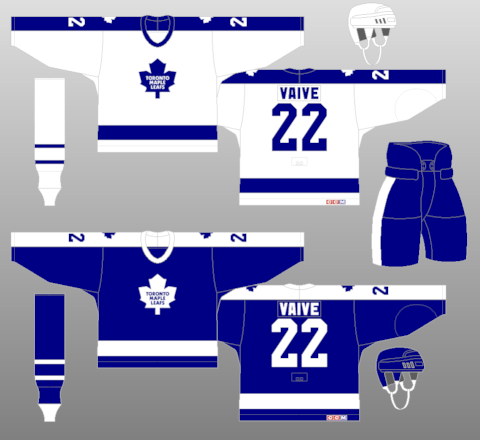
Today's featured jersey is a 1986-87 Toronto Maple Leafs Wendel Clark jersey. The Maple Leafs ushered in the 1970's with a brand new jersey style for the 1970-71 season featuring a new modern style with a full length arm strip and matching, single, bold waist stripe. It still carried over a classic lace-up collar. The jersey changed to a v-neck in 1972-73 but then reverted back to the lace-up collar in 1973-74 for two seasons. The v-neck was reinstated permanently starting in 1975-76. Begrudgingly, names on the back arrived on the blue jerseys late in the 1977-78 season and the whites followed in 1978-79.

This style would remain unchanged through the 1991-92 season, a run of 22 seasons but with very little on ice success, advancing past the second round of the playoffs just once and missing the postseason seven times.

This 1986-87 jersey features the King Clancy Memorial patch in honor of the Maple Leafs legend. Five different patches were worn on this style, the first being in 1983-84, the first patch ever worn on a Maple Leafs jersey in their long history, that being the City of Toronto 150th Anniversary patch.

In addition to the King Clancy patch in 1986-87, the home white jerseys also had the "Heart and Stroke" patch that same season to raise awareness of health issues. 1990-91 saw another memorial patch, that for Maple Leafs owner Harold Ballard. The final patch worn during this jersey's final season was the NHL 75th Anniversary patch, worn by all players league wide, the first time every player in the NHL would all wear the same patch.

Toronto Maple Leafs 1986-87 jersey photo Toronto Maple Leafs 1986-87 jersey 2.jpg
photo courtesy of Classic Auctions

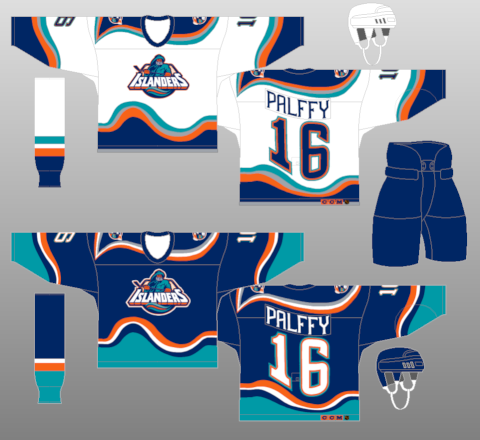
Bonus jersey: Today's bonus jersey is a 1995-96 New York Islanders Wendel Clark jersey, representative of the frequent changes in teams Clark was subjected to during the second half of his career, with stops in Quebec, Long Island, a return to Toronto, Tampa Bay, Detroit, Chicago and a final return to Toronto.

The unfortunate Fishsticks jersey was derided by the fans, media and players upon it's introduction. While Clark only had to wear it for 58 games, the Islanders were forced to wear it for two seasons before a hybrid version with the classic Islanders crest replaced it full time in 1997-98.

New York Islanders 1995–96 jersey photo NewYorkIslanders1995ndash96F.jpg
New York Islanders 1995–96 jersey photo NewYorkIslanders1995ndash96B.jpg


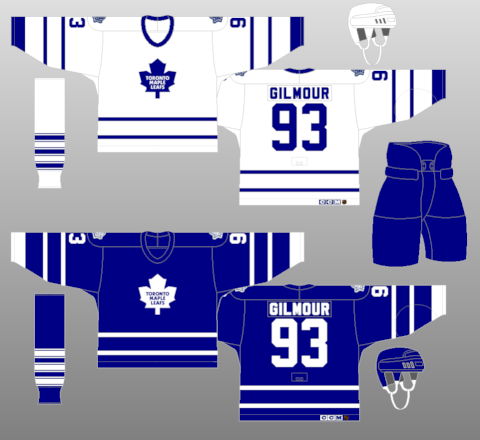
Extra bonus jersey: Today's extra bonus jersey is a 1993-94 Toronto Maple Leafs Wendel Clark jersey. Following the success of the Maple Leafs Turn Back the Clock jerseys worn by the Original Six teams the prior season in celebration of the NHL's 75th anniversary, the Maple Leafs redesigned their jerseys for the 1993-94 season, finally ending the run of their previous jerseys which had been worn since 1970.

The Maple Leafs went back to 1934 for the simple but classy jersey template which had been worn through 1966-67, only now mated with the modern maple leaf crest first used in 1970 and the throwback maple leaf crest from the TBTC jersey of the previous season now used as the secondary shoulder logos.

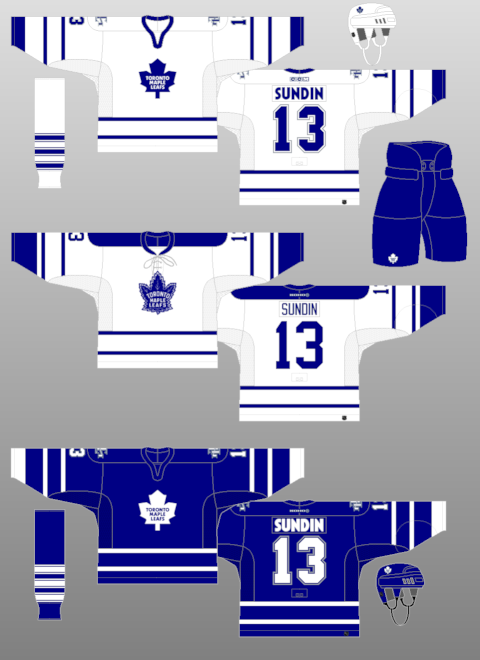
This style has remained in use by Toronto ever since, with a few minor tweaks and a variety of number fonts, even surviving the loss of the waist stripes with the introduction of the new Reebok Edge jerseys in 2007, supposedly due to the original concept of the jerseys being tucked in.

Still, the waist stripes returned in 2010-11, as did the retro maple leaf secondary logos, which had been discontinued in 2000-01.

Toronto Maple Leafs 1993-94 jersey photo TorontoMapleLeafs1993-94jersey.jpg
photo courtesy of Classic Auctions

Extra extra bonus jersey: Today's extra extra bonus jersey is a 1999 NHL All-Star Game Wendel Clark jersey as worn during the 1999 edition held in Tampa, Florida for the second of Clark's two all-star games, with the other being in 1986 although he was named to the 1994 game, but was forced to withdraw due to an injury.

This style was worn for twice, first in 1998 and again in 1999 during the era of the World vs. North America format, with the North Americans wearing red, while the World wore white trimmed in blue.

NHL All-Star Game 1999 jersey photo NHL All-Star Game 1999 jersey.jpg
photo courtesy of Classic Auctions

Normally we research the daily video section just hoping to find some relevant video of an NHL player or perhaps something, anything, on an obscure European player, but not today. Oh, no. Clark was so popular in Toronto, and had we had an embarrassment of riches to choose from.

 If you are not familiar with Clark, we urge you to watch today's first video clip to truly understand the type of player he was, as just statistical numbers don't capture the spirit of a player like Clark. Without further delay, strap on your helmet for The Best of Wendel Clark!


Hell yea! Now that was some Old Time Hockey!

Here is a profile of Clark which looks back on his rookie season.


In advance of his number being honored, Clark revisits Maple Leaf Gardens and recounts some of his favorite memories as a Maple Leaf in a very well done piece.


Next is the ceremony where the Maple Leafs honored Clark's #17 in 2008.


Finally, here is Clark's first game back in Toronto to begin his second stint with the Leafs. Feel the love people, feel the love...

Saturday, October 25, 2014

1993-94 Toronto Maple Leafs Wendel Clark Jersey

Toronto Maple Leaf fan favorite Wendel Clark was born on this date in 1966.

Clark played two seasons with the Saskatoon Blades of the WHL during which he averaged 27 goals, 50 assists, 77 points and 239 penalty minutes per season, catching the eyes of NHL scouts everywhere.

Clark Saskatoon Blades photo ClarkSaskatoonBlades.jpg
Clark with the Blades during his junior days
while wearing the notorious Cooperalls long pants

The rugged Clark was drafted first overall in the 1985 NHL Entry Draft by Toronto and made his debut for the Maple Leafs later that year. He actually played defense in junior hockey, but was converted to a forward by the Maple Leafs, a club he would return to again and again during his career.

Clark Maple Leafs Draft Pick photo ClarkMapleLeafsDraftPick.jpg
1985 first overall draft pick Wendel Clark

A true heart and soul player, the tireless Clark became a hugely popular player with the Toronto faithful for putting everything he had in to every shift, every game. Plus, he sported one of the top, yet underrated mullets in hockey history. Clark rocked the hockey hair in 1996 like few others before or since, not to mention the classic hockey mustache to go with it.

Wendel Clark mullet
Clark with the buzz cut mullet in 1996

While it may lack the sheer volume of the Jagr or the overexposure of the Melrose, the ratio of the shortness of the buzz cut on top to the length of the "mud flap" out back ranks it among the greatest mullets in NHL history.

Clark would announce his presence in the league with 227 penalty minutes in during his rookie season in addition to his 34 goals despite a broken foot limiting  him to 66 games. The legend of Clark's toughness would begin to grow as the broken foot happened when he was hit in the skate by a teammate's slapshot, but he continued to play the rest of the game before it was diagnosed. Clark would raise his reputation the following year by increasing both totals to 37 goals and 271 penalty minutes.

Clark Maple Leafs photo ClarkMapleLeafs4.jpg

A back injury suffered after being cross-checked into the crossbar during the 1987-88 season would limit him to 28 games and his physical style would take its toll as he would see the ice in just 15 games the following season and only 38 in the following, mainly due to recurrent episodes of his back problems.

His games played would increase over the next four seasons of 1990-91 to 1993-94, but he would still average just under 60 games with 59 per season during that time period. After campaigns of 18, 19 and 17 goals, he would explode for a career high with 46 in 64 games of the 1993-94 season. His drive and leadership were recognized when he was named team captain in 1991. The Maple Leafs would make it as far as the memorable conference final seven game series against the Wayne Gretzky-led Los Angeles Kings in 1992-93, with Clark scoring a hat trick in Game 6 as part of his 20 points in 21 playoff games that season.

The summer after his 46 goal season, with his trade value at it's highest in years, the physically aggressive but physically unreliable Clark was traded to the Quebec Nordiques in a blockbuster deal which brought Mats Sundin to Toronto.

Clark would begin to frequently move from team to team for the remainder of his career, being traded by the Nordiques to the New York Islanders after just one season with Quebec following a contract hold out which meant Clark never played in Colorado when the Nordiques moved there for the 1995-96 season despite two years remaining on his contract. He would only play 58 games with the Islanders before another deal saw him finish the season back in Toronto.

Clark Islanders photo ClarkIslanders.jpg

Two more seasons in Toronto, of just 65 and 47 games, would be followed by a 65 game stint with the Tampa Bay Lightning, during which he scored an impressive 30 goals to prove he had not lost his offensive skills. It was not enough to afford him any level of stability however, as he was again traded, this time to the Detroit Red Wings at the deadline. His 12 games with Detroit gave him a total of 77 for the season, easily his highest total in 12 years.

Clark Lightning photo ClarkLightning.jpg
Clark scored 30 goals during his brief time in Tampa Bay

He would begin his final NHL season with the Chicago Blackhawks, but once more return to the Maple Leafs to finish out his career with a final 20 games in Toronto where it all began.

Clark Maple Leafs photo ClarkMapleLeafs99-00.jpg
Clark during the final 20 games of his career back in Toronto

Clark's final career totals were 793 games played (an average of just 53 per season) 330 goals, 234 assists, 564 points and 1.690 penalty minutes. Such was the impact of injuries on Clark's career totals, his 147 goals scored during his four seasons of 30 goals or more accounted for 45% of his career total at an average of 37 goals per season, while his remaining 11 seasons saw him average just 17 goals.

Clark had his #17 jersey raised to the rafters of the Air Canada Centre in November of 2008, the 16th player to have his number honored by the Maple Leafs.

Today's featured jersey is a 1986-87 Toronto Maple Leafs Wendel Clark jersey. The Maple Leafs ushered in the 1970's with a brand new jersey style for the 1970-71 season featuring a new modern style with a full length arm strip and matching, single, bold waist stripe. It still carried over a classic lace-up collar. The jersey changed to a v-neck in 1972-73 but then reverted back to the lace-up collar in 1973-74 for two seasons. The v-neck was reinstated permanently starting in 1975-76. Begrudgingly, names on the back arrived on the blue jerseys late in the 1977-78 season and the whites followed in 1978-79.

This style would remain unchanged through the 1991-92 season, a run of 22 seasons but with very little on ice success, advancing past the second round of the playoffs just once and missing the postseason seven times.

This 1986-87 jersey features the King Clancy Memorial patch in honor of the Maple Leafs legend. Five different patches were worn on this style, the first being in 1983-84, the first patch ever worn on a Maple Leafs jersey in their long history, that being the City of Toronto 150th Anniversary patch.

In addition to the King Clancy patch in 1986-87, the home white jerseys also had the "Heart and Stroke" patch that same season to raise awareness of health issues. 1990-91 saw another memorial patch, that for Maple Leafs owner Harold Ballard. The final patch worn during this jersey's final season was the NHL 75th Anniversary patch, worn by all players league wide, the first time every player in the NHL would all wear the same patch.

Toronto Maple Leafs 1986-87 jersey photo Toronto Maple Leafs 1986-87 jersey 2.jpg
photo courtesy of Classic Auctions

Bonus jersey: Today's bonus jersey is a 1995-96 New York Islanders Wendel Clark jersey, representative of the frequent changes in teams Clark was subjected to during the second half of his career, with stops in Quebec, Long Island, a return to Toronto, Tampa Bay, Detroit, Chicago and a final return to Toronto.

The unfortunate Fishsticks jersey was derided by the fans, media and players upon it's introduction. While Clark only had to wear it for 58 games, the Islanders were forced to wear it for two seasons before a hybrid version with the classic Islanders crest replaced it full time in 1997-98.

New York Islanders 1995–96 jersey photo NewYorkIslanders1995ndash96F.jpg
New York Islanders 1995–96 jersey photo NewYorkIslanders1995ndash96B.jpg

Extra bonus jersey: Today's extra bonus jersey is a 1993-94 Toronto Maple Leafs Wendel Clark jersey. Following the success of the Maple Leafs Turn Back the Clock jerseys worn by the Original Six teams the prior season in celebration of the NHL's 75th anniversary, the Maple Leafs redesigned their jerseys for the 1993-94 season, finally ending the run of their previous jerseys which had been worn since 1970.

The Maple Leafs went back to 1934 for the simple but classy jersey template which had been worn through 1966-67, only now mated with the modern maple leaf crest first used in 1970 and the throwback maple leaf crest from the TBTC jersey of the previous season now used as the secondary shoulder logos.

This style has remained in use by Toronto ever since, with a few minor tweaks and a variety of number fonts, even surviving the loss of the waist stripes with the introduction of the new Reebok Edge jerseys in 2007, supposedly due to the original concept of the jerseys being tucked in.

Still, the waist stripes returned in 2010-11, as did the retro maple leaf secondary logos, which had been discontinued in 2000-01.

Toronto Maple Leafs 1993-94 jersey photo TorontoMapleLeafs1993-94jersey.jpg
photo courtesy of Classic Auctions

Extra extra bonus jersey: Today's extra extra bonus jersey is a 1999 NHL All-Star Game Wendel Clark jersey as worn during the 1999 edition held in Tampa, Florida for the second of Clark's two all-star games, with the other being in 1986 although he was named to the 1994 game, but was forced to withdraw due to an injury.

This style was worn for twice, first in 1998 and again in 1999 during the era of the World vs. North America format, with the North Americans wearing red, while the World wore white trimmed in blue.

NHL All-Star Game 1999 jersey photo NHL All-Star Game 1999 jersey.jpg
photo courtesy of Classic Auctions

Normally we research the daily video section just hoping to find some relevant video of an NHL player or perhaps something, anything, on an obscure European player, but not today. Oh, no. Clark was so popular in Toronto, and had we had an embarrassment of riches to choose from.

 If you are not familiar with Clark, we urge you to watch today's first video clip to truly understand the type of player he was, as just statistical numbers don't capture the spirit of a player like Clark. Without further delay, strap on your helmet for The Best of Wendel Clark!


Hell yea! Now that was some Old Time Hockey!

Here is a profile of Clark which looks back on his rookie season.


In advance of his number being honored, Clark revisits Maple Leaf Gardens and recounts some of his favorite memories as a Maple Leaf in a very well done piece.


Next is the ceremony where the Maple Leafs honored Clark's #17 in 2008.


Finally, here is Clark's first game back in Toronto to begin his second stint with the Leafs. Feel the love people, feel the love...

Sunday, October 25, 2009

1986-87 Toronto Maple Leafs Wendel Clark Jersey

Maple Leaf favorite Wendel Clark was born on this date in 1966. If you are not familiar with Clark, we urge you to watch today's first video clip to truly understand the type of player he was, as just statistical numbers don't capture the spirit of a player like Clark.

Clark was drafted first overall in the 1985 NHL Entry Draft and made his debut for the Maple Leafs later that year. He actually played defense in junior hockey, but was converted to a forward by the Maple Leafs, a club he would return to again and again during his career.

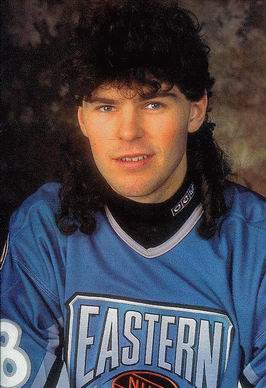
A true heart and soul player, Clark became a highly popular player with the Toronto faithful for putting everything he had in to every shift, every game. Plus, he sported one of the top, and underrated, mullets in hockey history. Yes, better than Jaromir Jagr and his cousin Barry Melrose, Clark rocked the hockey hair in 1996 like few others before or since, not to mention the classic mustache.

From the documentary, "Mario, Mike and the Great Gretzky" about Team Canada and the 1987 Canada Cup.

Wendel Clark mullet

While it may lack the sheer volume of the Jagr or the overexposure of the Melrose, the ratio of the shortness of the buzz cut on top to the length of the "mud flap" out back ranks it among the greatest mullets in NHL history.

Clark would announce his presence in the league with 227 penalty minutes in during his rookie season in addition to his 34 goals. He would raise his reputation the following year by increasing both totals with 37 goals and 271 penalty minuets.

A back injury suffered during his third season after being cross-checked into the crossbar would limit him to 28 games in his third season and his physical style would take its toll and Clark would see the ice in just 15 games during his fourth and 38 in the fifth.

His games played would increase over the next four seasons of 1990-91 to 1993-94, but he would still average just under 60 games with 59 per season during that time period. After campaigns of 18, 19 and 17 goals, he would explode for a career high with 46 in 64 games of the 1993-94 season. He was named team captain in 1991-92 and the Maple Leafs would make it as far as the conference finals in 1992-93, scoring a hat trick in Game 6 as part of his 20 points in 21 playoff games that season.

The summer after his 46 goal season he was traded to the Quebec Nordiques in a deal which brought Mats Sundin to Toronto. He would begin to frequently move teams for the remainder of his career, being traded by the Nordiques to the New York Islanders and then finishing the season back in Toronto. Two more seasons in Toronto, of 65 and 47 games, would be followed by a stint with the Tampa Bay Lightning followed by heading to the Detroit Red Wings at the trade deadline in a season in which he managed 77 games, easily his highest total in 12 years.

He would begin his final NHL season with the Chicago Blackhawks, but once more return to the Maple Leafs to finish out his career, where the Leafs would honor his #17 on November 22, 2008.

His final career totals are 793 games played (an average of just 53 per season) 330 goals, 234 assists, 564 points and 1690 penalty minutes.

Today's featured jersey is a 1986-87 Toronto Maple Leafs Wendel Clark jersey. Or is it a 1990-91 jersey?

Truth be told, it was originally created as a 1986-87 jersey with the King Clancy memorial patch on the left sleeve, one of the more unique and colorful memorial patches ever, but we were later able to obtain the Harold Ballard memorial patch worn on the right chest in 1990-91 on the exact same style jersey. Rather than shell out the money for an identical jersey to one already owned, the decision was made to create a hybrid jersey and add the Ballard patch on the opposite side of the Clancy patch with the knowledge that it can be removed at a later date if necessary.

Aside of the inconsistency of having patches from two different seasons on the one jersey, the other key feature of this jersey is the unusual treatment of the assistant captain's "A" on the front as worn by the Maple Leafs during this time period prior to Clark being named team captain.

Toronto Maple Leafs 86-87 F
Toronto Maple Leafs 86-87 B
1986-87 NHL Toronto Maple Leafs Wendel Clark jersey
Toronto Maple Leafs 86-87 P2 1986-87 NHL Toronto Maple Leafs Wendel Clark jersey
Normally we go into this part of each post just hoping to find some relevant video of an NHL player or perhaps something, anything, on an obscure European player, but not today. Oh, no. Clark was so popular in Toronto, and had we had an embarrassment of riches to choose from.

Without further delay, strap on your helmet for the best of Wendel Clark!


Hell yea! Now that was some Old Time Hockey!

Here is a profile of Clark which looks back on his rookie season.


In advance of his number being honored, Clark revisits Maple Leaf Gardens and recounts some of his favorite memories as a Maple Leaf in a very well done piece.


Next is the ceremony where the Maple Leafs honored Clark's #17 in 2008.


Finally, here is Clark's first game back in Toronto to begin his second stint with the Leafs. Feel the love people, feel the love...


Friday, July 17, 2009

1991-92 Toronto Maple Leafs TBTC Wendel Clark Jersey

July by the Numbers checks in at #17 with a Turn Back the Clock jersey from north of the border today.

As part of the celebrations of the NHL's 75th anniversary in the 1991-92 season, the Original Six teams, Boston, Chicago, Detroit, New York, Montreal and Toronto, all wore a Turn Back the Clock jersey from their past at various times throughout the season.

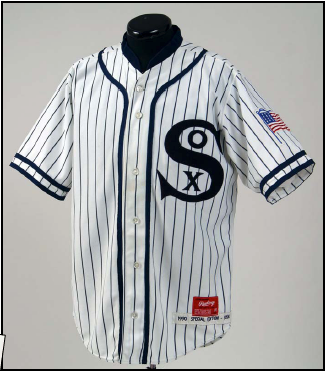
The success of the Turn Back the Clock jerseys would inspire both the NFL and NBA, with teams in those leagues also wearing throwbacks to celebrate their 75th and 50th anniversary seasons, but credit must be given to the Chicago White Sox, who wore the first throwback jerseys during the 1990 MLB season.

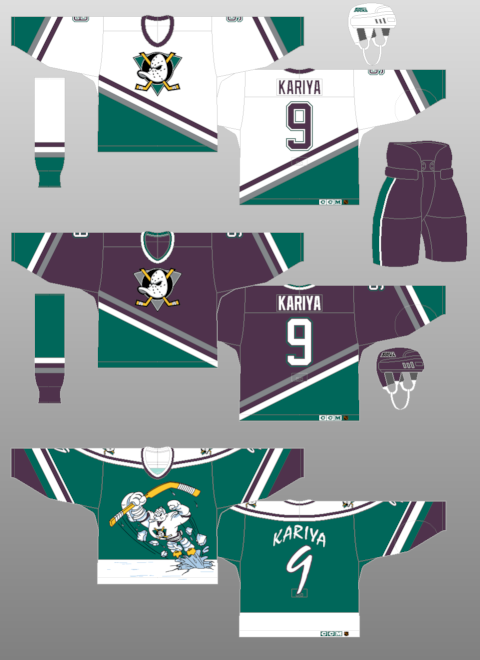
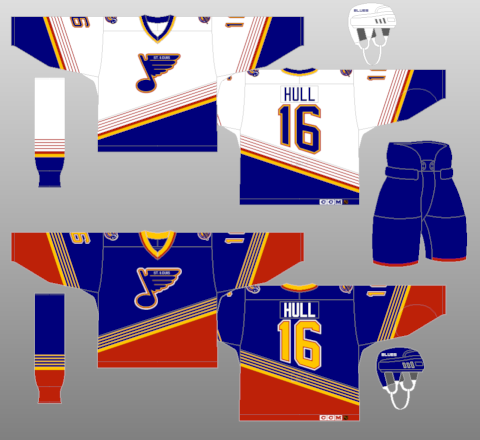
The influence of the throwback jerseys is still being felt today, as the popularity of retro jerseys is still strong, while the edgy, futuristic alternates that followed in the 1995-96 season were nearly universal failures with the public, as short-lived designs from Anahem and Los Angeles were immediately panned and discarded. St. Louis' proposed alternate was so bad that it was famously rejected by coach Mike Keenan before it ever hit the ice!

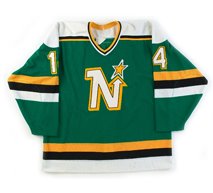
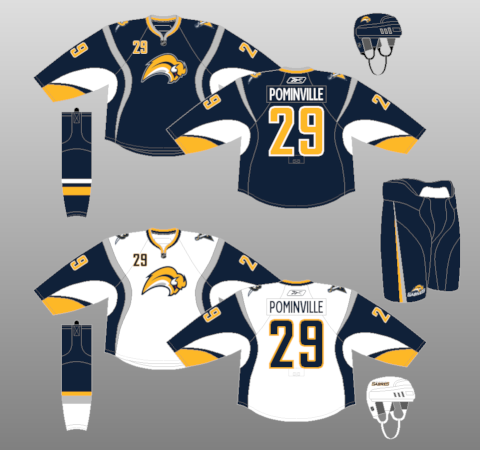
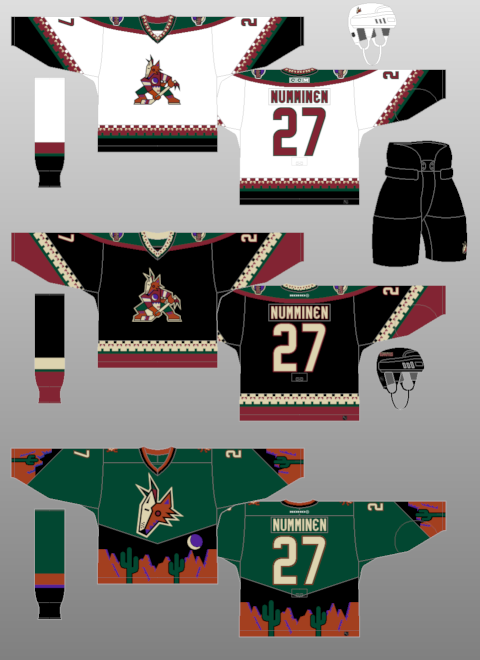
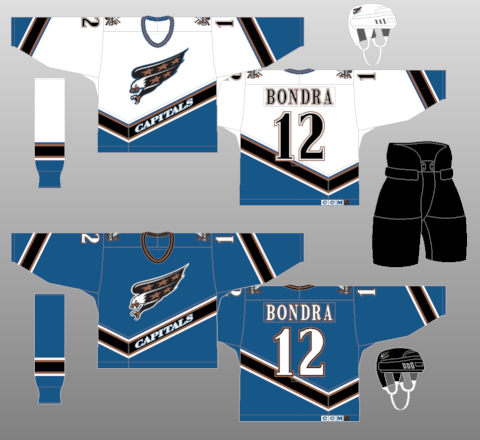
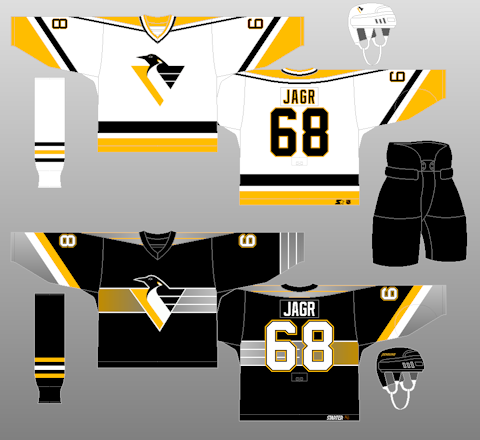
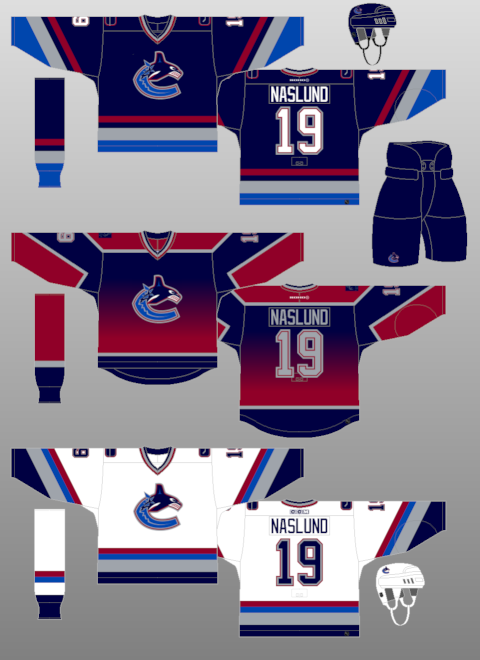
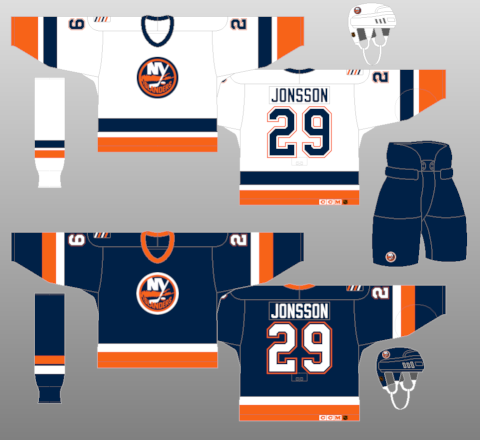
Other alternate designs from Boston and Vancouver were polarizing at best. Then you add in the entirely new jersey designs from Calgary, the Islanders, St. Louis, Buffalo, Phoenix, Washington, Pittsburgh and Vancouver that were all replaced by more traditional, if not outright throwback, designs as original logos continue to make return appearances, such as on Long Island, Buffalo, Pittsburgh and Vancouver you can see that the public prefers the classic old-school look. Minnesota even invents a throwback jersey that never existed to begin with, which immediately becomes the club's best selling sweater. And no matter how hard the Islanders try to come up with something new, they always seem to quickly gravitate back toward their classic jersey from their Stanley Cup dynasty in some form.

The latest trend in the throwback jerseys comes from the successful concept of the outdoor games, originated in Edmonton with the Heritage Classic, as the Oilers and Canadiens wore throwbacks to play outside, followed by the Sabres and Penguins then the Blackhawks and Red Wings going back in time for retro looks, which have proven so popular that five of the six teams have either incorporated their throwbacks from their respective outdoor games into their jersey set as an alternate or based a subsequent alternate on their designs, with only the ultra-traditional Red Wings standing pat, most likely because their basic home and road jersey already remains unchanged since 1932 and can be considered a throwback in and of itself.

Today's featured jersey is a 1991-92 Toronto Maple Leafs Turn Back the Clock Wendel Clark jersey.

Toronto's choice was the style originally used in 1940 and featured a vintage style Maple Leaf logo. It proved to be so popular that the basic home and road jerseys from 1991-92 were changed for the following season to incorporate the vintage Maple Leaf logo as a secondary shoulder patch, replacing the silhouette of the modern logo, as well as adopting the throwback jerseys more simplified striping pattern. In 2000 the retro Maple Leaf logo also adorned the Maple Leafs new vintage-themed alternate jersey. It was easily the most influential of the 1991-92 Turn Back the Clock jerseys as far as future team designs were concerned.

Toronto Maple Leafs TBTC F
Toronto Maple Leafs TBTC B
1991-92 NHL Toronto Maple Leafs Throwback Wendel Clark jersey

Since we came up empty trying to find any live game action of the Maple Leafs throwbacks in action, here's a throwback interview of Maple Leafs fan Mike Meyers and Dennis Miller sporting a pair of wicked mullets in Clark's honor.


hit counter for blogger