History of Jersey 83-93 Banner sm photo History of Jersey 83-93 Banner sm.jpg

Tuesday, April 28, 2026

1973-74 Minnesota Fighting Saints John Garrett Jersey

Perhaps no other players personifies life in the World Hockey Association better than John Garrett, who passed away today at the age of 74.

Drafted by the St. Louis Blues in the 1971 NHL Entry Draft, Garrett, faced with the prospect of life in the minor leagues riding buses and playing in a dingy old rink for little pay while trying to crack an NHL lineup instead cast his lot with the Minnesota Fighting Saints of the WHA for a higher salary, playing time in a top professional league in a brand new, state-of-the-art arena, featuring cutting edge clear dasherboards! It was a no-brainer for many minor league players in the early 1970's to make the jump to the WHA.

In Minnesota, Garrett split time with former US Olympian Mike Curran, before becoming the number one goalie in 1974-75 with 58 appearances and a 30-23-2 record. The following season Garrett had already played in 52 of the Fighting Saints 59 games, going 26-22-4, when the franchise folded mid-season.

Garrett Fighting Saints
Minnesota Fighting Saint John Garrett - note the clear boards behind him

Garrett's services were then snapped up by the Toronto Toros where their unsettled goaltending situation saw six different men play at least seven games, with none more than 26. While Garrett remained with the franchise for the next two seasons, nothing in the WHA was that simple, as the franchise relocated for the 1976-77 season to the deep south of the United States, finding a new home in Birmingham, Alabama of all places!

Garrett Bulls
Garrett joined the Toros after the Fighting Saints folded

Garrett's veteran experience and strong play immediately earned him the starting job and he patrolled the crease for 65 games that season and he was named a First Team WHA All-Star. He also played in 58 games in the 1977-78 season when the "Baby Bulls" were stocked with several players under the age of 20, something never before tried in major professional hockey.

Garrett Bulls
Garrett with his excellent snorting bull mask in Birmingham

A trade in September saw him dealt to the New England Whalers where he split the goaltending duties with Al Smith for the final season of the WHA. For 1979-80, the Whalers, now renamed the Hartford Whalers, joined the NHL along with the Quebec Nordiques, Edmonton Oilers and Winnipeg Jets.

During his time in the WHA, Garrett saw and lived through it all. A franchise folding mid-season, a franchise relocation, a trade and eventually a change in leagues!

Garrett led the Whalers in appearances in 1979-80 and 1980-81 with 52 and 54, respectively. With the Whalers failing to qualify for the playoffs in 1981, Garrett was chosen to be a member of Team Canada at the World Championships.

Garrett Whalers
Garrett with the Whalers in their new NHL era jerseys

He began the 1981-82 season with Hartford prior to being traded to another WHA refugee club, the Quebec Nordiques in January of 1982 to back up Dan Bouchard.

Garrett Nordiques
Garrett was traded to Quebec in 1982

With Bouchard again getting the majority of the playing time in 1982-83, and the Nordiques wanting to make room for future starter Clint Malarchuk, Garrett was again dealt in February 1983 to the Vancouver Canucks. While he was unable to displace established starter Richard Brodeur, Garrett did play three seasons in Vancouver to close out his NHL career.

Garrett Canucks
Garrett's final stop in his NHL career was with the Canucks

Garrett's career concluded with 530 games played, 216 wins, 242 losses and 52 ties between the two leagues combined.

John Garrett masks
John Garrett's goalie mask history

Today's featured jersey is a 1973-74 Minnesota Fighting Saints John Garrett jersey. The Fighting Saints original jerseys featured the "S" logo and were worn for the first half of their first season before being replaced by the "little saint" logo. None of the original Fighting Saints jerseys survived, as they had their crests removed and were given to the local Hastings High School to reuse.

Fighting Saints jerseys are some of the most sought after of the WHA game worn jerseys, thanks in part to their classic look, fantastic logo, die-hard fan base and limited availability.

1973-74 Minnesota Fighting Saints

Bonus Jersey: Our bonus jersey is a 1977 WHA All-Star John Garrett jersey as worn in the game in Hartford, Connecticut, won by the East All-Stars 4-2.

1977 WHA All-Star jersey
photo courtesy of Classic Auctions

Extra bonus Jersey: Our extra bonus jersey is a 1982-83 Vancouver Canucks John Garrett jersey. Moving forward in Garrett's career, he joined the NHL with the Whalers inclusion in the expansion in 1979-80 and made his way to Vancouver after a stint with the Nordiques in between.

Vancouver had debuted their controversial "flying V" jerseys in 1978-79 with one color black number and single color orange names. In Garrett's first season with the Canucks, the numbers became a sharp looking two color, as the black was now outlined in the orange, while the names were changed to a higher contrast black from the original orange. This was also the first season when the sleeve numbers moved to the more traditional location at the top of the arms, having originally been down at the wrists!


Today's extra bonus jersey has had Garrett's original nameplate removed unfortunately.


photo Garrett Canucks gold.jpg
Note the excessive length of the jersey, which is
bordering on the proportions of a ladies dress

Sharp eyed readers will notice the proportions of this jersey being "off", as the team has lengthened the jersey considerably, making look not unlike a dress when worn by Garrett, in an effort to surreptitiously reduce the size of Garrett's five hole between his legs!

photo Vancouver Canucks 1982-83 F jersey.jpg
photo Vancouver Canucks 1982-83 B jersey.jpg

Extra extra bonus Jersey: Our extra extra bonus jersey is a 1984-85 Vancouver Canucks John Garrett jersey.

This jersey displays an interesting history, having originally been worn by teammate Brodeur as a #35 jersey, which was then converted to #31 for Garrett, as evidenced by traces of the original #5 digit, signs of a nameplate change as well as some of Brodeur's trademark modifications, such as the sleeves having been shortened as well as having side panels added to the body.

1984-85 was the final season for this style and the only season it was produced by CCM.


photo Vancouver Canucks 1984-85 F jersey.jpg
photo Vancouver Canucks 1984-85 B jersey.jpg

Wednesday, February 25, 2026

1976-77 Charlestown Chiefs Reg Dunlop Jersey

Actor Paul Newman is known for many of his film roles, including Luke Jackson in Cool Hand Luke, Butch Cassidy in Butch Cassidy and the Sundance Kid and Fast Eddie Felson in The Color of Money, which earned him an Academy Award for Best Actor in 1986.

Following his service in the Navy during World War II, which included time as a turret gunner on a bomber during the Battle of Okinawa, he went to acting school and made his first film in 1954 and earned his first nomination for an Academy Award in 1958 for Cat on a Hot Tin Roof.

He would receive further nominations for The Hustler in 1961, Hud in 1963, Cool Hand Luke in 1967 and discover his passion for auto racing in 1968 while filming Winning, centered around the Indianapolis 500.

However, hockey fans know Newman best as "Reg" Dunlop in the classic 1977 movie Slap Shot, which was released on this date in 1977.

Paul Newman as Reg Dunlop

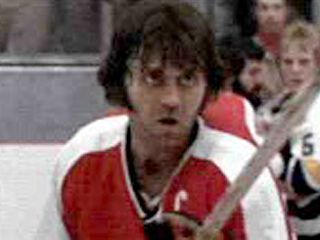
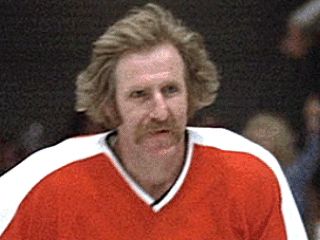
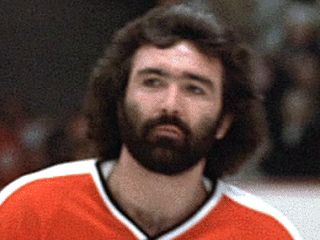
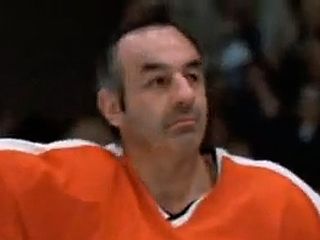
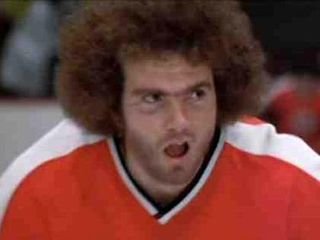
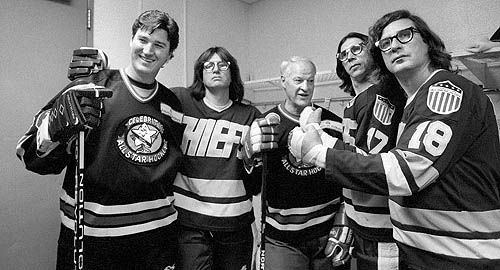
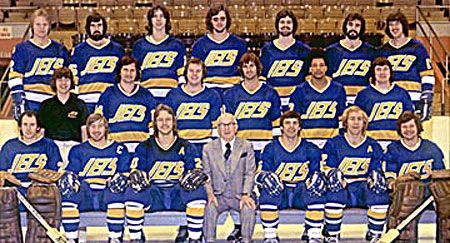
Written by Nancy Dowd, Slap Shot, about the downtrodden Charlestown Chiefs and their change in fortunes with the arrival of the notorious Hanson Brothers, draws heavily from the real life Johnstown Jets and the Carlson Brothers, Jack, Steve and Jeff.

The real life Carlson Brothers and the on screen Hanson Brothers

In addition, the real life Goldie Goldthorpe, is clearly the inspiration for the character of Ogie Ogilthorpe, who was played in the film by writer Dowd's brother Ned, who inspired Nancy and assisted her by collecting stories while playing in the minors.

Goldie Goldthorpe, the inspiration for Ogie Ogilthorpe

Jack Carlson was supposed to portray one of the three Hanson brothers in the film, however he was called up to play in the WHA with the Edmonton Oilers during filming. In his place, Dave Hanson was chosen to join Jeff and Steve as the third Hanson brother with actor Jerry Houser cast into Hanson's original role as Dave "Killer" Carlson, which was based on Dave Hanson.

In the movie, the Chiefs, members of the Federal League, are a downtrodden club in financial trouble, mainly due to unemployment issues facing the town, and are due to fold at the end of the season.

During the course of the season the club adds the Hanson Brothers, an immature trio of horn-rimmed glasses wearing thugs player/coach Dunlop is reluctant to even let on the ice. Finally, the Hansons hit the ice and complete mayhem follows as the Hansons hit everything in sight - that is when they aren't fighting everyone in sight. The fans in Charlestown go crazy at the antics of the Hansons, something Dunlop can't help but notice. As the Hansons are given more ice time, the fans at the games grow in number and enthusiasm, even following the team on road trips. Soon their teammates begin to adopt the Hansons violent, high-sticking, brawling style of play, at the urging of Dunlop.

Meanwhile, Dunlop keeps the team's morale up by fabricating a story about the potential sale and relocation of the club to a buyer who would move the franchise to Florida. In the end, Dunlop confesses to the team before the final and deciding championship playoff game that there is no secret buyer and the team is in fact, playing their final game. And if it is to be his final game, Dunlop wants to go out playing clean and with dignity, which the rest of the Chiefs agrees to. Unfortunately for the Chiefs, their violent, yet successful ways have influenced their opponents, the Syracuse Bulldogs, to round up the largest collection of thugs possible, including Tim "Dr. Hook" McCracken, Gilmore Tuttle, Andre "Poodle" Lussier, Ross "Mad Dog" Madison, Clarence "Screaming Buffalo" Swamptown and none other than rookie Ogie Ogilthorpe.

After being battered by the Bulldogs, the Chiefs finally fight back and the game degenerates into a brawl, with only the Chiefs Ned Braden refusing to participate. Braden "fights back" by going onto the ice in the middle of the melee and shocks everyone by performing an impromptu strip-tease, which causes all the combatants to stop and stare in bewildered amusement.

McCracken demands that the referee stop Braden, and when he refuses, McCracken slugs the referee, who disqualifies the Bulldogs, giving the Chiefs the championship and the trophy, which Braden joyfully skates around while wearing nothing but his jockstrap.

The movie has attained cult status in the hockey community, often cited as the #1 hockey movie of all time. Many classic quotes from the film have woven their way into the hockey vocabulary, such as
  • "You do that, you go to the box, you know. Two minutes by yourself, you know, and you feel shame, you know. And then you get free."
  • "Ok guys. Show us what you got."
  • "Hey Hanrahan! She's a lesbian!"
  • "Dave's a mess."
  • "The fans are standing up to them! The security guards are standing up to them! The peanut vendors are standing up to them! And by golly, if I could get down there, I'd be standing up to them!"
  • "puttin' on the foil!"
and of course,
  • "Old time hockey, like Eddie Shore, Dit Clapper and Toe Blake. Those guys were the greats!"

The Carlson brothers would all go on to have professional careers, which included all three brothers playing for the Minnesota Fighting Saints of the WHA, glasses and all, at the same time during the 1975-76 season, which should be noted was based on merit and not an attempt to capitalize on the fame of the movie, which would not even be released until 1977.

The Carlson Brothers playing for the Minnesota Fighting Saints of the WHA

Jack Carlson would play in 272 games in 5 WHA seasons and 236 games in 6 NHL seasons. Steve Carlson totaled 173 WHA games and 52 NHL games in 5 combined seasons, while Jeff Carlson skated in 7 WHA games plus nine more minor league seasons.

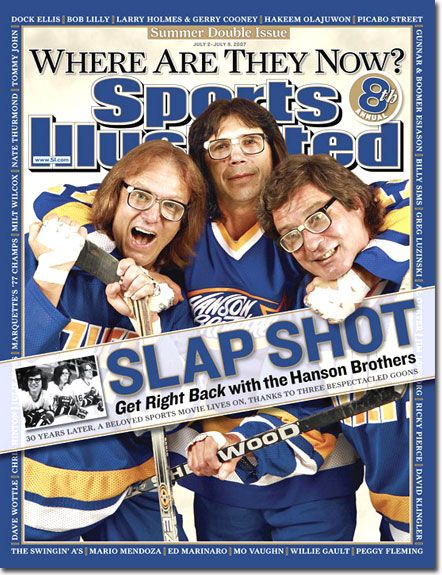
The "Hanson Brothers" have also attained cult status on their own, as Steve Carlson, Jeff Carlson and Dave Hanson continue to make personal appearances as The Hansons and have even been featured on the cover of Sports Illustrated. In addition, it's impossible to attend and NHL game in person without seeing a Chiefs jersey in the stands, as they continue to be sold to this day, nearly fifty years after the movie's original release.


Today's featured jersey is a 1976-77 Charlestown Chiefs Reg Dunlop jersey. The classic Charlestown Chiefs jersey was patterned after the Johnstown Jets jerseys, which in turn came from their parent club, the Minnesota Fighting Saints of the WHA.

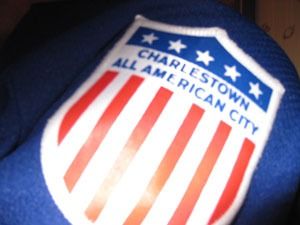
While we have taken care to match the fonts for the back and sleeve numbers to those used on the jerseys worn by Paul Newman in the movie, which are not exactly the same, we did stray from authenticity a bit by adding the name "DUNLOP" to the back of our jersey, as none of the Chiefs jerseys in the movie had names on the back. Our jersey was originally purchased blank for a bargain price and did not come with the Charlestown All American City patch on the shoulder like those worn in the movie. If we are able to obtain one at some point, we will certainly add it to our jersey at that time.

Humorously, many of the Chiefs jerseys sold feature #16 on one sleeve, #17 on the back and #18 on the other sleeve to represent all three Hanson Brothers on the same sweater.

Charlestown Chiefs 77 jersey photo CharlestownChiefs77F.jpg
Charlestown Chiefs 77 jersey photo CharlestownChiefs77B-1.jpg

Plenty of video options today, but no better place to start than with the original movie trailer for Slap Shot.


Next up, the Hansons take to the ice for the first time, and the game of hockey will never be the same.


Next, a look back at the films and life of Paul Newman - philanthropist, actor and sportsman.


Wednesday, April 24, 2024

Hall of Famer Al Shaver

Al Shaver was the voice of Minnesota North Stars hockey. Always was. Always will be.

He was a graduate of the Lorne Green Academy of Radio and Television Art in Toronto in 1948 and worked the morning show and baseball play-by-play at CJOY in Guelph, Ontario. He then worked in Calgary and Medicine Hat, Alberta before taking a job in Edmonton in 1952, where he did play-by-play for the Edmonton Eskimos of the Canadian Football League. He also broadcast five Grey Cup championship games nationally on the CBC.

Al Shaver

During the 1960's he worked in both Montreal and Toronto, which included doing junior hockey games and hosting a bowling show, until 1967 when the National Hockey League made it's dramatic expansion from six teams to twelve.

Shaver was hired as the voice of the North Stars for their inaugural season and was with the team first on WCCO until 1978.

Al Shaver

He moved with the team to KSTP until the franchise relocated to Dallas in 1993 for a total of all 26 seasons of the North Stars, calling 2,062 out of 2,071 games.

"It was a 26-year love affair that began on an October night in St. Louis, 1967, and ended abruptly on an April evening in 1993 when my love left me and moved to Dallas," Shaver wrote in 2007 .

Al Shaver

In addition to working for the North Stars, KSTP also had Shaver work on the Minnesota State High School Hockey Tournament, which gave him the opportunity to meet legendary Broadcaster Howard Cosell, who commented "What are you doing here?" as Cosell was of the opinion that Shaver should be in New York working for a national network.

Al Shaver
Howard Cosell with Al Shaver

He was such a part of the fabric of the North Stars that he was featured on both the team's media guide and made more than one appearance on the cover of the team's program.

Al Shaver

Al Shaver

Not quite ready to close out his broadcasting career, he then worked for the University of Minnesota Golden Gophers until he retired on his own terms in 1996.

Shaver was a ten-time Minnesota Sportscaster of the Year and was inducted into the Museum of Broadcasting Hall of Fame in 2003. He was also given the 1993 Foster Hewitt Memorial Award by the Hockey Hall of Fame for outstanding contributions to radio and TV broadcasting and the game of hockey.

Al Shaver

In addition to those honors, the press box at the Xcel Energy Center, home of the Minnesota Wild, is named for him.

Al Shaver

On a personal note, as a youngster, we would listen to Shaver call North Stars games against the Chicago Black Hawks at night with our transistor radio tuned to WCCO. We recall Shaver always saying "a shot from the blue line hits traffic in front", leading us to mistakenly believe "Traffic" was the name of a Chicago defenseman and the greatest shot blocker in hockey history!

Upon getting the opportunity to share that story with Shaver, he related that when goaltender Cesare Maniago would make a great save, he'd call out "Oh! Maniago makes a great save!" causing some to believe that the Canadian born "O'Maniago" was actually of Irish decent!

For a real treat, to hear Al at his best, including a call of "a shot hitting Traffic" and an "O'Maniago" as well as him excitedly calling a fight all in the same sequence, click below to listen.


On the occasion of the final North Stars home game in 1993, we felt bad that Shaver was being overlooked on what would be his last time calling a North Stars game in Minnesota amidst all the vitriol for the North Stars owner who was moving the club. In an effort to pay tribute to the man who had called the North Stars games since day one, we made a simple sign in his honor. With the game against Chicago (who it turns out never employed a defenseman named "Traffic" we had learned by then) beginning to wind down, and us not having had a chance to display our sign, the North Stars obliged by finally scoring their first goal of the game with less than 6 minutes remaining.

The in-arena presentation was for the video of the goal to be replayed on the Met Center scoreboard along with Shaver's call of the goal. Perfect! The fans in the arena had just heard Shaver's voice for the first time all night and the time was right to display the sign. Unlike modern arenas where the corridor is outside of the seating bowl, the Met Center had a walkway inside the seating bowl which separated the lower bowl from the upper level sections, giving us the opportunity to not just hold up our sign, but to walk an entire lap inside the arena with our sign held high for all fans to see.

So off we went on our tribute lap to Shaver, not knowing what to expect. Fans who saw the sign began to stand and applaud, hold their glasses up high as well as reach down from the upper seats to "high five" the sign. Roughly a quarter of the way around the arena, we realized that a camera had been trained on us and the sign was now filling the video replay screen for all to see, especially the fans lower down who may not have had a chance to see the sign until then. It didn't end there either, as one of Shaver's sons asked for the sign once we were done with it, a request we were only too happy to oblige.

Not only was there a video camera trained on the sign during the "lap of honor", but a still camera as well, resulting in a sizable photo which appeared in the Minneapolis StarTribune two days later!

Al Shaver

Shaver currently lives in the Vancouver area enjoying his retirement while his son Wally Shaver has done the broadcasting for the North Stars, Minnesota Moose and Golden Gophers for years now and his grandson Jason Shaver currently does play-by-play for the Chicago Wolves of the AHL, carrying on the family legacy.

Here is some footage of Al Shaver calling games for the North Stars. "What a ham this turkey is!"


For another large dose of Shaver's work, here is a thirty minute program recalling the 25 year history of the North Stars, narrated by Shaver and his rich baritone, courtesy of VintageMinnesotaHockey.com.

Thursday, November 24, 2022

1973-74 Toronto Maple Leafs Börje Salming Jersey

Swedish defenseman Börje Salming passed away earlier today after being diagnosed with ALS in July. 

Born in 1951, Salming began his career with three seasons with Kiruna AIF in the Swedish second division beginning with the 1967-68 season. While with Kiruna, Salming played for Sweden during both the 1968 and 1969 European Junior Championships.

Salming Sweden photo Salming Sweden young.jpg
A young Salming wearing the three crowns for Sweden

He joined Brynäs IF in Division 1 for three seasons beginning in 1970-71 and found immediate success with championships in both 1971 and 1972. During this phase of his career he made his senior level debut for Sweden at the 1972 World Championships, earning a bronze medal. He returned to the squad in 1973 where his offensive game exploded with 4 goals and 6 assists for 10 points in 10 games from the blueline as Sweden came through with silver medals.

Salming Brynas photo Salming Brynas 1.jpg
Salming while with Brynas in Division 1

Salming's eyes were opened when he was chosen to play for Sweden in a pair of exhibition games against Team Canada, who were on their way to play the second half of the 1972 Summit Series in Moscow. The Canadians played a much rougher style of hockey, with more body checking and stickwork, but Salming realized he could compete with the NHL's best.

During this time period, the world of professional hockey in North America underwent an unprecedented expansion with the arrival of the World Hockey Association in 1972, which began with a dozen new teams all needing to fill their rosters while the NHL countered with adding the New York Islanders and Atlanta Flames to attempt to secure strategic territories before the WHA could arrive. With so many players needed to fill the roughly 280 roster spots, teams began to look beyond the borders of Canada and the United States, and the Toronto Maple Leafs turned an eye toward Sweden, with an eye on left winger Inge Hammarstrom. Salming stood out to the Toronto scouts and he too, was signed as a free agent by the Maple Leafs to make his NHL debut with the 1973-74 season.

Salming Maple Leafs photo Salming Maple Leafs 1.jpg
Salming was now a European trailblazer with the NHL's Maple Leafs

His first game came on October 10, 1973, a 7-4 victory over the Buffalo Sabres after which Salming was named the game's number one star. With minimal offensive numbers on his resume from Sweden, the rookie impressed with 34 assists on his way to a 39 point season as he unleashed his  powerful wrist shot and accurate passes upon the NHL while enduring taunts of "Chicken Swede" and a barrage of physical abuse aimed at intimidating him all the way back to Sweden.

Two seasons later in 1975-76, he elevated his game to 16 goals and 41 assists for 57 points, all while playing his customary stout defense as he changed the accepted preconceived stereotype of European players being "soft" and easy to intimidate.

Salming Maple Leafs photo Salming Maple Leafs 5.jpg

Prior to the start of the 1976-77 season, Salming returned to the Sweden National Team when he was a member of their roster during the inaugural 1976 Canada Cup tournament where he scored 4 goals and 7 points in 5 games.

Salming Sweden photo Salming Sweden.jpg

Beginning with the 1976-77 season when he set career highs with 66 assists and 78 points, Salming reeled off four consecutive 70 point seasons, including finishing second on the team in points with 71 in 1979-80.

In 1980-81, Salming reached 60 assists for the third and final time of his career with 61. The Maple Leafs also qualified for the playoffs for the eight straight time in Salming's eight seasons in Toronto.

Salming Maple Leafs photo Salming Maple Leafs 2.jpg

Later that fall Salming again donned the Tre Kroner jersey of Sweden for the 1981 Canada Cup.

As his point totals began to decrease starting in 1980-81, his penalty minutes began to rise, starting with his first season over 100 with 154, followed by 170 in 1981-82 and topping out at 192 in 1983-84, his fourth of five seasons over 100, and the only five over 100 of his career.

Salming Maple Leafs photo Salming Maple Leafs 3.jpg

A gruesome injury in the 1985-86 season saw him receive over 200 stitches in his face after being cut by a skate after being knocked to the ice. Despite the horrific nature of the injury, Salming was back on the ice three days later. He was limited to just 41 games that season, after his durability saw him never play less than 68 over the previous ten seasons, but returned in time to play 10 playoff games as Toronto returned to the postseason.

Salming stitches photo Salming stitches.jpg
Salming was back on the ice three days after thankfully
not injuring his eye when his face was sliced by a skate

Salming would play three more seasons for Toronto, but never more than 66 games as time began to catch up to the rugged Swede. After his final of 16 seasons with the Maple Leafs, Salming would play in his first World Championships in 16 years for the 1989 edition.

Salming Maple Leafs photo Salming Maple Leafs 
4.jpg

Not ready to hang up his skates, Salming signed with the Detroit Red Wings for the 1989-90 season where he played the final 49 games of his NHL career.

Salming Red Wings photo Salming Red WIngs.jpg
Salming in his final NHL days in Detroit

Salming returned to Sweden and joined AIK IF of the Elitserien for the 1990-91 season, scoring 13 points in the shorter 36 game schedule.

Salming AIK photo Salming AIK.jpg
Salming returned to play three final seasons in Sweden

Salming had an emotional return to Toronto in the fall of 1991 when he received a standing ovation from his fans when Sweden competed there in the Canada Cup, Salming's third. "I'll never forget our game in Toronto. The fans gave me a standing ovation during the introductions. I was representing my country and Canadian fans gave me a standing ovation. Sometimes hockey has no country," a touched Salming recalled.

Salming Sweden 1991 photo Salming Sweden 1991.jpg
Salming  made an emotional return to Toronto during the 1991 Canada Cup

During the 1991-92 AIF season Salming played in his final international tournament when he finally played in his first Olympics in Albertville, France where he went out in fine style with 4 goals and 7 points in eight games.

His playing career concluded with 6 games with AIK during the 1992-93 season, his 26th.

Salming's final NHL totals were 150 goals and 637 assists for 787 points in 1,148 games played, with his 1,099 third all-time for Toronto. He holds Maple Leafs records for Most Career Points by a Defenseman (768), Most Career Goals by a Defenseman (148), Most Career Assists (620), Most Assists in a Season by a Defenseman (66) and Best Career Plus/Minus (+155).

He was voted the winner of the Viking Award as the best Swede in the NHL in 1976, 1977 and 1979, was named to the Canada Cup All-Star Team in 1976, played in the NHL All-Star Game in 1976, 1977 and 1978 and played for the NHL All-Stars in the 1979 Challenge Cup against the Soviet Union.

Sundin Salming photo Sundin Salming.jpg
Salming is credited with opening the door for many Swedes,
including future Maple Leafs captain Mats Sundin

He became the first Swede inducted into the Hockey Hall of Fame in 1996, was named to the IIHF Hall of Fame in 1998, had his #21 honored by the Maple Leafs and was named to the IIHF Centennial All-Star Team in 2008.

Salming honored photo Salming honored.jpg
Salming received many honors following his stellar career

Salming Tux photo Salming Tux.jpg

Today's featured jersey is a 1973-74 Toronto Maple Leafs Börje Salming jersey as worn during his trailblazing rookie season in the NHL. For the new decade, the Maple Leafs introduced a new, modernized jersey for the 1970-71 season, complete with a new logo. The club waffled back and forth between a lace up collar the first two seasons, changed to a v-neck in 1972-73 and back to the lace up collar again in 1973-74 and 1974-75 before a return to the v-neck from 1975-76 onwards.

Against the wishes of owner Harold Ballard, names on the back became visible and permanent in 1978-79 after which the jerseys remained unchanged through 1991-92, a run of 22 seasons for this style.

Toronto Maple Leafs 1973-74 jersey photo Toronto Maple Leafs 1973-74 jersey.jpg
photo courtesy of Classic Auctions

Bonus jersey: Today's bonus jersey is a 1976 Sweden National Team Börje Salming jersey as worn during the inaugural 1976 Canada Cup tournament, one of three Canada Cups and nine international tournaments Salming competed in for Sweden.

Sweden 1976 jersey photo Sweden 1976 jersey.jpg
photo courtesy of Classic Auctions

Extra bonus jersey: Today's extra bonus jersey is a 1979 NHL All-Star Börje Salming jersey as worn during the 1979 Challenge Cup. For the 1979-80 season, the league did not hold a traditional interleague Campbell vs. Wales all-star game. Instead, a team of NHL All-Stars would take on the Soviet Union in a three game series at New York's Madison Square Garden.

Proving Salming's standing in the league, he was selected as a member of the  NHL team, which was comprised of 23 Canadians and three Swedes, with the other two being forwards Ulf Nilsson and Anders Hedberg, for a total of just 26 of the league's most elite players rather than two full squads required to stock the rosters of a traditional two team All-Star Game.

The jersey itself is an extremely simple affair with thin, dual stripes of orange and black adorned with the NHL shield on the chest and shoulders, making them more plain than the ones worn by the Soviets!

photo NHL All-Star 1979 jersey.jpeg
photo courtesy of Classic Auctions

Today's video section begins with a well done profile of Salming.


This next video contains more game action and was from his introduction into the Hockey Hall of Fame.


hit counter for blogger