History of Jersey 83-93 Banner sm photo History of Jersey 83-93 Banner sm.jpg
Showing posts with label 1976 Canada Cup. Show all posts

Thursday, September 15, 2016

1976 Team Canada Darryl Sittler Jersey

With Canada dissatisfied with the state of international hockey, owing to the controversy over the amateur status of the Soviet players, the Canadians withdrew from both the World Championships and the Olympics from 1970 to 1977.

The Canadians got what they wanted in 1972 with the wildly successful Summit Series, an eight game "friendly" competition between the best Canadian professionals versus the finest the Soviet Union had to offer. As the tournament progressed, the Soviets, looking like they would finish with a better record declared their intentions to claim "victory" in the series only to have the Canadians come out on top with a dramatic late goal by Paul Henderson in the final game of the series.

 photo Hendersonscores.jpg
Paul Henderson scores the dramatic winning goal in the 1972 Summit Series

Following the 1974 Summit Series, which featured a team of WHA All-Stars who were soundly defeated by the Soviets, an attempt to catch lightning in a bottle once more led to the formation of the 1976 Canada Cup tournament.

1976 Canada Cup program photo 1976CanadaCupprogram.jpg
The 1976 Canada Cup program cover

The tournament was expanded beyond the two-team competition of the Summit Series format to include not only Canada and the Soviets, but Czechoslovakia, Finland, Sweden and the United States, with each team playing the other five clubs in a round robin format with the top two then meeting in a best-of-three final.

The games were played in Ottawa, Toronto, Montreal, Winnipeg and Quebec in Canada and Philadelphia in the United States and would take place prior to the NHL season, removing any eligibility or scheduling conflicts for players, such as those faced by the Olympics and World Championships, making the all the top players worldwide available to compete.

The Canadian team was given top priority in Canada, as the political restrictions the roster faced due to the NHL/WHA rivalry that affected both the 1972 and 1974 Summit Series were also removed.

Orr Potvin and Clarke photo OrrPotvinandClarke.jpg
Canada's stellar roster included Bobby Orr, Denis Potvin and Bobby Clarke

While many hoped for an anticipated a Canada vs. Soviet Union final, the Soviets did not field their best possible team, leaving several key players at home, including Boris Mikhailov, Vladimir Petrov, Alexander Yakushev and Valdimir Shadrin for reasons subject to speculation, but thought to be a combination of a power struggle between the Soviet Canada Cup coach and the Soviet Olympic Team coach, as well as a desire to downplay the importance of the new tournament, claiming their focus was on the World Championships and the Olympics, where they knew they would have the advantage of a full roster, while Canada would have the majority of it's best players occupied with the Stanley Cup playoffs during the World Championships or unavailable as professionals during the Olympics. The Soviets were also most notably without Valeri Kharlamov, who was out due to injuries suffered in an auto accident.

Canada opened with a strong statement, as they blitzed Finland 11-2. The following day. September 3rd, the Czechs beat the Soviet Union 5-3. Two days later the Soviets had to settle for a 3-3 draw with Sweden and the Czechs hammered Finland 8-0 while the Canadians got past the USA 4-2.

On September 7th, the Soviets took their turn pummeling Finland 11-3 as the USA held the Czechs to a 4-4 draw and Canada stayed undefeated with a 4-0 win over Sweden.

The Soviet Union stayed alive with a 5-0 win over the USA and the Czechs claimed the top spot in the standings with a close-fought 1-0 triumph over Canada.

On September 11th, Sweden gave the Soviets hope by narrowly edging Sweden 2-1 but they were eliminated from a berth in the finals when Canada got the satisfaction of ending their arch-rivals tournament with a 3-1 win over the Soviet Union, setting up a Canada - Czechoslovakia final.

The finals kicked off with a game in Toronto on September 13th, with Canada making it clear they were out to set the record straight as to who was the best hockey nation with a 6-0 pounding of the Czechs. Gilbert Perrault, scored just 1:05 into the game to give Canada an early lead, and their first goal against the Czechs after being shut out by them in their round robin matchup. Denis Potvin increased the lead to 2-0 at 7:56 and Bobby Orr made it 3-0 on the powerplay at 13:34. Guy Lafleur added another at 17:01 to give Canada a dominant 4-0 lead before the first period was even over.

Canada celebrates 1976 Canada Cup photo Canadacelebrates1976CanadaCup.jpg
Canada celebrates a goal during the 1976 Canada Cup finals

There were no goals in the second and Canada added a pair in the third, with Orr scoring again at 11:35 and Darryl Sittler just before the final whistle at 19:56 for a final six goal margin as Rogie Vachon recorded the shutout for Canada.

The second game of the finals was held in Monteal on this date in 1976 and started out very much the same as Game 1, with Canada up by two after only three minutes, as Perreault scored early once more at 1:25, followed by Phil Esposito at 3:09.

The Czechs would respond this time though, with a goal in the second at 9:44 from Milan Novy.

The dramatic third period would see five goals, with the first coming at 2:14 as the Czechs evened the score at two when Jaroslav Pouzar scored. Bobby Clarke would give Canada the lead at 7:48, only to have Josef Augusta tie the game once more at 15:01.

The Czechs would then surprise the Canadians by taking the lead for the first time when future NHLer Marian Stastny scored less than a minute later at 16:00. Canada would force overtime when Bill Barber even the game at 4-4 with a goal at 17:48.

As the game moved into overtime Canada put two pucks into the Czech net, only to have them both disallowed. The first was on a shot by Lafleur, which got by the Czech netminder Vladimir Dzurilla, only to have Ivan Hlinka knock the net off its pegs before the puck could cross the line, earning a penalty, but no goal.

Dzurilla Clarke 1976 photo DzurillaClarke1976.jpg
Druzilla holding off Clarke and Canada

Guy Lapointe then scored at the ten minute mark, but the rules stated that the teams had to change ends halfway through the period, so the horn sounded, negating Lapointe's goal, much to the dismay of the Canadians and their fans.

Finally at 11:33 of the overtime, the clock struck midnight for the Czechs, as Sittler deked Druzilla, who had a habit of some very unorthodox play (no doubt influencing a young Dominik Hasek) and had come way out of his net, allowing Sittler to score the game winner, (finally) giving the Canadians the championship in front of the home fans in what was the most watched program in Canadian TV history at the time.

"This has got to be the biggest thrill of my life," Sittler said. "I'm not cut out to be a hero; if I was going to do it, I was going to do it. But playing with these guys on the greatest team for the greatest country is something that will remain with me forever."

 photo SittlerRichardampDzurilla1976.jpg
Darryl Sittler, Maurice Richard and Dzurilla following the 1976 Canada Cup

Orr, who missed the 1972 Summit Series due to one of his many knee surgeries, was able to play in 1976 following his fifth knee operation. "It was Bobby's last hurrah," said Esposito. "Orr didn't show up the first week of training camp because of his knee problems, and we had some pretty imposing defensemen there. But when he arrived it was the man with the boys. He was just head and shoulders above the rest of us," said Bobby Hull.

Clarke said "I used to watch him. After the games he could hardly walk, and then he'd go out there again and play like hell. I think he played on straight determination. It's amazing what he did."

Orr finished the tournament with 2 goals and 7 assists for 9 points, tied for most in the tournament with fellow Canadian Potvin and Soviet Viktor Zhulktov, and was named Tournament MVP. Orr's performance in the 1976 Canada Cup would be ranked as #56 in the IIHF Top 100 Stories of the Century.

Of note, 16 of the 21 Canadian players would eventually be inducted into the Hockey Hall of Fame.

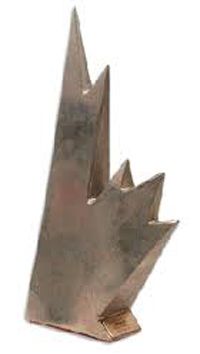
Today's featured jersey is a 1976 Canada Cup Darryl Sittler jersey. This unique jersey would make it's debut at the 1976 Canada Cup, with it's main design patterned after the Canada Cup trophy. This style would become an icon for Canadian hockey, as it was also used in the four subsequent Canada Cups in 1981, 1984, 1987 and 1991, something the marketing people would never allow to happen these days.

This style was revived once more, as it was the choice for the Canadian team in the 2005 World Championships when each country chose a throwback jersey from it's past.

The Canadian players participated in the ritual of exchanging jerseys after the game, a practice more commonly associated with European soccer, no doubt creating quite a challenge for collectors of game worn jerseys to locate and authenticate the set of jerseys worn in the final game after their departure for behind the Iron Curtain.

Canada 1976
photo courtesy of Classic Auctions

Today's video section features Sittler's cup winning goal in overtime of Game 2 of the finals.


Here is a tribute video to Team Canada with action highlights from throughout the tournament, with perhaps the cheesiest song ever written.


Enjoy these exciting highlights of the Canada vs. Soviet Union game from the round robin stage of the tournament with Tretiak in goal for the Soviets.

Monday, September 15, 2014

1976 Team Canada Darryl Sittler Jersey

With Canada dissatisfied with the state of international hockey, owing to the controversy over the amateur status of the Soviet players, the Canadians withdrew from both the World Championships and the Olympics from 1970 to 1977.

The Canadians got what they wanted in 1972 with the wildly successful Summit Series, an eight game "friendly" competition between the best Canadian professionals versus the finest the Soviet Union had to offer. As the tournament progressed, the Soviets, looking like they would finish with a better record declared their intentions to claim "victory" in the series only to have the Canadians come out on top with a dramatic late goal by Paul Henderson in the final game of the series.

 photo Hendersonscores.jpg
Paul Henderson scores the dramatic winning goal in the 1972 Summit Series

Following the 1974 Summit Series, which featured a team of WHA All-Stars who were soundly defeated by the Soviets, an attempt to catch lightning in a bottle once more led to the formation of the 1976 Canada Cup tournament.

1976 Canada Cup program photo 1976CanadaCupprogram.jpg
The 1976 Canada Cup program cover

The tournament was expanded beyond the two-team competition of the Summit Series format to include not only Canada and the Soviets, but Czechoslovakia, Finland, Sweden and the United States, with each team playing the other five clubs in a round robin format with the top two then meeting in a best-of-three final.

The games were played in Ottawa, Toronto, Montreal, Winnipeg and Quebec in Canada and Philadelphia in the United States and would take place prior to the NHL season, removing any eligibility or scheduling conflicts for players, such as those faced by the Olympics and World Championships, making the all the top players worldwide available to compete.

The Canadian team was given top priority in Canada, as the political restrictions the roster faced due to the NHL/WHA rivalry that affected both the 1972 and 1974 Summit Series were also removed.

Orr Potvin and Clarke photo OrrPotvinandClarke.jpg
Canada's stellar roster included Bobby Orr, Denis Potvin and Bobby Clarke

While many hoped for an anticipated a Canada vs. Soviet Union final, the Soviets did not field their best possible team, leaving several key players at home, including Boris Mikhailov, Vladimir Petrov, Alexander Yakushev and Valdimir Shadrin for reasons subject to speculation, but thought to be a combination of a power struggle between the Soviet Canada Cup coach and the Soviet Olympic Team coach, as well as a desire to downplay the importance of the new tournament, claiming their focus was on the World Championships and the Olympics, where they knew they would have the advantage of a full roster, while Canada would have the majority of it's best players occupied with the Stanley Cup playoffs during the World Championships or unavailable as professionals during the Olympics. The Soviets were also most notably without Valeri Kharlamov, who was out due to injuries suffered in an auto accident.

Canada opened with a strong statement, as they blitzed Finland 11-2. The following day. September 3rd, the Czechs beat the Soviet Union 5-3. Two days later the Soviets had to settle for a 3-3 draw with Sweden and the Czechs hammered Finland 8-0 while the Canadians got past the USA 4-2.

On September 7th, the Soviets took their turn pummeling Finland 11-3 as the USA held the Czechs to a 4-4 draw and Canada stayed undefeated with a 4-0 win over Sweden.

The Soviet Union stayed alive with a 5-0 win over the USA and the Czechs claimed the top spot in the standings with a close-fought 1-0 triumph over Canada.

On September 11th, Sweden gave the Soviets hope by narrowly edging Sweden 2-1 but they were eliminated from a berth in the finals when Canada got the satisfaction of ending their arch-rivals tournament with a 3-1 win over the Soviet Union, setting up a Canada - Czechoslovakia final.

The finals kicked off with a game in Toronto on September 13th, with Canada making it clear they were out to set the record straight as to who was the best hockey nation with a 6-0 pounding of the Czechs. Gilbert Perrault, scored just 1:05 into the game to give Canada an early lead, and their first goal against the Czechs after being shut out by them in their round robin matchup. Denis Potvin increased the lead to 2-0 at 7:56 and Bobby Orr made it 3-0 on the powerplay at 13:34. Guy Lafleur added another at 17:01 to give Canada a dominant 4-0 lead before the first period was even over.

Canada celebrates 1976 Canada Cup photo Canadacelebrates1976CanadaCup.jpg
Canada celebrates a goal during the 1976 Canada Cup finals

There were no goals in the second and Canada added a pair in the third, with Orr scoring again at 11:35 and Darryl Sittler just before the final whistle at 19:56 for a final six goal margin as Rogie Vachon recorded the shutout for Canada.

The second game of the finals was held in Monteal on this date in 1976 and started out very much the same as Game 1, with Canada up by two after only three minutes, as Perreault scored early once more at 1:25, followed by Phil Esposito at 3:09.

The Czechs would respond this time though, with a goal in the second at 9:44 from Milan Novy.

The dramatic third period would see five goals, with the first coming at 2:14 as the Czechs evened the score at two when Jaroslav Pouzar scored. Bobby Clarke would give Canada the lead at 7:48, only to have Josef Augusta tie the game once more at 15:01.

The Czechs would then surprise the Canadians by taking the lead for the first time when future NHLer Marian Stastny scored less than a minute later at 16:00. Canada would force overtime when Bill Barber even the game at 4-4 with a goal at 17:48.

As the game moved into overtime Canada put two pucks into the Czech net, only to have them both disallowed. The first was on a shot by Lafleur, which got by the Czech netminder Vladimir Dzurilla, only to have Ivan Hlinka knock the net off its pegs before the puck could cross the line, earning a penalty, but no goal.

Dzurilla Clarke 1976 photo DzurillaClarke1976.jpg
Druzilla holding off Clarke and Canada

Guy Lapointe then scored at the ten minute mark, but the rules stated that the teams had to change ends halfway through the period, so the horn sounded, negating Lapointe's goal, much to the dismay of the Canadians and their fans.

Finally at 11:33 of the overtime, the clock struck midnight for the Czechs, as Sittler deked Druzilla, who had a habit of some very unorthodox play (no doubt influencing a young Dominik Hasek) and had come way out of his net, allowing Sittler to score the game winner, (finally) giving the Canadians the championship in front of the home fans in what was the most watched program in Canadian TV history at the time.

"This has got to be the biggest thrill of my life," Sittler said. "I'm not cut out to be a hero; if I was going to do it, I was going to do it. But playing with these guys on the greatest team for the greatest country is something that will remain with me forever."

 photo SittlerRichardampDzurilla1976.jpg
Darryl Sittler, Maurice Richard and Dzurilla following the 1976 Canada Cup

Orr, who missed the 1972 Summit Series due to one of his many knee surgeries, was able to play in 1976 following his fifth knee operation. "It was Bobby's last hurrah," said Esposito. "Orr didn't show up the first week of training camp because of his knee problems, and we had some pretty imposing defensemen there. But when he arrived it was the man with the boys. He was just head and shoulders above the rest of us," said Bobby Hull.

Clarke said "I used to watch him. After the games he could hardly walk, and then he'd go out there again and play like hell. I think he played on straight determination. It's amazing what he did."

Orr finished the tournament with 2 goals and 7 assists for 9 points, tied for most in the tournament with fellow Canadian Potvin and Soviet Viktor Zhulktov, and was named Tournament MVP. Orr's performance in the 1976 Canada Cup would be ranked as #56 in the IIHF Top 100 Stories of the Century.

Of note, 16 of the 21 Canadian players would eventually be inducted into the Hockey Hall of Fame.

Today's featured jersey is a 1976 Canada Cup Darryl Sittler jersey. This unique jersey would make it's debut at the 1976 Canada Cup, with it's main design patterned after the Canada Cup trophy. This style would become an icon for Canadian hockey, as it was also used in the four subsequent Canada Cups in 1981, 1984, 1987 and 1991, something the marketing people would never allow to happen these days.

This style was revived once more, as it was the choice for the Canadian team in the 2005 World Championships when each country chose a throwback jersey from it's past.

The Canadian players participated in the ritual of exchanging jerseys after the game, a practice more commonly associated with European soccer, no doubt creating quite a challenge for collectors of game worn jerseys to locate and authenticate the set of jerseys worn in the final game after their departure for behind the Iron Curtain.

Canada 1976
photo courtesy of Classic Auctions

Today's video section features Sittler's cup winning goal in overtime of Game 2 of the finals.


Here is a tribute video to Team Canada with action highlights from throughout the tournament, with perhaps the cheesiest song ever written.


Enjoy these exciting highlights of the Canada vs. Soviet Union game from the round robin stage of the tournament with Tretiak in goal for the Soviets.

Sunday, March 4, 2012

Reader Submission - 2008 Team Canada 1976 Canada Cup Bobby Hull Jersey

Our latest reader submitted jersey comes from Lowell Umayam, and it's one with a unique history unlike any reader submitted one that has been sent in before, as well as one that evokes a lot of memories from past tournaments.

Here is Lowell's story about his wonderful jersey:
I would like to share my jersey on Third String Goalie. This is the authentic 2008 World Championships Team Canada 1976 Canada Cup Retro Jersey. I was able to purchase this from a company that sells game worn international jerseys.

Even though this jersey was never used in a game, it was worn by Bobby Hull during the pregame honoring of the 1976 Canada Cup team. It came with a certificate of authenticity. The jersey is the same as the ones Team Canada wore on May 6, 2008 against Team USA.
Photobucket
Photobucket

Photobucket

For the 100th anniversary of the International Ice Hockey Federation in 2008, the IIHF commemorated the occasion with all kinds of events and activities, including counting down the 100 Top Stories of the last century, naming the Centennial All-Star Team, honoring the Triple Gold Club, made up of players who have won the World Championship, the Stanley Cup and an Olympic Gold Medal, and publishing a pair of books on both the first 100 years of the IIHF and chronicling the Top 100 stories among other events.

Additionally, for the 2008 World Championships in Halifax and Quebec City in Canada, each of the 16 teams participating in the championships wore a jersey to replicate a sweater from a significant year from each particular country's past.

IIHF 100 Throwback jerseys, IIHF 100 Throwback jerseys

Canada's choice was their split-leaf style first worn in 1976 during the inaugural Canada Cup tournament, the first international tournament to feature the best players from each participating country without regard to professional or amateur status, a controversial differentiation at the time, competing without the scheduling conflicts suffered by the annual World Championships held each spring which kept many of the NHL's best out of the tournament due to being heavily involved in the annual NHL playoffs for the Stanley Cup.

This style jersey was subsequently worn by Canada for the future Canada Cups in 1981, 1984, 1987 and 1991.

On the occasion of the game where Team Canada wore their 1976 Canada Cup jerseys at the 2008 World Championships, the 1976 Canada Cup team was honored prior to the game in Halifax with a luncheon as well as a video montage after the first period of Canada's 5-4 win over the United States, which resulted in a standing ovation for the honored players on hand, which included the likes of Hull, Lanny MacDonald and Bobby Orr, each wearing a 1976 Team Canada jersey as part of the celebration.

1976 Canada Cup Veterans, 1976 Canada Cup Veterans
The honored 1976 Canada Cup veterans, with Bobby Hull
front and center wearing Lowell's jersey

What differentiates the jerseys worn in 2008 are the IIHF 100 patch on the back lower right side of the jersey and the 1976 identifying patch on the lower left.

Thanks to Lowell for taking the time to shoot the photos and send in the details about his great jersey. Even if it wasn't worn in actual competition, how great is it to have a jersey worn by Bobby Hull?

If you have a jersey in your collection that you'd like to share with us and your fellow readers, please submit your pictures and a story to go with it, no matter how brief or detailed, to spyboy1@gmail.com and we look forward to seeing your favorites.

Monday, December 26, 2011

1983 Team Canada Mario Lemieux Jersey

Boxing Day sees the start of the 2012 World Junior Championships, with four games today, with two in Calgary between first Latvia vs. Sweden at 3:30 PM and then Switzerland taking on Russia at 8:00 PM, both games in Group A. Meanwhile in Edmonton, Group B action sees Denmark going up against the United States at 6:00 PM, but first it all kicks off with Finland drawing hosts Canada at 1:30 PM.

Canada has chosen a retro third jersey for this year's tournament, inspired by the logo worn by National Junior Teams from 1982 to 1994, which included seven gold medal winning teams.

1982 Canadian Junior Team, 1982 Canadian Junior Team
The gold medal winning 1982 Canadian Junior National Team

The red jersey features the old version of the Hockey Canada logo, featuring three maple leaves, now said to represent the three steps of the Program of Excellence, the under-17, under-18 and under-20 programs.

Giant Canada 2012 alt jersey announcement, Giant Canada 2012 alt jersey announcement
The announcement of the 30th anniversary Canada third jersey

The new jersey has been updated with s sublimated design around the white waist stripe featuring imagery representing each of the past 15 Canadian gold medal winning championship teams in the now 30 year history of the Canadian junior program.

Jeff Shantz, Martin Gélinas and Gord Sherven 2012 jersey, Jeff Shantz, Martin Gélinas and Gord Sherven 2012 jersey
The white waist stripe now has a sublimated design honoring the 15 previous gold medal teams

In addition to the choice of the retro jersey, Hockey Canada is inviting 30 years worth of junior team alumni to this year's tournament as part of the anniversary celebrations for the hosts.

Jeff Shantz, Martin Gélinas and Gord Sherven 2012 jersey, Jeff Shantz, Martin Gélinas and Gord Sherven 2012 jersey
Canada junior hockey veterans Jeff Shantz, Martin Gélinas and Gord Sherven model the new 2012 third jersey

Group A in this year's tournament sees defending champions Russia grouped with Sweden's resurgent junior program, Switzerland, Slovakia and Latvia. Meanwhile, a difficult looking Group B comprises hosts Canada, the United States, Finland, the Czech Republic and Denmark.

The tournament format calls for a each team in a group to play the remaining four teams once each, with the top three advancing to the Playoff Round, while the bottom pair is placed in the Relegation Round. The Relegation Round will determine which single club is demoted down to the 2013 Division 1 Group A tournament, where in the past two teams were relegated.

The top seeded team from each group will bypass the quarterfinals, while the second place teams in each group will cross over to play the third seeded teams from the other group. The quarterfinal winners will advance to face the group winners in the semifinals on January 3rd, with the losers playing for bronze followed by the gold medal game, both on January 5th.

Group A will see the Russians as favorites, along with Sweden. While the Russians only return one player from last year's championship team, Washington Capitals prospect Evgeny Kuznetsov, but have other NHL draft choices, Ivan Telegin (Winnipeg) and Nikita Kucherov (Tampa Bay) on their roster along with top 2012 prospects Nail Yakupov and Mikhail Grigorenko, who could be selected 1-2 in this spring's 2012 NHL Entry Draft.

Sweden looks more than ready for the tournament following their 5-3 defeat of Canada in their final tune-up game on Friday. Sweden's roster boasts 11 players from last year, including NHL draft choices Jonas Brodin (Minnesota), Oscar Lefbom (Edmonton), Rickard Rakell (Anaheim) and Mika Zibanejad (Ottawa) are the first round selections among the 15 players on their roster already property of NHL clubs. While Sweden has not won gold in 13 years, their experience and quality, with four first round NHL draft choices, should make them favorites to win the group.

As of late, Switzerland has made it's presence known at the World Juniors, earning a fifth place last year. They lack the depth and quality of talent of the gold medal contenders, but stand a good chance to advance to the playoffs as they contend with Slovakia for the third place spot in the group. They return four players from last year, led by Sven Bartschi, a 2011 first round draft choice of the Calgary Flames.

Slovakia returns eight players from last year, including Tomas Jurco and Marek Tvrdon (Detroit) at forward and Martin Marincin (Edmonton), Adam Janosik (Tampa Bay), Martin Gemat (Edmonton) and Peter Ceresnak (New York Rangers) on defense. The Slovaks will be looking to keep games close based on their experienced defense and hoping to gain points whenever possible as they contend with Switzerland for the final playoff position in the group.

The final team in Group A is Lativa. Kristians Pelss (Edmonton) leads the squad who must hope to find the magic to pull off an upset, particularly against either Switzerland or Slovakia, whichever club will join them in the Relegation Round, in order to carry over some points in their struggle to avoid relegation. If all goes according to form, their expected game against Denmark, who they defeated 5-1 in exhibition play, will be key to their survival.

Group B is led by Canada, who will be expecting to compete in their 11th straight gold medal final. Canada is loaded with a roster comprised entirely of NHL draft choices, save two players, including some with NHL experience already. Their embarrassment of riches include five of seven first round draft choices on defense, six on forward among the 12 and one of their two goaltenders. Only three of the roster was drafted later than the third round. Jonathan Huberdeau (#3 Florida), Ryan Strome (#5 New York Islanders), Brett Connolly (#6 Tampa Bay) and Mark Scheifele (#7 Winnipeg) are all first round selections at forward, while Dougie Hamilton (#9 Boston) closes out the Canadian first round draft choices on defense.

Right there with Canada is the United States, led by Jack Campbell (Dallas) in goal, returning for this third World Juniors. Charlie Coyle (Minnesota), Nick Bjugstad (Florida), Emerson Etem (Anaheim) and Jason Zucker (Minnesota) all return at forward, while Derek Forbort (Los Angeles) and Jon Merrill (New Jersey) return on defense. The Americans will be looking to take first place in the group and hope to spoil the party on Canadian ice by taking home the gold.

The key for Finland is forward Mikael Granlund (Minnesota), who currently leads Finland's top professional league in scoring, will be looking to propel the Finns to their first gold medal game since 2001. Finland boasts seven NHL draft choices at forward alone, two of which are first rounders. Their defense is younger, with only one current selection and three who are draft eligible for the first time this season. Still, there goaltenders, Sami Aittokallio and Christopher Gibson are both already property of NHL clubs and will be looking to hold steady behind their young defense and continue the line of successful Finnish goaltenders. Finland should advance to the Playoff Round, but must do their best to take points out of their games with Canada and the US. Their key game will be against the Czech Republic and will want to be certain to secure maximum points against Denmark.

The Czech Republic will be looking to return to the top half of the World Junior contenders following back-to-back seventh place finishes. To do so, they must rely on their six drafted forwards, none of which are first round choices. The remainder of the Czech roster sees only two drafted players, one on defense and the other in goal, with the remainder having gone undrafted. The Czechs face an uphill battle on paper to overcome Finland for the final playoff position, but it would take an utter collapse for them to be worried about relegation.

Denmark, on the other hand, stands no chance to make the playoffs and their ultimate goal will be to survive relegation. Their roster contains but one NHL draft pick, Nicklas Jensen (Vancouver) at right wing. Denmark's hopes must rely on keeping games close, accomplished only by keeping them low scoring. Once down by two or three goals, they do not have the players to try to play risky, catch-up hockey. Their tournament will really begin with the relegation round, and their hope is to have either won, or at least taken a point out of their game with whichever Group B team joins them in relegation play. With only one team facing the drop this time out, it's likely that the success of their tournament will be based on their expected Relegation Round game against Latvia.

Key games of the tournament will be the opening game of Canada vs. Finland later today, as Canada looks to get off to a fast start and set the tone as immediate contenders for the championship. December 27th sees Latvia and Slovakia looking to collect vital points in their efforts to make the playoffs, and if not, carry an advantage into the relegation round.

Devante Smith-Pelly 2012 Canada Alt jersey, Devante Smith-Pelly 2012 Canada Alt jersey
Devante Smith-Pelly wearing the new 2012 Canada third jersey during exhibition play

The key game on the 28th is the United States vs. Finland, but the real highlights of the Preliminary Round come on December 31st, when Canada faces off against the United States followed by Russia taking on Sweden for what, on paper, should be two games which will determine the winners of both groups as long as no team stumbles in their previous games, which always does happen and is part of the appeal of the short international tournament format where every game counts.

TSN will be broadcasting the games in Canada, while the NHL Network will have the United States Preliminary Round games, as well as five others, as part of their schedule in the US before showing all the playoff games.

Today's featured jersey is a 1983 Team Canada Mario Lemieux jersey that the 2012 Canadian junior team's third jersey is reprising. While the three leaf logo may have been worn from 1982 until 1994, the style of jersey used by the 2012 team was only worn from 1982 until 1984, as the team switched to full length pants in 1985 and adopted jerseys with striping that ran down the sides of the sweaters.

The 1983 World Junior Tournament was held in Leningrad (since renamed St. Petersburg) in the Soviet Union. The defending champion Canadians had a roster which boasted future NHLers Dave Andreychuk, Mario Lemieux, Sylvain Turgeon, Mike Eagles, Paul Boutilier, Steve Yzerman, Pat Flatley, Pat Verbeek, Paul Cyr, Toni Tanti, Gary Leeman, Brad Shaw, James Patrick, Joe Cirella and goaltender Mike Vernon.

They opened with a 4-0 win over Germany followed by a 4-2 triumph over the United States. Finland fell next 6-3 before they ran into the host Soviets, who prevailed 7-3. An important 7-7 tie with Czechoslovakia followed, as the team then was defeated by Sweden 5-2.

Canada had the upper hand in the contention for a medal however, as their record now stood at 3-2-1 to Sweden's 4-2, only with a highly more favorable schedule for their final games. Canada demolished Norway 13-0 to improve to 4-2-1 for 9 points, while Sweden was easily defeated by the dominant Soviets 5-1 to drop their record to 4-3 and only 8 points, giving Canada the bronze medal behind the Czechs at 11 points and the Soviets with 14 following their undefeated run through the tournament at home.

Andreychuk led the Canadians in scoring with 6 goals and 11 points, while Lemeiux was right behind at 5 goals and 10 points in an uncommon appearance for Canada, as his international resume would only consist of five appearances, the 1983 World Juniors, the 1985 World Championships and the 1987 Canada Cup before a combination of success at the NHL level and injury problems would keep him out of international action for 15 years until the 2002 Olympics followed by the 2004 World Cup of Hockey, the final two ending with gold medals.

Unusually, Lemeiux did not wear his customary #66 for one of the rare, and perhaps only times in his career, as no player on the Canada roster was assigned a number higher than 30, that being goaltender Vernon. Lemeiux wore #24 for the tournament, along with the noteworthy #14 worn by future legend Yzerman rather than his famous #19.

The three leaf logo would first be used in 1982 and survive a number of sweater manufacturer changes, from Cooper to Adidas, Tackla finally Reebok for it's final appearance in 1994.

Canada 1983 F
Canada 1983 B

Today's video section begins with the unveiling of the 2012 Team Canada alternate jersey.


Next up is Paul Brandt's official anthem for the 2012 World Junior Championships.


Finally, highlights from last year's unforgettable final game between Canada and Russia, which saw a furious comeback by the Russians, stunning the Canadian fans who filled the arena in Buffalo, New York. Canada led 3-0 after two periods, chasing the starting Russian goaltender from the net halfway through the game and looking to be well on their way to the title. Suddenly, with two lightning quick goals 11 seconds apart turned the tide in favor of the Russians, who kept their foot on the gas, going on to score five times to shock Canada 5-3.


Wednesday, September 15, 2010

1976 Team Canada Darryl Sittler Jersey

With Canada dissatisfied with the state of international hockey owing to the controversy over the amateur status of the Soviet players, the Canadians withdrew from both the World Championships and the Olympics from 1970 to 1977. Canada got what they wanted in 1972, with the wildly successful Summit Series, and eight game "friendly" competition between the best Canadian professionals versus the finest the Soviet Union had to offer. As the tournament progressed, the Soviets, looking like they would finish with a better record declared their intentions to claim "victory" in the series only to have the Canadians come out on top with a dramatic late goal in the final game of the series.

Following the 1974 Summit Series which featured a team of WHA All-Stars who were soundly defeated by the Soviets, an attempt to catch lightning in a bottle once more led to the formation of the 1976 Canada Cup tournament.

The tournament was expanded beyond the two-team competition of the Summit Series format to include not only Canada and the Soviets, but Czechoslovakia, Finland, Sweden and the United States, with each team playing the other five clubs in a round robin format with the top two then meeting in a best-of-three final.

The games were played in Ottawa, Toronto, Montreal, Winnipeg and Quebec in Canada and Philadelphia in the United States and would be held prior to the NHL season, removing any conflicts for players, such as those faced by the Olympics and World Championships, making the all the top players available to compete.

The Canadian team was also given top priority in Canada, as the restrictions the roster faced due to the NHL/WHA rivalry that affected both the 1972 and 1974 Summit Series were removed.

While many hoped for and anticipated a Canada vs. Soviet Union final, the Soviets did not field their best possible team, leaving several key players at home, including Boris Mikhailov, Vladimir Petrov, Alexander Yakushev and Valdimir Shadrin for reasons subject to speculation, but thought to be a combination of a power struggle between the Soviet Canada Cup coach and the Soviet Olympic Team coach, as well as a desire to downplay the importance of the new tournament, claiming their focus was on the World Championships and the Olympics, where they knew they would have the advantage of a full roster, while Canada would have the majority of it's professionals occupied with the Stanley Cup playoffs during the World Championships or unavailable during the Olympics. The Soviets were also most notably without Valeri Kharlamov, who was out due to injuries suffered in an auto accident.

Canada opened with a strong statement, as they blitzed Finland 11-2. The following day. September 3rd, the Czechs beat the Soviet Union 5-3. Two days later the Soviets had to settle for a 3-3 draw with Sweden and the Czechs hammered Finland 8-0 while the Canadians got past the USA 4-2.

On September 7th, the Soviets took their turn pummeling Finland 11-3 as the USA held the Czechs to a 4-4 draw and Canada stayed undefeated with a 4-0 win over Sweden.

The Soviet Union stayed alive with a 5-0 win over the USA and the Czechs claimed the top spot in the standings with a close-fought 1-0 triumph over Canada.

On September 11th, Sweden gave the Soviets hope by narrowly edging Sweden 2-1 but they were eliminated from a berth in the finals when Canada got the satisfaction of ending their arch-rivals tournament with a 3-1 win over the Soviet Union, setting up a Canada - Czechoslovakia final.

The finals kicked off with a game in Toronto on September 13th, with Canada making it clear they were out to set the record straight as to who was the best hockey nation with a 6-0 pounding of the Czechs. Gilbert Perrault, scored just 1:05 into the game to give Canada an early lead, and their first goal against the Czechs after being shut out by them in their round robin matchup. Denis Potvin increased the lead to 2-0 at 7:56 and Bobby Orr made it 3-0 on the powerplay at 13:34. Guy Lafleur added another at 17:01 to give Canada a dominant 4-0 lead before the first period was even over.

There were no goals in the second and Canada added a pair in the third, with Orr scoring again at 11:35 and Darryl Sittler just before the final whistle at 19:56 for a final six goal margin as Rogie Vachon recorded the shutout for Canada.

The second game of the finals was held in Monteal on this date in 1976 and started out very much the same as Game 1, with Canada up by two after only three minutes, as Perreault scored early once more at 1:25, followed by Phil Esposito at 3:09.

The Czechs would respond this time though, with a goal in the second at 9:44 from Milan Novy.

The dramatic third period would see five goals, with the first coming at 2:14 as the Czechs evened the score at two when Jaroslav Pouzar scored. Bobby Clarke would give Canada the lead at 7:48, only to have Josef Augusta tie the game once more at 15:01.

The Czechs would then surprise the Canadians by taking the lead for the first time when future NHLer Marian Stastny scored less than a minute later at 16:00. Canada would force overtime when Bill Barber even the game at 4-4 with a goal at 17:48.

As the game moved into overtime Canada put two pucks into the Czech net, only to have them both disallowed. The first was on a shot by Lafleur, which got by the Czech netminder Vladimir Druzilla, only to have Ivan Hlinka knock the net off it's pegs before the puck could cross the line, earning a penalty, but no goal.

Guy Lapointe then scored at the ten minute mark, but the rules stated that the teams had to change ends halfway through the period, so the horn sounded, negating Lapointe's goal, much to the dismay of the Canadians and their fans.

Finally at 11:33 of the overtime, the clock struck midnight for the Czechs, as Sittler deked Druzilla, who had a habit of some very unorthodox play (no doubt influencing a young Dominik Hasek) which included coming way out of his net, and scored the game winner, (finally) giving the Canadians the championship to thrill the home fan in what was the most watched program in Canadian TV history at the time.

"This has got to be the biggest thrill of my life," Sittler said. "I'm not cut out to be a hero; if I was going to do it, I was going to do it. But playing with these guys on the greatest team for the greatest country is something that will remain with me forever."

Orr, who missed the 1972 Summit Series due to one of his many knee surgeries, was able to play in 1976 following his fifth knee operation. "It was Bobby's last hurrah," said Esposito. "Orr didn't show up the first week of training camp because of his knee problems, and we had some pretty imposing defensemen there. But when he arrived it was the man with the boys. He was just head and shoulders above the rest of us," said Bobby Hull.

Clarke said "I used to watch him. After the games he could hardly walk, and then he'd go out there again and play like hell. I think he played on straight determination. It's amazing what he did."

Orr finished the tournament with 2 goals and 7 assists for 9 points, tied for most in the tournament with fellow Canadian Potvin and Soviet Viktor Zhulktov, and was named Tournament MVP. Orr's performance in the 1976 Canada Cup would be ranked as #56 in the IIHF Top 100 Stories of the Century.

Of note, 16 of the 21 Canadian players would eventually be inducted into the Hockey Hall of Fame.

Today's featured jersey is a 1976 Canada Cup Darryl Sittler jersey. This unique jersey would make it's debut at the 1976 Canada Cup, with it's main design patterned after the Canada Cup trophy. This style would become an icon for Canadian hockey, as it was also used in the four subsequent Canada Cups in 1981, 1984, 1987 and 1991, something the marketing people would never allow to happen these days.

This style was revived once more, as it was the choice for the Canadian team in the 2005 World Championships when each country chose a throwback jersey from it's past.

The Canadian players participated in the ritual of exchanging jerseys after the game, a practice more commonly associated with European soccer, no doubt creating quite a challenge for collectors of game worn jerseys to locate and authenticate the set of jerseys worn in the final game after their departure for behind the Iron Curtain.

Canada 1976

Today's video section features Sittler's cup winning goal in overtime of Game 2 of the finals.


Here is a tribute video to Team Canada with action highlights from throughout the tournament, with perhaps the cheesiest song ever written.


Enjoy these exciting highlights of the Canada vs. Soviet Union game from the round robin stage of the tournament with Tretiak in goal for the Soviets.


hit counter for blogger